Key Moments
E75: Fast shuts down, board culpability, Elon buys 9% of Twitter, deplatforming's evolution & more
 All-In Podcast
Key Moments
Startups face harsh realities, Elon joins Twitter board, and global food/energy concerns loom.
Key Insights
The tech startup environment is contracting, leading to layoffs and shutdowns like Fast, highlighting the need for founders to manage burn rates and costs diligently.
Venture capital firms and board members have a responsibility to provide proper governance and strategic guidance, which has been lacking in many high-growth companies.
Elon Musk's acquisition of a significant stake in Twitter signals a potential shift towards prioritizing free speech on the platform, sparking debate about censorship and online discourse.
The war in Ukraine is exacerbating global food shortages, particularly impacting developing nations due to supply chain disruptions, stockpiling, and rising fertilizer costs.
Achieving energy independence and securing supply chains for critical materials like semiconductors and specialty chemicals are paramount for U.S. long-term strategic dominance.
The nature of deplatforming has evolved from specific individuals to entire categories of thought, raising concerns about censorship and the control of public narratives.
THE TECH INDUSTRY'S HARSH REALITY CHECK
The podcast opens with a candid discussion on the recent wave of layoffs and shutdowns in the tech sector, exemplified by Fast.com's closure. Chamath provides a macro and micro overview, emphasizing that the era of easy funding and unchecked growth is over. Startups like Better.com and GoPuff are also mentioned, underscoring the widespread contraction. This segment highlights the critical need for founders to rigorously manage their burn rates and cost structures, suggesting that many companies could have avoided their current predicaments by acting sooner.
BOARD CULPABILITY AND VENTURE CAPITAL RESPONSIBILITY
A significant portion of the discussion delves into the culpability of company boards and the broader venture capital model. The failure of companies like Fast is attributed not only to founders but also to a lack of effective governance from investors and board members. The panelists critique the trend of VCs sitting on too many boards without providing adequate oversight, suggesting that a 'founder-friendly' approach has sometimes led to a dereliction of fiduciary duty. This has created an environment where a few overly confident founders could ignore sound advice, leading to catastrophic failures.
ELON MUSK'S TWITTER TAKEOVER AND THE FREE SPEECH DEBATE
The conversation shifts to Elon Musk's significant stake in Twitter and his subsequent board appointment. This move is framed primarily around the issue of free speech online. Musk's previous polls indicating user dissatisfaction with Twitter's role as an open town square, coupled with his vocal stance on free speech, suggest a potential shift in the platform's ethos. The panelists discuss the implications of this, with some arguing it's a positive development to counter 'woke' censorship, while others question the practicalities and potential consequences for content moderation and algorithmic ranking.
THE EVOLUTION AND DANGERS OF DEPLATFORMING
The discussion on censorship broadens to the evolution of deplatforming. The panelists trace the progression from controversial individuals like Alex Jones to broader categories of opinion, such as those related to COVID-19 and climate change. This trend is seen as a dangerous escalation, moving beyond specific incitement to violence towards a generalized suppression of dissent. The differing views on whether private companies should have the right to moderate content versus the idea that these platforms have become de facto public squares are debated, with concerns raised about a potential monopoly on narrative control.
GLOBAL FOOD SHORTAGES AND ECONOMIC FRAGILITY
David Friedberg provides a stark update on the looming global food shortage, directly linked to the war in Ukraine and fertilizer disruptions. He explains that the food supply chain is highly complex and lacks the flexibility to easily substitute core ingredients, making it difficult to replace staple crops like wheat. Furthermore, global market dynamics, including stockpiling by larger nations, exacerbate shortages for less affluent countries, leading to a potential famine. The reduced planting of crops like corn in the U.S. due to fertilizer costs further compounds the issue, creating bifurcated outcomes for different regions of the world.
STRATEGIC IMPERATIVES FOR U.S. GLOBAL LEADERSHIP
The podcast concludes by exploring the strategic objectives for the United States in a shifting global landscape. Key priorities discussed include achieving energy independence, securing supply chains for critical materials like semiconductors and specialty chemicals, and building a strong alliance in East Asia to counter China's rise. The panel agrees that reducing dependence on other nations is crucial for asserting U.S. interests. A negotiated settlement to the Ukraine war is also suggested as a means to refocus attention on more pressing geopolitical challenges, particularly in Asia, and to avoid a prolonged, costly engagement.
Mentioned in This Episode
●Products
●Software & Apps
●Companies
●Organizations
●Concepts
●People Referenced
Common Questions
Startups like Fast.com are shutting down due to a combination of factors including high burn rates, low revenue, and a tightening venture capital market. The economic downturn and increased interest rates make it difficult for these companies to raise follow-on funding, leading to collapse if they cannot achieve profitability or significantly cut costs.
Topics
Mentioned in this video
Mentioned as a country potentially affected by global food supply disruptions.
Discussed in terms of its foreign policy objectives, strategic priorities, and economic stability in light of global events.
The ongoing conflict in Ukraine is discussed, including its impact on global food and fertilizer markets, and its geopolitical implications.
Its role in the Ukraine conflict and its geopolitical standing are discussed, noting its economic disparity with the US and China.
Mentioned as a key ally in East Asia that the US should ally with to balance China's rise.
Mentioned as a country that could face significant famine due to global food supply chain disruptions.
Mentioned as a key ally in East Asia that the US should ally with to balance China's rise.
Used as an example of a country that would face practical challenges in adapting its food supply chain.
Mentioned as a country with whom the US should build a strong relationship, given its adversarial stance with China and relations with Russia.
Identified as the primary global competitor to the United States, influencing US foreign policy and strategic objectives.
Mentioned as a country potentially affected by global food supply disruptions.
Mentioned as a key ally in East Asia that the US should ally with to balance China's rise.
Founder of Y Combinator, whose past negative experiences with VCs influenced his 'wartime stance' advice to founders.
Mentioned as a potential board member or investor in Fast.com.
CEO of Coinbase, cited for standing up to the 'mob' regarding content moderation policies, leading to the mob dissipating.
CEO of Better.com, mentioned in relation to the company's layoffs and market challenges.
Mentioned as a benchmark for the scale of a 'night out', with discussions about his past behavior and rehab.
Used as a reference point on a scale of 'wild nights'.
Praised for his performance in the WeWork TV show.
Cited as an example of a reputable venture capitalist whose investments signal quality.
Used as a reference point for a 'wild night', also referencing her past struggles with rehab.
The Russian leader whose actions in Ukraine are discussed, with speculation on the long-term impact on his power.
Introduced as a regular co-host of the podcast, with humorous nicknames.
Mentioned in relation to David Sacks and the concept of 'software as a service'.
Mentioned as a prominent venture capitalist whose involvement signifies quality.
Former Twitter CEO who expressed support for Elon Musk joining the board.
Introduced as a co-host with humorous nicknames, known for investing in SaaS and insights on startups and governance.
His administration's foreign policy regarding the Ukraine war and its potential economic consequences is discussed.
Author of 'Chaos Monkeys', mentioned in relation to Apple's decision to distance itself from his book due to specific statements.
Founder of 'F--- Company', a message board that reported on dot-com era layoffs and company malfeasance.
His de-platforming from Twitter and Facebook is discussed, with varying opinions on whether he should be reinstated.
Used as an example of a founder with high intellectual curiosity, humility, and coachability, leading to adaptability.
A pornographer who fought for free speech rights, used as an example in the context of censorship debates.
Acquired a 9% stake in Twitter and joined its board, with discussion focusing on his free speech advocacy and potential impact.
Twitter CEO who announced Elon Musk's appointment to the board.
Author of 'Pirate Wires' newsletter, cited for his take on the reaction to Elon Musk joining the Twitter board.
His podcast was mentioned in relation to Spotify's approach to content moderation, specifically regarding COVID-19 information.
Used as an early example of de-platforming for inciting violence and promoting misinformation.
Mentioned as an example of controversial figures who have been de-platformed.
Mentioned in relation to the movie 'The People vs. Larry Flynt'.
Mentioned as a social networking platform that existed before the era discussed for Phil Kaplan's 'F--- Company'.
The central focus of a discussion following Elon Musk's acquisition of a significant stake and board seat, with debates on free speech and content moderation.
Mentioned in the context of its TV show and the concept of 'elevating the world'.
Discussed in the context of significant layoffs and business challenges.
Mentioned as a company that took a stand against employee pressure regarding content.
Mentioned as a company that faced a challenge from the hedge fund Engine No. 1.
Mentioned as a platform that has adopted a stance on content moderation, suggesting users can avoid content they disagree with or leave the platform.
Mentioned in the context of Paul Graham's advice to founders regarding their relationship with venture capitalists.
Mentioned as the lead investor in Fast.com's Series B round and as a board member of Fast.com.
Mentioned in the context of its margins and market changes affecting its valuation.
Mentioned for its policy of adding COVID-19 information labels to podcasts, including Joe Rogan's.
Mentioned for its stance on content, specifically regarding an author's book that contained controversial statements.
Trump's alternative social media platform, mentioned as technically difficult to get working.
Used as a historical example of a company that navigated the dot-com crash by introducing paid accounts.
Mentioned as being on the board of Fast.com.
Mentioned as a venture capital firm that championed a 'founder-focused' approach, contrasting with traditional VC models.
Mentioned in the context of technology companies that have acquiesced to external pressure regarding censorship.
Mentioned alongside Visa as a company that has felt pressure regarding content and speech policies.
Cited as an example of a platform that has implemented automatic censorship, even on topics not actively discussed.
A one-click checkout startup that announced it was shutting down after growing to 450 employees.
A hedge fund mentioned as an example of how smaller entities can influence large corporations like Exxon.
Mentioned as an example of a company that benefited from the 'pro-founder' model, alongside WeWork.
Mockingly mentioned as 'tempeh garbage' in a hypothetical weight-loss scheme.
Discussed as being in season and humorously contrasted with the expense of vegan options.
Mentioned as a company that uses 'blitz scaling' strategy, implying potential for similar issues to Fast.com.
Discussed as being full of chemicals and sugar, questioning its health benefits compared to plain oats and water.
Cited for its proactive 'R.I.P. Good Times' deck during the 2008 financial crisis, demonstrating strong governance and franchise integrity.
Discussed as playing a dangerous game of chicken with interest rate increases and quantitative tightening.
Mentioned as a key ally in East Asia that the US should ally with to balance China's rise.
Mentioned as a venture capital firm associated with the 'founder-focused' approach.
Ukraine's potential membership in NATO was discussed as an issue that Zelenskiy has acknowledged is off the table.
A message board founded by Phil Kaplan that predated Reddit and allowed users to report on company layoffs and management issues.
Mentioned as a platform available for publishing before MySpace and the widespread use of blogs.
A newsletter authored by Mike Solana, which provided commentary on the reaction to Elon Musk joining the Twitter board.
More from All-In Podcast
View all 409 summaries 77 min
Trump-Xi Summit, Benioff: "Not My First SaaSpocalypse," OpenAI vs Apple, Multi-Sensory AI, El Niño
 96 min
How We Grew Koch Inc. to $150 Billion Without Going Public: Charles & Chase Koch
 72 min
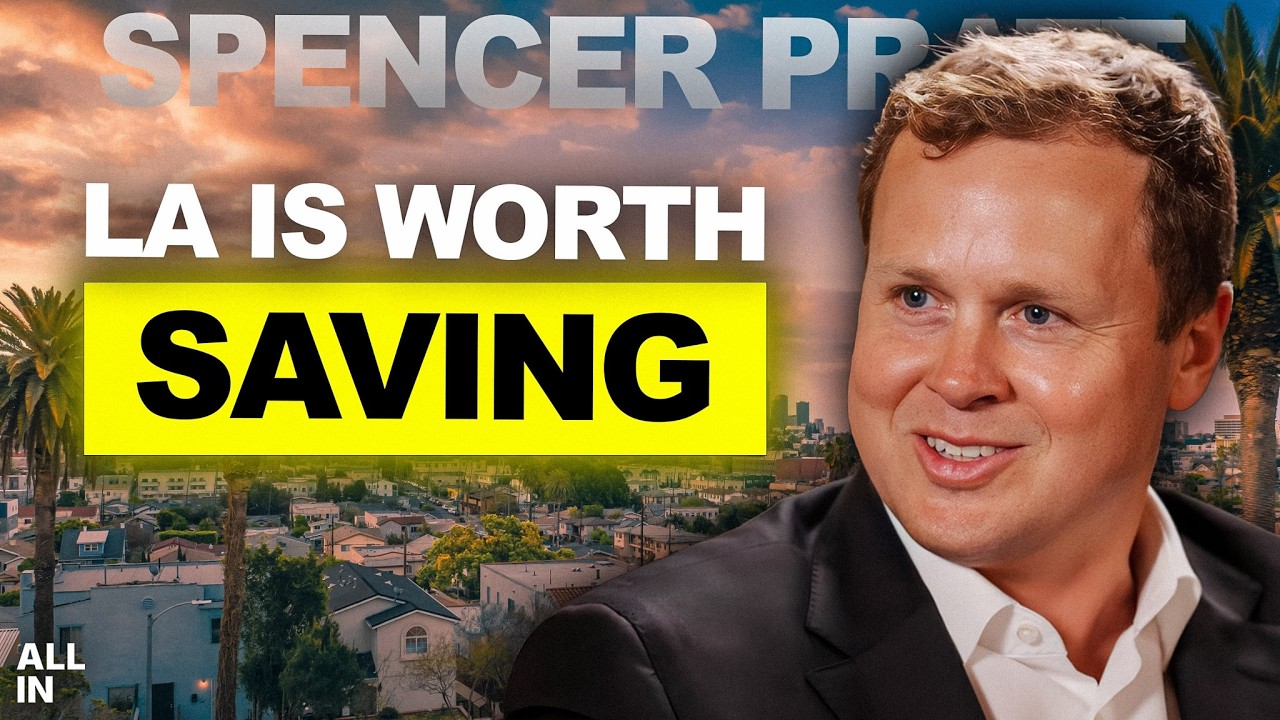
Spencer Pratt on Fixing LA: Wildfires, Homelessness, Corruption & the Fight to Take It Back
 83 min
Elon’s Anthropic Deal, The Next AI Monopoly?, “FDA for AI” Panic, Trading the AI Boom
Ask anything from this episode.
Save it, chat with it, and connect it to Claude or ChatGPT. Get cited answers from the actual content — and build your own knowledge base of every podcast and video you care about.
Get Started Free