Key Moments
E108: Doxing debate, Nuclear fusion breakthrough, state of the markets & more
 All-In Podcast
Want to know something specific about what's covered?
We've already dissected every moment. Ask and we will deliver (with timestamps).
Key Moments
Panel discusses Twitter doxing, nuclear fusion, market downturns, and VC valuations.
Key Insights
Twitter's new doxing policy raises complex free speech vs. safety questions.
A nuclear fusion breakthrough achieved net energy gain, a significant scientific milestone.
Tech market valuations are undergoing a severe correction, impacting startups and VCs.
Private equity is poised to acquire undervalued tech companies, likely with significant layoffs.
Founders are urged to conserve cash and manage burn rates amid economic headwinds.
The power law in VC means most funds underperform, concentrating returns in a few.
TWITTER'S DOXING DEBATE AND CONTENT MODERATION CHALLENGES
The podcast kicks off with a debate on Twitter's new policy against sharing real-time location data, exemplified by the ElonJet account. Panelists discuss the delicate balance between free speech and user safety, questioning the definition of doxing and the implications of persistent tracking. While acknowledging the dangers, they explore whether Elon Musk's personal experience should dictate platform policy. The discussion highlights the immense difficulty of content moderation, with no easy answers and inevitable criticism regardless of decisions made.
NUCLEAR FUSION BREAKTHROUGH: IGNITION AND POTENTIAL
A significant scientific achievement is celebrated: the National Ignition Facility's successful nuclear fusion reaction producing more energy than consumed (net energy gain). The hosts explain the principles of fusion, contrasting it with fission and outlining the challenges of achieving the necessary temperature and density on Earth. They discuss both inertial confinement and magnetic confinement methods, emphasizing the decades of technological development required. This breakthrough is seen as a crucial proof of concept, potentially paving the way for a new era of clean energy.
THE PROMISE AND PRACTICALITY OF FUSION ENERGY
While celebrating the fusion breakthrough, the conversation delves into its practical implications and contrast with existing renewable energy sources. One perspective argues that fusion, with its potential for near-limitless scalability and abundant fuel, offers a future energy solution unimaginable with solar. Others counter that solar energy is already extremely cheap and scalable, questioning the immediate investment priority for fusion compared to nearer-term solutions. The debate touches on the inherent characteristics and challenges of fusion technology, including its long development timeline and immense infrastructure requirements.
MARKET CORRECTIONS AND THE RISE OF PRIVATE EQUITY
The state of the markets reveals a severe valuation correction affecting startups across all stages. The acquisition of Coupa by Thoma Bravo serves as a case study, highlighting how private equity firms can leverage private credit and capitalize on reduced valuations. The discussion emphasizes that private equity is expected to become highly active, targeting software and SaaS companies. This activity is likely to involve significant cost-cutting, including substantial layoffs, to improve efficiency and profitability, fundamentally reshaping the tech landscape.
FOUNDER DELUSIONS AND THE AGE OF AUSTERITY
A stark reality check is delivered to founders clinging to last year's inflated valuations. Data from Cooley shows dramatic valuation drops across funding rounds, with Series D seeing an 85% decrease. Founders are urged to recognize the current economic climate, conserve cash, and abandon the 'Age of Excess.' The advice is to embrace capital efficiency, focus on core product and customer value, and prepare for a prolonged period of economic headwinds, prioritizing survival and sustainable growth over hyper-growth fueled by excessive spending.
VC LANDSCAPE SHIFTS: POWER LAW AND LP EXPECTATIONS
The conversation turns to the venture capital industry, highlighting the enduring power law where a minority of investments drive the majority of returns. Data illustrates that the bulk of VC value is generated by a small fraction of companies, while many others fail to return even invested capital. Limited Partners (LPs) are becoming more discerning, focusing on secondary strategies, earlier entry points, and larger positions. The expectation is that the bottom 75% of VC firms will struggle to raise future funds, leading to consolidation and a market that favors sober founders and disciplined investors.
GEOPOLITICAL IMPLICATIONS OF ABUNDANT ENERGY
The potential geopolitical ramifications of a future with abundant, low-cost energy are explored. If energy scarcity, a historical driver of conflict and despotic regimes ('resource curse'), were eliminated, the global power dynamic could shift dramatically. Nations like the United States, with strong innovation and intellectual capital, could gain a significant advantage over resource-dependent countries. This scenario suggests a future where energy becomes more akin to a software problem, favoring agile and technologically advanced economies.
COMEDIANS, CANCEL CULTURE, AND SOCIETAL DISCOURSE
The role of comedians in public discourse is framed as a critical element of a healthy society. The podcast argues that comedians are increasingly viewing platforms like Twitter as places where they risk being 'canceled,' rather than as spaces for challenging dialogue. The panelists advocate for cherishing comedians' ability to provoke, question, and even make audiences uncomfortable, as this process is essential for societal self-understanding and progress. Allowing comedians to 'cross the line' is seen as vital for challenging norms and fostering debate.
THE 'WORST PERSON IN TECH' CONVERSATION
The episode concludes with a lighthearted segment discussing a bracket of 'worst people in tech.' The hosts humorously debate various tech figures, touching on themes of perceived hypocrisy, media engagement, and business practices. The discussion reveals a contrast between calculated public personas and genuine impact, highlighting the subjective nature of such rankings and offering a final comedic takeaway from the week's conversations.
Mentioned in This Episode
●Supplements
●Products
●Software & Apps
●Companies
●Organizations
●Studies Cited
●People Referenced
Common Questions
Elon Musk's updated Twitter policy aims to suspend accounts dedicated to sharing someone's live location. While public information can be shared, persistent, coordinated tracking of individuals is no longer permitted, aligning with safety concerns and preventing potential targeting or stalking.
Topics
Mentioned in this video
Mentioned as a platform that has dealt with content moderation challenges similar to Twitter.
Mentioned in the context of union busting and the CEO's actions.
Mentioned as a sponsor of the podcast.
Mentioned as a company that has dealt with content moderation challenges similar to Twitter. Also mentioned in the context of potential headcount reductions and the company's role in developing technology.
Mentioned as the provider of a margin loan, relevant to Elon Musk's financial situation with Tesla stock sales.
Sold to Adobe for $20 billion, mentioned as a deal that topped the market before the economic slowdown.
A software-as-a-service company that was acquired by Thoma Bravo, used as a case study for the state of the tech market and private equity deals.
Mentioned as an example of a company that grew through bolt-on acquisitions.
Mentioned as a project that Chris Dixon tried to promote, in the context of 'loathsome people in tech'.
Mentioned in relation to Elon Musk having to sell stock due to potential distractions from Twitter, and his past achievements in electric cars.
Mentioned as a sponsor of the podcast, the airlines' cup was present.
The platform is extensively discussed regarding Elon Musk's acquisition, content moderation policies, new doxing rules, and its role as a town square for free speech.
Mentioned as an example of a company that grew through bolt-on acquisitions.
Mentioned as a company alongside Tesla where Elon Musk has bent the laws of physics for humanity, contrasting with the psychological realm of Twitter moderation.
Acquired Coupa and is a private equity firm active in the tech sector, highlighted for their strategy of cost-cutting and efficiency.
Acquired Figma for $20 billion, mentioned as a potential buyer for a lower price in the current market.
Mentioned as the CEO of OpenAI, and compared to Chris Dixon in the 'most loathsome person in tech' discussion.
Mentioned as an individual whose reach was dramatically impacted by being banned from social media platforms.
Mentioned as a friend and 'bestie' who was present at the Chris Rock and Dave Chappelle show, and provided shooting lessons.
Mentioned in relation to Chris Rock's set, which reportedly included a takedown of Will Smith.
Mentioned as an example of a celebrity who might be doxxed at a farmer's market.
Mentioned as a comedian performing at the Chase Center, whose set was praised for its content and delivery.
Mentioned in a comparison to Andy Jassy.
Mentioned as a winner in the 'most loathsome person in tech' discussion, associated with Worldcoin and Web3.
Owner of the Golden State Warriors, mentioned as being present during the celebrity gathering.
Helped provide data for a chart on venture capital returns.
Mentioned as a comedian performing at the Chase Center and later doing a late-night set, praised for his genius and storytelling.
Mentioned as someone who draws many names, in comparison to Joe Lacob.
CEO of Amazon, described as a gentleman and delightful human compared to Andrew Jackson.
Discussed in relation to security issues with tracking his plane, his purchase and moderation decisions at Twitter, and his involvement in advancing humanity through Tesla and SpaceX. His sale of Tesla stock is also mentioned.
Former head of Trust and Safety at Twitter, discussed in the context of media hypocrisy regarding criticism against him and his safety.
Mentioned as an individual who was banned from social media platforms, and as someone many people wanted suspended from Twitter.
Mentioned in comparison to the cost of the fusion project, noting that a third of the amount spent was allegedly stolen by him.
Mentioned as a fan of the show who gave shooting lessons to Dave Chappelle and Jayco.
Mentioned as someone who is not active on Twitter, and as a potentially loathsome person in tech.
Cited as an example of a breakthrough technology that started large, expensive, and slow but became vastly more accessible.
The largest construction project in Europe, a 30 billion dollar demonstration system for production-scale fusion.
Mentioned as a top venture capital firm and a co-founder of Silicon Valley. Also listed as one of the most loathsome people in tech.
Mentioned in the context of media hypocrisy regarding their reporting on Yoel Roth.
Cited for data on the cost of capturing grid-level solar energy.
Mentioned as a publication where Yoel Roth writes op-eds.
The facility where scientists achieved net energy gain in a fusion reaction using inertial confinement.
Discussed in relation to publishing aircraft identification data, posing a potential security risk.
Mentioned as a top-tier venture capital firm with consistently high returns.
More from All-In Podcast
View all 417 summaries 40 min
Why Secondary Markets Are Eating the IPO | All-In Liquidity Secondary Markets Panel
 33 min
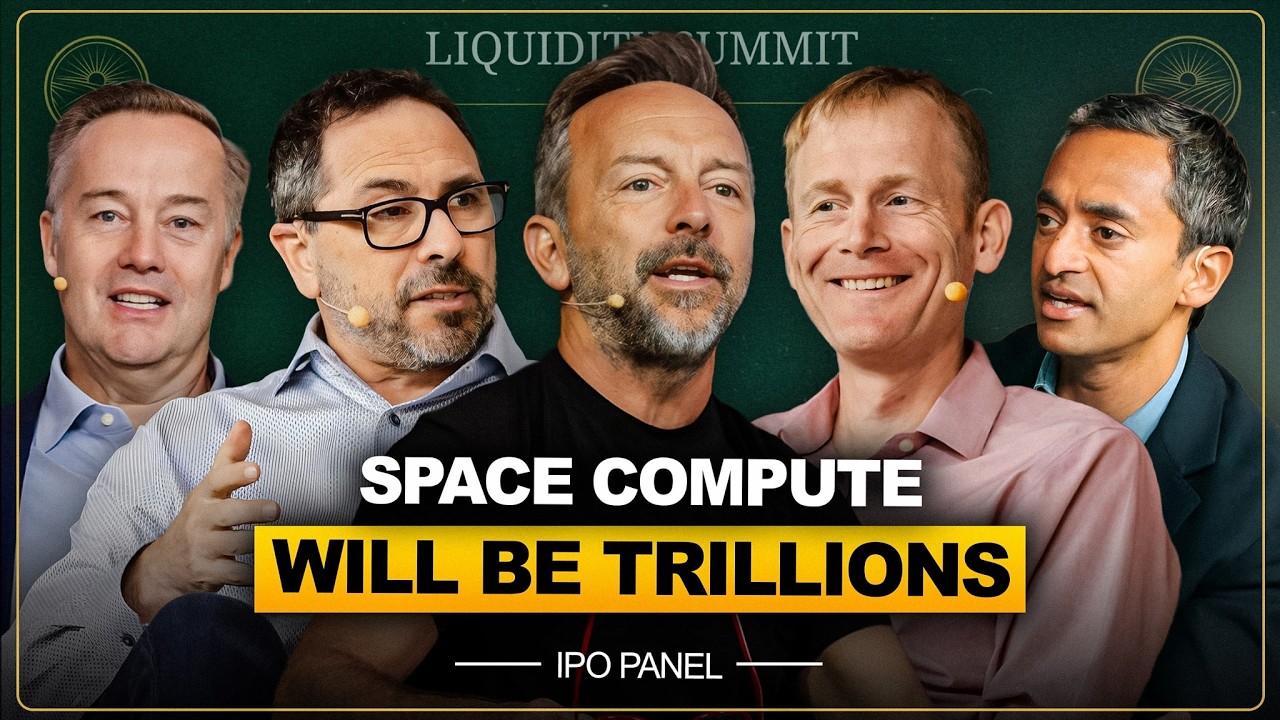
The IPO Comeback: Why Tech Giants Are Finally Going Public | All-In Liquidity IPO Panel
 32 min
Dan Loeb: The Lost Art of Short Selling, and Why Stock Picking is Back
 33 min
Thomas Laffont: The $4T AI IPO Wave Is Coming… and We’ve Never Seen Anything Like It
Ask anything from this episode.
Save it, chat with it, and connect it to Claude or ChatGPT. Get cited answers from the actual content — and build your own knowledge base of every podcast and video you care about.
Get Started Free