Key Moments
Dr Mark Plotkin on Ethnobotany, Real vs Fake Shamans, Hallucinogens, and More | The Tim Ferriss Show
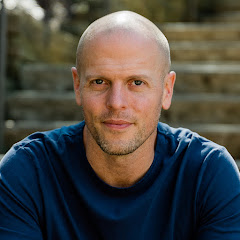 Tim Ferriss
Want to know something specific about what's covered?
We've already dissected every moment. Ask and we will deliver (with timestamps).
Key Moments
Ethnobotanist Mark Plotkin discusses traditional Amazonian healing, ethnobotany, and conservation efforts.
Key Insights
Ethnobotany explores the relationship between plants and people, particularly focusing on medicinal plants and indigenous knowledge.
Richard Evans Schultes, a pioneer in ethnobotany, deeply influenced the field and its public perception through his extensive research.
Amazonian healing traditions, while distinct from Western medicine, offer unique insights and potential treatments for ailments.
Preserving indigenous cultures and their knowledge is crucial not only for biodiversity but also for potential medical breakthroughs.
The misuse and abuse of nature, including wildlife trade, contribute to the emergence of pandemics.
Sustainable development for indigenous communities requires diverse income streams, not solely relying on exploitation of resources.
THE FOUNDATION OF ETHNOBOTANY
Ethnobotany is defined as the study of the relationship between plants and people. While broadly encompassing all plant-people interactions, it is popularly understood as the search for medicinal plants in rainforests through indigenous knowledge. This field was significantly shaped by Richard Evans Schultes, often called the father of ethnobotany, who inspired many with his rigorous yet deeply respectful approach to studying plant uses. His work, including research on psychoactive plants like those found in Mexico and the Amazon, laid the groundwork for understanding the profound connection between human culture and the botanical world.
SHAMANISM AND AMAZONIAN HEALING
Dr. Mark Plotkin highlights the sophisticated healing practices of Amazonian cultures, often referred to as shamanism. These traditions employ plant-based remedies and spiritual practices to address a wide range of ailments, including those that Western medicine struggles to treat. Plotkin stresses that while not every culture or shaman can cure everything, their deep understanding of the natural world offers solutions and perspectives that are invaluable. He recounts personal experiences of healing from these traditions, emphasizing their potent and sometimes instantaneous effects, showcasing specialized knowledge honed over generations.
THE VALUE OF BIODIVERSITY AND CONSERVATION
Plotkin emphasizes the immense value of biodiversity, not just for its intrinsic worth but for its potential to yield new medicines and technologies. He uses examples like the discovery of new electric eel species, which could inspire advancements in battery technology, and the anticoagulant properties of vampire bat saliva, leading to drugs like Draculin. This underscores that conservation efforts are critical for safeguarding not only charismatic species but also the often-overlooked 'creepy crawlies' and plants that hold significant medicinal promise, benefiting humanity as a whole.
PRESERVING INDIGENOUS KNOWLEDGE
A significant portion of Plotkin's work, through the Amazon Conservation Team, focuses on preserving indigenous cultures and their invaluable knowledge. Traditional healing practices and understanding of plant and animal uses are being lost as younger generations are drawn to modernity. Plotkin advocates for empowering indigenous communities to document their own wisdom, using tools like GPS for mapping and recording their traditions in their own languages. This bottom-up approach ensures that crucial knowledge is passed down and not erased by external influences.
THE DANGERS OF ABUSE AND THE RISK OF PANDEMICS
The conversation touches upon the link between human abuse of nature and the emergence of pandemics. Plotkin points to the COVID-19 pandemic as a clear example, originating from bats in crowded markets, highlighting how disrupting natural ecosystems and engaging in wildlife trade can have catastrophic global consequences. He stresses that treating nature with respect and understanding its delicate balance is essential for preventing future outbreaks and protecting both human and planetary health.
SUSTAINABLE PRACTICES AND RECIPROCITY
Plotkin advocates for sustainable development models that empower indigenous communities without exploiting them or their environment. He suggests a diversified economic approach, combining eco-tourism, handicrafts, and medicinal practices, rather than over-reliance on a single resource that could lead to exploitation. Furthermore, he emphasizes reciprocity, urging those who benefit from Amazonian medicines to give back to the communities and ecosystems that provided them, whether through financial support, conservation efforts, or advocating for their rights.
BRIDGING CULTURES AND BUILDING ALLIANCES
A recurring theme is the importance of 'boundary walkers' – individuals who can bridge different worlds and build trust between diverse groups. Plotkin believes that solving complex global challenges, from conservation to public health, requires collaboration across political, cultural, and scientific divides. He highlights the need for long-term relationships built on trust and friendship to enact meaningful change, emphasizing that a holistic approach, integrating traditional wisdom with modern science and technology, is key to a healthier future for all.
Mentioned in This Episode
●Products
●Companies
●Organizations
●Books
●Drugs & Medications
●Concepts
●People Referenced
Common Questions
Richard Evans Schultes is often called the father of ethnobotany. He influenced many scientists and popular figures, and his fieldwork in southern Mexico in the 1930s led to the discovery of magic mushrooms, while his work in the Amazon in the 1940s led to the discovery of ayahuasca. His positive impact on the world is still felt today, particularly in the study of hallucinogenic compounds for medicinal purposes. Schultes taught from 415 to 507 seconds.
Topics
Mentioned in this video
An organization partnered with 55 tribes to map and protect 80 million acres of ancestral rainforests, led by Mark Plotkin.
University where a new institute was started to research entheogenic compounds for intractable diseases like PTSD and schizophrenia.
Indigenous people living in northern Colombia, known as the 'Dalai Lamas of South America' for their traditional lifestyle and warnings against abusing nature.
A publication where Mark Plotkin recently wrote an editorial on the pandemic being caused by the abuse of nature.
A tribe of hunter-gatherers, regarded as legendary for their hunting ability and forest knowledge, with whom the Amazon Conservation Team created a sustainable honey development project.
Often called the father of ethnobotany, a Harvard professor who spent 14 years in the Amazon, co-authored 'Plants of the Gods', and discovered magic mushrooms and ayahuasca.
Researcher at Johns Hopkins who coined the term 'ontological shock' in the context of psychedelic experiences.
An ethnobotanist who has made progress in developing antiviral compounds from American Samoa, ensuring indigenous communities receive payment and a share of market profits.
A colleague of Mark Plotkin at Jaguar Health who is developing an anti-diarrheal medicine from tree sap in Peru, putting money back into communities.
The first person to synthesize LSD, and co-author of 'Plants of the Gods'.
A friend of Mark Plotkin who was lost in 1969 on the Brazil-Peru border and introduced to hallucinogenic frogs (kambo) by uncontacted peoples.
Author of 'How to Change Your Mind,' a book discussed by the speakers on hallucinogenic plants and practices, emphasizing the risks of misuse.
An ethnobotanist and president of the Amazon Conservation Team, author of 'Tales of a Shaman's Apprentice' and 'The Amazon: What Everyone Needs to Know'.
A buddy of Mark Plotkin who published a classic account of his encounter with kambo, reporting a vision of a tapir that later materialized.
Former Cuban leader who attended the Rio Conference in 1992, demonstrating global collaboration on environmental issues.
A hallucinogenic principle found in a frog venom used by Amazonian tribes for hunting magic.
A hallucinogenic brew discovered by Schultes in the northwest Amazon in the 1940s, now widely used but with significant risks if not administered correctly.
A powerful synthetic hallucinogenic drug, first synthesized by Albert Hofmann, mentioned in comparison to the spiritual trips of yopo.
Billion-dollar drug industry that originated from studying poisonous snakes.
A compound with anticoagulant properties found in vampire bat saliva, being studied for medicinal applications.
A medicine for erectile dysfunction mentioned as having been unexpectedly discovered during trials for a blood pressure medicine.
Michael Pollan's book on hallucinogenic plants and practice, providing a 30,000-foot view and experiential accounts of psychedelics.
One of the most popular books about the rainforest ever published, written by Dr. Mark Plotkin, chronicling his 15-year search for medicinal plants.
A book co-authored by Richard Evans Schultes and Albert Hofmann about hallucinogenic plants.
Mark Plotkin's new book published by Oxford Press, which discusses ayahuasca and other plant medicines.
Bats that feed on blood and have anticoagulants in their saliva, which are being studied in labs under the trade name 'Draculin' for potential medicinal uses.
An endangered man-eating crocodilian rumored to live in French Guiana, which sparked Mark Plotkin's first field expedition.
Hallucinogenic fungi discovered by Schultes in sub-tropical Mexico and Oaxaca in the 1930s.
Eight-foot creatures capable of producing powerful electric shocks; two new species were discovered in 2019, one producing 20% more electricity than previously known, inspiring research for new micro-batteries.
A new species of pink river dolphin discovered in the Amazon, highlighting that large, conspicuous creatures still hold secrets.
Hallucinogenic frog secretions used by indigenous people, initially discovered by Lauren McIntyre from the Matzah tribe and later found to be used by other tribes for hunting magic.
A sustainable non-timber forest product found by the Trio tribe outside the Amazon basin, which they mapped and are using to generate income.
Software company that developed a response dashboard for the Amazon Conservation Team to visually track mitigation efforts against COVID-19.
A company where Stephen King is developing an anti-diarrheal medicine from tree sap in Peru.
A podcast network producing shows like Business Wars, with many reaching number one on Apple Podcasts.
More from Tim Ferriss
View all 703 summaries 70 min
Q&A with Tim — The Art of Male Friendship, Reinvention in The Age of AI, & More
 125 min
Dr. Andrew Huberman — Peptides, Performance, and Protocols
 112 min
The Random Show! Mortality, AI, Supplements, Rock Climbing, & More
 88 min
The Legendary Hollywood Power Broker — Guy Oseary on 36 Years of Managing Madonna, 26 IPOs, and More
Ask anything from this episode.
Save it, chat with it, and connect it to Claude or ChatGPT. Get cited answers from the actual content — and build your own knowledge base of every podcast and video you care about.
Get Started Free