Key Moments
Dr. Gabor Maté — Trauma, Addiction, Ayahuasca, and More
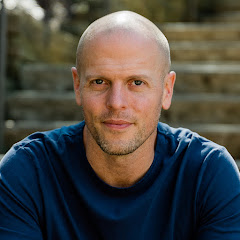 Tim Ferriss
Want to know something specific about what's covered?
We've already dissected every moment. Ask and we will deliver (with timestamps).
Key Moments
Dr. Gabor Maté discusses trauma, addiction, the wisdom of books, and healing.
Key Insights
Childhood experiences, especially trauma and stress, profoundly shape adult development, emotional regulation, and behavior, often leading to conditions like ADHD and addiction as coping mechanisms.
Addiction is not solely a choice or a primary brain disorder but rather a complex response to underlying pain, often stemming from early childhood adversity.
Healing involves understanding the root causes of pain and distress, rather than just treating the symptoms of addiction or other dysfunctions.
Trauma is defined not just by adverse events, but by the internal disconnection from emotions and the body that results from those events.
Various therapeutic modalities, including compassionate inquiry, somatic experiencing, EMDR, yoga, and psychedelics, can aid in reconnecting with oneself and healing from past trauma.
The integration of pre- and post-work is crucial for therapeutic modalities like psychedelic-assisted therapy to ensure lasting benefits and avoid potential harm.
THE PROFOUND IMPACT OF EARLY CHILDHOOD EXPERIENCES
Dr. Maté emphasizes that early childhood experiences, particularly stress and trauma, lay the foundation for an individual's lifelong struggles. Born during WWII, Maté's own early life was marked by his mother's terror and stress, which he believes contributed to his lifelong battles with depression and ADHD. This personal experience fuels his exploration into how adverse early environments can lead to maladaptive coping mechanisms, such as addiction, as individuals attempt to soothe the pain caused by these formative years.
DECONSTRUCTING ADDICTION: MORE THAN A CHOICE OR DISEASE
Challenging conventional definitions, Maté defines addiction as any behavior that offers short-term pleasure or relief but results in long-term negative consequences, which the individual cannot abandon. He argues against viewing addiction solely as a moral failing, a choice, or a primary brain disorder. Instead, he posits that it is a coping mechanism developed to manage profound emotional pain, often originating from childhood trauma or deprivation.
HEALING THROUGH COMPASSIONATE INQUIRY AND RECONNECTION
The core of Dr. Maté's therapeutic approach, 'compassionate inquiry,' involves exploring the 'why' behind the pain, rather than just the 'why' of the addiction. This method encourages individuals to understand the origins of their distress, often rooted in childhood wounding. The goal of healing is to help individuals reconnect with their authentic selves, their emotions, and their bodies, which were often disconnected as a protective mechanism against trauma.
THE ROLE OF THERAPEUTIC MODALITIES IN HEALING
Dr. Maté highlights various therapies that facilitate reconnection and healing. These include body therapies like Somatic Experiencing and yoga, as well as psychological approaches such as EMDR and emotional freedom techniques. He also discusses the potent role of psychedelics when used in a safe, guided context. These modalities help bypass conscious defenses, access deeper emotional states, and process past traumas, clearing the path for recovery.
SPIRITUAL AND EXISTENTIAL WISDOM FROM LITERATURE
Maté draws profound insights from literature, including 'The Scourge of the Swastika,' which deeply impacted him due to his family's history during the Holocaust. Winnie the Pooh, 'The Drama of the Gifted Child,' Don Quixote, and the Dhammapada offer wisdom on managing suffering, understanding sensitivity, pursuing justice despite delusion, and the mind's role in shaping reality. These books serve as metaphors for universal human experiences with pain, resilience, and the search for meaning.
THE INTERCONNECTEDNESS OF INDIVIDUAL AND SOCIAL WELL-BEING
Dr. Maté stresses that individual suffering, including addiction, is deeply intertwined with societal factors. He argues that a culture characterized by stress, disconnection, and economic insecurity contributes to widespread emotional pain and trauma. Therefore, true healing requires not only individual transformation but also societal change that addresses the root causes of collective distress and fosters greater compassion and connection.
Mentioned in This Episode
●Products
●Software & Apps
●Companies
●Organizations
●Books
●Drugs & Medications
●Studies Cited
●Concepts
●People Referenced
Common Questions
Born in Budapest, Hungary in 1944, Dr. Maté's infancy was marked by his mother's terror and stress during the German occupation. His grandparents were killed in Auschwitz, and his father was in forced labor. This early exposure to suffering and a profound personal experience reading 'The Scourge of the Swastika' at age 10 ignited his lifelong quest to understand why people suffer and cause suffering.
Topics
Mentioned in this video
The concentration camp where Dr. Maté's grandparents were killed, a detail of his family history that deeply influenced his life's work and pursuit of understanding human suffering.
Dr. Gabor Maté was born in Budapest, Hungary in 1944, two months before German occupation, an event that profoundly shaped his early life and family's experience of the Holocaust.
A prestigious child development research institution at Harvard University, whose summary of decades of research is cited to show how early environments fundamentally shape brain architecture and long-term health.
An organization of psychologists, psychiatrists, and medical doctors scientifically studying the role of psychedelics in healing, highlighted for their work on psilocybin and MDMA-assisted psychotherapy.
Their official definition of addiction as primarily a genetic brain disorder is disputed by Dr. Maté, who argues it's an attempt to solve underlying problems rooted in childhood trauma, not solely a primary brain disorder.
Designated MDMA a 'breakthrough therapy' and fast-tracked it into Phase 3 trials, indicating growing acceptance of psychedelics in medical research.
An organization primarily run by MDs and PhDs that the host has worked with, focused on psilocybin studies at Johns Hopkins related to treatment-resistant depression.
Another organization primarily focused on psilocybin research, alongside MAPS and the Heffter Institute, contributing to the resurgence of psychedelic research.
An organization that does 'incredible work' for social accountability and support, but is critiqued for not addressing the root trauma of addiction and for downplaying the role of psychedelics in its co-founder's spiritual growth.
Collaboration with the Heffter Institute on psilocybin studies for treatment-resistant depression, with the host's audience helping fund a study there.
A San Diego internist and deep thinker/researcher who initiated the ACE studies in an obesity clinic, recognizing that patients were 'stuffing down their pain' due to childhood trauma, leading him to listen to patient experiences.
Author of 'Waking the Tiger' and developer of Somatic Experiencing, a brilliant body-based therapy recommended for reconnecting with the body and healing trauma.
The father of Christopher Robin, who wrote the Winnie-the-Pooh stories, mentioned as potentially having a dysfunctional father-son relationship that impacted Christopher Robin's life.
Mentioned as someone who hosted a gathering where the host met Vicki Dulai and shares commonalities with Dr. Maté.
Formerly of Google, who introduced the host to loving-kindness meditation, helping him apply compassion to his own past behaviors.
Mentioned for his song 'It All Goes Down in Your Mind,' which Dr. Maté plays at his events, encapsulating the powerful teaching that our internal state determines our experience of the world.
Chief of the Luftwaffe and head of the Gestapo under Hitler, also an opiate addict, whose great-niece contacted Dr. Maté, illustrating multi-generational trauma and healing.
Mentioned for his work on interpersonal neurobiology, underscoring that humans are social creatures with brains wired together, highlighting the interconnectedness of individual and social environments in health.
A Swiss-German Jewish psychotherapist who authored 'The Drama of the Gifted Child,' realizing Freudian psychoanalysis ignored trauma and developing a framework that profoundly influenced Dr. Maté's understanding of childhood and adult pathologies.
A teacher who reiterated the practice of loving-kindness meditation, further influencing the host's self-compassion journey.
Self-help guru whose 'Date with Destiny' event highlighted how many people on antidepressants remain depressed, suggesting a deeper, unresolved component to mental health beyond chemical imbalances.
Co-founder of 'Compassion for Addiction' with Dr. Maté, who recommended him to the host for this interview.
Co-founder of Airbnb, who attended the Tony Robbins event with the host and was part of a group text for accountability and follow-up.
CEO of Salesforce, an acquaintance of the host who also attended the Tony Robbins event.
A great Indian guru who taught empowerment over victimhood, using the analogy of wearing shoes instead of wrapping the world in burlap if your foot hurts when you walk outside.
Co-founder of Alcoholics Anonymous (AA), who had powerful LSD experiences that aided his spiritual growth—a fact often overlooked in AA, which also doesn't typically address the root trauma of addiction.
A brilliant psychologist friend of Dr. Maté, considered the world's leading developmental psychologist, co-authored 'Hold On to Your Kids' focusing on the importance of parent-child attachment.
Mutual friend who firmly believes in changing the public conversation around addiction from blaming and shaming to one that incorporates trauma and social issues.
Peter Levine's first book, which introduces Somatic Experiencing, a body-based therapy focusing on reconnecting with the body to heal trauma.
A collection of the Buddha's sayings emphasizing that our minds create our world, but Dr. Maté adds that early experiences shape our minds, connecting ancient wisdom with modern psychology of trauma.
Read by Dr. Maté as a child and many times as an adult, featuring a deluded but purely hearted nobleman fighting for justice, resonating with Dr. Maté's own yearning for justice rooted in his experiences.
A book published in the 1950s detailing Nazi crimes, which profoundly impacted Dr. Maté as a child, revealing what happened to his family during the Holocaust and sparking his lifelong question about human suffering.
A book by Alice Miller, originally titled 'Prisoners of Childhood,' which helped Dr. Maté understand that adverse childhood experiences lead to defensive adult behaviors, forming the basis of much of his work.
The official journal of the American Academy of Pediatrics, an article from which is cited by Dr. Maté to support the scientific evidence that social and physical environments impact human development and long-term health.
A parenting book co-authored by Dr. Maté and Gordon Neufeld, emphasizing that parent-child attachment is the primary drive and how modern culture disrupts this connection, leading to developmental problems in children.
Dr. Maté's book published in 2008, which became a national bestseller and led to questions about alternative addiction treatments like ayahuasca, ultimately prompting his personal experience with psychedelics.
Dr. Maté's first book, originally titled 'Scattered' in the American edition, exploring ADHD not as an inherited disease but as a response to family multi-generational and social stress in sensitive children.
Dr. Maté's book on mind-body unity, scientifically demonstrating how emotional patterns, especially repression, negatively impact the immune, hormonal, and nervous systems, linking various physical illnesses to emotional and psychological factors.
A Peruvian/Amazonian vine used in a brew with psychedelic properties. Dr. Maté experienced profound love and insight into his own emotional blockages during his first ceremony, leading him to incorporate it into his healing work.
The psychoactive compound in 'magic mushrooms,' used in research by MAPS and the Heffter Institute for conditions like end-of-life anxiety and treatment-resistant depression.
Used in assisted psychotherapy clinical trials, designated a breakthrough therapy by the FDA, showing powerful healing potential in the right setting and with skilled leadership.
A strong stimulant the host self-medicated with in high school to combat depressive periods, providing euphoria, optimism, and energy, but leading to tolerance and severe withdrawal symptoms.
A seminal book from Dr. Maté's childhood, appreciated for its humor, wisdom, and the underlying themes of lost innocence and playfulness, which resonated with his own early life experiences.
The soundtrack that features Johnny Cash's song 'It All Goes Down in Your Mind,' highlighting its profound message about internal experience shaping reality.
A tapping therapy mentioned as a method for healing and reconnecting with oneself.
Discussed as a traditional therapy, meaning 'unity,' aimed at regaining unity with oneself and creation. Dr. Maté practices it daily and highly recommends it for ADHD and presence.
A therapeutic method discussed as a way to bypass the conscious mind and access the emotional brain more quickly than talk therapy alone, used in conjunction with it.
A meditation practice that the host applies to his younger self and past 'hated' behaviors, thanking them for their role and allowing release, aligning with Dr. Maté's compassionate inquiry approach.
A yoga practice taught by Sadhguru's followers, highly recommended by Dr. Maté for making an enormous difference in his life and helping him stay present with his ADHD.
A brilliant body-based therapy method developed by Peter Levine, recommended for reconnecting with the body and addressing trauma.
Mentioned as something that some less scrupulous Ayahuasca retreat centers might add to the brew, potentially to cater to foreigners seeking a specific type of experience.
A DMT-containing plant often combined with the ayahuasca vine to create the orally active psychedelic brew.
A potentially dangerous plant mentioned as something problematic retreat centers might include in ayahuasca brews, prompting caution.
More from Tim Ferriss
View all 703 summaries 70 min
Q&A with Tim — The Art of Male Friendship, Reinvention in The Age of AI, & More
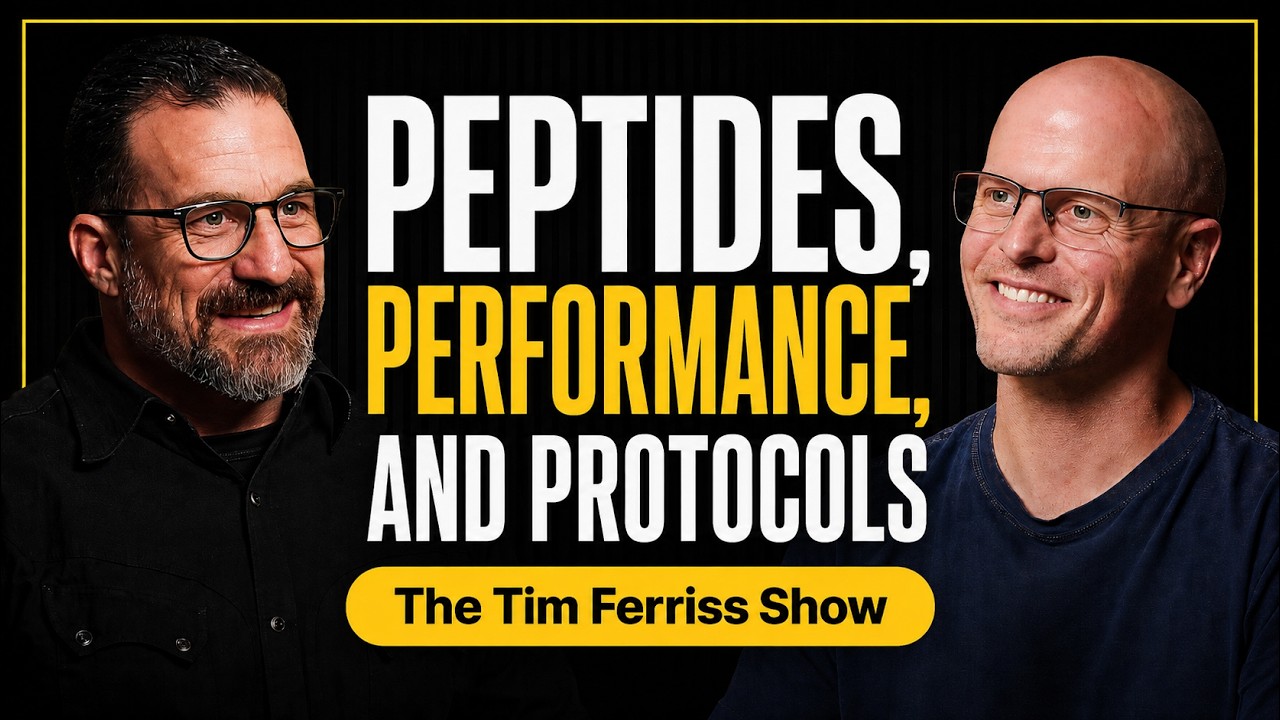 125 min
Dr. Andrew Huberman — Peptides, Performance, and Protocols
 112 min
The Random Show! Mortality, AI, Supplements, Rock Climbing, & More
 88 min
The Legendary Hollywood Power Broker — Guy Oseary on 36 Years of Managing Madonna, 26 IPOs, and More
Ask anything from this episode.
Save it, chat with it, and connect it to Claude or ChatGPT. Get cited answers from the actual content — and build your own knowledge base of every podcast and video you care about.
Get Started Free