Key Moments
Breathing Protocols to Reboot Your Health, Fix Your Sleep, and Boost Performance — James Nestor
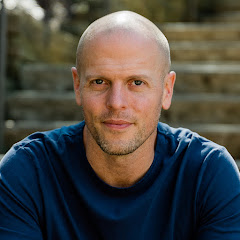 Tim Ferriss
Want to know something specific about what's covered?
We've already dissected every moment. Ask and we will deliver (with timestamps).
Key Moments
Explore breathing techniques for health, sleep, and performance, from ancient practices to modern science.
Key Insights
Coherent breathing (balanced inhale/exhale) can induce a state of physiological coherence for peak efficiency.
Various breathwork practices, like Tummo and Wim Hof Method, can generate heat and enhance bodily functions.
Nasal breathing, especially during sleep, is crucial for addressing issues like sleep apnea and ADHD in children.
Indoor air quality, particularly high CO2 levels, significantly impacts cognitive function and well-being.
Body Oxygen Level Test (BOLT score) is a useful metric for assessing breathing efficiency and CO2 tolerance.
Proper breathing biomechanics, including diaphragmatic engagement and nasal breathing, are vital for athletic performance and recovery.
THE POWER OF COHERENT BREATHING AND ANCIENT PRACTICES
The conversation begins by introducing the concept of coherent breathing, identified through research into prayer rituals. This practice, characterized by roughly equal inhale and exhale durations (5-6 seconds each) followed by a brief pause, was observed to induce a state of physiological coherence. This state is associated with peak efficiency and optimal bodily function. The discussion then delves into historical breathwork practices, tracing back to individuals like Maurice Dubard, who, inspired by yoga, rehabilitated himself from severe respiratory issues. His legacy points to ancient techniques, including Tummo, a Bon Buddhist practice from Tibet used for generating and retaining body heat, often seen as a survival mechanism.
EXPLORING EXTREME BREATHWORK AND PERSONAL RECOVERY
James Nestor shares his personal journey, highlighting how chronic respiratory issues despite a healthy lifestyle led him to breathwork. He found significant relief and elimination of conditions like pneumonia and bronchitis through practices like Sudarshan Kriya, even amidst unconventional workshop elements. The Wim Hof Method is also discussed, involving intense hyperventilation followed by breath holds and pressure building, which can rapidly warm the body. Nestor's exploration led him to discover that many advanced techniques, while potent, are often hidden and require dedicated effort to uncover, likening it to a 'Fight Club' of breathwork.
THE CRITICAL LINK BETWEEN BREATHING AND CHILD DEVELOPMENT
A significant portion of the discussion focuses on the alarming prevalence of sleep-disordered breathing in children. Nestor emphasizes that conditions like snoring and sleep apnea in kids are often misdiagnosed as ADHD, leading to inappropriate treatments. He argues that these breathing issues are primarily the cause, not just a symptom, leading to sleep deprivation that mimics neurological conditions. The lack of basic breathing assessments by doctors for children presenting with ADHD symptoms is highlighted as a critical oversight, potentially causing long-term neurological damage and increasing risks for future health problems like diabetes.
PRACTICAL STRATEGIES FOR IMPROVED BREATHING AND SLEEP
Practical advice is offered for assessing and improving breathing, especially for children. Simple home observations like mouth-breathing during the day or noisy breathing during sleep can indicate issues. Apps like Snorl and Snore Clock can record sleep patterns. The primary recommendation for addressing these issues is to become an 'obligate nasal breather,' both day and night. Techniques like mouth taping (using specialized tapes or simple micropore tape) and tools like Myotape are suggested to gently train the lips to stay closed during sleep. These interventions can lead to remarkable improvements, including resolving bedwetting and reducing ADHD symptoms.
INDOOR AIR QUALITY AND THE 'CO2 EFFECT'
The conversation shifts to environmental factors, specifically indoor air quality and elevated CO2 levels. Nestor explains that while outdoor CO2 is increasing, indoor levels, where people spend 90% of their time, are often much higher than optimal. Studies show that CO2 concentrations around 1500 ppm can significantly impair cognitive test scores by up to 50%. Higher levels, around 2500 ppm, can cause headaches and further cognitive decline. Nestor shares his experience monitoring CO2 in hotels and airplanes, noting that ventilation standards are often not met, leading to negative health impacts. He recommends seeking accommodations with openable windows and using accurate CO2 monitors like the Aeromet 4.
BREATHWORK FOR ATHLETIC PERFORMANCE AND TRAVEL WELLNESS
For athletes, the focus is on breathing efficiency and biomechanics. Many athletes, despite their physical conditioning, exhibit suboptimal breathing patterns, often relying on chest breathing instead of diaphragmatic engagement, which is inefficient. The Body Oxygen Level Test (BOLT score) is introduced as a method to assess CO2 tolerance and breathing efficiency, which can be improved with practice. Manual therapies for the rib cage and inspiratory muscle training devices are discussed as beneficial tools. For travelers, Nestor emphasizes his 'travel kit,' including CO2 monitors, red light bulbs, essential supplements, and a device called the 'Relaxator' for controlled breathing during intense work or travel, aiming to maintain physiological stability.
THE SCIENCE OF FREQUENCY AND SUPPLEMENTATION
Nestor touches upon less conventional wellness tools, like pulsed electromagnetic field (PEMF) devices, which have historical roots in Eastern Europe and are increasingly used for pain management and overall health. He references research on electrical frequencies and their potential biological effects, citing books like 'The Body Electric.' He also discusses his supplement regimen, including Vitamin D, K2, E, and CoQ10, noting their importance for supporting health, especially when dealing with environmental stressors or potential illnesses. The need to obtain minerals from food sources, or supplements like Natto, is also mentioned, reflecting a holistic approach to health that goes beyond basic breathing techniques.
MASTERING THE WRITING PROCESS THROUGH DISCIPLINE
Shifting focus to his writing career, Nestor debunks the concept of 'writer's block' as a convenient excuse for professionals who rely on writing for income. He emphasizes the importance of discipline, treating writing as a business, and showing up to work consistently. His own transition from corporate life to full-time writing was a leap of faith that, despite initial financial struggles and canceled contracts, was driven by a deep-seated passion. He highlights the value of community, like the San Francisco Writers Grotto, in learning the business aspects of publishing and the necessity of taking control of promotion and career management.
STRUCTURING A COHERENT NARRATIVE
Nestor describes the challenging process of condensing his extensive research for his book 'Breath,' particularly going from nearly 300,000 words down to 85,000. He credits key figures like his agent and editor for helping him find the narrative arc, transforming a detailed, fact-heavy manuscript into a compelling story. A breakthrough moment involved structuring the book around a 20-day personal experiment with nasal versus mouth breathing. This defined the core narrative thread, allowing other stories and research to branch out, ultimately creating a cohesive and engaging book that resonated with readers.
THE UNIVERSAL IMPORTANCE OF FUNDAMENTAL BREATHING
Finally, the conversation circles back to the core message: the fundamental importance of breathing correctly. Nestor expresses concern that the current 'breathwork' culture can sometimes overcomplicate something that is a natural, innate biological function belonging to everyone. He advocates for mastering basic nasal breathing and healthy respiratory mechanics before delving into more intense breathwork practices. This foundational step, he argues, addresses the vast majority of breathing dysfunctions and unlocks significant health, sleep, and performance benefits, making it accessible and effective for all.
Mentioned in This Episode
●Supplements
●Products
●Software & Apps
●Tools
●Organizations
●Books
●Concepts
●People Referenced
Breathing & Sleep Optimization Cheat Sheet
Practical takeaways from this episode
Do This
Avoid This
Common Questions
Coherent breathing is a pattern of inhaling for 5-6 seconds and exhaling for 5-6 seconds, which research suggests brings various body systems into a state of coherence, improving heart rate variability, decreasing blood pressure, and increasing oxygen in the brain.
Topics
Mentioned in this video
A device capable of tracking heart rate variability live.
A phone app that records breathing throughout the night with audio and provides a sleep score, used for initial assessment of sleep-disordered breathing.
Another phone app similar to SnoreLab that records and assesses breathing during sleep.
An ancient breathwork practice from Bon Buddhists that allows for generating and storing body heat, used by monks in the Himalayas for survival. There are traditional slow breathing and intense hyperventilation (Wim Hof style) versions.
A breathwork practice taught through the Art of Living that James Nestor still practices and found profoundly impactful for his health.
A traditional Japanese dish with a stringy texture, rich in Nattokinase, that James tried to incorporate into his diet but found challenging to eat.
A professional writer mentioned as a member of the San Francisco Writers' Grotto.
A legendary mixed martial artist who co-developed and constantly used an inspiratory muscle training device.
Illusionist and endurance artist mentioned for breaking the static apnea oxygen-assisted breath hold time.
A professional writer mentioned as a member of the San Francisco Writers' Grotto.
A woman with whom the host worked on using breathing patterns to improve heart rate variability.
A mysterious 90-year-old predecessor of Wim Hof who practiced extreme cold exposure and breathing techniques for 50-60 years, rehabilitating himself from childhood illness and achieving superhuman strength.
A professional writer mentioned as a member of the San Francisco Writers' Grotto.
A friend of James Nestor and expert in breathing, who developed the Relaxator device.
A highly accurate carbon dioxide (CO2) monitor recommended for measuring indoor air quality, with a long battery life.
A small, portable breathing trainer developed by Andrew Olsen, designed to create slight resistance during breathing, particularly useful for slowing down breath patterns during intense focus (e.g., 'email apnea').
Small, dim red light sources used in hotels to avoid disrupting circadian rhythm, especially after long flights.
Devices designed to create resistance for respiratory muscles, improving muscle memory and strength, often resembling a snorkel end or an 'adult pacifier'.
More from Tim Ferriss
View all 705 summaries 108 min
The Random Show — AI Super Assistants, Dream Engineering, Wizards, Supplements, and More!
 121 min
How to Legalize Medical Psychedelics in Your Country — Tania de Jong on Australia’s Breakthrough
 70 min
Q&A with Tim — The Art of Male Friendship, Reinvention in The Age of AI, & More
 125 min
Dr. Andrew Huberman — Peptides, Performance, and Protocols
Ask anything from this episode.
Save it, chat with it, and connect it to Claude or ChatGPT. Get cited answers from the actual content — and build your own knowledge base of every podcast and video you care about.
Get Started Free