Key Moments
#55–Jocko Willink Part 1 of 2: objective, strategy & tactics, leadership, protocols & lessons of war
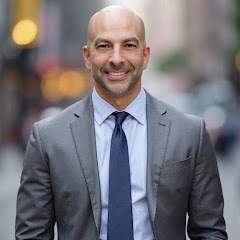 Peter Attia MD
Key Moments
Jocko Willink discusses crucial leadership lessons from his SEAL career, emphasizing objective, strategy, tactics, humility, and the necessity of protocols for life's challenges.
Key Insights
Clearly defining the objective is paramount, forming the foundation for effective strategy and tactics, especially in high-stakes situations.
Decentralized command thrives when frontline personnel understand the broader strategic mission, enabling rapid, informed decision-making.
Humility is the most critical leadership trait, fostering an open mind for learning and preventing arrogance that leads to denial and failure.
Realistic, high-intensity training, like 'force-on-force,' is vital for preparing for unpredictable, high-stress combat scenarios by simulating enemy action.
Establishing protocols for both expected and unexpected life events (e.g., death, breakups, success) provides a framework for action and prevents stagnation.
Detachment from emotions and ability to identify what truly matters, cultivated through experience, is essential for effective decision-making in leadership and life.
THE INTERCONNECTEDNESS OF OBJECTIVE, STRATEGY, AND TACTICS
Jocko Willink emphasizes that every successful endeavor, whether in combat or business, must begin with a clearly defined objective. This objective then informs the overarching strategy, which acts as a scaffolding for specific tactics. A common pitfall is to jump directly to tactics without a solid strategic framework. This leads to tactical decisions that might seem individually sound but are ultimately detrimental to the larger aim. Frontline troops, or even employees, must comprehend the strategic situation to make effective decisions, especially when operating under decentralized command or in rapidly evolving scenarios.
THE STRATEGIC IMPACT OF TACTICAL MISSTEPS
The Abu Ghraib prison scandal serves as a stark example of how tactical errors by young, inexperienced individuals can have devastating strategic consequences. Soldiers, unaware of the broader strategic goal of winning Iraqi hearts and minds, engaged in inappropriate treatment of detainees. The resulting leaked images were weaponized by adversaries, fueling insurgency and undermining American efforts. This highlights the critical need for all personnel, regardless of rank, to understand the strategic implications of their actions to prevent tactical mistakes from escalating into strategic failures.
THE LIMITATIONS OF TRAINING VERSUS REAL-WORLD COMBAT
Jocko recounts the evolution of SEAL training from reliance on blank fire and paper targets to more realistic 'simunition' and advanced laser tag systems. Traditional training often failed to replicate critical combat elements: enemies shooting back and maneuvering. This led to the realization that many established tactics were ineffective when confronted by a dynamic, responsive foe. The introduction of force-on-force training, though still imperfect in simulating the fear of death, drastically improved tactical readiness and forced the adaptation of previously flawed methods, such as packing hallways.
THE POWER OF HUMILITY IN LEADERSHIP
Humility is identified as the most crucial characteristic for a leader. Jocko learned this contrast between an arrogant, inexperienced platoon commander who fostered mutiny and a highly experienced, humble leader who inspired unwavering loyalty. Humble leaders are open to learning from those with frontline experience, like National Guardsmen with extensive combat exposure. This openness prevents the arrogance exemplified by companies like BlackBerry and Blockbuster, whose denial of evolving market realities led to their downfall. Humility allows for accurate self-assessment and adaptation, vital for sustained success.
THE DICHOTOMY OF LEADERSHIP: FINDING BALANCE
While humility is paramount, Jocko also acknowledges the 'dichotomy of leadership,' where any positive trait can become a liability if taken to an extreme. Excessive humility can lead to a lack of confidence, preventing a leader from asserting necessary authority or challenging bad ideas. For example, when addressing underprivileged kids, Jocko recognized their need for instilled confidence over further humility. Similarly, while emotional control is valuable, a complete absence of emotion can alienate followers. Effective leadership requires a dynamic balance, knowing when to be humble and when to be assertive.
THE NECESSITY OF PROTOCOLS FOR LIFE'S TRIALS
In a society where traditional rites and rituals are diminishing, Jocko advocates for the development of personal protocols to navigate life's inevitable challenges, such as death, loss, or personal setbacks. Lacking a guiding framework during acute emotional distress can lead to stagnation or destructive coping mechanisms. Jocko shares his personal protocol for dealing with the loss of a loved one: working, mourning through a structured service, and eventually writing a letter of remembrance and moving forward. Protocols provide a structured path forward, preventing individuals from being overwhelmed by the unknown.
A PROTOCOL FOR UNCERTAINTY: THE ITERATIVE APPROACH
Beyond specific scenarios, Jocko proposes a 'strategy protocol' for situations where one simply doesn't know what to do. This involves taking a step back, assessing the situation comprehensively, considering all possibilities and their outcomes, and then taking a small, iterative, non-committal step towards what appears to be the best direction. This approach mitigates risk by avoiding full commitment until more information is gathered, allowing for adaptation in unpredictable circumstances. This framework encourages action over paralysis when faced with overwhelming uncertainty.
THE FRAGILITY OF LIFE AND THE VALUE OF DETACHMENT
Experiences in combat profoundly shift one's perspective, emphasizing the fragility and preciousness of life. Survivors often gain a profound understanding of what truly matters, shedding attachments to trivial worries. Jocko developed an ability to detach emotionally from unfolding events, allowing him to objectively assess situations and make sound decisions in chaos. This detachment is crucial for leaders, enabling them to distinguish between significant issues and minor distractions, preventing emotional overreactions to inconsequential problems. This skill is honed through high-stakes experience but applicable to all aspects of life.
THE DISCIPLINE OF AGGRESSIVE ACTION IN THE FACE OF FEAR
Jocko highlights the danger of fear leading to paralysis and hesitation, especially in combat. He advocates for defaulting to aggression, not recklessness, but a proactive mindset that attacks a problem rather than hiding from it. While recognizing uncontrollable threats like IEDs, he stresses focusing energy on mitigating controllable risks. This aggressive mindset, cultivated through training and experience, helps overcome fear of the unknown and reduces the likelihood of becoming a target. It's about taking ownership and initiative rather than passively awaiting fate.
MILITARY TRANSITION AND THE ENDURING SENSE OF PURPOSE
Transitioning from military life, particularly for those deeply immersed in combat, presents unique challenges. Jocko's wife, a "saint," supported his demanding schedule and recognized his need for intense physical outlets like Jiu-Jitsu. The separation and risk of combat for soldiers often means their families bear unique burdens, attending funerals without them. Despite the passage of time and new family responsibilities, Jocko expresses a continued willingness to return to combat if needed, driven by a deep sense of connection to his comrades and a belief in a higher purpose beyond personal comfort.
THE EVOLUTION OF WARFARE: FROM TRENCHES TO GUERRILLA
World War I is depicted as a "nightmare" of static trench warfare, characterized by immense, senseless casualties and a severe lack of decentralized command. The 20-year interwar period saw Germany, drawing lessons from Napoleon and WWI failures, develop maneuver warfare and decentralized command, leading to the early successes of the Blitzkrieg in WWII. However, Hitler's later centralization of control undermined this advantage. Vietnam marked a significant shift to large-scale guerrilla warfare, where the U.S. struggled against an asymmetrical foe that prioritized winning over the populace over conventional metrics like body count, a crucial lesson for counterinsurgency.
THE AMERICAN MACHINE: INDUSTRIAL POWER AND WARRIOR CULTURE
The post-Pearl Harbor mobilization of American industry and its inherent "warrior culture" are highlighted as critical factors in WWII's outcome. The sheer scale of American production, coupled with a deep-seated fighting spirit, proved formidable against well-entrenched adversaries. This fighting culture, rooted in a revolutionary history, allows Americans to face threats with a silent, relentless resolve. Jocko reflects on the idea that despite societal changes, a fundamental American commitment to a higher ideal and willingness to sacrifice for it endures, resonating with a desire for freedom and purpose.
THE OBLIGATION TO DISSENT AND THE IMPORTANCE OF RELATIONSHIP CAPITAL
The concept of "the obligation to dissent," echoing Napoleon's sentiments, emphasizes a subordinate's moral duty to challenge flawed orders that could lead to harm. This is a delicate balance, as constant objection can erode trust. Jocko stresses the importance of subordinates building strong, trusting relationships with their superiors. By demonstrating competence and loyalty in routine tasks, a subordinate earns the right to be heard when critical decisions arise, preventing blind adherence to potentially disastrous plans. This requires active ownership of the upward relationship, not just passive obedience.
HINDSIGHT BIAS AND THE COMPLEXITY OF PRESIDENTIAL DECISIONS
Evaluating past decisions, especially those made by presidents, is fraught with the trap of hindsight bias. Decisions are made with limited, imperfect information at the time, not with the full knowledge of subsequent events. Presidents face only the world's most intractable problems, and outcomes are often influenced by myriad factors beyond their control. This complexity makes retrospective judgments difficult and often unfair. A true understanding requires empathy for the contextual limitations and pressures faced by leaders, acknowledging that even good decisions can yield bad outcomes and vice-versa.
Mentioned in This Episode
●Products
●Software & Apps
●Companies
●Organizations
●Books
●Concepts
●People Referenced
Common Questions
Jocko explains that objectives are clear goals, strategies are frameworks for achieving them, and tactics are specific actions. He highlights that frontline soldiers often make tactical errors due to a lack of understanding of the broader strategic objective, a principle that also applies to areas like health and nutrition, where people often jump directly to tactics without a clear strategy.
Topics
Mentioned in this video
A leadership consulting company co-founded by Jocko Willink after his military career.
A former video rental company used as an example of a business that failed due to arrogance and denial of market changes, such as the rise of streaming.
A social media platform, described by Peter Attia as a 'world's worst neighborhood' for fostering negative interactions.
A militant Sunni Islamist multi-national organization, mentioned as recipients of the Abu Ghraib photos for propaganda.
A country invaded by Nazi Germany, marking the beginning of World War II, mentioned as an objective of blitzkrieg.
Jocko Willink commanded this SEAL team during the Battle of Ramadi, becoming one of the most decorated Special Operations units of the Iraq War.
A mixed martial arts gym in San Diego co-founded by Jocko Willink.
Branch of the U.S. armed forces, credited by Jocko with defeating the Japanese Bushido warrior spirit in the Pacific campaign of WWII.
A training system introduced in the late 90s that uses real guns with different barrels to fire paint rounds, significantly improving tactical training by simulating enemy return fire and maneuver.
A type of assault rifle, mentioned in comparison to the lesser impact of simunition paint rounds during training.
An old laser tag system used by the Army for land warfare training, deemed not very effective by SEALs.
A former mobile phone company used as an example of a business that lost significant market share due to arrogance and unwillingness to adapt to new methodologies like streaming services.
A book by Kathryn Schultz that deeply impacted Peter Attia, leading him to realize how often people are wrong even when convinced they are right.
A book by Jordan Peterson, mentioned for its parallel themes with Jocko's ideas on protocols for life's challenges.
Rommel's famous book on World War I tactics, described as a great book with good leadership lessons, despite its tactical focus.
A book co-authored by Jocko Willink, which outlines principles of combat and leadership, including the 'cover and move' law of combat.
A book co-authored by Jocko Willink, exploring how every human trait has both negative and positive extremes in leadership.
Jon Krakauer's book about Pat Tillman's life and death, read by Peter Attia, which detailed the futility of the mission that cost Tillman his life.
David Foster Wallace's famous commencement speech, admired by Peter Attia for its profound life lessons.
Former U.S. President, mentioned for his powerful display of emotion after a school shooting.
A passenger who survived the US Airways flight that landed in the Hudson River, whose TED Talk on near-death experiences deeply resonated with Peter Attia.
Former U.S. President, identified by Peter Attia's daughter as her favorite president, leading to a broader discussion on presidential evaluation.
Former Navy SEAL commander of Task Unit Bruiser, New York Times bestselling author on leadership, host of The Jocko Podcast, black belt in Jiu-Jitsu, and co-founder of Echelon Front and Victory MMA.
Author of the book 'Being Wrong,' whose work on human fallibility significantly influenced Peter Attia's perspective on humility.
Peter Attia's best senior resident during surgical training, described as an exemplary leader who inspired his subordinates.
Author known for his commencement speech 'This Is Water,' which Peter Attia frequently listens to for stark life reminders, similar to Rick Elias's TED Talk.
Leader of Nazi Germany, criticized for centralizing military decisions during World War II, particularly during campaigns like Stalingrad, leading to disastrous outcomes.
Former U.S. President, mentioned as another commonly cited favorite president.
Former U.S. President, whose role in the booming economy of the late nineties is discussed as an example of difficulty in attributing credit for broad economic trends.
Host of The Drive podcast, interested in optimizing performance, health, longevity, and critical thinking.
A mutual friend and fellow SEAL who introduced Peter Attia to Jocko Willink.
The first Navy SEAL killed in Iraq, mentioned by Jocko.
Former NFL player who joined the Army and was killed by friendly fire in Afghanistan; his story highlights futility of missions and importance of dissenting against bad plans.
Actor who played Patton, mentioned in relation to Rommel's book 'Attacks'.
A person Peter Attia met, credited with changing his perspective on defining objective, strategy, and tactics for problem-solving.
Former U.S. President, mentioned in Peter Attia's reflection on his past strong feelings about the Iraq War and the challenge of judging presidential decisions in hindsight.
French military and political leader, cited for his belief that subordinates have an obligation to dissent against bad plans.
The second Navy SEAL killed in Iraq, mentioned by Jocko.
Author of 'Where Men Win Glory,' a book Peter Attia read about Pat Tillman's life and death, highlighting the futility of some military missions.
Former U.S. President, mentioned in the context that blame for the Vietnam War can be traced back to multiple administrations, not just Johnson's.
Former President of Iraq, mentioned in the context of the second Iraq war and the quick overthrow of his regime.
Author of '12 Rules for Life', whose work conceptually parallels Jocko's discussion on protocols for navigating life's challenges.
Former U.S. President, mentioned as another commonly cited favorite president.
Another SEAL lost, mentioned in the context of the operational losses during combat.
A German field marshal during World War II, whose book (Attacks) on World War 1 tactics is highly regarded. His eventual death by forced suicide under Hitler's orders is also discussed.
The theater of conflict between the European Axis powers and the Soviet Union during World War II, where Hitler's micromanagement of generals led to catastrophic losses.
A city in Iraq where Jocko Willink's unit served, and where civilian presence complicated military operations. National Guard units had extensive combat experience here.
One of the locations where SEAL Teams are based.
A country where U.S. forces were deployed, along with Iraq, leading to questions about the interchangeability of military units between these fronts.
The city where SEAL Teams are based and Jocko pursued his dream of being a commando and surfing after joining the Navy.
The U.S. naval base in Hawaii attacked by Japan in 1941, discussed as a pivotal moment that brought the U.S. into World War II.
A landmark bridge mentioned in the context of suicide attempt survivors' accounts of time slowing down during freefall.
Capital of Iraq, where Jocko experienced his first ambush during a convoy, initially mistaking gunfire for sparks from cigarettes.
Site of a 1989 invasion, which inspired Jocko to join the Navy after seeing a war happen and not being part of it.
A martial art in which Jocko Willink is a black belt and co-founder of Victory MMA. He uses it as an analogy for understanding what's important in life.
The 26-week (six-month) training program for Navy SEALs, known for high attrition rates, especially during Hell Week. Designed to test physical and mental fortitude.
A German military strategy employed in World War II, characterized by swift attacks using decentralized command and maneuver warfare.
The initial eight-week training phase in the Navy, described as a 'clean slate' where only adherence to instructions matters.
The highest military decoration awarded by the United States government, referenced when Jocko questions whether soldiers would take extreme risks if facing real AK-47 fire.
The traditional warrior code of Japan, mentioned in the context of its defeat by the U.S. Marine Corps in the Pacific campaign.
A platform for sharing 'ideas worth spreading,' referenced in the context of Rick Elias's powerful speech on his near-death experience.
A 1970 American biographical war film about U.S. General George S. Patton during World War II, mentioned for a line where the character references Rommel's book 'Attacks.'
More from Peter Attia MD
View all 333 summaries 135 min
381‒Alzheimer’s disease in women: how hormonal transitions impact the brain, new therapies, & more
 9 min
9 minIs Industrial Processing the Real Problem With Seed Oils? | Layne Norton, Ph.D.
 13 min
Cooking with Lard vs Seed Oils | Layne Norton, Ph.D.
 146 min
380 ‒ The seed oil debate: are they uniquely harmful relative to other dietary fats?
Ask anything from this episode.
Save it, chat with it, and connect it to Claude or ChatGPT. Get cited answers from the actual content — and build your own knowledge base of every podcast and video you care about.
Get Started Free