Key Moments
#43–Alan Bauman, M.D.: The science of male and female hair restoration—how to protect & restore hair
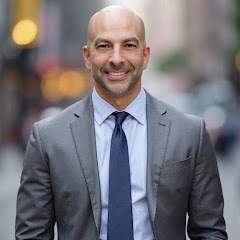 Peter Attia MD
Key Moments
Hair loss is a complex issue for men and women. Treatments range from prevention to surgical restoration, with advancements in technology and understanding.
Key Insights
Hair loss affects a significant portion of both men and women, with varying patterns and psychological impacts.
Genetics play a major role in male pattern baldness (MPB), while female hair loss can be multifactorial.
DHT is the primary driver of MPB, and its inhibition is a key medical treatment for men.
Non-surgical options like minoxidil, low-level laser therapy (LLLT), and Platelet-Rich Plasma (PRP) are available for both sexes.
Hair transplant surgery has evolved significantly, with Follicular Unit Extraction (FUE) offering less scarring than older strip harvesting methods.
Scalp health is crucial for hair growth, and addressing inflammation and microbial balance can be beneficial.
THE PREVALENCE AND IMPACT OF HAIR LOSS
Hair loss is incredibly common, affecting nearly 100 million Americans, with 80 million men and 46 million women experiencing some form of hair thinning or loss. While visible in men, women often experience thinning that is easier to mask, yet it can be equally or more devastating due to fewer socially acceptable solutions. The distress associated with hair loss varies greatly with age, with younger individuals often experiencing more significant psychological impact.
GENETIC AND HORMONAL FACTORS IN HAIR LOSS
In men, hair loss is predominantly genetically determined, with DHT (dihydrotestosterone) identified as the primary trigger for male pattern baldness. Approximately 20% of men in their 20s, 30% in their 30s, and 40% in their 40s show visible signs. While genetics are key in men, female hair loss is more multifactorial, influenced by hormones, age, childbirth, and conditions like PCOS. A very low DHT level does not preclude androgen sensitivity as a cause for hair loss in women.
MEDICAL AND NON-CHEMICAL TREATMENT OPTIONS
For men, finasteride (a DHT blocker) is highly effective, with a 90% chance of stabilization or improvement. Non-surgical options universally applicable include topical minoxidil (Rogaine), which helps keep follicles in the growing phase, and low-level laser therapy (LLLT) that imparts energy to hair follicles to stimulate growth. Platelet-Rich Plasma (PRP) therapy, derived from the patient's own blood, is gaining traction for its regenerative properties, promoting tissue repair and potentially enhancing hair growth.
ADVANCEMENTS IN HAIR TRANSPLANTATION
Hair transplantation has evolved from older, plug-like methods to sophisticated techniques. Follicular Unit Transplantation (FUT), historically involving strip harvesting, has largely been surpassed by Follicular Unit Extraction (FUE). FUE uses tiny punches to harvest individual follicular units, leaving minimal scarring and allowing for more natural-looking results and greater flexibility in hair styling, especially for patients with shorter haircuts or those coming from previous linear harvest procedures.
OPTIMIZING SCALP HEALTH AND HAIR GROWTH
The health of the scalp is paramount for optimal hair growth. Inflammation, often associated with conditions like dandruff or overgrowth of yeast on the scalp, can negatively impact follicle function. Therefore, maintaining a healthy scalp environment through appropriate cleansing and potentially specialized treatments is crucial. Understanding individual scalp pH, moisture levels, and sebum production helps in selecting the right shampoo and conditioner regimen.
PATIENT SELECTION AND COMBINATION THERAPIES
Effective hair loss management requires careful patient selection and often a combination of therapies. For men, finasteride combined with topical minoxidil and potentially LLLT is a common protocol. For women, topical minoxidil, LLLT, and PRP are frequently used, especially if they are of childbearing age. The goal is to prevent further loss, enhance existing hair, and, if necessary, restore density through transplantation, all tailored to the individual's specific condition and goals.
Mentioned in This Episode
●Supplements
●Products
●Software & Apps
●Organizations
●Drugs & Medications
●Concepts
●People Referenced
Common Questions
Dr. Alan Bauman is a board-certified hair transplant surgeon who initially trained as a general surgeon at Beth Israel in New York. He transitioned into hair restoration after being inspired by a patient's undetectable hair transplant outcome in the mid-1990s.
Topics
Mentioned in this video
A board certification for hair transplant surgeons that is not yet recognized by the American Board of Medical Specialties (ABMS), but is a rigorous process for demonstrating expertise in the field.
An organization that published a report ranking over-the-counter minoxidil (Rogaine) as the most disappointing hair loss treatment due to application difficulties and user non-compliance.
A research center at Mass General and Harvard where Dr. Michael Hamlin conducted extensive research on photobiomodulation and the mechanism of low-level laser therapy.
Conducted significant research at Wellman Center for Photomedicine (Mass General and Harvard) describing the mechanism of action of low-level laser therapy (LLLT).
A board-certified hair transplant surgeon who has treated over 20,000 patients and performed over 8,000 hair transplants. He initially trained as a general surgeon before specializing in hair restoration.
The primary hormonal trigger for male pattern hair loss in genetically susceptible individuals. Systemic agents like finasteride block the enzyme that converts testosterone into DHT.
A non-chemical hair loss treatment that works by imparting energy to hair follicles through photobiomodulation, specifically at the mitochondrial level via cytochrome C oxidase, leading to stronger hair growth.
The foundational theory of hair transplant surgery, stating that hair follicles from the sides and back of the scalp (resistant to DHT) will retain their genetic characteristics and continue to grow permanently even when transplanted to a balding area.
The 1-milligram formulation of finasteride, FDA-approved for hair loss in 1998.
The brand name for the first minoxidil formulation with propylene glycol, which was the first FDA-approved medication for hair loss. Often cited as disappointing due to application difficulty and scalp irritation.
A pharmaceutical drug that blocks the enzyme converting testosterone into DHT, used to mitigate male baldness. It has a 90% success rate in clinical trials over five years but can have sexual side effects.
A stronger DHT blocking agent than finasteride, blocking both pathways to DHT.
The 5-milligram formulation of finasteride, often used for benign prostatic hypertrophy (BPH).
Originally a blood pressure drug, it was found to cause hair growth as a side effect. Now used topically to keep hair follicles in the growing phase and prolong their growth cycle.
A mild anti-inflammatory steroid, a 'whiff' of which is included in the 82M compounded minoxidil formula to make it more tolerable to the scalp and address micro-inflammation.
A sophisticated compounded minoxidil formulation including minoxidil, tretinoin, and a mild anti-inflammatory to improve penetration, reduce irritation, and enhance hair growth, especially for women.
Another portable low-level laser therapy device, usually recommended for 20 minutes every other day.
A top-tier, physician-only low-level laser therapy device for hair growth with 312 diodes, designed as a cap for convenient daily home use (e.g., 6 minutes a day). Costs about $3500.
An autologous treatment derived from a patient's own blood, concentrated for platelets and growth factors to stimulate tissue regeneration, repair, and hair growth. Injected into the scalp to enhance existing follicles and prevent further loss.
A modern hair transplant technique using tiny punches (about 1mm) to harvest individual follicular units without scalpels or stitches, resulting in no linear scar and greater flexibility in hair styling.
A lab device used in Dr. Bauman's office to perform a complete blood count (CBC) to precisely measure platelet concentration before, during, and after PRP preparation to optimize efficacy.
The first manual, hand-turned instrument designed by Dr. Bauman for follicular unit extraction (FUE) in the early days of the technique, improving precision and viability.
A nitrous oxide delivery system used on demand to make PRP injections for hair restoration painless, often resulting in a 'dreamy' experience for patients.
More from Peter Attia MD
View all 333 summaries 135 min
381‒Alzheimer’s disease in women: how hormonal transitions impact the brain, new therapies, & more
 9 min
9 minIs Industrial Processing the Real Problem With Seed Oils? | Layne Norton, Ph.D.
 13 min
Cooking with Lard vs Seed Oils | Layne Norton, Ph.D.
 146 min
380 ‒ The seed oil debate: are they uniquely harmful relative to other dietary fats?
Ask anything from this episode.
Save it, chat with it, and connect it to Claude or ChatGPT. Get cited answers from the actual content — and build your own knowledge base of every podcast and video you care about.
Get Started Free