Key Moments
Training Lessons from CrossFit Champion Jason Khalipa | Tim Ferriss
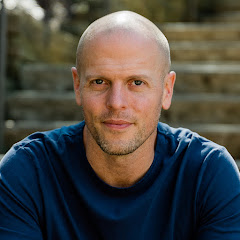 Tim Ferriss
Key Moments
Jason Khalipa on CrossFit training: prioritize warm-ups, master the back squat, and focus on dedication, consistency, and community for results.
Key Insights
Effective warm-ups focus on raising core body temperature, achieving full range of motion, and preparing for specific movement patterns. Sets a timer to maintain urgency.
The back squat is a foundational movement that stresses the entire system, crucial for building pure strength. Consistent, progressive overload using a 5x5 or similar linear progression is recommended.
Hard work and consistency are paramount. Jumping between programs is less effective than sticking with a good program and executing it with purpose and dedication.
Community and having a coach are vital for pushing limits and achieving higher levels of performance. Working out with others fosters motivation and accountability.
For novice and intermediate athletes, prioritize technique over ego. Take a step back to build a solid foundation, focusing on efficient movement before increasing weight significantly.
When setting goals, consider powerlifts (squat, bench, deadlift) and conditioning/gymnastics before highly complex Olympic lifts, as powerlifts offer clearer progression paths.
Proper technique in fundamental movements like push-ups (elbows in) and deadlifts (maintaining spinal orientation) is crucial for functional carryover and injury prevention.
Front squats and overhead squats offer specific benefits, but for most, the back squat is king, followed by the front squat due to its carryover to Olympic lifts, while overhead squats require significant shoulder mobility.
THE IMPORTANCE OF EFFECTIVE WARM-UPS
Jason Khalipa emphasizes that warm-ups serve multiple crucial purposes: raising core body temperature, preparing the body through a full range of motion, and activating specific movement patterns for the upcoming workout. He advises setting a timer (10-15 minutes) to create a sense of urgency and prevent excessive session length. The focus should be on 'big movers' like rowing, running, and squats, ensuring joints are opened and muscles are prepared for the stresses of the workout, such as opening up the hamstrings and Achilles for box jumps.
PERFECTING THE BACK SQUAT TECHNIQUE
The back squat is highlighted as a foundational movement that taxes the entire system, essential for building pure strength. Khalipa details key points of performance: weight planted in the heel, a tight torso and lower back (without hyperextension), the crease of the hip below the knee, and knees driven out. He stresses addressing the bar with purpose, setting up foot and hand placement consistently, and taking a deep breath before lifting. Proper unracking and reracking techniques also contribute to safety and efficiency, especially when fatigued.
PROGRAMMING AND PROGRESSION FOR STRENGTH
Khalipa discusses programming strategies, favoring a 5x5 progression for its balance of challenge and efficiency, allowing for focused time under tension and quality reps. He suggests a linear progression, increasing weight incrementally (e.g., 10 lbs weekly, or 5 lbs twice weekly) until the target reps can no longer be completed. At that point, he advises reverting to a previous weight and continuing with smaller increments. The goal is consistency and maintaining technique while steadily increasing load, rather than chasing maximal lifts at the expense of form.
THE POWER OF DEDICATION AND COMMUNITY
A significant takeaway is the critical role of hard work, dedication, and consistency over constantly switching programs. Khalipa argues that results stem from sustained effort, not program-hopping. He strongly advocates for the influence of community and coaching, noting that being surrounded by motivated individuals and having guidance can elevate performance beyond what's possible in isolation. The atmosphere in a gym with others pushing each other fosters a sense of camaraderie that drives progress.
BUILDING A SOLID FOUNDATION FOR NOVICES
For athletes new to CrossFit, Khalipa stresses the importance of being coachable and prioritizing technique over ego. He warns against the temptation to rapidly increase weight if movement mechanics are inefficient. This approach is likened to Jiu-Jitsu, where muscling through moves might work initially but becomes unsustainable against skilled opponents. Building a strong foundation with proper technique ensures long-term progress and injury prevention, allowing for more effective weight increases later.
STRATEGIC GOAL SETTING IN FITNESS
When setting goals for athletes, Khalipa recommends prioritizing powerlifts (squat, bench, deadlift) and conditioning or gymnastics movements before Olympic lifts. While Olympic lifts are highly beneficial, their complexity requires significant time to perfect. Powerlifts offer more direct and achievable progression paths. Examples of attainable goals include a double bodyweight squat, a two-and-a-half times bodyweight deadlift, or a 1.5 times bodyweight bench press, alongside measurable improvements in mile time or mastering skills like pull-ups and muscle-ups.
FUNDAMENTAL MOVEMENTS AND COMMON MISTAKES
Khalipa identifies common technical errors, such as flaring elbows in push-ups, which compromises shoulder health and functional carryover. He emphasizes movements that move a large load over a long distance quickly, contrasting them with less powerful isolation exercises like calf raises. Ensuring full range of motion, particularly in squats (hip crease below knee), is crucial for functionality outside the gym, enabling everyday activities. He advocates for a squatting depth that allows you to transition smoothly from low surfaces without assistance.
UNDERSTANDING SQUAT VARIATIONS AND THEIR BENEFITS
Discussing squat variations, Khalipa positions the back squat as king for overall benefit, followed by the front squat, which has strong carryover to Olympic lifts like the clean and thruster. The front squat requires significant lat flexibility and proper elbow positioning to avoid wrist pain. The overhead squat, while excellent for midline stability due to the increased lever arm, demands substantial shoulder mobility and is challenging for many. For most people, a gradual progression from back squat to front squat is recommended, moving to overhead squats once mobility is sufficient.
TECHNIQUE AND PROGRAMMING INSIGHTS FROM TOP ATHLETES
Learning from elite powerlifters like Mark Bell and Louie Simmons has taught Khalipa the value of unwavering dedication to one's craft. He highlights authenticity, passion for coaching, and an open-minded approach to different systems and body types as qualities of a good coach like Bell. He also touches on technical aspects such as bracing for the deadlift, advocating for a position of peak tension without compromising spinal integrity. The core principle remains: never move the spine under load; maintain the established orientation.
THE DEADLIFT: TECHNIQUE AND PROGRESSION
For the deadlift, Khalipa's gym starts with the conventional stance due to its carryover to Olympic lifts. When an athlete is stuck at a certain weight (e.g., 315 lbs), he looks at their position, specifically how well they engage hamstrings by pulling the knees back. Techniques like deficit deadlifts (standing on an elevated surface to increase range of motion) or banded deadlifts can help build strength and improve position, especially for enhancing hamstring engagement and maintaining spinal alignment during the lift.
Mentioned in This Episode
●Organizations
●Concepts
●People Referenced
Jason Khalipa's Training Principles
Practical takeaways from this episode
Do This
Avoid This
Common Questions
A warm-up aims to increase core body temperature, take the body through a full range of motion, and prepare specific movement patterns for the intended workout. It should ideally take about 10-15 minutes.
Topics
Mentioned in this video
CrossFit Games champion and guest on the podcast, discussing training methodologies, squat techniques, and programming.
Host of the podcast, interviewing Jason Khalipa about training and fitness.
Founder of Westside Barbell, cited as an inspiration for dedication to the craft of strength training, exemplified by his athletes' intense training sessions.
Mentioned as a friend and peer in powerlifting, known for his goal of back squatting 1000 lbs, illustrating a focus on specialized strength over general fitness.
More from Tim Ferriss
View all 694 summaries 34 min
PRISONER NO MORE: The True Story of Tae Jin Park
 71 min
The Most Incredible Transformation I’ve Ever Seen — Jerzy Gregorek on Cerebral Palsy and Coaching
 89 min
From Food Stamps to the Super Bowl War Room — NFL Chief Security Officer Cathy Lanier
 55 min
From Dad’s Basement to Selling Two Companies — 4-Hour Workweek Success Story
Ask anything from this episode.
Save it, chat with it, and connect it to Claude or ChatGPT. Get cited answers from the actual content — and build your own knowledge base of every podcast and video you care about.
Get Started Free