Key Moments
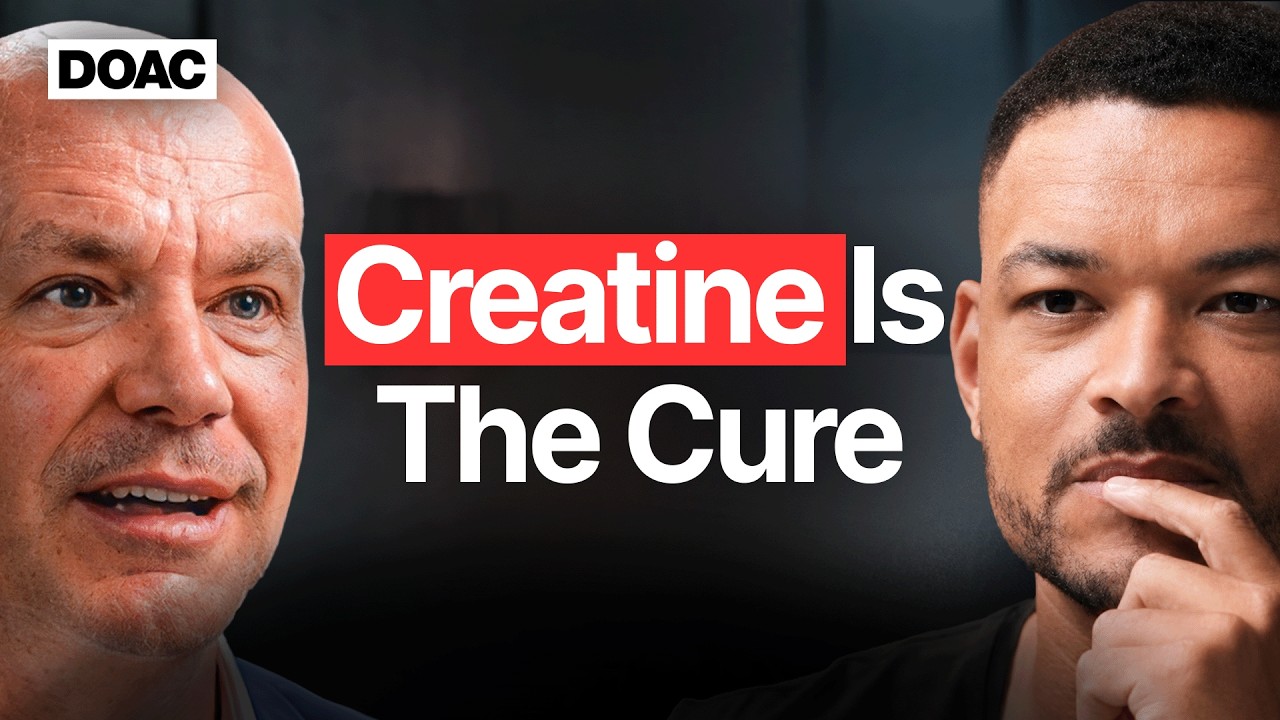
The Truth About Creatine & Exercise! 30% Of People Will Die From This! The Healthy Ageing Doctor
 The Diary Of A CEO
Want to know something specific about what's covered?
We've already dissected every moment. Ask and we will deliver (with timestamps).
Key Moments
Dr. Vonda Wright discusses bone health, muscle, nutrition, and mindset for longevity, emphasizing personalized approaches and the interconnectedness of body and brain health.
Key Insights
Bone health is crucial, impacting cognition and longevity. Osteoporosis significantly increases fracture risk, with severe consequences.
Estrogen plays a vital role in bone, muscle, and joint health, explaining faster bone density loss in women post-menopause.
Muscle is a metabolic endocrine organ that releases beneficial proteins like irisin and myostatin, crucial for longevity and repair.
Personalized health plans, based on individual biomarkers and genetic makeup, are the future of preventative medicine.
The 'critical decade' for health habits is between 35-45, emphasizing baseline labs, resistance training, and cardiovascular health.
Creatine supplementation is beneficial for everyone, not just bodybuilders, supporting muscle, brain, and bone health.
THE CRITICAL ROLE OF BONE HEALTH
Dr. Vonda Wright emphasizes the often-overlooked importance of bone health, highlighting that 50% of women and 2 million men in the US will face osteoporosis. Low bone density is linked to cognitive decline and a significantly increased risk of death after a hip fracture. Factors contributing to bone fragility include aging, insufficient bone building in youth, sedentary lifestyles, and societal pressures on women's body image. However, maintaining bone density is achievable through a lifestyle focused on muscle, bone, nutrition, and mindset.
HORMONAL INFLUENCES AND LIFESPAN CHANGES
Hormonal shifts, particularly the plummeting estrogen levels during menopause, significantly impact bone density, muscle, tendons, and ligaments. While men generally maintain bone density longer due to testosterone and genetics, women experience a more rapid decline. This hormonal influence highlights that our bodies change throughout different life stages, requiring tailored approaches to health and nutrition. For instance, women in midlife may need specific nutrients as their gut function becomes less efficient.
BONES AS MASTER COMMUNICATORS
Beyond their structural role, bones are vital 'master communicators.' Bone-building cells release proteins like osteocalcin, which travel to the brain for neuroprotection, aid in neuron synthesis, improve insulin sensitivity, and can even influence testosterone production in men. This demonstrates that bone health is intrinsically linked to overall bodily function, impacting everything from brain health to metabolic regulation, challenging the perception of bones as merely a passive framework.
PRECISION LONGEVITY AND PERSONALIZED APPROACHES
The era of one-size-fits-all medicine is evolving into 'precision longevity.' By understanding individual DNA and biomarkers, personalized health plans can be devised. This includes targeted nutrition based on specific needs, like managing senescent cells or addressing inflammation, and exercise tailored to individuals, such as identifying one's 'Fat Max' heart rate zone for optimal mitochondrial function. This approach moves beyond generic guidelines to address what the body truly needs at a specific time.
THE IMPORTANCE OF MUSCLE AND METABOLIC FUNCTION
Muscle is not just for aesthetics; it's a metabolic endocrine organ that plays a critical role in longevity. Skeletal muscle contraction releases proteins like ?, a longevity protein that aids in organ repair, and irisin, which benefits bone and converts white fat to brown fat. Maintaining muscle mass, especially through resistance training, is crucial for glucose regulation, preventing insulin resistance, and enhancing resilience. It's never too late to build muscle, even in older age, by starting gradually and progressively.
THE INTERCONNECTEDNESS OF BODY AND BRAIN HEALTH
There is a profound link between bone health, muscle, and cognitive function, often referred to as the 'bone-brain axis.' Low bone density is correlated with higher rates of cognitive decline. Furthermore, the critical decade for establishing health habits (35-45) is vital for preventing future metabolic dysfunction, which can lead to pre-diabetes and, subsequently, Alzheimer's disease. Prioritizing sleep, nutrition, and consistent exercise proactively supports both physical and mental vitality throughout life.
PRE-DIABETES AND THE CRITICAL DECADE
Pre-diabetes is a serious condition often overlooked, with 96 million Americans affected. It's a precursor to Type 2 diabetes and has significant links to Alzheimer's disease. The 'critical decade' of 35-45 is crucial for addressing metabolic health by establishing consistent exercise, anti-inflammatory nutrition, and regular medical check-ups. Neglecting pre-diabetes can compound age-related metabolic changes, especially for women losing estrogen post-menopause.
NUTRITION AND SUPPLEMENTATION STRATEGIES
A diet rich in protein and vegetables is essential for maintaining muscle mass and overall health. High-quality protein, particularly from sources rich in leucine, is key. Creatine supplementation is widely researched and beneficial for muscle, brain, and bone health for all demographics, not just athletes. Vitamin D and magnesium are also crucial for bone health, alongside other micronutrients. Focusing on nutrient density and targeted supplementation can support an 'unbreakable' lifestyle.
ADDRESSING MENOPAUSE AND MUSCULOSKELETAL SYMPTOMS
Menopause and perimenopause bring significant hormonal changes that impact musculoskeletal health. Symptoms such as arthralgia (widespread pain), frozen shoulder, bone density loss, and increased tendon/ligament issues are common. Hormone replacement therapy, when based on science and not fear, can help prevent these issues by supporting estrogen receptors. Developing 'menopause literacy' and building proactive lifestyle habits before menopause sets in is essential for navigating this transition.
PREVENTING BACK PAIN AND EMBRACING MOVEMENT
Lower back pain, a leading cause of global disability, is often linked to sedentary lifestyles. Prolonged sitting, weak core muscles, and lack of exercise contribute significantly. Differentiating between general back pain and nerve impingement is crucial. Incorporating more movement, such as using standing desks, walking treadmills, and even standing meetings, can counteract the negative effects of prolonged sitting. Regular exercise, particularly core strengthening, is vital for spinal health and preventing pain.
THE MOTIVATION TO AGE WITH POWER
The key to sustained health behaviors is not a distant promise of future well-being but feeling good every single day. Focusing on immediate benefits like feeling like a 'badass' after lifting weights or experiencing improved cognitive function can drive consistent action. While tragedy can be a motivator, cultivating self-love and valuing oneself enough to invest daily in health is the ultimate driver for long-term adherence to an 'unbreakable' lifestyle that promotes aging with power and vitality.
RUNNING, BIOMECHANICS, AND INJURY PREVENTION
While running builds cardiovascular fitness, it's a single-leg sport that can lead to injuries if supporting muscles, particularly the glutes and core, are not adequately strong. Runners often experience issues like Runner's Knee or glute injuries due to muscle imbalances. Assessments like the Trendelenburg sign can reveal these weaknesses. Focusing on single-leg exercises, proper biomechanics, and addressing tightness or weakness in specific muscle groups is essential for injury prevention and optimizing running performance.
Mentioned in This Episode
●Supplements
●Products
●Tools
●Companies
●Books
●Concepts
●People Referenced
Common Questions
If you break your hip, there's a 50% chance you won't return to your previous level of function, and a 30% chance of death due to complications from the fracture, bed rest, or infections.
Topics
Mentioned in this video
A condition characterized by low bone density, which increases the risk of fractures, cognitive decline, and significantly impacts quality of life, especially in women.
The period when estrogen levels plummet in women, critically affecting muscle, bone, tendon, ligament, and fat health, leading to faster bone loss and various musculoskeletal issues.
Cells that cease to divide but remain metabolically active, contributing to aging and disease. Mentioned in the context of personalized nutrition plans to address high loads of these cells.
A clinical test used to assess the strength of gluteal muscles by observing pelvic stability and knee position during a single-leg squat, often revealing muscle imbalances that can lead to running injuries.
A protein released by bone-building cells (osteoblasts) that acts as a master communicator throughout the body, affecting brain health, insulin sensitivity, muscle glucose uptake, and testosterone production in men.
A method used to determine the 'fat Max,' the point at which mitochondria in cells are most efficient at burning fat before switching to carbohydrates, used to personalize exercise prescriptions.
More from The Diary Of A CEO
View all 493 summaries 108 min
EXCLUSIVE - Vice President JD Vance: They Tricked Me About Donald Trump, But Everything Changed!
 76 min
Anti-Aging Expert: Creatine Is The Fat Loss Secret Doctors Don’t Tell You - Dr. Darren Candow
 117 min
Archaeology WARNING: They Secretly Found Antarctica 300 Years Before Us! - Graham Hancock
 153 min
EMERGENCY DEBATE: The Death Of The Middle Class! The Pitch Forks Are Coming!
Ask anything from this episode.
Save it, chat with it, and connect it to Claude or ChatGPT. Get cited answers from the actual content — and build your own knowledge base of every podcast and video you care about.
Get Started Free