Key Moments
The End of Global Order: A Conversation with Peter Zeihan and Ian Bremmer (Episode #288)
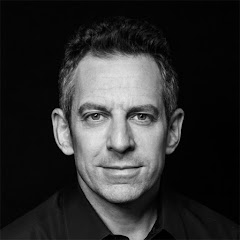 Sam Harris
Want to know something specific about what's covered?
We've already dissected every moment. Ask and we will deliver (with timestamps).
Key Moments
Global order is ending due to deglobalization and demographic collapse, leaving nations like China struggling while the US fares better.
Key Insights
The post-WWII global order, secured by US naval power, is collapsing as the US withdraws its security guarantees.
Demographic collapse, driven by urbanization and lower birth rates, is leading to aging populations and a shrinking workforce globally.
China faces severe demographic challenges, with a rapidly aging population and a shrinking workforce, potentially crippling its economy.
The US is projected to fare better due to its more favorable demographics and geographic advantages, insulating it somewhat from global disruptions.
The war in Ukraine and energy crises are accelerating deglobalization, exposing vulnerabilities in economies like Germany's, which relies heavily on Russian energy.
Globalization, once a driver of unprecedented growth, is becoming unsustainable due to demographic shifts and geopolitical fragmentation.
THE COLLAPSE OF THE POST-WAR GLOBAL ORDER
The world order established after World War II, characterized by global trade and secure shipping lanes, is nearing its end. This system relied on the United States' dominance of naval power to protect commerce worldwide. However, with the end of the Cold War and shifting domestic priorities, the US is gradually withdrawing its security guarantees. This disengagement leaves a vacuum, challenging the foundation of global interconnectedness and forcing nations to reconsider their reliance on international supply chains and stability.
THE DRIVING FORCES OF DEGLOBALIZATION
Deglobalization is driven by a confluence of factors, including the US's strategic decision to cease acting as the global guarantor of trade and the geopolitical landscape evolving to include more regional powers. The US military is no longer optimized for protecting global trade routes, and rivals have emerged, making a return to a universally protected global commerce model unlikely. Furthermore, a growing sentiment within the US suggests that globalization has yielded a raw deal, fueling populism and a desire for national self-interest.
DEMOGRAPHIC COLLAPSE: A SLOW-MOTION CATASTROPHE
A critical driver of the impending global disorder is demographic collapse, stemming from mass urbanization and industrialization post-WWII. As populations move to cities and birth rates decline, the foundation of the demographic pyramid narrows, while life expectancies lengthen. This results in aging societies with fewer young workers to support a growing elderly population. This trend is not just a future concern but a present reality actively reshaping economies and societies worldwide, creating an economic model for which we have no historical precedent.
CHINA'S DEMOGRAPHIC CRISIS
China, once lauded for its massive labor force, is facing a severe demographic crisis. Recent data suggests its population may be shrinking far faster than anticipated, with projections indicating a population of less than 600 million by the end of the century. This rapid aging and shrinking workforce threaten China's economic engine, its ability to consume, and its global influence. The country historically has not embraced immigration as a solution, leaving it vulnerable to the consequences of its demographic trajectory.
AMERICA'S RELATIVE ADVANTAGE
In stark contrast to many developed nations, the United States is expected to fare relatively better due to its more favorable demographic profile and geographic advantages. While also experiencing aging, its workforce is not contracting as severely as in countries like China, Japan, or Germany. Coupled with abundant natural resources, these factors position the US to be an 'island of relative advantage' in a fracturing global economy, better equipped to navigate the challenges of deglobalization and resource scarcity.
IMPLICATIONS OF THE UKRAINE WAR AND ENERGY CRISES
The war in Ukraine has acted as an accelerant for deglobalization, exposing the fragility of global supply chains and energy markets. Germany, in particular, faces immense pressure as its reliance on Russian energy is revealed. The disruption of natural gas supplies, crucial for industrial input, threatens its manufacturing base. While Germany is making rapid adjustments, the potential for long-term energy insecurity and economic dislocation highlights the vulnerability of nations deeply integrated into the pre-collapse global system.
THE END OF EASY GLOBAL COMMERCE
Globalization, the engine of unprecedented economic growth and human development, is becoming unsustainable. The core logic of globalization relies on consumption and the free flow of goods, but this is undermined by demographic shifts and geopolitical fragmentation. As more countries face aging populations and declining workforces, the ability to export and maintain global supply chains will diminish. This suggests a future of increasing scarcity and limited global economic interaction, forcing a return to more regionalized and self-sufficient economic models.
Mentioned in This Episode
●Supplements
●Products
●Software & Apps
●Companies
●Organizations
●Books
●Concepts
●People Referenced
Common Questions
Peter Zeihan argues that the world as we knew it ended in 2019, and the previous era of globalization and economic growth is over. He predicts widespread global disorder and scarcity due to deglobalization and demographic collapse.
Topics
Mentioned in this video
One of the charities receiving donations through the "100 days of giving" initiative.
One of the charities receiving donations through the "100 days of giving" initiative.
Publication where Ian Bremmer serves as a foreign affairs columnist and editor at large.
Institution where Ian Bremmer teaches.
One of the charities receiving donations through the "100 days of giving" initiative.
Mentioned as a source of previous, less dire population decline projections for China.
Global research and consulting firm founded by Ian Bremmer.
Mentioned in the context of Finland and Sweden joining, and Russia's inability to effectively counter this expansion.
Mentioned in the context of a G20 economy (Russia) being severed from the G7 for the first time in history.
One of the charities receiving donations through the "100 days of giving" initiative.
One of the charities receiving donations through the "100 days of giving" initiative.
Discussed in the context of a G20 economy (Russia) being severed from it for the first time in history.
One of the charities receiving donations through the "100 days of giving" initiative.
The source of a recent report predicting a significant decline in China's population.
Mentioned as joining NATO, despite Putin's threats, showing Russia's limited leverage.
Mentioned as having worked for 25 years despite demographic challenges due to its ability to sell to the wider world; key in granting Ukraine candidate member status.
Peter Zeihan's new book, which posits that the world as we knew it ended in 2019 due to deglobalization and demographic collapse.
Ian Bremmer's most recent book, discussing how three threats and our response will change the world.
A New York Times bestseller by Ian Bremmer.
Mentioned as a populous candidate and a reflection of the US political shift away from global engagement.
Author of a book on global development and human progress, cited as evidence of the benefits of globalization.
President and founder of Eurasia Group, co-hosting the discussion on Peter Zeihan's book, offering a more nuanced perspective on deglobalization.
Mentioned as calling Putin his best buddy on the global stage.
Host of the Making Sense podcast, introducing Peter Zeihan and Ian Bremmer and discussing their book and its themes.
Geopolitical strategist and author of 'The End of the World is Just the Beginning,' presenting a dire view of deglobalization and demographic collapse.
Mentioned in the context of the rise of populism and the idea that the US has received a raw deal from globalization.
Author whose work on economic inequality is cited as a reason for populism and anti-establishment sentiment related to globalization's impact.
Chancellor of Germany, whose government is described as stable and moving smartly on energy diversification post-Ukraine invasion.
Mentioned as having had a conversation with Sam Harris about Christianity, which is available in 'The Best of Making Sense' feed.
Writer and producer of a new audio course on time management for the Waking Up app, author of '4000 Weeks'.
An initiative launched by the Waking Up app to give away $10,000 daily to effective charities over 100 days.
Russia is the world's number one exporter of natural gas, which is crucial for fuel and industrial input, especially in Germany.
Russia is the world's largest source of fertilizer and its components, making its role crucial for global agriculture.
Mentioned as joining NATO, despite Putin's threats, showing Russia's limited leverage.
A region in Ukraine that Russia aimed to take, discussed in the context of Putin's strategic miscalculations.
Discussed as facing severe demographic collapse, which will cripple its economy and competitiveness, making it unlikely to retain its global influence.
The country invaded by Russia, whose conflict has significant global economic and geopolitical ramifications, including affecting energy supplies and leading to sanctions against Russia.
Mentioned as a region where China previously exported surplus labor, creating competition for local jobs.
Its collapse is described as the greatest humiliation of Putin's lifetime, motivating his actions.
Mentioned as a region where China previously exported surplus labor, creating competition for local jobs.
Mentioned as a country that strongly opposes Russia's invasion of Ukraine.
Mentioned as a country with demographic challenges that is still seeking to do business with China.
Mentioned in relation to the land bridge to Russia during the Ukraine conflict.
Discussed as a declining superpower whose commitment to global security has waned, but is predicted to fare better than China due to its demographics.
Discussed as having a vulnerable industrial sector heavily reliant on Russian energy, facing significant economic challenges due to the Ukraine war.
A metal Russia plays a major role in exporting, essential for various industries.
A metal Russia plays a major role in exporting, essential for various industries.
A metal Russia plays a major role in exporting, essential for various industries.
A key component of fertilizer, with Russia supplying 40% of the global supply.
A metal Russia plays a major role in exporting, essential for various industries.
A metal Russia plays a major role in exporting, essential for various industries.
More from Sam Harris
View all 300 summaries 34 min
Is Psychedelic Therapy Ready for FDA Approval?
 26 min
You Lose Interest the Moment You Realize It's AI
 28 min
Michael Pollan on Consciousness, Psychedelics, and the Limits of Neuroscience
 22 min
Why the Stock Market Has Become a Casino
Ask anything from this episode.
Save it, chat with it, and connect it to Claude or ChatGPT. Get cited answers from the actual content — and build your own knowledge base of every podcast and video you care about.
Get Started Free