Key Moments
The Best Kept Secret In History?: A Conversation with Brian Muraresku (Episode #346)
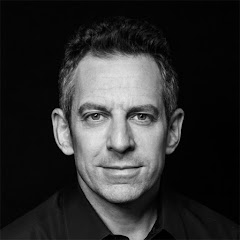 Sam Harris
Want to know something specific about what's covered?
We've already dissected every moment. Ask and we will deliver (with timestamps).
Key Moments
Ancient mystery religions may have influenced Christianity, possibly through psychedelic rituals.
Key Insights
The Eleusinian Mysteries and other ancient mystery religions may have involved the use of psychedelic substances.
There's a hypothesis that these ancient practices and their potential psychoactive components influenced early Christianity.
The Gospel of Thomas and Dead Sea Scrolls offer alternative perspectives on Jesus and early Christian beliefs, aligning with mystical traditions.
Early Christianity, especially in its nascent stages, shared characteristics with mystery cults, including rituals and a focus on personal spiritual journeys.
The concept of consuming divine substance, mirroring Dionysian rituals, appears in Christian theology, specifically the Eucharist.
The persistence and profound impact of these mystery traditions suggest a significant spiritual and psychological dimension that traditional explanations may overlook.
THE IMMORTALITY KEY AND THE MYSTERY RELIGIONS
Brian Muraresku's book, 'The Immortality Key,' explores the fascinating possibility that ancient mystery religions, particularly the Eleusinian Mysteries, may have had psychedelic roots. These ancient rites, centered around the goddess Demeter and the myth of Persephone, are thought to have offered initiates a profound, life-altering experience of death and rebirth. Muraresku posits that the potent effects attributed to these mysteries, described by figures like Cicero as civilizing and offering a better hope for dying, could suggest an external pharmacological agent, such as a psychedelic potion known as the Kykeon, was involved.
THE ELEUSINIAN MYSTERIES: A CULMINATING LIFE EXPERIENCE
The Mysteries of Eleusis, which persisted for nearly 2,000 years, were a central aspect of ancient Greek spiritual life. Participants underwent a multi-day ritual, including a procession and fasting, culminating in an experience within the sanctuary dedicated to Demeter. This experience was often described as an 'eye-opening event' where initiates felt they had 'seen it all' and were convinced of their own immortality. The transformative nature and reproducibility of this experience led scholars like Ruck, Hoffman, and Wasson to propose that a psychoactive substance was consumed, a theory that initially faced significant scholarly resistance.
THE PAGAN CONTINUITY HYPOTHESIS AND EARLY CHRISTIANITY
The 'Pagan continuity hypothesis' suggests that pre-Christian Greco-Roman mystery traditions carried over into the early Christian era. Christianity, in its first few centuries, was an underground religion with no fixed dogma or centralized structure, bearing similarities to these mystery cults. Early Christians, often Greek speakers familiar with these traditions, gathered under figures like Jesus, whose narratives and promises sometimes mirrored those found in Dionysian cults, such as the consumption of a divine 'blood' in the form of wine to achieve unity with the god.
DIONYSIAN CULTS AND THE THEOLOGY OF CONSUMPTION
The cult of Dionysus, prevalent throughout the ancient Mediterranean, focused on themes of mystical rapture, delirium, and madness, often involving the consumption of wine, referred to as the god's blood. This practice of 'theophagy'—eating the god to become the god—offered initiates a promise of immortality. Muraresku draws striking parallels between these Dionysian rituals and the central Christian sacrament of the Eucharist, where the consumption of bread and wine symbolizes the body and blood of Christ, a concept that was reportedly drastic and even cannibalistic to ancient Jewish sensibilities.
THE GNOSTIC GOSPELS AND THE DEAD SEA SCROLLS
The discovery of texts like the Nag Hammadi library, including the Gospel of Thomas, and the Dead Sea Scrolls has significantly reshaped our understanding of early Christianity. These texts often portray Jesus not as a divine Son of God to be worshiped, but as a guide or mentor offering direct, unmediated knowledge of the divine (gnosis). This Gnostic perspective, emphasizing an inner divine spark and personal salvation, aligns more closely with the experiential and mystical nature of the ancient mystery traditions than with later orthodox Christian doctrines.
THE STRANGE ICONOGRAPHY OF CHRISTIANITY
From a modern or external perspective, many core elements of Christian iconography and ritual appear fundamentally strange, particularly when stripped of their long-standing tradition. The Eucharist, viewed as a symbolic act of consuming Christ's body and blood, can be seen as echoing ancient sacrificial and even cannibalistic cult practices. The idea of human sacrifice for the sins of humanity, a concept that evolved from animal sacrifice in the Old Testament, is a profound and, to many outside the tradition, perplexing tenet of Christian theology.
Mentioned in This Episode
●Supplements
●Software & Apps
●Organizations
●Books
●Drugs & Medications
●Concepts
●People Referenced
Common Questions
The book's central thesis is that ancient Greek mystery religions, particularly the Eleusinian Mysteries, may have involved the consumption of psychedelic substances. Muraresku proposes that this practice could have influenced early Christianity.
Topics
Mentioned in this video
Brian Muraresku's book that explores the potential role of psychedelics in ancient mystery religions and early Christianity.
Ancient Jewish religious manuscripts discovered near the Dead Sea, relevant to the study of early religious texts and beliefs.
A collection of early Christian and Gnostic writings that offer alternative perspectives to the canonical New Testament, discussed in relation to early Christianity's mystical aspects.
A 1978 book by R. Gordon Wasson, Albert Hofmann, and Carl Ruck, which proposed that the ancient Greeks consumed a psychedelic potion in the Eleusinian Mysteries.
A collection of Gnostic texts discovered in Egypt in 1945, including the Gospel of Thomas, which provides insight into early Christianity and Gnosticism.
A Gnostic Gospel discovered among the Nag Hammadi library, portraying Jesus as a spiritual guide for personal salvation rather than solely the Son of God.
A verse in the Gospel of John that discusses Jesus's teaching on eating his flesh and drinking his blood, which is interpreted as a theophagy and compared to ancient mystery rites.
The chemist who first synthesized LSD and co-authored 'The Road to Eleusis', proposing the psychedelic use in the Eleusinian Mysteries.
Macedonian king whose conquests spread Hellenistic culture and influence across the ancient Mediterranean and beyond, impacting the reach of mystery religions.
Author of 'The Immortality Key: The Secret History of the Religion with No Name', who discusses the possible psychedelic roots of ancient mystery religions and early Christianity.
Host of the Making Sense podcast, interviewing Brian Muraresku about his book and its theories.
Ethnologist who rediscovered psilocybin-containing mushrooms in Oaxaca, Mexico, and co-authored 'The Road to Eleusis'.
Professor of Classics at Boston University and co-author of 'The Road to Eleusis', known for his theories on psychedelic use in ancient Greece.
Roman Emperor and Stoic philosopher, mentioned as a potential participant in ancient mysteries.
A collection of religious ideas and systems that emerged in the first century AD among early Christian and Jewish groups, emphasizing direct, unmediated knowledge (gnosis) of the divine.
A philosophical system based on Plato's teachings, particularly influential in late antiquity, which explores concepts of the One and the soul's ascent to the divine.
Greek god associated with wine, fertility, ritual madness, and theater, whose mysteries are compared to early Christian practices.
Substances that alter perception, mood, and cognitive processes, proposed as a key component in ancient mystery rites, including the Eleusinian Mysteries and potentially early Christianity.
The Catholic doctrine that the bread and wine of the Eucharist literally become the body and blood of Christ, a concept many modern Catholics reportedly do not believe in.
Philosophical system originating with Plato, characterized by idealism and the concept of Forms, which influenced later thought, including Neoplatonism and early Christian theology.
More from Sam Harris
View all 306 summaries 92 min
Is AI Already Conscious? (FULL EPISODE)
 25 min
Why Sam Harris Is Still Angry at Ezra Klein
 30 min
Can AI Cure Loneliness?
 25 min
Why Is Everyone So Unhappy?
Ask anything from this episode.
Save it, chat with it, and connect it to Claude or ChatGPT. Get cited answers from the actual content — and build your own knowledge base of every podcast and video you care about.
Get Started Free