Key Moments
Manolis Kellis: Meaning of Life, the Universe, and Everything | Lex Fridman Podcast #142
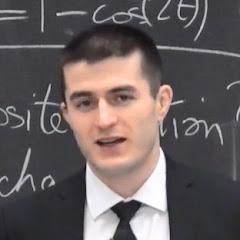 Lex Fridman
Key Moments
Manolis Kellis discusses life's meaning through music, biology, and philosophy, emphasizing human cognition and interconnectedness.
Key Insights
Music profoundly shapes life, offering solace, perspective, and emotional expression, often mirroring life's dualities of joy and sorrow.
Human cognitive evolution is deeply intertwined with music and rhythm, suggesting language may have evolved from these artistic expressions.
Creativity and artistic expression are not mere diversions but are fundamental to cognitive function, problem-solving, and a holistic understanding of the world.
The search for meaning is inherent to human nature and is, in itself, the meaning of life, driving both individual and collective growth.
Humanity's complex cognitive hardware and rapidly evolving 'software' (language, culture, education) make us unique, enabling us to perceive and interact with multiple layers of reality.
Interconnectedness, through shared genes and the horizontal transfer of ideas (memes), is a fundamental aspect of human existence and progress.
Embracing mistakes and uncertainty, and focusing on the present while learning from the past, leads to a richer, more meaningful life.
MUSIC AS A LIFE COMPASS
Manolis Kellis illustrates how music serves as a profound guide through life, shaping personal experiences and offering solace. He shares how Greek traditional songs, with their raw acknowledgment of hardship and longing for a better life, deeply influenced him. These songs, often juxtaposing struggle with hope, provided a framework for understanding adversity. Similarly, Western pop music offered lessons in self-reflection and responsibility. The ability of music to embed complex emotions and narratives, touching both logical and emotional centers of the brain, underscores its significance in human experience.
THE EVOLUTIONARY ROOTS OF LANGUAGE AND ART
Kellis proposes that language may have evolved from music and rhythmic rituals. He posits that complex mating dances and rituals in early human cultures, which required sequential organization and expression, served as a precursor to the cognitive abilities necessary for language development. This suggests that artistic expression, far from being a secondary faculty, is a fundamental evolutionary driver, essential for developing the intelligence and social coordination required for complex thought and communication.
THE PRIMACY OF CREATIVITY AND HOLISTIC THINKING
Creativity is presented not as separate from logical or scientific pursuits but as integral to them. Kellis argues that engaging in diverse activities, like playing music or sports, enhances three-dimensional spatial reasoning and complex concept formation, vital for mathematics and science. This holistic approach, stretching the brain in multiple directions and connecting emotional and cognitive selves, is crucial for innovation and problem-solving, proving that 'all work and no play' can indeed lead to a dull mind and diminished capabilities.
THE SEARCH FOR MEANING AS LIFE'S PURPOSE
The pursuit of life's meaning, often seen as an unanswerable or even futile endeavor (symbolized by the number 42), is, in Kellis's view, the very essence of life itself. He argues that this search is an inherent human drive that makes life beautiful and worthwhile. The meaning is not in finding a definitive answer, but in the ongoing process of seeking, questioning, and exploring, both individually and collectively. This continuous journey enriches existence and reflects humanity's unique capacity for abstract thought beyond basic survival.
HUMANITY'S UNIQUE COGNITIVE STRATIFICATION
Kellis highlights human uniqueness in our ability to perceive reality across multiple layers—from atomic and quantum levels to the vastness of space-time and abstract concepts. Unlike other species, which operate on a single or limited set of sensory inputs, humans possess the cognitive hardware and 'software' (language, culture, science) to integrate and understand these diverse strata. This capacity for comprehensive awareness, extending from the smallest particles to the grandest cosmic phenomena, distinguishes humanity and allows for deep appreciation and understanding of the universe.
THE CO-EVOLUTION OF GENES AND MEMES
Human progress is driven by both genetic inheritance (vertical transfer) and the spread of ideas, or 'memes' (horizontal transfer). Kellis emphasizes that ideas are not static but actively shape the distribution and development of cognitive systems (humans). This co-evolution occurs in both physical locations and online communities, where like-minded individuals cluster, share, and refine ideas, influencing future generations' cognitive and cultural landscapes. This interconnectedness ensures that every individual contributes to a constantly evolving human experience.
EMBRACING THE PRESENT AND THE POWER OF INTERCONNECTEDNESS
Kellis advocates for living in the present, accepting imperfections, and focusing on making each day meaningful through kindness and generosity. He finds profound fulfillment not in legacy, but in the present moment and the interconnectedness of all life. This perspective allows for embracing both joy and sorrow, recognizing that mistakes are part of growth. The act of sharing knowledge, inspiring others through passion and drive, and fostering academic and biological families creates an infinite ripple effect, solidifying humanity's shared journey.
Mentioned in This Episode
●Supplements
●Software & Apps
●Companies
●Organizations
●Books
●Concepts
●People Referenced
Common Questions
The number 42, famously from "The Hitchhiker's Guide to the Galaxy," is highlighted for its many 'coincidental' connections, such as being the angle at which light reflects to create a rainbow, the sum of rows/columns of certain magic cubes, and its binary representation. It also links to panda chromosomes, light-travel time across a proton, paper-folding to the moon, and has significance in Egyptian, Judaic, Christian, and Kabbalistic traditions. It even relates to Messier object 42 (Orion) and the number of proteins in a yeast cell.
Topics
Mentioned in this video
An all-in-one nutritional drink that the host starts every day with, mentioned as a sponsor.
Social media platform where the host, Lex Fridman, can be connected with.
Platform where links to mentioned songs and other content are available, and where listeners can subscribe.
A company researching brain-computer interfaces, discussed for its concept of directly transferring knowledge between brains, with Manolis highlighting the significant challenges involved.
Platform where listeners can follow the podcast.
Platform where listeners can support the podcast.
A Belgian singer-songwriter whose depth of desperation for human connection in his songs is powerful.
Former leader of the Soviet Union, quoted in Sting's song 'Russians' with the phrase 'We will bury you'.
An American pop singer whose song 'Man in the Mirror' offered important philosophical lessons to Manolis during his youth.
An incredible French composer known for his unique stage presence and unbelievable lyrics, profoundly influencing Manolis after he moved to France.
A female artist from Amsterdam who covered Jacques Brel's 'Ne Me Quitte Pas' with added English lyrics.
A French-Greek singer-songwriter whose song 'Avec Ma Gueule de Métèque' (With My Immigrant Face) is described as magnificent, touching on themes of identity and migration.
A mathematician and podcaster, previously discussed 'Hallelujah' with the host, referencing Leonard Cohen's quote.
A singer-songwriter whose song 'Hallelujah' is mentioned as beautiful and whose 'Dance Me to the End of Love' was Manolis's wedding song.
A Greek singer whose song 'Careless Whisper' was impactful to Manolis, highlighting themes of heartbreak and regret.
An American engineer murdered in Nicaragua in 1987, the event that inspired Sting's song 'Fragile'.
Scientist known as the 'father of the atomic bomb', whose 'deadly toy' is referenced in Sting's song 'Russians' as a threat to innocent children.
Professor at MIT and head of the MIT Computational Biology Group, making his fourth appearance on the podcast.
One of Manolis's favorite Greek singers.
A Canadian singer-songwriter whose song 'Both Sides Now' explores changing perspectives on clouds, love, and life as one matures.
Entrepreneur mentioned for democratizing space exploration by launching rockets from the private sector.
Author who introduced the concept of memes as ideas multiplying and selecting in human minds, a concept Manolis extends to the co-evolution of genes and memes.
A rock band whose album 'The Wall' profoundly impacted Manolis during his teenage years, depicting themes of misery and mental imprisonment.
A country singer whose song 'The Lucky One' resonates deeply with Manolis's optimistic and adaptable attitude towards life, despite its subtle message on commitment.
Author of 'The Hitchhiker's Guide to the Galaxy', whose reflections on human and dolphin intelligence conclude the podcast.
Author of 'The Better Angels of Our Nature', referenced for the concept that civilization reduces violence.
A Pink Floyd album and movie that depicts themes of misery, being stuck in one's mind, loneliness, and mental prison.
A famous song by Leonard Cohen, cited as a beautiful and meaningful song.
A song by Joni Mitchell, featuring three rounds on clouds, love, and life, reflecting on how perspectives change from childhood to adulthood.
A song by Michael Jackson that teaches personal responsibility and self-improvement to make the world a better place.
A political song by Sting, written after the murder of Ben Linder, conveying the realization that violence cannot win and highlights human fragility.
A Pink Floyd song, not on 'The Wall' album but in the movie, vividly describing a World War II attack and the disposability of ordinary lives.
Leonard Cohen's song, which was Manolis's wedding song.
A song by Jacques Brel, covered by Caro Emerald, expressing profound desperation for another human being.
A movie by Stanley Kubrick, featuring a scene where the protagonist struggles with creativity, mentioned to illustrate the need for diverse intellectual and artistic engagement.
Leonard Cohen's song, which Manolis and his wife frequently reference, celebrating the versatility and depth of commitment in a relationship.
A country song by Alison Krauss and Union Station that Manolis identifies with for its lighthearted embrace of varied experiences and lack of worry, while also acknowledging the cost of non-commitment.
A song by George Michael, described as beautiful and heartbreaking, almost Greek in its emotional depth.
The podcast hosting the conversation, with this being episode #142, tying into the number 42's significance.
A song by Sting that conveys lessons on living authentically, being kind, and avoiding anger.
A film franchise admired for its opening line 'A long time ago in a galaxy far, far away,' emphasizing the vastness of time and space for evolution.
A film that serves as an analogy for the simulated reality of human perception, which Manolis argues humans have already 'broken through' cognitively.
The institution where Manolis Kellis is a professor and leads the Computational Biology Group.
A biomedical and genomic research center where cognitive systems (humans) interested in genomics might gravitate.
A European research organization where cognitive systems (humans) interested in physics might gravitate.
U.S.-backed rebel groups in Nicaragua, mentioned in the context of Sting's song 'Fragile' and the murder of Ben Linder.
A university mentioned as a place where cognitive systems interested in computer science might go, and where Manolis's academic 'grandchildren' now teach.
A political song by Sting, suggested as a potential new national anthem for its message of common humanity beyond political divides.
A university mentioned as a place where cognitive systems interested in computer science might go, and where Manolis's academic 'grandchildren' now teach.
Alison Krauss's bluegrass band, mentioned in context of her song 'The Lucky One'.
An app used by the host to send money to friends, mentioned as a sponsor.
A hypothetical future version of GPT, discussed in the context of scaling AI hardware and knowledge transfer between AI systems.
A service for checking spelling, grammar, sentence structure, and readability, mentioned as a sponsor.
A preprint server where a recent paper by Manolis Kellis's lab on schizophrenia was posted, receiving positive comments.
Platform where listeners can review the podcast with five stars.
Egyptian goddess personifying truth and justice, who would ask 42 questions to the dying in Egyptian mythology.
An AI language model, used to illustrate how scaling architecture (more hardware) can lead to dramatically increased capabilities, potentially towards general intelligence.
The first printed book, marking the age of printing and the dissemination of knowledge leading to the Enlightenment.
A book by Douglas Adams that famously states '42' is the answer to the ultimate question of life, the universe, and everything.
A book by Steven Pinker, cited for its argument that civilization has dramatically reduced violence and suffering.
A movie (and book) about humanity's first contact with alien intelligence, featuring travel as light and sending instructions to create machines.
A fantasy epic by J.R.R. Tolkien, mentioned in contrast to Sting's 'Russians', as its enemies are dehumanized monsters, enabling warfare.
The question of why, if alien life is common in the universe, we haven't seen any evidence of it, potentially due to 'great filters'.
The outer layer of the brain that expanded significantly in mammals and primates, driving cognitive capabilities beyond those of dinosaurs.
In Kabbalistic tradition, Eloha (42) is the number with which God creates the universe, starting with the 25-letter 'B' and ending with the 17-letter 'Good'.
A single-cell eukaryote that was the subject of Manolis's PhD research, noted for having exactly 42 million proteins.
More from Lex Fridman
View all 549 summaries 259 min
FFmpeg: The Incredible Technology Behind Video on the Internet | Lex Fridman Podcast #496
 124 min
Vikings, Ragnar, Berserkers, Valhalla & the Warriors of the Viking Age | Lex Fridman Podcast #495
 146 min
Jensen Huang: NVIDIA - The $4 Trillion Company & the AI Revolution | Lex Fridman Podcast #494
 311 min
Jeff Kaplan: World of Warcraft, Overwatch, Blizzard, and Future of Gaming | Lex Fridman Podcast #493
Ask anything from this episode.
Save it, chat with it, and connect it to Claude or ChatGPT. Get cited answers from the actual content — and build your own knowledge base of every podcast and video you care about.
Get Started Free