Key Moments
Manolis Kellis: Human Genome and Evolutionary Dynamics | Lex Fridman Podcast #113
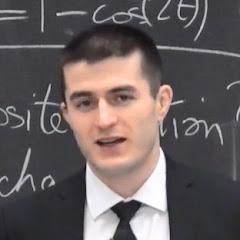 Lex Fridman
Want to know something specific about what's covered?
We've already dissected every moment. Ask and we will deliver (with timestamps).
Key Moments
Manolis Kellis discusses the beauty and complexity of the human genome, digital inheritance, and the impact of horizontal knowledge transfer.
Key Insights
Life's digital nature, a concept from Mendel, is the most beautiful aspect of genomes, allowing for digital inheritance and evolution.
Human genome variation highlights both individuality (99.9% similarity) and uniqueness (millions of differences between siblings).
Horizontal inheritance (cultural transmission of knowledge) is unique to humans, amplified by the internet, but requires critical evaluation of expertise.
The human genome's complexity, initially thought to be understood last, is now central to research, revealing genetic bases for cognition and emotions.
Evolution is a messy process driven by ruthless selection on random mutations, leading to robust yet specialized biological systems.
The beauty of biological systems lies in their messiness, fault tolerance, and ability to repurpose genetic material, a stark contrast to rigid engineering principles.
THE DIGITAL BEAUTY OF GENOMES AND MENDELIAN INHERITANCE
Manolis Kellis opens by describing the profound beauty of genomes, not just human ones, likening life to a digital computer. This digital nature, he explains, originates from Mendel's discovery of discrete inheritance. While ancient thinkers perceived traits as continuous and blended, Mendel's insight into discrete units laid the groundwork for understanding evolution. The genome's double-helix structure, though discovered later, embodies this discrete inheritance, enabling information to be precisely replicated across generations without loss, a fundamental aspect of life's digital essence.
GENOMIC VARIATION: INDIVIDUALITY AND SHARED HUMANITY
The human genome's variation offers a powerful lesson in both individuality and our shared humanity. Kellis highlights that any two people on Earth are 99.9% genetically identical, a fact that should foster connection rather than division. Conversely, any two siblings can differ by millions of genetic locations, making each person uniquely distinct. This paradox underscores the complexity of human identity: we are remarkably similar yet incredibly unique, challenging simplistic notions of difference and promoting a sense of universal kinship.
HORIZONTAL VS. VERTICAL INHERITANCE: THE HUMAN EDGE
Humans possess a unique form of inheritance beyond the vertical transmission of genes from parents. This 'horizontal' inheritance involves the rapid, horizontal transfer of ideas, culture, and knowledge across generations and populations. Unlike species with hard-coded instincts, humans undergo a prolonged period of neoteny, allowing their brains to remain malleable for extensive learning. This capacity, amplified by modern technologies like the internet, enables unprecedented speed and breadth in knowledge dissemination, defining a distinct human evolutionary advantage.
THE INTERNET'S DOUBLE-EDGED SWORD: DEMOCRATIZATION AND EXPERTISE
The internet's democratization of knowledge is a source of both excitement and concern. While it allows unprecedented access to information, it also risks eroding respect for expertise. Kellis cautions that the ease of access can lead to a dismissal of deep study, fostering an environment where personal theories are valued equally with scientific consensus. He stresses the importance of teaching not just knowledge, but epistemology – the critical thinking skills needed to navigate and evaluate information, distinguishing fact from falsehood in the digital age.
THE EVOLUTION AND BEAUTY OF VIRAL GENOMES
Kellis finds immense beauty even in the design of viral genomes, using SARS-CoV-2 as an example. He details how viruses, despite not being 'intelligent' in a biological sense, exhibit remarkable evolutionary dynamics. Their ability to hijack cellular machinery, replicate RNA in complex ways, and adapt rapidly through recombination and rapid mutation, like the d614g mutation in the spike protein, showcases elegant yet brutal evolutionary processes. This adaptation, especially in fast-evolving exterior proteins, highlights how environmental pressures shape viral evolution.
BIOLOGICAL ROBUSTNESS AND LIFE'S MESSY EVOLUTION
Biological systems, Kellis argues, are fundamentally characterized by robustness and a messy, iterative evolutionary process rather than rigid engineering design. He contrasts the clean, modular approach of computer science with biology's often haphazard path to complexity, citing whole genome duplication in yeast as an example. This perceived 'messiness' allows for fault tolerance and adaptation, where breaking things or making mistakes becomes a pathway to new optima, a principle that challenges traditional engineering paradigms and offers insights into resilience and innovation.
THE QUEST FOR MEANING AND THE UNIQUENESS OF HUMAN CONSCIOUSNESS
Reflecting on the meaning of life, Kellis shares insights from a symposium where diverse perspectives converged. The common thread was the quest itself, the constant striving to understand our existence, purpose, and place in the universe. He emphasizes gratitude, the joy of intellectual pursuit, and the profound fulfillment found in raising children. This deeply human experience, the capacity to ponder meaning, worry about existence, and love unconditionally, defines us and underscores the unique value of human consciousness.
Mentioned in This Episode
●Products
●Software & Apps
●Companies
●Organizations
●Books
●Drugs & Medications
●Concepts
●People Referenced
Common Questions
The human genome is characterized by both profound similarity and uniqueness. Any two people are 99.9% identical, emphasizing our common humanity. However, any two siblings differ by millions of locations, representing a vast possibility for individual uniqueness, much like the diversity seen in stars.
Topics
Mentioned in this video
Professor at MIT and head of the MIT Computational Biology Group, interested in understanding the human genome from a computational evolutionary biological perspective.
A 20th-century statistician who recognized that even a few Mendelian traits could sum up to a continuum-like inheritance pattern, reconciling Mendel's work with observed continuous traits.
Founder of Neuralink, engaged in developing brain-computer interfaces to connect human brains with computers.
English naturalist, geologist and biologist, best known for his contributions to the science of evolution. His quote about poetry and music is used to conclude the podcast.
A crowd-sourced online encyclopedia praised as a 'solid accessible survey paper' and an authoritative source for scientific topics, despite initial skepticism.
Mentioned as an example of traditional centralized expertise, compared to information sources on Twitter during the pandemic.
An experiment that created a 'new sense' for humans by detecting gravitational waves, expanding our perception of the physical world.
An ancient Greek priestess known for giving cryptic, multi-interpretable answers, referenced in the context of a linguistic professor's 'meaning of life' answer.
The Massachusetts Institute of Technology, where Manolis Kellis is a professor and leads the Computational Biology Group.
Mentioned as a surprisingly good source of information during the coronavirus pandemic, allowing for distributed networks of experts.
A biotechnology company that rapidly finalized its vaccine design for SARS-CoV-2 after the virus's genome sequence was published.
Elon Musk's company working on brain-computer interfaces, aiming to increase the number of connections to the brain.
A social network mentioned as a platform for short-form video clips, contrasted with more substantive knowledge sources.
A family of viruses, including SARS-CoV-2, discussed in depth regarding their genetic makeup, evolutionary dynamics, and interaction with human cells and immune systems.
Used as an example of dinosaurs, highlighting their long reign on Earth and comparatively less environmental impact than humans.
The community of bacteria living inside humans, which plays a critical role in digestion and personalized nutrition advice, sometimes more significant than genetic makeup.
Baker's yeast, which underwent a whole genome duplication coinciding with the emergence of fruit-bearing plants, showcasing a messy evolutionary path.
A specific mutation in the SARS-CoV-2 spike protein that disrupts a highly conserved nucleotide position, leading to a new adaptation for human-to-human transmission, observed to increase significantly in frequency.
Identified as the actual purpose of orf10 in the SARS-CoV-2 genome, rather than being a protein-coding gene.
The portion of the SARS-CoV-2 spike protein responsible for attaching to the ACE2 receptor, noted for its rapid evolution and critical role in host adaptation.
A gene locus associated with obesity, with alleles that were advantageous for fat storage during periods of famine but are detrimental in modern environments of food abundance.
The powerful phenomenon where believing in a treatment can lead to actual physiological improvements, suggesting a strong mind-body connection that is scientifically untapped.
A subset of machine learning inspired by the brain, seen as moving towards embracing 'messiness' and robustness, similar to biological systems, through methods like LSTMs and convolutional neural networks.
Incorrectly referenced as the impact site of the meteor that killed the dinosaurs, a correction of this common misconception.
The city where SARS-CoV-2 (carbon-19) was first identified.
The actual location of the giant crater caused by the meteorite that killed the dinosaurs.
A genetic condition more frequent in populations with historical exposure to malaria, as the sickle cell trait provides protection against malaria.
The virus responsible for COVID-19, its genome sequencing speed, vaccine design, and the incredible pace of scientific response are highlighted.
Mentioned as an example of traditional centralized expertise, contrasted with distributed networks on platforms like Twitter during the pandemic.
A science fiction comedy novel where the number 42 is revealed as the 'Answer to the Ultimate Question of Life, the Universe, and Everything,' inspiring a 'meaning of life' symposium.
More from Lex Fridman
View all 550 summaries 174 min
Biggest Mysteries in Physics: Antimatter, Dark Energy & ToE - Don Lincoln | Lex Fridman Podcast #497
 259 min
FFmpeg: The Incredible Technology Behind Video on the Internet | Lex Fridman Podcast #496
 124 min
Vikings, Ragnar, Berserkers, Valhalla & the Warriors of the Viking Age | Lex Fridman Podcast #495
 146 min
Jensen Huang: NVIDIA - The $4 Trillion Company & the AI Revolution | Lex Fridman Podcast #494
Ask anything from this episode.
Save it, chat with it, and connect it to Claude or ChatGPT. Get cited answers from the actual content — and build your own knowledge base of every podcast and video you care about.
Get Started Free