Key Moments
Joe Gebbia Interview | The Tim Ferriss Show
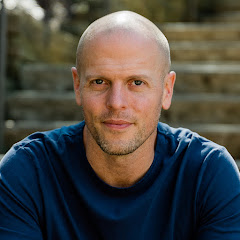 Tim Ferriss
Key Moments
Joe Gebbia's journey from childhood creativity and pranks to co-founding Airbnb.
Key Insights
Early entrepreneurial spirit and creativity were evident from childhood with ventures like selling drawings and designing t-shirts.
Supportive parents fostered Joe's artistic and entrepreneurial interests, learning to support intrinsic motivations over imposed ones.
A strong work ethic and a willingness to embrace discomfort were cultivated through sports and challenging academic experiences.
The development of 'Crit Buns' and the 'Eco X' website provided valuable lessons in product development, manufacturing, and sustainable design.
The creation of Airbnb, initially as 'Air Bed & Breakfast,' stemmed from a need to solve a problem and a willingness to experiment.
Rejection is an inevitable part of innovation; reframing it as an opportunity to persevere is crucial for success.
EARLY SIGNS OF ENTREPRENEURSHIP AND CREATIVITY
Joe Gebbia's entrepreneurial journey began in second grade when he started selling his drawings of Teenage Mutant Ninja Turtles to classmates, earning a small allowance. This early venture was quickly shut down by his teacher due to classroom disruption, marking his first brush with 'regulation.' Growing up in Georgia, his parents, who were entrepreneurs themselves, fostered an environment where trying new things and forging one's own path was encouraged. This early exposure to their work ethic and unconventional approaches laid a foundation for his future endeavors.
THE INFLUENCE OF FAMILY AND SUPPORTIVE UPBRINGING
Both of Joe's parents had entrepreneurial backgrounds, which created a household where self-reliance and ambition were valued. He recalls accompanying his father on business trips in the health food industry, observing firsthand the importance of going above and beyond for customers. This instilled in him a deep appreciation for customer service and building strong relationships. While his parents supported various interests, a key lesson was learned after an early violin recital where Joe felt out of his depth; they shifted to supporting his intrinsic interests in sports, art, and music.
FORMATIVE EXPERIENCES IN ART AND DESIGN SCHOOL
Joe's passion for art led him to the Rhode Island School of Design (RISD). During his 3D design class, a challenging 'chess set project' from professor Gareth Jones initially seemed daunting. However, Joe's ambition to create full-sized functional chairs, rather than scaled models, led him to confront his perceived limits. This experience, coupled with the demanding environment of RISD, solidified his desire to pursue industrial design and create tangible products that could impact many lives.
THE BIRTH OF 'CRIT Buns' AND PRODUCT DEVELOPMENT LESSONS
Inspired by the discomfort of long critiques at RISD, Joe conceptualized 'Crit Buns'—a seat cushion designed for artists and designers. This project became a valuable learning experience in product development, from prototyping to manufacturing. He faced numerous rejections when trying to find a manufacturer, but persistent problem-solving and an entrepreneurial mindset eventually led to the production and sale of Crit Buns, even landing a spot at the MoMA design store. This venture taught him about the entire product lifecycle and the importance of story in marketing.
THE SEED OF AIRBNB: AIR BED & BREAKFAST
After RISD, Joe and his roommate Brian Chesky, facing rising rent and financial pressure, created 'Air Bed & Breakfast' as a way to host attendees of a design conference. This venture, born out of necessity, provided a crucial realization: people were interested in sharing their space and experiencing travel in a more local, human way. The initial launch was fraught with challenges, including payment issues and a narrow focus on conferences, but the core idea of connecting travelers with hosts was taking root.
NAVIGATING CHALLENGES AND THE PATH TO AIRBNB
The transition from 'Air Bed & Breakfast' to Airbnb involved learning from early failures, particularly the awkwardness of cash payments and the limited market of conference attendees. The team pivoted to a broader travel model with online payments, which they tested during the 2008 Democratic National Convention in Denver. This event generated significant press, proving the concept's potential. The key lesson learned was the power of a compelling story and the importance of making something people want to talk about, which propelled Airbnb forward despite numerous initial setbacks.
Mentioned in This Episode
●Products
●Software & Apps
●Companies
●Organizations
●Books
●Concepts
●People Referenced
Common Questions
Joe's first venture was in second grade, selling drawings of Teenage Mutant Ninja Turtles to his classmates for $1 or $2. This was eventually shut down by his teacher when parents complained about lunch money being used for art.
Topics
Mentioned in this video
Andre Agassi's autobiography, read by Tim Ferriss, which mentioned Nick Bollettieri.
Another book by Seth Godin, referenced by Joe Gebbia for its concept of creating something distinct and differentiated that people want to talk about.
A book by William McDonough that was hugely influential on Joe's environmental consciousness and his approach to environmentally considered design.
A book by Seth Godin that inspired Joe Gebbia's understanding of storytelling and creating products people want to talk about.
Joe Gebbia recounts getting his first Mac computer with Photoshop and Illustrator, which he used to redesign his high school senior t-shirt.
A seat cushion for artists and designers, designed by Joe Gebbia to provide comfort and cleanliness in art studios, which became his first company after RISD.
A portable cassette player that Joe used to play his prank tape mix over the school intercom.
A cleaning product famously endorsed by Billy Mays in infomercials.
A major city in Georgia, near where Joe Gebbia grew up, and where he later worked as an NBA ball boy for the Atlanta Hawks.
The state where Joe Gebbia grew up, specifically in towns like Lawrenceville, Snellville, Lilburn, and Norcross, near Atlanta, giving him a Southern upbringing.
The stadium in Denver where the DNC moved its venue, creating a need for more housing due to increased attendance.
The location associated with the 212 area code phone calls Joe received from MTV producers, indicating his prank gained national attention.
The city Joe Gebbia moved to after RISD, drawn by its entrepreneurial energy, and where Airbnb was later founded.
Where Joe Gebbia's parents grew up before moving to Georgia.
The former arena where the Atlanta Hawks played, and where Joe Gebbia had his interview for the ball boy position.
A city in Japan where Joe Gebbia traveled for Design Week to sell Crit Buns, facing language barriers and adapting his sales strategy.
The city where the 2008 Democratic National Convention was held, prompting a housing crisis that became an opportunity for Airbnb's relaunch.
The arena that replaced the Omni Coliseum, mentioned in the context of Joe working as a ball boy for the Atlanta Hawks.
One of the international locations Joe traveled to sell Crit Buns at a design event.
A renowned sports psychologist and co-founder of the Johnson & Johnson Human Performance Institute, mentioned by Tim Ferriss as a tennis coach.
A motivational speaker and life coach. Joe, his father, and Tim Ferriss attended one of his 'Date With Destiny' events.
A progressive rock band whose song 'Another Brick in the Wall, Part 2' (with the lyric 'we don't need no education') was part of Joe's prank tape mix.
The inventor of the foam finger, whom Joe met in Texas to explore manufacturing Crit Buns. He had the original foam finger in a glass case in his lobby.
A famous infomercial pitchman known for products like OxiClean; Joe pitched Crit Buns to him for a reality show.
The creator of Star Wars, for whom Joe designed high-end packaging for a book while at Chronicle Books.
An NBA legend mentioned by Joe Gebbia as someone he worked alongside during his time as a ball boy for the Atlanta Hawks.
A player for the Chicago Bulls team that Joe worked with as a ball boy.
A graphic designer known for corporate logos and film title sequences, associated with large design firms that many of Joe's classmates went to work for.
A famous tennis player whose autobiography, Open, mentioned Nick Bollettieri, which helped Tim Ferriss recognize the name.
An American jazz pianist and composer; one of Joe Gebbia's favorite musicians to play on the piano.
The strength coach for the Atlanta Hawks who called Joe Gebbia for an interview to be a ball boy.
A crucial player for the Chicago Bulls, sitting next to Michael Jordan when Joe spilled Gatorade on him.
The furious head coach of the Chicago Bulls during the Gatorade spilling incident.
An incredible tennis coach in Florida, mentioned by Tim Ferriss.
A legendary basketball player for the Chicago Bulls, with whom Joe had an unforgettable incident involving spilled Gatorade while working as a ball boy.
A famous tennis coach and founder of the Nick Bollettieri Tennis Academy, whose name Joe recognized on a shirt.
A renowned American jazz pianist and composer; one of Joe Gebbia's favorite musicians to play on the piano.
A rock singer whose song 'School's Out' was included in Joe's prank tape mix.
The head coach of the Atlanta Hawks during Joe Gebbia's time as a ball boy.
An NBA player who played for the Atlanta Hawks during Joe's time as a ball boy.
A Chicago Bulls player who bumped Joe's elbow, causing the Gatorade spill on Michael Jordan.
A player for the Toronto Raptors whom Joe Gebbia admired from his college play at UMass.
A Dutch architect and designer from the 1920s and 30s whose furniture designs, particularly his chairs, inspired Joe Gebbia's chess set project at RISD. His work is featured in MoMA.
Co-founder of Reddit, who famously used a dismissive comment from a Yahoo exec ('a rounding error for us') as motivation for his team.
Two influential designers from the mid-20th century whose philosophy of producing the best design for the most people at the least price inspired Joe to switch to industrial design.
An architect and designer known for his work in sustainable development, whose book 'Cradle to Cradle' was influential in Joe's environmental consciousness.
Joe Gebbia's former RISD classmate and later roommate, with whom he co-founded Airbnb after facing rent struggles in San Francisco.
A presidential candidate in the 2008 US election, whose campaign was juxtaposed with Barack Obama's during Joe's discussion of the DNC.
A CNN anchor who conducted a live interview with Joe Gebbia and Brian Chesky from their living room about Airbnb's DNC success.
An author and marketer whose book 'All Marketers Are Liars' influenced Joe's philosophy of making products people want to talk about.
The founder of Playboy, for whom Joe designed a custom leather briefcase for a book on centerfolds while at Chronicle Books.
A presidential candidate in the 2008 US election, whose record-breaking crowds and the DNC created an opportunity for Airbnb's growth.
Joe Gebbia used Google to search for high school senior prank ideas and later to find foam manufacturers for Crit Buns.
A printing company where Joe got his Japanese marketing poster for Crit Buns printed overnight in downtown Tokyo.
An early internet company mentioned as one of the influential entrepreneurial success stories that inspired Joe Gebbia.
An early internet search engine and web portal, mentioned as one of the entrepreneurial success stories that inspired Joe.
An e-commerce giant, mentioned as an example of how easy it was to find content online when Eco-X was being conceptualized, highlighting the lack of a similar platform for sustainable materials.
An early internet search engine and web portal, mentioned as one of the entrepreneurial success stories that inspired Joe.
A major television network whose local affiliate in Denver covered Airbnb's DNC housing solution, leading to wider media coverage.
A major television network that followed NBC in covering Airbnb's story during the DNC.
A health food store where Joe Gebbia's parents worked as representatives, connecting supplement manufacturers to retail shelves.
An early internet company mentioned as one of the influential entrepreneurial success stories that inspired Joe Gebbia.
A social news aggregation, content rating, and discussion website, co-founded by Alexis Ohanian.
A book publisher where Joe Gebbia worked on a fellowship, designing high-end packaging for books, including those for George Lucas and Hugh Hefner.
A location-based social networking service, mentioned as a preeminent tech company that launched successfully at South by Southwest.
The global hospitality company founded by Joe Gebbia, Brian Chesky, and Nathan Blecharczyk, originating from the 'Air Bed & Breakfast' concept.
A microblogging and social networking service, mentioned as a preeminent tech company that launched successfully at South by Southwest.
A major television network that followed NBC in covering Airbnb's story during the DNC.
A university in Massachusetts that accepted the RISD basketball team's invitation to play a game, despite initially dismissing it.
A major news organization that initially hung up on Airbnb's co-founders but eventually covered their story regionally and then internationally during the DNC.
The professional basketball league where Joe Gebbia worked as a ball boy for the Atlanta Hawks during his high school years.
The NBA team Joe Gebbia worked for as a ball boy in high school.
A prestigious art museum in New York City where Gerrit Rietveld’s chairs are displayed, and a pinnacle store shelf for designers Joe aspired to sell Crit Buns in.
An art and design school recommended to Joe by his art teacher, where he later studied Fine Arts and Industrial Design.
The baseball team mentioned in a newspaper article that inspired Joe to apply to be a ball boy for the Atlanta Hawks.
The opposing team in Joe's very first game as an NBA ball boy.
The college where Marcus Camby played basketball, admired by Joe Gebbia.
The National Aeronautics and Space Administration, where some of Joe's industrial design classmates found jobs after graduation.
The NBA team that played the Hawks in a memorable game where Joe spilled Gatorade on Michael Jordan.
A university whose students and community attended RISD basketball games, and whose bookstore was the first store Joe Gebbia pitched Crit Buns to.
The institution from which Nate, a co-founder of Airbnb, graduated with a computer science degree.
The magazine for which Joe designed a custom leather briefcase for a book on its centerfolds.
The famous franchise created by George Lucas; Joe designed high-end packaging for a Star Wars book.
A television channel that produced 'High School Stories: Pranks and Controversies', on which Joe's senior prank was reenacted.
A popular cartoon and comic franchise that inspired Joe Gebbia's first entrepreneurial venture of drawing and selling fan art in second grade.
A reality television series where entrepreneurs pitch their business ideas to a panel of investors, used as a comparison for Joe's pitch to Billy Mays.
A British newspaper that picked up the Airbnb story, further expanding its international coverage during the DNC.
A movie (incorrectly referenced by Joe as 'Fuel the Dreams') whose 'if you build it, they will come' philosophy is critiqued as a misconception about entrepreneurship.
A French newspaper that picked up the Airbnb story after it became an international phenomenon, demonstrating the global reach of their DNC press.
A graphic design software Joe Gebbia used on his first Mac to redesign his high school senior t-shirt.
A graphic design software Joe Gebbia used on his first Mac to redesign his high school senior t-shirt.
A classifieds website where Joe Gebbia found his former roommate, Nate, who later became a co-founder of Airbnb.
One of the biggest design blogs in the world instrumental in connecting designers like Joe with international gift fairs and design week events.
A website co-founded by Joe Gebbia and Matt to connect designers with sources of sustainable materials, described as a 'Google for sustainable materials'.
More from Tim Ferriss
View all 694 summaries 71 min
The Most Incredible Transformation I’ve Ever Seen — Jerzy Gregorek on Cerebral Palsy and Coaching
 34 min
PRISONER NO MORE: The True Story of Tae Jin Park
 89 min
From Food Stamps to the Super Bowl War Room — NFL Chief Security Officer Cathy Lanier
 55 min
From Dad’s Basement to Selling Two Companies — 4-Hour Workweek Success Story
Ask anything from this episode.
Save it, chat with it, and connect it to Claude or ChatGPT. Get cited answers from the actual content — and build your own knowledge base of every podcast and video you care about.
Get Started Free