Key Moments
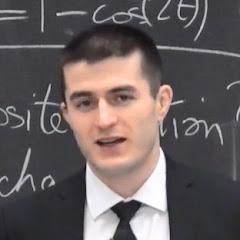
Jim Gates: Supersymmetry, String Theory and Proving Einstein Right | Lex Fridman Podcast #60
 Lex Fridman
Key Moments
Physicist Jim Gates discusses supersymmetry, string theory, the challenges of space travel, and the beauty of physics.
Key Insights
Space travel faces immense challenges, including radiation and the need for radical biological or technological breakthroughs beyond current capabilities.
Entrepreneurial efforts in space exploration, while promising, are currently focused on incremental technological improvements rather than the fundamental breakthroughs needed to significantly reduce costs.
The universe is likely teeming with life, but recognizing it may depend on its native environment and biology, with possibilities beyond our carbon-based understanding.
The most beautiful idea in physics is not a specific theory but the universe's comprehensibility through mathematics and our capacity to understand it.
Supersymmetry hypothesizes a symmetry between matter particles and force-carrying particles, suggesting a more complete and balanced picture of fundamental physics.
String theory, while a powerful mathematical framework, remains largely unvalidated experimentally, with debates ongoing about its connection to our universe.
THE FORMIDABLE CHALLENGES OF INTERSTELLAR TRAVEL
Venturing beyond our solar system presents monumental hurdles dictated by the laws of modern physics. Even reaching Mars is a significant undertaking due to factors like cosmic radiation, which could be lethal within two years without sufficient shielding. The development of multi-generational starships remains in the realm of science fiction, requiring not only advanced technology but also solutions for the biological and engineering challenges of long-duration spaceflight.
EVALUATING EARTH-LIKE PLANETS AND THE POSSIBILITY OF ALIEN LIFE
The universe is vast, and the discovery of over a thousand exoplanets, many in the 'Goldilocks zone,' makes it almost inconceivable that Earth is the sole possessor of conscious life. However, recognizing alien life, if encountered, would depend heavily on its native environment and evolutionary path. The principle of convergence suggests possible similarities if alien biologies evolved under comparable conditions to Earth's, but silicon-based life or entirely novel forms cannot be ruled out.
THE BEAUTIFUL SIMPLICITY AND MYSTERY OF PHYSICAL LAWS
For physicist Jim Gates, the most profound and beautiful idea in physics is the universe's inherent comprehensibility. The fact that relatively simple mathematical laws can describe the complex workings of reality is seen as nearly miraculous. This mathematical language acts as a lens through which we can 'compress' vast amounts of data about the universe, revealing an elegant, underlying order that our minds are uniquely equipped to decipher.
SUPERSYMMETRY, ADINKRA SYMBOLS, AND THE SEARCH FOR BALANCE
Supersymmetry proposes a symmetry between matter particles and force-carrying particles, suggesting that each known particle has a 'superpartner.' This idea, visualized through 'Adinkra symbols' developed by Gates, introduces a balanced 'pie' of particles with two previously empty quadrants filled. These symbols, containing error-correcting codes, reveal a deep mathematical structure that may be fundamental to reality, hinting at principles like those found in genetics.
STRING THEORY: A MATHEMATICAL FRAMEWORK AND ITS UNCERTAIN STATUS
String theory posits that fundamental particles are not point-like but tiny vibrating strings, requiring more than four dimensions for their mathematical consistency. While it has yielded significant mathematical insights and inspired advances in areas like quantum mechanics and holography, its direct experimental validation remains elusive. The debate continues regarding whether string theory accurately describes our universe or is a purely mathematical construct.
PROVING EINSTEIN RIGHT: THE HUMAN STORY BEHIND GENERAL RELATIVITY
The book 'Proving Einstein Right' explores the human element in scientific discovery, focusing on Einstein's theory of general relativity. It highlights how a seemingly radical mathematical idea, validated through observations like the bending of starlight during eclipses, gradually gained acceptance despite initial skepticism and the role of chance and circumstance, such as war and weather, in its experimental verification. This narrative emphasizes the personal struggles and eventual triumphs of scientists.
REFLECTIONS ON SERVICE, LEADERSHIP, AND THE FUTURE OF SCIENCE
Gates's service on President Obama's Council of Advisors on Science and Technology underscored the importance of scientific input in policy. Obama's ability to keenly listen, internalize complex information, and ask insightful questions, particularly in areas like AI, highlights his exceptional leadership. This experience, alongside reflections on the potential of quantum computing and the enduring mystery of existence, shapes a perspective on the progress and challenges within science and society.
Mentioned in This Episode
●Software & Apps
●Companies
●Organizations
●Books
●Concepts
●People Referenced
Common Questions
Colonizing Mars by 2030 is unlikely due to immense financial and biological engineering challenges. Radiation exposure during long space travel poses a significant threat to human health, and current rocket technology represents only incremental advancements. However, humans could potentially land on Mars by 2090-2120.
Topics
Mentioned in this video
A book about Richard Feynman, praised for accurately portraying his personality and approach to physics.
A book co-authored by James Gates Jr. about the scientists who set out to prove Einstein's theory of relativity and the human story behind the scientific endeavor.
A play by William Shakespeare, specifically the 'to be or not to be' speech, referenced for its beautiful expression 'shuffle off this mortal coil'.
An invention by James Gates Jr. and Michael Fox in 2005, these are strange little graphs or pictures representing data in certain supersymmetry equations, composed of black and white balls and lines.
A hypothesized particle that carries the gravitational force, which physicists expect to exist based on mathematics but have not yet experimentally verified by proving energy is carried in packets.
A philosophical view that consciousness is a fundamental and ubiquitous property of the universe, underlying everything.
A property derived from string theory that allows one to deduce information about the interior of a space by studying its boundary.
The particle of light and carrier of the electromagnetic force, which famously passes through other photons without interaction.
A field of computing that utilizes quantum-mechanical phenomena, considered an immediate horizon for major breakthroughs in physics and engineering.
A belief system that suggests Earth and other planets have a kind of conscious life force, which the guest encounters but doesn't fully embrace.
The three carrier particles of the weak nuclear force, responsible for radioactive decay.
A scientific award founded by Yuri Milner, noted as being three times more financially significant than the Nobel Prize and a potential recognition for future string theory advancements.
A prestigious international award, discussed in the context of Albert Einstein not receiving one for general relativity due to the historical timing of its observational validation, and the unlikelihood of string theory receiving one within a normal human lifetime.
A fundamental particle associated with the Higgs field, which gives mass to other elementary particles, and the most recently experimentally verified particle in the standard model.
One of the eight carrier particles of the strong nuclear force, binding quarks together.
Physicist who formulated the classical theory of electromagnetic radiation, whose equations revealed the existence of the photon as a force carrier.
Astrophysicist who wrote a book linking scientific progress to military endeavors and DARPA funding, prompting a discussion on war.
One of the Western scientists who independently rediscovered supersymmetry in the early 1970s, alongside Bruno Zumino.
Nobel laureate in biology who first contacted James Gates Jr. about serving on President Obama's Council of Advisors on Science and Technology.
Founder of Amazon and Blue Origin, mentioned as an entrepreneur pushing to reduce space travel costs through reusable rocket technology, though the guest expresses disappointment in the lack of 'breakthrough' engine technology.
Astronomer and author, quoted for his statement about the waste of space if humanity is the only conscious life in the universe.
Theoretical physicist and professor at Brown University, working on supersymmetry, supergravity, and superstring theory. Former advisor to President Obama and co-author of 'Proving Einstein Right'.
Russian-American immigrant and founder of the Breakthrough Prize, a prestigious award for scientific achievements.
Implied through discussion of nuclear weapon development, (Incorrectly attributed to Schrödinger in transcript: 'Schrodinger who said that these things are not really weapons their political and implements and not weapons') but the sentiment is closer to Oppenheimer's reflections.
One of the Western scientists who independently rediscovered supersymmetry in the early 1970s.
A great scientist at Caltech with whom James Gates Jr. worked in 1979, addressing problems in supersymmetry equations that Adinkra symbols later helped to approach.
A friend and colleague of James Gates Jr. at the University of Maryland, with whom he proved the existence of four-dimensional strings.
Colleague of James Gates Jr. with whom he co-invented Adinkra symbols in 2005.
Former President of the United States, on whose Council of Advisors on Science and Technology James Gates Jr. served for seven years. Praised for his extraordinary learning capacity and comfort with complex ideas.
Physicist known for the theory of relativity. His struggle and eventual validation of general relativity through observation are discussed as a parallel to challenges in modern physics.
Former U.S. President who issued the challenge to land on the Moon, symbolizing a 'we do these things not because they're easy, but because they're hard' ethos.
Considered the inventor of physics, who first described gravity but was puzzled by action at a distance without a carrier particle.
Former CEO of Google, with whom James Gates Jr. had a conversation about the future of AI replacing human work.
Physicist who derived the Dirac Equation, describing the behavior of electrons, which laid the mathematical foundation for understanding their properties.
CEO of SpaceX, mentioned as a prominent figure pushing for human colonization of Mars.
Nobel Prize-winning physicist known for his irreverent, fun, and deeply intelligent approach to physics and his ability to explain complex ideas simply, which influenced James Gates Jr.'s science communication.
A computer scientist who, in the 1940s, developed error-correcting codes to reliably transmit digital information, a concept found to be inherent in Adinkra symbols.
Astronomer who led expeditions in 1919 that provided the first observational evidence confirming Albert Einstein's prediction of light bending due to gravity, making Einstein a global superstar.
Defense Advanced Research Projects Agency, mentioned in the context of military funding for scientific progress.
A STEM education non-profit, known for FIRST Robotics and Lego competitions, supported by Cash App and James Gates Jr. himself.
Laser Interferometer Gravitational-Wave Observatory, used to detect gravitational waves from colliding black holes and neutron stars, confirming 'waves in spacetime'.
Massachusetts Institute of Technology, where James Gates Jr. was a freshman and later a graduate student, conducting his foundational work on supersymmetry.
The United States government agency responsible for the civilian space program, mentioned in the context of past moon landings and current Mars aspirations.
More from Lex Fridman
View all 548 summaries 124 min
Vikings, Ragnar, Berserkers, Valhalla & the Warriors of the Viking Age | Lex Fridman Podcast #495
 146 min
Jensen Huang: NVIDIA - The $4 Trillion Company & the AI Revolution | Lex Fridman Podcast #494
 311 min
Jeff Kaplan: World of Warcraft, Overwatch, Blizzard, and Future of Gaming | Lex Fridman Podcast #493
 154 min
Rick Beato: Greatest Guitarists of All Time, History & Future of Music | Lex Fridman Podcast #492
Found this useful? Build your knowledge library
Get AI-powered summaries of any YouTube video, podcast, or article in seconds. Save them to your personal pods and access them anytime.
Get Started Free