Key Moments
Vikings, Ragnar, Berserkers, Valhalla & the Warriors of the Viking Age | Lex Fridman Podcast #495
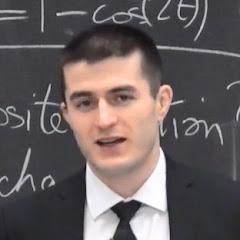 Lex Fridman
Key Moments
Viking longships traveled 70-120 miles daily, enabling swift raids and escapes before armies could respond, creating a terrifying psychological impact on their targets. Their strategic use of terror, sophisticated planning, and unparalleled mobility defined their era.
Key Insights
Viking longships could travel 70 to 120 miles per day, vastly outperforming the 10-15 miles per day of English armies, allowing for swift raids and escapes.
The first Viking raid on Lindisfarne in 793 AD was so psychologically devastating that Alcuin described the dead monks as "dung in the streets," shattering medieval notions of sanctuary.
Viking society was not primarily warrior-based; most were farmers and merchants, with 'Viking' being an activity rather than a profession, likely originating from the word 'Vick' (bay).
The Vikings actively used terror as a weapon, often attacking on high holy days like Easter and Christmas to maximize plundered wealth and sow fear.
The Normans, descendants of Vikings, conquered England and Sicily within a generation, demonstrating rapid cultural assimilation and integration while retaining unique vitality, leading to the creation of powerful medieval states.
Eric the Red's naming of Greenland, a predominantly icy landmass, is described as "the greatest real estate scam in history" to attract settlers from increasingly overpopulated Iceland.
The terrifying speed and psychological impact of Viking raids
The sheer speed of Viking longships, capable of averaging 70 to 120 miles a day, was a primary weapon. This mobility allowed them to strike, plunder, and retreat before organized land armies could respond, a concept that shattered medieval sensibilities. The raid on Lindisfarne in 793 AD epitomized this terror. Monks, accustomed to the sanctity of churches as places of refuge, witnessed an unprecedented violation. Alcuin, Charlemagne's scholar, described the event with palpable horror, noting that the dead were left "as dung in the streets." This brutality against a sacred site, coupled with the unexpected threat emerging from the sea, profoundly shook the medieval worldview, shattering the perceived safety of monasteries and the ocean itself. The Vikings' disregard for established social contracts and religious sanctuaries made them appear as inhuman monsters to their victims, a perception exacerbated by their calculated use of fear. They deliberately attacked on high holy days, knowing these times offered richer targets and greater psychological impact. Their ability to blend in as traders before launching attacks also showcased a sophisticated understanding of their targets and a strategic approach that belied their often-brutal reputation.
Who were the Vikings and their harsh worldview
Contrary to popular imagery, 'Viking' was not a primary occupation but an activity. Most Norse people were farmers or merchants, living in small bays known as 'Vicks.' The term 'Viking' likely derived from this. Written records from their victims often indiscriminately labeled them 'Danes,' 'pagans,' or 'Northmen,' making it difficult to trace their origins precisely. Life in the harsh northern climate bred a resilient and pragmatic people. Stories, like the one of a Swedish Viking giving his newborn son a sword and saying he should gain sustenance solely through his own efforts, illustrate a culture that valued strength and self-reliance above all else. Mercy was not a celebrated virtue. This ethos, combined with the inherent risks of seafaring, forged individuals willing to face extreme uncertainty. Their ships, though sturdy enough for ocean voyages, were often undecked, requiring tents for shelter against the elements. Navigation relied on celestial bodies and natural signs, highlighting an extraordinary level of courage and skill to undertake journeys of thousands of miles across treacherous waters without modern aids.
Technological prowess: The versatile Viking ship
The design of Viking ships was a critical factor in their success, embodying a remarkable blend of seaworthiness and versatility. These clinker-built vessels, with overlapping planks, were robust enough to cross the Atlantic. Yet, their shallow draft of less than two feet allowed them to navigate shallow rivers, penetrate inland, and even be carried overland around obstacles. This dual capability meant that Viking raiders could appear not just on coastlines but deep within territories, multiplying their strategic advantage. The speed of these ships was immense, with some averaging 70 to 120 miles per day, far surpassing the movement capabilities of contemporary land armies. This technological superiority in naval architecture provided the Vikings with unparalleled mobility and surprise, enabling them to achieve dominance across vast distances and through diverse terrains. Their ships were the great secret of their age, allowing them access to both open oceans and intricate river systems.
The 'Great Heathen Army' and the transition to conquest
The Viking age, though intense, was relatively short, lasting less than three centuries. This brevity can be attributed to the Vikings' pragmatic nature; they were quick to conquer and then establish institutions, effectively transitioning from raiders to state-builders. The 'Great Heathen Army,' which invaded England in 865 AD, exemplified this shift towards larger-scale invasions and conquest. Figures like Ragnar Lothbrok, though possibly a composite character, became archetypes of the successful Viking chieftain, driven by wealth, fame, and honor. Ragnar's famous sack of Paris in 845 AD, extorting a massive ransom from King Charles the Bald, served as a template for future Viking operations, provoking waves of larger attacks. This pattern of raiding, conquering, and then integrating into existing societies or forming new ones is a recurring theme. For instance, Etheldred the Unready of England paid an exorbitant sum, equivalent to 50 adult elephants, to the Vikings simply to make them leave, a strategy that proved counterproductive, attracting more raiders.
From Raiders to Rulers: The Norman transformation
The descendants of Vikings, known as the Normans, offer a prime example of rapid assimilation and lasting impact. In Normandy, France, Viking settlers, led by figures like Rollo, integrated so quickly that within a generation, Viking names and customs largely disappeared, replaced by French language and culture. Rollo himself, after securing a treaty with the Frankish king Charles the Simple in 911 AD, became the first ruler of Normandy. Despite his Viking past and immense wealth, he was granted legitimacy by the Frankish crown, a pragmatic move that turned a potential threat into a defender. The Normans retained their inherent vitality and ambition, leading to conquests that reshaped Europe. They established powerful kingdoms in England and Sicily, demonstrating their ability to not only conquer but to build enduring states. This was not merely a change in allegiance but a profound transformation, where Viking pragmatism and military prowess were channeled into sophisticated statecraft and cultural integration.
Viking explorations: Reaching New Worlds and the spirit of the unknown
The Vikings were exceptional explorers, driven by an unyielding spirit of curiosity and resilience. Leif Erikson's journey around the year 1000 AD, leading to the discovery of North America (Vinland), predates Columbus by five centuries. His father, Erik the Red, famously lured settlers to Greenland with propaganda, calling the ice-laden island 'Greenland' to attract colonists from overpopulated Iceland. This ambition to explore the unknown, to 'strive, seek, find, and not to yield,' as captured in Tennyson's poem 'Ulysses,' fueled their voyages. They reached Iceland, Greenland, and North America, navigating without compasses and relying on celestial cues and natural signs. While their North American settlement at L'Anse aux Meadows was ultimately unsuccessful due to a failure to adapt to the environment, resistance from native populations, and immense logistical challenges 2,000 miles from Norway, it showcases their extraordinary courage. This spirit of venturing into the unknown, even towards perceived certain death, remains a powerful and attractive aspect of the Viking legacy, symbolizing a profound human drive for discovery.
The Norse Pantheon and the cyclical view of existence
Viking religion was polytheistic and ritualistic, centered on a pantheon of gods like Odin and Thor, with no single holy book. Their cosmology depicted an eternal struggle between order and chaos, with chaos ultimately destined to win in Ragnarök, the final battle. Odin, the god of war, kingship, and wisdom, was often associated with the elite and was the patron of berserkers—warriors known for their ferocity and pain resistance. Thor, the god of thunder and protection, was favored by farmers and common people, symbolizing earthly concerns like fertility and protection from the elements. Freya embodied love, magic, and battle-dead. The afterlife concept was intriguing: brave warriors who died in battle were resurrected daily in Valhalla to fight and feast, eternally preparing for Ragnarök. Those who did not achieve this warrior's death faced a less glorious, twilight realm. This worldview emphasized fate, resilience, and the glorification of battle, reflecting a harsh existence where chaos was an accepted, even inevitable, part of life.
The Byzantine Empire: A thousand-year bulwark and source of knowledge
Lars Brownworth's extensive work on the Byzantine Empire highlights its crucial role in preserving Western civilization. For centuries, the Eastern Roman Empire, with its capital in Constantinople, acted as a buffer against invasions from the East, including the Islamic caliphates, allowing Western Europe the time to develop. When Constantinople eventually fell, Byzantine scholars migrated to Italy, reigniting the Renaissance by bringing with them preserved classical Greek knowledge that had been lost in the West. The Byzantines were highly literate, pragmatic administrators, and masters of law. Justinian's legal code, in particular, formed the basis for many modern European legal systems. Their longevity, lasting over a thousand years, despite constant threats on their frontiers, offers valuable lessons in statecraft, diplomacy, and societal resilience, demonstrating how strong institutions and adaptability can foster stability over immense periods. The empire's ability to survive and adapt, even through periods of internal turmoil and external pressure, provides a stark contrast to the shorter, more transient Viking age.
Mentioned in This Episode
●Software & Apps
●Companies
●Organizations
●Books
●Concepts
●People Referenced
Common Questions
The Viking Age is often dated from 793 AD to 1066 AD, lasting less than three centuries. Its start is commonly attributed to June 8, 793 AD, when a group of Vikings, likely from Norway, raided the monastic community of Lindisfarne, slaughtering its inhabitants and plundering its valuables.
Topics
Mentioned in this video
His murder in England is mentioned as an example of violating the sanctity of a church, a grave offense in medieval Christian sensibilities.
An English king who paid 7.5 million silver pennies to Vikings to make them leave, an act that only encouraged more raids.
A legendary Scandinavian warlord, possibly a composite figure, who raided French realms, notably sacking Paris in 845. He embodies the archetypal Viking chieftain focused on wealth, fame, and honor in battle, and his death spurred his sons to form the Great Heathen Army.
A Frankish king from whom Ragnar Lothbrok extorted a huge ransom after raiding Paris in 845.
A historical son of Ragnar Lothbrok, notorious for leading the Great Heathen Army and allegedly performing the 'blood eagle' ritual on King Ælla.
One of Ragnar Lothbrok's sons, who, along with Ivar the Boneless, avenged their father's death by leading the Great Heathen Army.
Rollo's son and successor, who enlarged Normandy, demonstrating the continued ambition of the Norman dukes.
An English king whose defeat against William the Conqueror is mentioned as an example of rooting for the losers in history.
The Norman leader who successfully conquered England, a key event in the impact of Normans on European history.
A king of Wessex who successfully defended against and conquered Viking invaders, preserving one of the last English kingdoms.
The Roman Emperor who moved the capital from Rome to Constantinople, thereby shifting focus to the East and providing a crucial buffer for Europe against eastern threats.
A Frankish military leader who stopped the Islamic invasions at the Battle of Tours, highlighting the importance of the Byzantine Empire as a buffer.
An Icelandic historian and poet who wrote extensively about Norse mythology towards the end of the Viking Age, potentially blending Christian beliefs with traditional Norse cosmology.
A filmmaker mentioned for his documentary featuring a 'deranged penguin' that metaphorically captures the Viking spirit of unyielding exploration towards the unknown.
Author of the poem 'Ulysses,' which is cited as capturing the Viking spirit of striving and not yielding.
A Viking explorer, son of Eric the Red, credited as the first European to reach North America (Vinland) around the year 1000 AD.
Leif Erikson's father, an outlaw who discovered and settled Greenland, famously naming it 'Greenland' as a real estate scam to attract colonists.
Leif Erikson's half-sister, who accompanied him on his journey to Vinland, although her full story is noted as being another complex narrative.
An Egyptologist and professor of The Great Courses, whose storytelling style inspired Lars Brownworth's foray into podcasting.
A Byzantine emperor who attempted to break free of bureaucratic constraints but suffered a disastrous defeat against the Turks at the Battle of Manzikert in 1071.
A leader who unified Mongolia and conquered a vast empire, serving as an example of an individual from humble beginnings who profoundly changed the course of history.
A famous Viking who served in the Varangian Guard, demonstrating the career path available to Vikings in the Byzantine Empire.
Mentioned as an American founder who, by symbolically giving away power, made a powerful statement that reverberated through generations, highlighting the impact of individual actions.
A Roman emperor and Stoic philosopher who maintained humility despite immense power, offering an insight into the mind of a great leader.
A Byzantine Emperor who 'dreams big,' reconquered parts of the Western Roman Empire, and built the Hagia Sophia. He also overhauled Roman law, creating the Code of Justinian which forms the basis for legal systems in much of Europe.
Cited as an individual whose unique role makes it impossible to imagine the Protestant Reformation without him, supporting the 'great man' theory of history.
A Viking king in York who controlled parts of Ireland, Scotland, Wales, and England, demonstrating the interconnected, river-based kingdoms created by Vikings.
Compared to Augustus, he is seen as more of a 'destroyer' than a 'builder' in the context of Roman history.
The Eastern Emperor who attempted to recover Asia Minor during the First Crusade, although this effort ultimately failed to reverse the empire's decline.
Mentioned in the context of the belief that human nature is a 'blank slate' that can be educated into a utopia, a view contrasted with the speaker's perspective on inherent human flaws.
The last monarch of the Macedonian dynasty, under whom the Byzantine Empire reached its peak power and wealth. His death marked the beginning of the empire's decline due to a self-serving bureaucracy.
Described as a highly competent military general and statesman with extreme confidence in his vision, whose individual power profoundly shaped history, supporting the 'great man' theory.
A 10th-century Viking king of Denmark, representing the transition from free explorers to state builders.
An 11th-century Danish ruler who became king of England, Denmark, and Norway, creating the North Sea Empire. He stabilized the realm after Viking warfare and is famous for his demonstration of humility towards his courtiers.
His autobiography is cited for his statement about sitting with Plato and Cicero, illustrating the idea that intellectual conversation is open to all, regardless of background.
A prominent Norse god of war, kingship, wisdom, and death, worshipped by chieftains, elite warriors, and poets. Berserkers were considered his chosen warriors, and he was believed to travel incognito, rewarding hospitality and punishing unhospitable acts.
A Norse god of protection, thunder, and fertility, typically worshipped by farmers and ordinary people. He is depicted as an earthy god to whom people would pray for calmer waves.
A Norse god, whose children include the Midgard Serpent and Hel, mentioned in the context of Ragnarok where he contributes to the gods' demise.
Three spirits in Norse mythology representing past, present, and future, who spin the fates of men and gods at the roots of Yggdrasil, implying a sense of determinism in Viking life.
A daughter of Loki and the ruler of the realm of the same name (Niflheim), the destination for most people after death, described as a colorless twilight, distinct from the Christian concept of hell.
A poem by Alfred Lord Tennyson, which the speaker believes captures the Viking spirit with its line 'to strive, to seek, to find, and not to yield,' highlighting their relentless drive for exploration.
A personal diary of Marcus Aurelius, recommended for insight into human nature and the mind of a humble, powerful leader.
A 13th-century Icelandic prose epic about a legendary Norse dynasty of heroes and dragon slayers, from which powerful quotes about fearlessness and hope are drawn.
Native inhabitants of Vinland (North America) encountered by Leif Erikson, whom the Vikings called 'skraelings' (screechers) due to their language and immediate hostility.
A part of the Metropolitan Museum of Art in New York, housing an ivory cross made of walrus ivory from the New World traded via Viking routes, symbolizing the vast northern trade network.
Its branch, The Cloisters, is highlighted for representing the extensive trade networks of the Viking age through an ivory cross.
A famous bodyguard unit for the Byzantine emperors, initially composed of Vikings (Varangians, 'men of the oath'), known for their loyalty and effectiveness. Many famous Vikings, like Harald Hardrada, served in it.
A state established by Swedish Vikings (Varangians) in 862-882 AD, connecting them to the Byzantine Empire through trade and conflict.
A major enemy of the Byzantines, with whom the Vikings established extensive trading links through the Volga river system, facilitating exchange of goods like fur, amber, and slaves.
A UNESCO World Heritage site in Newfoundland, Canada, identified as the likely location of the Viking settlement in Vinland.
A church in Constantinople where Norse runes carved by Varangian guards can still be found, illustrating the Viking presence in the Byzantine Empire.
More from Lex Fridman
View all 548 summaries 146 min
Jensen Huang: NVIDIA - The $4 Trillion Company & the AI Revolution | Lex Fridman Podcast #494
 311 min
Jeff Kaplan: World of Warcraft, Overwatch, Blizzard, and Future of Gaming | Lex Fridman Podcast #493
 154 min
Rick Beato: Greatest Guitarists of All Time, History & Future of Music | Lex Fridman Podcast #492
 23 min
Khabib vs Lex: Training with Khabib | FULL EXCLUSIVE FOOTAGE
Found this useful? Build your knowledge library
Get AI-powered summaries of any YouTube video, podcast, or article in seconds. Save them to your personal pods and access them anytime.
Get Started Free