Key Moments
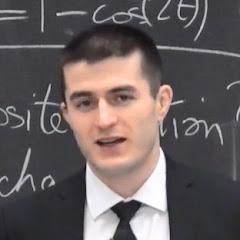
François Chollet: Measures of Intelligence | Lex Fridman Podcast #120
 Lex Fridman
Want to know something specific about what's covered?
We've already dissected every moment. Ask and we will deliver (with timestamps).
Key Moments
François Chollet discusses defining, measuring, and achieving artificial general intelligence, emphasizing adaptation and skill acquisition.
Key Insights
Intelligence is defined as the efficiency of acquiring new skills for unknown tasks, not skill itself.
Measuring intelligence requires focusing on skill acquisition efficiency and generalization ability, not just performance on known tasks.
Current AI progress, particularly with large language models like GPT-3, often relies on pattern matching and memorization rather than true understanding or reasoning.
The ARC challenge aims to test fluid intelligence by requiring generalization from minimal data and core knowledge priors, making it difficult for current AI.
Human intelligence is structured hierarchically with a 'g-factor' influencing both specific skills and general learning, but it's still constrained by human biology and environment.
The Turing Test is criticized for subjectivity and creating incentives for trickery rather than genuine scientific progress in AI.
THE CONCEPT OF INTELLIGENCE: SKILL ACQUISITION AND ADAPTATION
François Chollet redefines intelligence not as the possession of skills, but as the efficiency with which an entity can acquire new skills for tasks it hasn't encountered or prepared for. This emphasizes adaptation, improvisation, and generalization. He contrasts this with systems that merely perform pre-programmed tasks, likening the difference to that between a road-building company (intelligent process) and a single road (output artifact). This perspective highlights the importance of dealing with novelty and uncertainty as core markers of intelligence.
CHALLENGES IN MEASURING AI PROGRESS: SKILLS VS. PROCESS
Chollet argues that current AI evaluation often focuses on specific skills (outputs) rather than the underlying intelligence (process of acquiring those skills). This can be misleading, as systems might excel at tasks they were explicitly trained for without possessing general intelligence. The paper aims to clarify misunderstandings in how AI progress is conceptualized and evaluated, advocating for a formal, reliable, and actionable measure of general intelligence.
THE LIMITATIONS OF LARGE LANGUAGE MODELS (LLMS)
While acknowledging the impressive capabilities of models like GPT-3 in generating plausible text, Chollet expresses skepticism about their genuine understanding or reasoning. He suggests their performance might stem from sophisticated pattern matching and memorization of training data rather than true generalization. LLMs can generate factually incorrect or self-contradictory statements because their primary constraint is plausibility, not truthfulness or consistency, indicating a gap between generating text and possessing intelligence.
THE ARC CHALLENGE: TESTING ABSTRACTION AND GENERALIZATION
The Abstract Reasoning Corpus (ARC) challenge, developed by Chollet, is an attempt to measure fluid intelligence. It presents tasks resembling IQ tests, requiring participants to infer abstract rules from a few input-output examples. ARC focuses on core knowledge priors (like objectness, agentness, basic geometry, and number sense) rather than external knowledge, aiming to test generalization to novel, unpredictable situations that are easy for humans but difficult for current AI.
HUMAN INTELLIGENCE: STRUCTURE, BIASES, AND GENERALIZATION
Chollet discusses the 'g-factor' in human intelligence, a statistical construct representing a general cognitive ability that correlates across various mental tasks. He likens it to physical fitness, explaining that while it implies broad capabilities, humans are still specialized and bounded by their biology and environment. Human intelligence, while remarkable in its generality, does not equate to universal applicability and is influenced by innate priors and evolutionary constraints.
FUTURE DIRECTIONS AND THE NATURE OF SCIENTIFIC PROGRESS
Chollet critiques the Turing Test for its subjectivity and potential to incentivize deception over genuine understanding. He advocates for tests like ARC that are actionable, reveal clear directions for progress, and measure skill acquisition efficiency. The conversation touches upon the idea that true intelligence involves learning and adapting to novel, unforeseen circumstances, a capability that current AI systems largely lack, suggesting that progress lies in developing systems capable of extreme generalization.
Mentioned in This Episode
●Products
●Software & Apps
●Companies
●Organizations
●Books
●Concepts
●People Referenced
Common Questions
François Chollet defines intelligence as the efficiency with which a system acquires new skills at tasks it did not previously know or prepare for. It emphasizes adaptation and improvisation in novel environments, rather than just possessing skills themselves.
Topics
Mentioned in this video
Russian poet whose work is used as an example of what one could learn with Babbel.
Early AI researcher who subscribed to the view of the mind as a collection of static, special-purpose mechanisms, reflecting the mainframe computer metaphor.
Proponent of the Hutter Prize, which links intelligence to data compression.
Chess grandmaster offering a MasterClass on chess.
Linguist whose perspective on language as fundamental to cognition is contrasted by Chollet, who views language as a layer on top of cognition.
Mathematician who proposed the 'imitation game' (Turing Test) as a thought experiment for philosophical discussion about machine intelligence, not as a practical goal for AI.
Philosopher quoted at the end of the podcast, anticipating the Turing Test and the debate between mimicry/memorization versus understanding in machines.
World-class engineer and philosopher in deep learning and AI, author of 'On the Measure of Intelligence' paper and creator of the ARC challenge.
Creator of SimCity and Sims, offering a MasterClass on game design.
Author of 'On Intelligence' who proposed a vision of the mind as a multi-scale hierarchy of temporal prediction modules, influencing Chollet's thinking about AI.
Musician offering a MasterClass on guitar.
Philosopher associated with the 'blank slate' or 'tabula rasa' idea of the mind, which is contrasted with the evolutionary psychology view.
Astronaut offering a MasterClass on space exploration.
Swiss psychologist considered the father of developmental psychology, whose work on how intelligence develops in children influenced Chollet.
Astrophysicist offering a MasterClass on scientific thinking and communication.
Poker player offering a MasterClass on poker.
Cited for his quote 'The measure of intelligence is the ability to change,' which aligns with Chollet's definition of intelligence as adaptability.
Harvard researcher who developed the core knowledge theory, outlining innate knowledge systems in humans that are crucial to understanding priors for intelligence tests.
Magician used as an example of someone who can trick an audience with elaborate illusions, drawing a parallel to how current AI might 'trick' judges in a Turing Test without genuine intelligence.
Referenced in the context of Tesla Autopilot's learning-based approach to self-driving cars.
A financial app for sending money, buying Bitcoin, and investing in the stock market, mentioned as a sponsor.
A language learning app and website mentioned as a sponsor.
A machine intelligence test designed by François Chollet to measure fluid general intelligence by requiring novel skill acquisition based on core knowledge priors, presented as a Kaggle competition.
A large language model by OpenAI discussed for its ability to generate plausible text, but criticized for lacking factual consistency and true reasoning ability.
An online education platform offering courses from various experts, mentioned as a sponsor.
Employer of Chollet where he worked on large-scale deep learning models, also mentioned in the context of self-driving car research.
AI research laboratory that developed GPT-3, mentioned in the context of its models' capabilities and limitations.
Brain-computer interface company whose approach to augmenting intelligence is viewed skeptically by Chollet, who believes bandwidth is not the primary bottleneck.
An organization supported by Cash App donations, helping advance robotics and STEM education for young people.
Platform where the ARC challenge was hosted as a competition, verifying its robustness against hacking.
An online encyclopedia used as an example of externalized human intelligence and the target for compression in the Hutter Prize.
University psychology department where future collaboration for human testing on ARC will take place.
A test of a machine's ability to exhibit intelligent behavior equivalent to, or indistinguishable from, that of a human; criticized by Chollet for being unreliable, unscalable, biased, and not conducive to scientific progress.
A classic non-verbal intelligence test that is similar in format to the ARC challenge.
More from Lex Fridman
View all 552 summaries 227 min
Gary Gallagher: American Civil War, Slavery, Lincoln, Grant & Lee | Lex Fridman Podcast #499
 232 min
The Rise and Fall of the Roman Empire and the Byzantine Empire | Lex Fridman Podcast #498
 174 min
Biggest Mysteries in Physics: Antimatter, Dark Energy & ToE - Don Lincoln | Lex Fridman Podcast #497
 259 min
FFmpeg: The Incredible Technology Behind Video on the Internet | Lex Fridman Podcast #496
Ask anything from this episode.
Save it, chat with it, and connect it to Claude or ChatGPT. Get cited answers from the actual content — and build your own knowledge base of every podcast and video you care about.
Get Started Free