Key Moments
Essentials: Psychedelics & Neurostimulation for Brain Rewiring | Dr. Nolan Williams
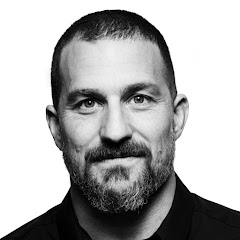 Andrew Huberman
Want to know something specific about what's covered?
We've already dissected every moment. Ask and we will deliver (with timestamps).
Key Moments
New brain stimulation techniques and psychedelics can rapidly rewire neural circuits for depression and PTSD, challenging the century-old chemical imbalance theory of mental illness.
Key Insights
Depression is now considered the fourth major risk factor for coronary artery disease, alongside hypertension, high cholesterol, and diabetes, highlighting its systemic health impact.
Transcranial Magnetic Stimulation (TMS) can directly influence heart rate by stimulating the dorsalateral prefrontal cortex and its connection to the vagus nerve.
Unlike older models (psychiatry 1.0/2.0), the new paradigm (psychiatry 3.0) focuses on circuit recalibration rather than psychological experiences or a serotonin deficit.
MDMA has shown a clinically significant anti-PTSD effect in about two-thirds of individuals after one to a few sessions in clinical trials.
Psilocybin, in blinded trials for depression, has shown improvement in approximately one-third of participants, with open-label studies suggesting higher efficacy (half to two-thirds).
The Stanford Accelerated Intelligent Neuromodulation Therapy (SAINT) protocol can induce remission in 60-90% of patients within 1-5 days by consolidating seven-and-a-half months of traditional TMS into a five-day period.
Depression as a critical cardiovascular risk factor
Dr. Nolan Williams highlights depression's significant impact on overall health, noting its recent addition by the American Heart Association as the fourth major risk factor for coronary artery disease, alongside established factors like hypertension, high cholesterol, and diabetes. This classification underscores that depression is not merely a mood disorder but a systemic issue with profound physiological consequences. The connection between the brain and heart is further elaborated through the use of transcranial magnetic stimulation (TMS). Specifically, stimulating the dorsalateral prefrontal cortex, a key brain region for control and regulation, has been shown to decelerate heart rate by influencing pathways down to the nucleus tractus solitarius and the vagus nerve. This physical link demonstrates how psychiatric conditions can have tangible, measurable effects on cardiovascular health, and conversely, how interventions targeting specific brain regions can influence bodily functions.
The neuroscience of TMS and brain-heart connections
Transcranial Magnetic Stimulation (TMS) offers a direct physical intervention for psychiatric conditions by leveraging Faraday's law to induce electrical currents in specific brain tissue. When applied to the dorsalateral prefrontal cortex, this stimulation depolarizes cortical neurons. Studies using actual scanners show that this targeted stimulation propagates to deeper brain structures like the anterior cingulate, insula, amygdala, and ultimately impacts the vagus nerve and heart. This pathway is highly specific to the prefrontal cortex's control region, as stimulation over visual or motor cortex does not yield similar cardiac effects. Research, including work by Martin Paulus, has replicated these findings, reinforcing the understanding of this brain-heart axis. Anecdotally, TMS has empowered patients to re-engage with therapy, with some experiencing profound mindful presence after rapid treatment, suggesting TMS might provide exogenous cognitive functions that restore order to brain circuits disrupted by depression. This contrasts with depression, where deeper brain regions can override the prefrontal cortex, akin to a player directing the coach.
Beyond serotonin: The shift to Psychiatry 3.0
The conversation critically examines the long-standing 'chemical imbalance' theory, particularly regarding Selective Serotonin Reuptake Inhibitors (SSRIs). While SSRIs are acknowledged as effective for depression, OCD, and anxiety disorders, their delayed action suggests they work through brain plasticity rather than immediate serotonin level adjustments. Dr. Williams contends that the idea of a serotonin deficit is a misconception, and psychiatry has evolved from Freudian psychotherapy (Psychiatry 1.0) and the chemical imbalance theory (Psychiatry 2.0) to a focus on neural circuitry (Psychiatry 3.0). This new paradigm is supported by TMS and psychedelic therapies, which demonstrably alter brain function and connectivity without directly manipulating serotonin. The success of rapid TMS protocols working within days, and the observed circuit-level changes with psychedelics like psilocybin and ketamine long after drug effects dissipate, point towards recalibrating neural networks as the primary therapeutic mechanism. This reframes psychiatric illnesses as recoverable circuit states, akin to a heart arrhythmia or a broken bone, rather than intractable conditions stemming from childhood trauma or inherent deficiencies.
Psychedelics for trauma and depression
Psychedelics like psilocybin and MDMA are showing significant promise in treating PTSD and depression. MDMA, in particular, has demonstrated an anti-PTSD effect in clinical trials, with approximately two-thirds of participants experiencing clinically significant improvement after one to a few sessions. These effects appear to be long-lasting, potentially spanning years. For depression, psilocybin has shown efficacy in open-label studies, benefiting half to two-thirds of individuals, while blinded trials report improvements in about a third. Researchers like David Nutt and Robin Carhart-Harris have used neuroimaging to reveal that psychedelics like psilocybin initially decrease overall brain activity but increase global connectivity. A key finding is that psilocybin induces a specific connectivity change between the subgenial anterior cingulate and the default mode network, a change also observed with effective TMS protocols. This suggests a convergent mechanism where these therapies decouple negatively valanced mood states from self-representation, helping individuals stuck in persistent negative thought patterns.
Ibogaine: A deep dive into neurobiology and risks
Ibogaine, an alkaloid from the iboga tree, is described as a profound psychedelic that induces a 'life review' or '10 years of psychotherapy in a night' experience. Participants report re-experiencing memories with detached empathy, allowing for profound self-reflection and forgiveness. Unlike recreational drugs, ibogaine is labor-intensive therapy with long-lasting effects, potentially 24-36 hours. It has shown promise in treating severe conditions like moral injury in special operations personnel, enabling self-forgiveness for past actions, such as accidental civilian casualties. While potent, ibogaine carries significant cardiac risks, requiring careful screening through electrocardiograms. Despite its potential, its non-recreational nature and risks necessitate strict medical supervision, distinguishing it from recreational substances. The research aims to quantify its neurobiological and neurocognitive effects, treating it as a powerful psychiatric tool rather than a cultural artifact.
Ayahuasca: A sacred sacrament with therapeutic potential
Ayahuasca, a psychoactive brew originating from Amazonian indigenous cultures, combines two plants to produce a powerful psychedelic effect. This combination uniquely allows dimethyltryptamine (DMT) to cross the blood-brain barrier by including a reversible monoamine oxidase inhibitor (MAOI). This physiological feat is remarkable, as orally ingested DMT is typically broken down before reaching the brain, and non-reversible MAOIs can cause dangerous serotonin syndrome. Ayahuasca has been explored for antidepressant effects and is considered safe, with studies showing no neurocognitive impairment even in children exposed to it within certain traditional contexts. Its use extends into religious ceremonies in South America. A notable study in Brazilian prisons found that offering ayahuasca sessions significantly lowered recidivism rates compared to a control group, suggesting its capacity to influence behaviors linked to criminality.
SAINT protocol: Rapid, intensive neuromodulation
The Stanford Accelerated Intelligent Neuromodulation Therapy (SAINT) protocol represents a paradigm shift in TMS treatment. By applying principles of spaced learning theory—which suggests optimal learning occurs with spaced repetitions—researchers redesigned the TMS protocol. Instead of the traditional once-daily sessions over six weeks, SAINT consolidates approximately seven-and-a-half months of TMS into just five days. This involves intensive stimulation, with sessions spread throughout the day for five consecutive days, totaling about 50 hours of protocol duration. The result is remarkable: 60-90% of patients achieve full remission within one to five days. While the durability of these effects is still being studied, some individuals have maintained remission for several years. This intensive, rapid approach aims to break through states of severe depression by 'cramming' therapeutic signals into the brain, utilizing its natural communication pathways to signal the need for sustained activity and recovery. Importantly, patients report no side effects and feel back to their normal selves upon exiting the treatment.
Mentioned in This Episode
●Software & Apps
●Organizations
●Books
●Drugs & Medications
●Concepts
●People Referenced
Brain Rewiring Strategies: Do's and Don'ts
Practical takeaways from this episode
Do This
Avoid This
Treatment Efficacy and Duration Comparison
Data extracted from this episode
| Treatment | Condition | Efficacy (% Clinically Significant Change) | Duration of Effect |
|---|---|---|---|
| MDMA | PTSD | ~66% | Years (for some) |
| Psilocybin | Depression (Open Label) | ~50-66% | Long-lasting |
| Psilocybin | Depression (Blinded Trials) | ~33% | Long-lasting |
| Ketamine | Depression | N/A | Approx. 1.5 weeks (single infusion) |
| SAINT (Rapid TMS) | Depression | 60-90% Remission | Variable (years reported) |
Common Questions
Depression is now recognized by the American Heart Association as the fourth major risk factor for coronary artery disease, alongside hypertension, high cholesterol, and diabetes.
Topics
Mentioned in this video
Host of Huberman Lab Essentials, Professor of Neurobiology and Ophthalmology at Stanford School of Medicine.
Guest on Huberman Lab Essentials discussing psychedelics and neurostimulation for brain rewiring.
Researcher whose work in Europe (Netherlands) has replicated findings on brain-heart connections and TMS.
Associated with a sociocultural construct overlaid on psychedelics, contrasting with the modern, scientifically-driven approach.
Added depression as the fourth major risk factor for coronary artery disease.
Mentioned in the context of standard MDMA dosage (150-175mg) for clinical trials.
Institution where a psychiatrist studied the effects of Ayahuasca, including on children, finding no neurocognitive effects.
Andrew Huberman's affiliation where he is a professor of neurobiology and ophthalmology.
A form of brain stimulation that can decelerate heart rate and is used to treat mood regulatory regions.
Stanford Accelerated Intelligent Neuromodulation Therapy, a rapid TMS protocol that delivers 7.5 months of treatment in 5 days, achieving high remission rates.
A class of antidepressants that are effective for depression, OCD, and anxiety disorders, working through brain plasticity effects rather than immediate serotonin increase.
Discussed for its significant anti-PTSD effects, with about two-thirds of participants in trials showing clinically significant improvement after one to a few sessions.
An alkaloid from the ibogga tree root bark, used for extensive life review psychotherapy, offering potential for trauma and addiction treatment but carrying cardiac risks.
A psychedelic brew used as a sacrament in South America, combining two plants to allow DMT to cross the blood-brain barrier, explored for depression and recidivism reduction with a history of religious use.
More from Andrew Huberman
View all 422 summaries 114 min
What Makes Great Leaders & How to Live an Extraordinary Life | Dr. Jared Diamond
 31 min
Essentials: Neuralink & Technologies to Enhance Human Brains | Dr. Matt MacDougall
 123 min
How Food Choices Shape Memory, Cognition & Cravings | Dr. Scott Kanoski
 31 min
Essentials: Manage Stress & Build Resilience | Dr. Elissa Epel
Ask anything from this episode.
Save it, chat with it, and connect it to Claude or ChatGPT. Get cited answers from the actual content — and build your own knowledge base of every podcast and video you care about.
Get Started Free