Key Moments
E35: Biogen's controversial Alzheimer's drug approval, the billionaire space race, Bitcoin & more
 All-In Podcast
Key Moments
Podcast discusses Biogen's Alzheimer's drug, the billionaire space race, and the future of work.
Key Insights
Biogen's Alzheimer's drug, Aducanumab, received FDA approval despite a divided scientific community and concerns over efficacy and cost, sparking debate on drug approval processes and pharmaceutical pricing.
The billionaire space race, spearheaded by Jeff Bezos and Richard Branson, highlights the potential and risks of private space exploration, while also underscoring the government's role in incentivizing industry growth.
The future of work is increasingly leaning towards remote and hybrid models, presenting challenges for companies in supervision and onboarding, but also offering opportunities for distributed talent acquisition.
The housing crisis is exacerbated by limited supply and rising demand, with hedge funds' involvement in the real estate market drawing criticism and prompting discussions on regulatory solutions.
The ProPublica leak of tax records has reignited discussions on wealth inequality and the fairness of the US tax system, particularly concerning capital gains and the ability of the wealthy to minimize tax burdens.
The debate around Bitcoin maximalism versus the broader cryptocurrency space highlights the tension between rigid ideology and diverse technological innovation, with concerns about toxicity impacting the movement's growth.
THE CONTROVERSIAL APPROVAL OF ADUCANUMAB
The podcast delves into the FDA's approval of Biogen's Alzheimer's drug, Aducanumab. Despite a unanimous vote against approval by the FDA's advisory panel, and three panel members resigning, the drug was approved. This decision has ignited a significant debate regarding the drug's modest efficacy, its hefty $56,000 annual cost, and the potential for it to grant false hope to patients and families. The discussion highlights concerns about pharmaceutical pricing, the FDA's approval process, and the economic burden on payers, while also acknowledging the drug's negligible side effects and the potential for it to stimulate further research and investment in Alzheimer's treatments.
BIOGEN'S DRUG: SCIENCE, DATA, AND THE MARKET
David Friedberg breaks down the science behind Aducanumab, explaining its function as a monoclonal antibody targeting amyloid plaques, a theorized driver of Alzheimer's. The drug's development faced setbacks with trials showing limited cognitive benefits compared to a placebo, leading to its abandonment before a re-evaluation based on data from a subset of patients receiving the highest dosage. The approval raises questions about data interpretation, the role of advisory panels, and whether the F.D.A. is creating a market to incentivize future innovation, mirroring past decisions with drugs for Duchenne muscular dystrophy.
FINANCIAL AND ETHICAL IMPLICATIONS OF ADUCANUMAB
Chamath Palihapitiya discusses the financial landscape of Alzheimer's, noting its disproportionate impact on minorities and women. He contrasts the low cost of manufacturing antibody therapies ($5) with the high price charged for Aducanumab ($56,000), highlighting the ethical dilemma of 'quality of life' premiums. The discussion touches upon the breakdown of Medicare Part B, which incentivizes physicians with kickbacks, and the broader challenge of regulating pharmaceutical pricing when the government is a major payer. The overarching concern is how to balance innovation with affordability in healthcare.
THE BILLIONAIRE SPACE RACE AND ITS IMPLICATIONS
The conversation shifts to the burgeoning billionaire space race, with Jeff Bezos and Richard Branson preparing for their respective flights. The hosts analyze the perceived risks, with concerns about the safety of Blue Origin's flights, noting past incidents. Chamath suggests Bezos's flight signifies a potential transition to leading Blue Origin full-time, driven by a passion for space exploration. The discussion praises the government's role in creating contract incentives that fuel private sector innovation in space, drawing parallels to the technological advancements spurred by the original space race.
GOVERNMENT'S ROLE IN THE SPACE INDUSTRY
The panel explores the government's involvement in space exploration, distinguishing between funding public programs like the Space Shuttle and contracting with private companies like SpaceX. While acknowledging the risks and costs of government-led R&D, they highlight the effectiveness of private sector innovation driven by government contracts. A geopolitical dimension is introduced, emphasizing the necessity for the US to maintain dominance in space to counter potential threats from Russia and China, thereby securing national interests and technological leadership.
THE FUTURE OF WORK AND REMOTE OPERATIONS
The discussion turns to the evolving landscape of work, with a growing trend towards remote and hybrid models. Companies like Apple, Amazon, Google, and Facebook are adapting their policies, balancing employee preferences with management's need for supervision. The hosts note that while work-from-home can enhance productivity for some, it can also enable less productive employees to 'hide.' The challenges of onboarding new employees in a remote setting are also highlighted as an unsolved problem that may impact overall effectiveness and company culture.
HOUSING CRISIS AND THE ROLE OF NIMBYISM
The housing crisis is examined, with concerns about rising prices, low mortgage rates, and insufficient new construction. The involvement of hedge funds in purchasing large numbers of homes is criticized for further inflating prices and limiting first-time homebuyers' access. The panel stresses the significant role of 'Not In My Backyard' (NIMBY) sentiment in hindering new housing development, suggesting that regulatory reform is crucial. Technological advancements like modular home construction are presented as potential solutions to accelerate building and address the supply shortage.
TAXATION, WEALTH INEQUALITY, AND SOCIAL CONTRACT
The ProPublica leak of tax records for wealthy Americans is discussed, revealing instances of billionaires paying little to no taxes due to deductions and capital gains loopholes. This sparks a debate about the fairness of the US tax system, particularly the principle of taxing income versus unrealized gains. The hosts explore how wealthy individuals leverage loans against their assets, making interest payments tax-deductible, creating an arbitrage that is less accessible to average citizens. The potential for mandatory tax record publication and wealth taxes is considered as future policy directions.
IMPROVING OPPORTUNITY THROUGH EDUCATION AND HOUSING
Addressing wealth inequality, the panelists propose concrete solutions centered on expanding access to education and housing. Ideas include universal free trade school, increased federal funding for charter schools and school choice, and policies that actively encourage the construction of affordable single-family homes. The argument is made that these measures are more effective and equitable than current subsidy programs that can artificially inflate prices. The importance of safe communities and quality education as foundational elements for individual and societal progress is emphasized.
BITCOIN MAXIMALISM AND THE TOXICITY DEBATE
The podcast touches on the concept of 'Bitcoin toxicity,' an extreme form of Bitcoin maximalism where adherents aggressively attack any opposing cryptocurrency. This behavior is seen by some as detrimental, potentially alienating participants and collapsing interest in the broader crypto movement. The discussion links this rigid ideology to frustration among some demographics and draws parallels to 'Fight Club' themes of unmet expectations and the search for purpose in a materialistic world. Conversely, others argue that such 'toxicity' is a moral panic and that denouncing scams is valid.
MERITOCRACY, DIVERSITY, AND CORPORATE CULTURE
The conversation explores the tension between meritocracy and diversity in the workplace, following comments by Snowflake CEO Frank Slootman. His remarks, suggesting a focus on merit over diversity, sparked controversy and a subsequent apology. The panelists debate whether these two ideals can coexist and the fear CEOs have of expressing potentially unpopular opinions. The discussion also touches upon the intense work ethic observed in countries like China and contrasts it with Silicon Valley's culture and the challenges of remote work impacting innovation and employee engagement.
NUCLEAR ENERGY AND THE PATH TO SUSTAINABILITY
A surprising discussion emerges about the potential of nuclear energy. The panel explores how, after dispelling common misconceptions about safety and reliability, nuclear power is recognized as a clean and efficient energy source crucial for achieving carbon neutrality. The irony of environmental groups like Greenpeace opposing nuclear energy is highlighted, despite its critical role in sustainability. This segment underscores the difficulty of holding nuanced views on complex issues and the tendency to shut down conversations rather than engage with them.
Mentioned in This Episode
●Products
●Software & Apps
●Companies
●Organizations
●Books
●Drugs & Medications
●Concepts
●People Referenced
Common Questions
Aducanumab is Biogen Mars's Alzheimer's drug, approved by the FDA despite a unanimous vote against its approval by an advisory panel. Its efficacy is modest, showing only a 23% decline in disease progression in a high-dose patient subset, and it costs $56,000 annually, raising ethical and economic concerns.
Topics
Mentioned in this video
Pharmaceutical company that developed Aducanumab, a controversial Alzheimer's drug approved by the FDA.
Elon Musk's space company, mentioned in comparison to Blue Origin for its accident rate and its government contracts funding innovation.
Has a policy expecting employees back in the office three days a week, similar to Amazon's hybrid model.
Smart home gym system, used as an example of a tool with measurable metrics to track progress in workouts.
Online real estate company, mentioned as one of the companies, along with banks and hedge funds, buying homes and potentially contributing to the housing crisis.
Hedge fund cited for a study that reverse-engineered Warren Buffett's returns, showing he used leverage.
Cryptocurrency exchange, mentioned as a company that has taken a stance against political speech at work, related to the debate on meritocracy and diversity.
Richard Branson's space tourism company, which had a tragic accident in the past.
Automotive and energy company, referenced for its factory-based modular car building approach, suggesting a similar model could revolutionize home construction.
Insurance company owned by Berkshire Hathaway, whose 'float' was used by Warren Buffett to synthetically leverage his investments.
Cloud data warehousing company, whose CEO's comments on diversity and meritocracy sparked debate and subsequent apology.
Jeff Bezos's space company, which conducted an 11-minute suborbital flight. It is speculated that Bezos will take a more active CEO role in the company.
Discussed in relation to employee petitions regarding work-from-home and the role of leadership in fostering innovation and a sense of purpose.
Financial services company, mentioned as a type of bank from which billionaires can obtain margin loans against their stock holdings.
Announced that employees can work from home permanently, a policy attributed to CEO Jack Dorsey's preference.
Discussed for its remote work policy, with Mark Zuckerberg personally embracing remote work for long-term thinking and family time.
Announced its move to become an 'entirely Slack-centric company,' rebuilding its architecture around Slack to adapt to distributed work.
Company that licensed the antibody discovery for Alzheimer's to Biogen for further development.
Flexible workspace provider, mentioned as a potential beneficiary of companies opting for smaller or flex spaces in a post-pandemic work environment.
Investment bank, mentioned as a type of bank from which billionaires can obtain margin loans against their stock holdings.
Online payment system, mentioned by David Sacks, who wrote an article in 1999 about 'Silicon Valley's Fight Clubs,' suggesting startups offered purpose.
E-commerce platform, mentioned as a company that has taken a stance against political speech at work, related to the debate on meritocracy and diversity.
Financial services company, mentioned as a type of bank from which billionaires can obtain margin loans against their stock holdings.
Adjusted its return-to-work policy to a hybrid model (two days remote, three days in office), differing from its initial office-centric stance.
Chamath's portfolio company with a customer service and claim center in Tempe, Arizona, which saw increased productivity after going fully remote.
Real estate brokerage, mentioned as one of the companies, along with banks and hedge funds, buying homes and potentially contributing to the housing crisis.
CEO of Twitter, mentioned as an introvert whose preference for remote work influenced Twitter's 'work from home forever' policy.
Venture capitalist, who wrote an essay highlighting the commitment to excellence and long working hours of Chinese engineers compared to Silicon Valley.
FDA acting commissioner in 2016 who approved a Duchenne muscular dystrophy drug despite a negative panel vote, setting a precedent for Aducanumab's approval.
Founder of Virgin Galactic, mentioned for attempting to beat Jeff Bezos into space, indicating a competitive space race.
Renowned investor, whose returns were reverse-engineered by AQR Capital, demonstrating his use of leverage through Geico's float.
Nobel Prize winner for his work on induced pluripotent stem cells, which allows any cell to be converted into a stem cell, a step towards cloning.
CEO of SpaceX, who tweeted a joke about Blue Origin's rocket not reaching full orbital space, highlighting competition in the space industry.
Founder of Amazon and Blue Origin, who embarked on an 11-minute suborbital flight with his brother, signaling a deeper involvement in space ventures.
CEO of Apple, criticized for caving to employee petitions, including those regarding work-from-home policies and stances on political issues.
CEO of Salesforce, praised for his brilliant marketing strategy of connecting Salesforce products, particularly Slack, to larger societal trends like distributed work.
French historian and philosopher, whose theory of mimetic desire is referenced in the context of human cloning and identity.
CEO of Meta (Facebook), who publicly stated his embrace of remote work, finding it beneficial for long-term thinking and family life, improving his happiness and productivity.
Co-founder of Apple, credited for the creation of the iPhone and his ability to inspire employees, contrasted with current corporate culture.
CEO of Snowflake, whose comments on diversity and meritocracy in hiring practices were controversial, leading to an apology.
A real estate site for San Francisco, cited for its calculation of vacant office space, illustrating the impact of remote work on commercial real estate.
Communication platform, identified as a dominant tool for distributed work. Salesforce announced it would become an 'entirely Slack-centric company'.
Government agency responsible for approving drugs. Its approval of Aducanumab was controversial, with some advisory panel members resigning.
Investment management corporation, criticized for buying up housing stocks in the US, driving up prices and making homeownership difficult for first-time buyers.
Newspaper where Mike Moritz's essay on the comparative work ethics of Chinese engineers was published.
Where researchers initially looked at antibodies in Alzheimer's patients that led to the discovery of Aducanumab.
US government agency for space exploration, mentioned for its role in contracting with private sector companies for R&D, moving away from past government-run programs.
U.S. government agency that collected the tax records leaked to ProPublica.
Environmental organization, criticized for advocating against nuclear energy despite its potential for achieving carbon neutrality, highlighting their contradictory stance.
The first decentralized cryptocurrency, discussed in the context of 'Bitcoin maximalism' and 'Bitcoin toxicity,' where advocates aggressively promote it as the only valid crypto.
A meme-inspired cryptocurrency, whose shirts were revealed by protesters at a Bitcoin conference, challenging Bitcoin maximalism.
Regulatory bodies that can limit innovation in space by creating undue burden, posing a risk to the space race.
A bill allocating a quarter-trillion dollars for semiconductors and other technologies, seen as a positive step for American manufacturing progress and innovation.
The part of Medicare that covers physician services and certain drugs. It provides a 6% kickback to physicians for prescribed drugs, creating a problematic incentive.
More from All-In Podcast
View all 409 summaries 77 min
Trump-Xi Summit, Benioff: "Not My First SaaSpocalypse," OpenAI vs Apple, Multi-Sensory AI, El Niño
 96 min
How We Grew Koch Inc. to $150 Billion Without Going Public: Charles & Chase Koch
 72 min
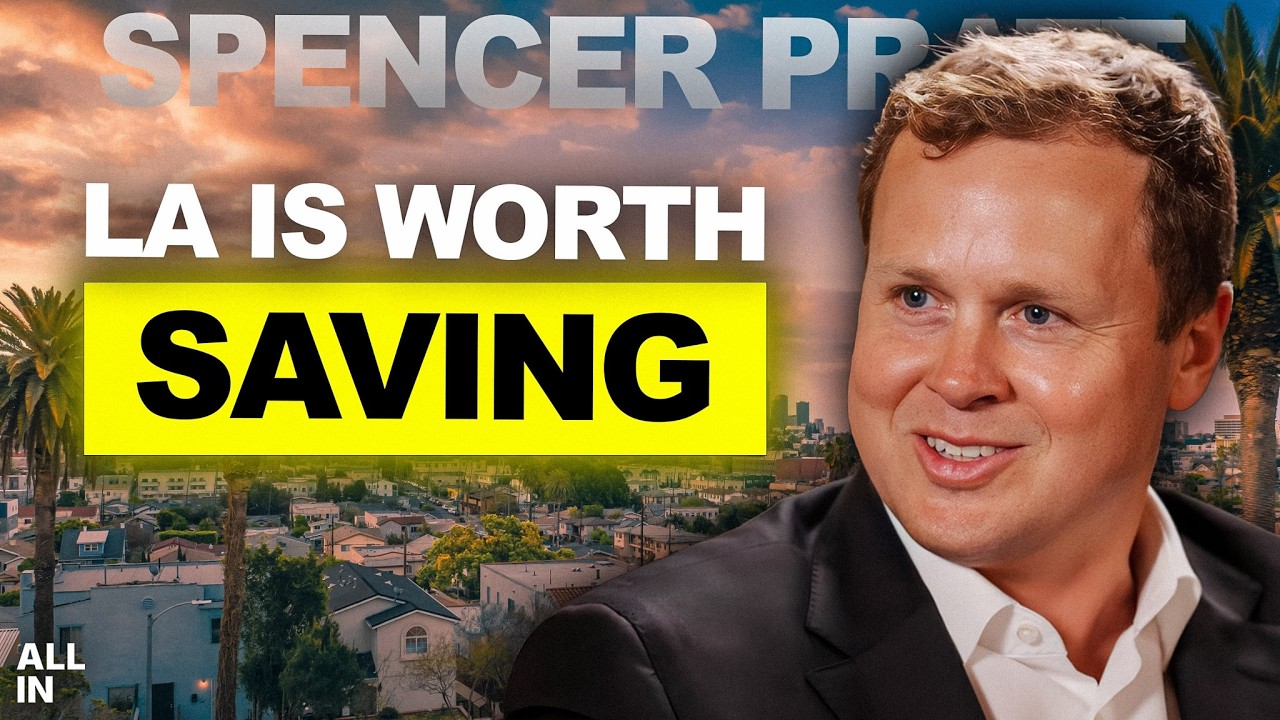
Spencer Pratt on Fixing LA: Wildfires, Homelessness, Corruption & the Fight to Take It Back
 83 min
Elon’s Anthropic Deal, The Next AI Monopoly?, “FDA for AI” Panic, Trading the AI Boom
Ask anything from this episode.
Save it, chat with it, and connect it to Claude or ChatGPT. Get cited answers from the actual content — and build your own knowledge base of every podcast and video you care about.
Get Started Free