Key Moments
Dr. Martine Rothblatt — The Incredible Polymath of Polymaths | The Tim Ferriss Show
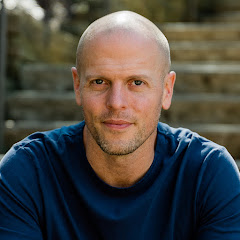 Tim Ferriss
Want to know something specific about what's covered?
We've already dissected every moment. Ask and we will deliver (with timestamps).
Key Moments
Dr. Martine Rothblatt discusses her polymathic career, biopharma innovations, AI consciousness, and sustainable tech.
Key Insights
Martine Rothblatt founded United Therapeutics to save her daughter, pioneering treatments for pulmonary hypertension.
She successfully licensed a life-saving drug from Glaxo Welcome by demonstrating a unique market opportunity and persistence.
Rothblatt's work in organ manufacturing, including refurbishing lungs and using genetically modified pig organs, aims to solve organ shortages.
She champions the idea of 'techno-ethics,' emphasizing the obligation to obtain consent from those affected by new technologies.
Rothblatt believes in 'thinking differently' and pursuing 'corridors of indifference' to drive innovation and problem-solving.
She sees the potential for AI to achieve consciousness and love, and advocates for ethical integration of advanced technologies.
FROM SATELLITES TO SAVING LIVES
Dr. Martine Rothblatt's career is marked by an extraordinary breadth of achievement, spanning fields from satellite communications to biotechnology. Initially captivated by satellite technology after a formative experience at a NASA tracking station, she led the creation of Sirius XM before pivoting to address a critical personal need. The founding of United Therapeutics was directly motivated by her daughter's diagnosis with a fatal illness, pulmonary arterial hypertension, for which no treatments existed, setting the stage for a profound impact on medicine.
PIONEERING BIOPHARMACEUTICAL INNOVATION
Rothblatt's journey into biotechnology was driven by necessity and a remarkable capacity for self-education. Faced with her daughter's life-threatening condition and a lack of available treatments, she immersed herself in medical literature, applying a rigorous, 'Shepardizing' approach to research to uncover potential solutions. This led to the discovery of a molecule that, while unsuccessful for congestive heart failure, held promise for pulmonary arterial hypertension. Her persistence in licensing this drug from Glaxo Welcome and establishing United Therapeutics demonstrates a unique ability to identify unmet needs and navigate complex corporate and scientific landscapes.
ADDRESSING THE ORGAN SHORTAGE CRISIS
One of Rothblatt's most significant current endeavors is the work at United Therapeutics to address the global organ shortage. This includes innovative approaches such as refurbishing donated lungs that would otherwise be discarded, saving lives through advanced technological repair and digital consultation with transplant surgeons. Furthermore, the company is exploring the transplantation of genetically modified pig organs, drawing inspiration from genetic diversity in human populations, like those with Laron's disease, to create organs that are size-compatible and less likely to be rejected.
THE ETHICS OF TECHNOLOGICAL ADVANCEMENT
A recurring theme in Rothblatt's philosophy is 'techno-ethics,' the principle that the right to create technology is inextricably linked to the obligation to obtain consent from those who might be adversely affected. This is crucial in fields like genetic modification and organ transplantation, where societal acceptance and regulatory approval, like that from the FDA, are paramount. She emphasizes that pioneers in any technological field must consider the broader community and ensure their innovations serve humanity ethically and responsibly.
EMBRACING 'CORRIDORS OF INDIFFERENCE'
Rothblatt advocates for identifying and pursuing 'corridors of indifference'—market areas or unmet needs that are largely ignored by others. This entails 'thinking differently' and not being afraid to question established norms or authorities, a concept she links to the teachings of Alan Watts about dialectical thinking. By focusing on niches overlooked by larger entities, one can become a leader in a specific area, fostering innovation and success where larger players might struggle. This approach guided her in both business and scientific pursuits.
THE FUTURE OF CONSCIOUSNESS AND SUSTAINABILITY
Looking forward, Rothblatt is deeply engaged with the potential for artificial intelligence to achieve consciousness and the development of sustainable technologies. She believes that replicating human consciousness synthetically is achievable, drawing parallels with the creation of artificial organs and body parts. Simultaneously, she champions zero-carbon footprint solutions, exemplified by United Therapeutics' sustainable headquarters and the use of electric helicopters for organ delivery. These efforts underscore her belief that technological progress must be coupled with environmental responsibility and ethical consideration for the future of humanity.
Mentioned in This Episode
●Supplements
●Products
●Software & Apps
●Companies
●Organizations
●Books
●Concepts
●People Referenced
Common Questions
Martine Rothblatt was introduced to Alan Watts' work through the philosophy of transhumanism and later rediscovered him through the film 'Her'. Watts' dialectic approach to nature, seeing yin and yang in everything, helped her find positivity in challenges.
Topics
Mentioned in this video
Scientist whose work on electricity is explained in Thomas S. Kuhn's 'The Structure of Scientific Revolutions'.
Known as the father of bioelectronic medicine and Chief Medical Officer at Northwell Medical Complex, who collaborates with Martine Rothblatt on vagus nerve stimulation research.
Often considered the father of artificial intelligence and author of 'The Emotion Machine,' which details how to create a computer with emotions.
Director of Engineering at Google, believed by Martine Rothblatt to have the best understanding of human consciousness moving into a digital substrate.
Chairman and CEO of United Therapeutics, founder of Sirius XM, and polymath known for her work in biotechnology, satellite systems, aviation, legal advocacy, and cyber ethics.
Martine Rothblatt's wife and partner, who inspired the creation of Bina48.
A science fiction author whose brilliant works, especially Time Enough for Love, influenced Martine Rothblatt and whose characters served as role models.
An astronomer and science popularizer who was an amazing role model for Martine Rothblatt, known for his ability to relate scientific concepts to everyday life.
A common character in Robert Heinlein's books who served as a role model for Martine Rothblatt.
A famous historian of science and author of 'The Structure of Scientific Revolutions,' recommended for understanding critical thinking and scientific change.
A Jesuit referred to Martine Rothblatt through her friend, who was an early influence.
A public health figure who commented on American culture's resistance to authority during the COVID-19 pandemic.
Head of the National Organization on Rare Diseases, who introduced Martine to Teilhard de Chardin and other Jesuits, who in turn referred her to Alan Watts.
A research and development executive at GlaxoSmithKline who initially refused to develop the molecule for pulmonary hypertension but later became a 'product champion' for Martine Rothblatt.
Scientist whose work on gravity is explained in Thomas S. Kuhn's 'The Structure of Scientific Revolutions'.
A scientist who led the effort to decode the human genome around the year 2000.
Founder of Neuralink, a company working on downloading a whole human brain, contributing to the idea of replicating human minds.
Physicist quoted by Martine Rothblatt for his saying, 'You can't solve a problem on the same level that it was created; you have to solve it on a different level.'
A scientist who led the effort to decode the human genome around the year 2000.
A pioneering surgeon who questioned authority and successfully performed organ transplants, enabling hundreds of thousands of people to clamor for organs today.
British surgeon and a pioneer of antiseptic surgery, whose research influenced Dr. Agnew.
A role model for Martine Rothblatt, known for his saying that 'magic is indistinguishable from sufficiently advanced technology.'
A public figure whose positive, progressive approach to the world enamored Martine Rothblatt, making him a role model.
A science fiction writer whose books, like 'Parable of the Sower' and 'Parable of the Talents', inspire questioning authority.
Co-founder of Apple Inc., associated with the 'Think Different' slogan that Martine Rothblatt highly values.
A book written by Octavia Butler that encourages readers to question authority.
Martine Rothblatt's favorite book by Robert Heinlein, covering almost every topic imaginable.
A book by Marvin Minsky that beautifully details how to go about creating a computer and software capable of feeling emotions like love.
The subtitle of one of Allen Watts' books, 'On the taboo against knowing who you really are,' which influenced Martine Rothblatt.
A well-known book by Robert Heinlein, which Martine Rothblatt savored, especially the uncensored version.
A well-known book written by Octavia Butler that encourages readers to question authority.
A book by Thomas S. Kuhn that describes approximately 10 revolutions in science, explaining complex scientific concepts and promoting critical thinking.
Country where a community of people with a type of dwarfism (Laron syndrome) are studied for their genetic resistance to growth hormone.
A set of islands in the Indian Ocean where Martine Rothblatt encountered a NASA tracking station during her world travels.
Country where a community of people with a type of dwarfism (Laron syndrome) are studied for their genetic resistance to growth hormone.
Location of United Therapeutics' new 150,000 square foot, zero-carbon footprint headquarters, the largest in the world.
A gastrointestinal problem that can be controlled by stimulating the vagus nerve.
A gastrointestinal problem that can be controlled by stimulating the vagus nerve, as documented extensively in research.
A disease name given by Western medicine to a type of dwarfism found in a population in Ecuador and Peru, characterized by a lack of growth hormone receptor.
The pandemic that necessitated virtual gatherings for 'Love Night' and led to chronic lung problems in 'long haulers', an area United Therapeutics is considering for medicine development.
A brain stimulation technique, along with TMS, that Tim Ferriss inquires about for its potential applications.
A video conferencing platform used by Martine Rothblatt's family to continue their 'Love Night' tradition during the COVID-19 pandemic.
A video conferencing platform used by Martine Rothblatt's family to continue their 'Love Night' tradition during the COVID-19 pandemic.
A meditation app offering guided meditations and daily mindfulness doses, backed by clinically validated research and numerous published studies.
An all-in-one invoicing and accounting solution that helps businesses manage billing, track expenses, and create professional invoices.
A painting by Thomas Eakins depicting Dr. Agnew practicing sterile surgical procedures, contrasting with 'The Gross Clinic'.
A film that Martine Rothblatt watched, which visualized the concept of computers becoming sentient, and featured an appearance by Alan Watts.
A TV series that explores the dark sides of technology, with episodes depicting sentient AI and digital resurrections of loved ones.
A science documentary series hosted by Carl Sagan, watched repeatedly by Martine Rothblatt and praised for its ability to build scientific literacy.
A painting by Thomas Eakins depicting Dr. Gross performing surgery without sterile procedures, reflecting past medical practices.
A documentary about music and memory, showcasing how music can dramatically revive communication and cognitive function in individuals with dementia and advanced Alzheimer's.
A type of cancer for which United Therapeutics offers FDA-approved medicines.
A fatal illness affecting the pressure between the lung and the heart, which Martine Rothblatt's company developed a medicine for.
A philosophy explored by Martine Rothblatt, involving the idea that people can transcend some biological human limitations, which led her to Alan Watts's work.
An illness that has been shown to be mediated by stimulating the vagus nerve, which helps calm inflammation.
A brain stimulation technique, along with tDCS, that Tim Ferriss inquires about for its potential applications.
Institution where Martine Rothblatt earned her PhD in medical ethics.
University where Martine Rothblatt earned her bachelor's, JD, and MBA degrees, and which awarded her its highest recognition, the UCLA Medal.
Medical complex in the New York area where Dr. Kevin Tracy serves as Chief Medical Officer.
Space agency with a tracking station in the Indian Ocean where Martine Rothblatt first learned about satellite communication possibilities.
A publication recommended as a great way for lay people to access and learn about various types of science.
An organization for which Martine Rothblatt led efforts to protect autonomy rights and genetic information via an international treaty.
A scientific magazine recommended as a great way for lay people to access and learn about various types of science.
Regulatory body responsible for approving medicines and technologies, known for its rigorous scientific proof requirements.
Professional organization for physicians in the United States, founded by Dr. Gross.
Pharmaceutical company that had developed a molecule effective for pulmonary arterial hypertension but was initially unwilling to pursue it due to perceived low market potential, eventually licensing it to United Therapeutics.
A platform mentioned as providing access to countless amounts of music and training, contributing to widespread access to knowledge and information.
A social media platform mentioned as offering an option for accounts to remain active and potentially continue tweeting after a person's passing.
A satellite radio company created and led by Martine Rothblatt, enhancing aviation safety with real-time digital weather information to pilots.
An all-in-one nutritional insurance supplement with 75 vitamins, minerals, and whole food sourced ingredients, recommended by Tim Ferriss.
Technology company where Ray Kurzweil works as Director of Engineering.
A biotechnology company founded by Martine Rothblatt to save her daughter's life, focusing on FDA-approved medicines for pulmonary hypertension and neuroblastoma, and working on manufacturing transplantable organs.
A company that produces consumer EEG brain interface headsets, one of which inspired Martine Rothblatt's Alzheimer's Cognitive Enabler.
A company founded by Elon Musk, focused on developing technology for downloading the human brain.
A social media platform mentioned as potentially offering similar post-mortem account options to Twitter.
An electric car manufacturer, whose vehicles inspired Martine Rothblatt to pursue electric helicopter development due to their electrical power output.
Technology company whose 'Think Different' slogan is a favorite saying of Martine Rothblatt.
A digital simulacrum or copy of Bina Rothblatt's basic personality, memories, and thoughts, created as a science and art project.
A brand of headphones, used as an example of a device that could be adapted to deliver targeted vagus nerve stimulation for various ailments.
A patented device developed by Martine Rothblatt, worn over the cranium to sense nerve impulses in the brain and facilitate communication for Alzheimer's patients.
More from Tim Ferriss
View all 701 summaries 112 min
The Random Show! Mortality, AI, Supplements, Rock Climbing, & More
 88 min
The Legendary Hollywood Power Broker — Guy Oseary on 36 Years of Managing Madonna, 26 IPOs, and More
 77 min
The Many Benefits of Coca — The “Divine Leaf” with 8,000+ Years of Use
 100 min
Inside The AI Race: DeepMind, OpenAI, Anthropic, China, and The Race to Superintelligence
Ask anything from this episode.
Save it, chat with it, and connect it to Claude or ChatGPT. Get cited answers from the actual content — and build your own knowledge base of every podcast and video you care about.
Get Started Free