Key Moments
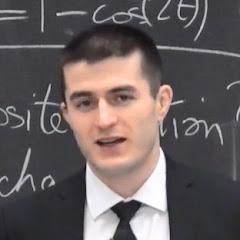
Dmitry Korkin: Computational Biology of Coronavirus | Lex Fridman Podcast #90
 Lex Fridman
Key Moments
Dmitry Korkin discusses computational biology of coronaviruses, protein structure, and pandemic modeling.
Key Insights
Viruses can be viewed as highly efficient, intelligent machines perfected for survival.
Computational biology plays a crucial role in understanding viral structure, function, and evolution.
The development of universal vaccines and antiviral drugs is a major goal in combating pandemics.
Agent-based modeling is a valuable tool for simulating virus spread and evaluating intervention strategies.
Open data sharing and interdisciplinary collaboration are essential for scientific advancement, especially during pandemics.
Understanding viral protein folding and interactions is key to designing effective treatments and preventatives.
THE NATURE OF VIRUSES: MACHINES OF EFFICIENCY
Dmitry Korkin describes viruses not as living organisms but as incredibly efficient, intelligent machines. Their simplicity belies their power, enabling them to achieve complex functions with minimal genetic material. This efficiency, coupled with their ability for self-modification, ensures their survival and success. The discussion touches upon both the micro-scale of individual viral particles and the macro-scale impact of pandemics on society, highlighting the fascinating duality of viral existence.
COMPUTATIONAL BIOLOGY'S ROLE IN UNDERSTANDING VIRUSES
Computational biology and bioinformatics are indispensable tools for decoding viral complexity. By analyzing viral genomes, researchers can reconstruct 3D protein structures and predict their interactions with human proteins. This structural genomics approach provides crucial insights into viral function, evolution, and potential vulnerabilities. Korkin emphasizes how computational methods aid in identifying functional regions and predicting protein behaviors, accelerating the discovery process for new treatments and vaccines.
VIRAL DIVERSITY AND PANDEMIC THREATS
The conversation highlights the natural and persistent threat of emerging viral strains, particularly influenza and coronaviruses. While acknowledging the theoretical possibility of engineered pandemics, Korkin considers naturally occurring viruses a more immediate concern due to their continuous evolution and emergence. The discussion contrasts different viruses, like smallpox and coronaviruses, in terms of contagiousness and pathogenicity, emphasizing the complex balance that determines their societal impact.
THE MECHANICS OF VIRAL INFECTION AND STRUCTURE
Viruses infect cells by attaching to specific receptors, like the ACE2 receptor for coronaviruses, primarily using their spike proteins. Once attached, they fuse with the host cell membrane, releasing their genetic material (RNA) to hijack the cell's machinery for replication. Korkin details the key structural components of a coronavirus, including spike, membrane, envelope, and nucleocapsid proteins, each playing a distinct role in the viral structure and function. The significant number of genes and proteins in coronaviruses compared to viruses like influenza underscores their complexity.
DRUG DISCOVERY AND UNIVERSAL VACCINES
Understanding viral proteins and their functions is paramount for developing effective antiviral drugs and vaccines. Korkin discusses the potential for existing drugs, like Remdesivir, to be effective against new viral strains, but also highlights the challenge posed by mutations that could alter binding sites. The aspiration for universal vaccines, effective against all strains of a virus like influenza, represents a significant goal. This pursuit requires deep knowledge of viral evolution and structure to create broad-spectrum immunity.
AGENT-BASED MODELING AND PANDEMIC RESPONSE
Agent-based simulation is presented as a powerful tool for modeling disease spread in confined environments like cruise ships or schools. These models allow researchers to simulate individual behaviors and pathogen dynamics in real-time, aiding in the evaluation of various intervention strategies. Korkin explains how including a 'pathogen agent' enhances the model's flexibility, enabling the incorporation of factors like asymptomatic transmission, viral shedding, and survival on surfaces, which are critical for understanding and controlling outbreaks.
THE IMPORTANCE OF DATA SHARING AND COLLABORATION
The COVID-19 pandemic has underscored the critical importance of open data sharing and interdisciplinary collaboration. The scientific community has demonstrated a remarkable ability to work together, accelerating research and development. Korkin highlights the value of public databases like the Protein Data Bank, which facilitate collaborative efforts. This shift towards open knowledge sharing is seen as a defining characteristic of modern scientific progress, especially in tackling global health crises.
THE CHALLENGE OF PROTEIN FOLDING AND PREDICTION
Predicting how proteins fold into their complex 3D structures is a significant challenge in computational biology. While methods like homology modeling leverage existing data, *ab initio* prediction remains difficult. Efforts like Folding@home and DeepMind's AlphaFold are advancing the field by using citizen science and sophisticated machine learning. The accuracy of structure prediction is vital for understanding protein function and designing targeted interventions, though challenges persist, especially with larger or membrane-bound proteins.
STRUCTURAL ANALYSIS OF SARS-COV-2
Korkin's group applied computational methods to analyze the structure of SARS-CoV-2 proteins, identifying conserved and functionally important regions by comparing them to related coronaviruses. This analysis revealed that while some viral proteins are highly conserved, others show significant mutations, often clustering in specific functional areas. Importantly, binding sites targeted by known drugs for SARS appeared largely unaffected in SARS-CoV-2, suggesting potential efficacy for existing antiviral compounds. The ongoing work involves modeling the entire viral particle to understand its overall structure and potential for nanoparticle-based interventions.
THE DYNAMICS OF ASYMPTOMATIC AND SYMPTOMATIC TRANSMISSION
The role of asymptomatic individuals in virus transmission is a crucial aspect of pandemic dynamics. Korkin notes that asymptomatic carriers can shed sufficient viral particles to infect others, making containment challenging. The timing of peak contagiousness, often within the first week of infection regardless of symptom status, significantly impacts transmission patterns. This understanding is vital for public health measures, such as mask-wearing, which protect both the wearer and the community.
THE FUTURE OF KNOWLEDGE SHARING AND SCIENTIFIC COLLABORATION
The podcast touches upon the evolving landscape of scientific communication, with a growing emphasis on preprints and open access knowledge. The value is shifting from publication venue to the knowledge itself. Korkin anticipates that remote collaboration will continue to be vital, especially for computational scientists, even as in-person interactions remain important for certain aspects of scientific discovery. This collaborative spirit is crucial for addressing complex global challenges like pandemics.
HUMAN VULNERABILITY AND SCIENTIFIC HOPE
Reflecting on the fragility of human life in the face of microscopic agents, Korkin underscores the importance of societal cohesion and scientific endeavor. The ability of simple viruses to impact humanity so profoundly serves as a stark reminder of our vulnerability. However, the progress made in understanding biology and developing countermeasures through science offers a strong sense of hope, demonstrating the utility and impact of scientific work in protecting human well-being.
Mentioned in This Episode
●Software & Apps
●Organizations
●Books
●Drugs & Medications
●Concepts
●People Referenced
Common Questions
Viruses are considered non-living because they are largely dependent on a host cell for their functions. They lack critical components, like ribosomes, to replicate and perform most of their functions autonomously.
Topics
Mentioned in this video
A past influenza pandemic that infected billions due to its high transmissibility, despite a low fatality rate.
Proteins that essentially cleave other protein sequences, important for viral function and a target for antiviral drugs.
A common cause of stomach flu outbreaks on cruise ships, often devastating to the cruise industry economy. It was one of the viruses initially modeled in Dmitry Korkin's agent-based simulation.
A type of flu virus that constantly changes, leading to the need for annual seasonal flu shots. The discussion points to the dream of a universal vaccine against it.
An exciting new research area with the potential to create artificial particles that mimic viruses to reduce infection effects.
A type of coronavirus that caused the SARS disease, which is closely related to SARS-CoV-2 and used as a reference for understanding the novel virus's proteins and structure.
A surface protein with the highest number of copies on the viral particle, forming the envelope and helping to maintain its curvature. Dmitry Korkin describes it as creating a 'carpet' on the surface of the virus.
An avian flu strain that emerged in China with an incredibly high mortality rate (above 30%), but was thankfully not pandemic because it couldn't transmit between humans.
A real-world virus that influenced the design of the fictional MeV-1 virus in the movie 'Contagion'.
A canonical model disease model of coronavirus in mice, which scientists study extensively to understand viral mechanisms.
A critical component mentioned found in viruses, responsible for replicating RNA.
A computational modeling concept used to predict 3D protein structures based on known structures of similar protein sequences (templates).
Another surface protein on the viral particle, occurring in fewer quantities, with its exact function still under research.
A highly pathogenic virus related to Ebola, for which Remdesivir was also initially developed.
An infamous protein on the surface of the virion particle, responsible for the 'crown' appearance of coronaviruses and critical for attachment to host cells. It functions as a trimer and is the main target for vaccine design.
A human receptor protein that SARS-CoV-2, like SARS-CoV, attaches to on host cells to initiate infection, with stronger attachment than SARS-CoV.
A structural protein inside the virus that binds to the viral RNA and creates a capsid, serving to protect the viral genetic material.
A dangerous, neglected disease that caused an outbreak in New England in 2019, targeting the brain and transmitted by mosquitoes. It was the focus of Dmitry Korkin's initial bioinformatics class project.
A collaborator from Texas who proposed, with some evidence, that SARS-CoV virion particles are elongated ellipsoids rather than perfect spheres.
Co-discoverer of the DNA structure, represented by a bobblehead in Dmitry Korkin's collection.
A pioneering computer scientist and cryptanalyst; Dmitry Korkin would like to see a bobblehead of him.
A scientist whose Photograph 51 was crucial to Watson and Crick's discovery of the DNA structure, and her bobblehead is Dmitry Korkin's favorite.
Co-discoverer of the DNA structure, represented by a bobblehead in Dmitry Korkin's collection.
A biologist and naturalist who is quoted at the end of the podcast, highlighting the vast diversity of life, including microbes.
A renowned scientist, represented by a bobblehead in Dmitry Korkin's collection.
The father of evolutionary theory, represented by a bobblehead in Dmitry Korkin's collection.
A Hungarian-American mathematician, physicist, computer scientist, and polymath; Dmitry Korkin would like to see a bobblehead of him.
A virologist from Columbia University who served as a scientific consultant for the movie 'Contagion' and designed the fictional MeV-1 virus based on Nipah virus and airborne flu characteristics.
A renowned scientist, represented by a bobblehead in Dmitry Korkin's collection.
A great Russian mathematician whom Dmitry Korkin admires for his dedication to science and educating young people; he would love to add his bobblehead to his collection.
An influential inventor, represented by a bobblehead in Dmitry Korkin's collection.
One of the greatest chemists who discovered the secondary structure of proteins and was close to solving the DNA structure; Dmitry Korkin considers him one of his favorite scientists.
Professor of Bioinformatics and Computational Biology at WPI, specializing in complex diseases, computational genomics, systems biology, and biomedical data analytics. His group reconstructed the 3D structure of major SARS-CoV-2 viral proteins.
A groundbreaking scientist, represented by a bobblehead in Dmitry Korkin's collection.
Academic institution where Dmitry Korkin is a professor of bioinformatics and computational biology. It's described as a problem-learning institution.
A community-driven open dataset where scientists submit solved protein and protein complex structures, crucial for computational modeling and making predictions.
Mentioned as part of the complicated process of experimental validation and approval for vaccines and drugs.
The institution where Dmitry Korkin studied mathematics before pursuing applications to real-life problems.
The US public health agency mentioned for potentially recommending mask-wearing during the pandemic.
An antiviral drug considered promising for SARS-CoV-2, originally developed for Ebola and Marburg viruses. It works by mimicking nucleotides to stop viral RNA replication.
A bacterial disease for which an antiviral drug was originally designed, demonstrating how drugs can sometimes be repurposed for different diseases.
A highly contagious virus mentioned with an R0 of 15 or higher, indicating its rapid spread.
A historically dangerous virus, now largely eradicated thanks to a vaccine, used as an example of a highly contagious virus with an R0 between 5 and 7.
A severe and often fatal disease caused by a virus for which Remdesivir was originally developed. Also modeled in agent-based simulations for outbreaks.
Cited for a study that found 50% of people infected with SARS-CoV-2 were asymptomatic.
Dmitry Korkin's childhood location; he was a child when it collapsed, influencing his early life experiences.
The city in the Hubei province where the novel coronavirus was first reported in 2019.
Cited as the location of an iconic photograph during the Spanish Flu era, depicting a tram refusing entry to someone without a mask.
More from Lex Fridman
View all 549 summaries 259 min
FFmpeg: The Incredible Technology Behind Video on the Internet | Lex Fridman Podcast #496
 124 min
Vikings, Ragnar, Berserkers, Valhalla & the Warriors of the Viking Age | Lex Fridman Podcast #495
 146 min
Jensen Huang: NVIDIA - The $4 Trillion Company & the AI Revolution | Lex Fridman Podcast #494
 311 min
Jeff Kaplan: World of Warcraft, Overwatch, Blizzard, and Future of Gaming | Lex Fridman Podcast #493
Ask anything from this episode.
Save it, chat with it, and connect it to Claude or ChatGPT. Get cited answers from the actual content — and build your own knowledge base of every podcast and video you care about.
Get Started Free