Key Moments
Dmitri Dolgov: Waymo and the Future of Self-Driving Cars | Lex Fridman Podcast #147
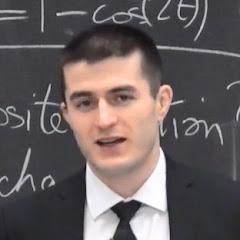 Lex Fridman
Want to know something specific about what's covered?
We've already dissected every moment. Ask and we will deliver (with timestamps).
Key Moments
Waymo CTO Dmitri Dolgov discusses self-driving tech, from Google's early days to Waymo's scaled operations.
Key Insights
Waymo's journey began with Google's self-driving car project in 2009, evolving into Waymo in 2016.
The Darpa Urban Challenge was a pivotal event, sparking significant advancements and attracting talent.
Waymo's development prioritized learning and iteration, with ambitious early milestones like driving 100,000 autonomous miles.
The pivot to fully driverless vehicles, rather than driver-assist, was a crucial strategic decision made around 2013.
Waymo's operational philosophy emphasizes safety, reliability, and user experience, aiming to delight customers.
Scaling autonomous technology requires advancements in core tech, evaluation processes, and commercial operations.
EARLY FORAYS INTO TECHNOLOGY AND ROBOTICS
Dmitri Dolgov's fascination with technology began at a young age with computers, leading him to programming and game development in Russia. While he didn't pursue game development professionally, this early exposure to coding laid the foundation for his future engineering path. His academic journey included studying physics and mathematics at MIPT (Moscow Institute of Physics and Technology), a rigorous institution that instilled a strong understanding of fundamental principles. This academic background, combined with his early programming experiences, set the stage for his eventual deep involvement in robotics and artificial intelligence.
THE DARPA URBAN CHALLENGE AND THE BIRTH OF WAYMO
Dolgov's entry into robotics and self-driving cars began seriously with his postdoctoral work at Stanford, where he joined the Darpa Urban Challenge team in 2006. This competition, designed to test autonomous vehicles in a simulated city environment with other vehicles, was a crucial catalyst for the field. The success of teams in this and previous challenges, particularly the insights gained, inspired Google's founders to launch the self-driving car project in 2009, which eventually became Waymo. This project aimed to tackle the complex problem of driving with ambitious learning-focused milestones.
WAYMO'S EVOLUTION AND STRATEGIC PIVOTS
The initial Google self-driving car project focused on extensive learning through milestones like completing 100,000 autonomous miles and special test routes with no human intervention. After achieving these, the project pivoted around 2013 from a driver-assist focus to the bolder vision of fully driverless vehicles. This strategic shift was critical, recognizing that building a fully autonomous system presented fundamentally different engineering challenges than driver assistance. The formation of Waymo as an independent company within Alphabet in 2016 marked the next phase, dedicated to scaling this technology commercially.
LANDMARK MILESTONES AND OPERATIONAL DEPLOYMENT
Waymo achieved several significant milestones, including the world's first fully driverless trip on public roads in 2015 with their 'Firefly' vehicle, carrying a blind passenger. This was followed by the launch of regular driverless operations in 2017 and the public commercial service, Waymo One, in Phoenix in 2018. A key distinction of Waymo's approach is its focus on 'driverless' operations, meaning no safety driver is present, differentiating it from many other autonomous vehicle efforts. This rider-only mode was opened to the public in Phoenix in October 2020, signifying a major step towards mainstream adoption.
TECHNOLOGICAL FOUNDATIONS AND HARDWARE DEVELOPMENT
Waymo's success is built on a robust technological stack, with a strong emphasis on developing proprietary hardware, including lidar, cameras, and radar. The company highlights its fifth-generation sensing hardware as a qualitative leap forward, designed for manufacturability at scale and improved unit economics. This in-house development strategy allows for deep integration and optimization, moving beyond off-the-shelf components to create systems specifically tailored for autonomous driving challenges, including pedestrian and cyclist safety.
THE ROLE OF MACHINE LEARNING AND DATA
Machine learning (ML) is central to every aspect of Waymo's system, from basic perception tasks like object detection to complex prediction and decision-making. Dolgov emphasizes a hybrid approach, combining supervised and unsupervised learning with rule-based systems where appropriate, such as traffic light interpretation. The ability to process vast amounts of sensor data in real-time, combined with extensive off-board data for training and simulation, is critical. Breakthroughs in areas like language models are also being explored for their applicability to behavioral prediction and decision-making in driving scenarios.
SCALING OPERATIONS AND NAVIGATING COMPLEXITIES
Expanding Waymo's service beyond Phoenix involves scaling three key dimensions: core technology, evaluation and deployment processes, and product/commercial excellence. The fifth-generation hardware is designed for massive scale, and continuous improvements are being made to software for robustness and generality. The company is refining its evaluation and deployment frameworks to enable confident, regular releases of new software across its fleet. Learning from real-world operations in Phoenix, including user feedback on everything from grocery loading to pickup locations, is crucial for iterating and improving the product.
USER EXPERIENCE AND THE FUTURE OF TRANSPORTATION
Waymo aims to create a seamless, frictionless, and delightful transportation experience. User feedback mechanisms, including in-car prompts and a 'live help' customer support system, are integral to this. The goal is for users to 'fall in love' with the predictability, safety, and convenience of Waymo's service, making it a reliable part of their daily lives. This involves not only moving people and goods efficiently but also considering subtle aspects of user interaction, like real-time car status updates during pickup, to enhance the overall experience.
ADDRESSING ETHICAL QUESTIONS AND REAL-WORLD CHALLENGES
While the 'trolley problem' is often discussed, Dolgov views it as more of a philosophical thought experiment than a practical engineering concern for autonomous vehicles. The focus in development is on building a safe, capable, and defensive driving system that proactively avoids dangerous situations. The rigorous engineering process, detailed testing, and extensive data collection are geared towards ensuring the safety of all road users, especially vulnerable ones like pedestrians and cyclists, often detecting hazards earlier than human operators. Waymo's approach prioritizes moving the entire capability curve upward rather than making difficult trade-offs in extreme hypothetical scenarios.
BROADENING HORIZONS: TRUCKING AND GLOBAL EXPANSION
Waymo is also applying its autonomous driving technology to commercial trucking through Waymo Via, recognizing that the core technical challenges—perception, decision-making, and infrastructure—transfer across domains. While the hardware configurations might differ (e.g., sensor placement on trucks versus passenger vehicles), the fundamental engineering principles remain consistent. The company is strategically building on its core technology and specializing it for different applications. Plans for global expansion are underway, with Phoenix serving as a foundational platform for learning and refinement before scaling to new cities and markets.
Mentioned in This Episode
●Products
●Software & Apps
●Companies
●Organizations
●Books
●Concepts
●People Referenced
Common Questions
Dmitri first got into computer science at a fairly young age in the late 1980s when his family got their first IBM computer. His leap to robotics, specifically self-driving cars, happened much later after grad school and a postdoc at Stanford University.
Topics
Mentioned in this video
Where Dmitri Dolgov did his postdoc and joined the DARPA Urban Challenge team.
The university in Moscow where Dmitri Dolgov earned his bachelor's and master's degrees in physics and math, known to Lex Fridman as a highly elite institution.
A leading university in robotics and artificial intelligence, whose team took first place in the DARPA Urban Challenge.
Lex Fridman's previous workplace where his focus was on autonomous and semi-autonomous driving.
Co-founder of Google, who believed in autonomous vehicle technology after the DARPA Urban Challenge.
Founder of comma.ai, described as an entertaining human being, who is working on an end-to-end machine learning approach to autonomous driving.
Co-founder of Google, who believed in autonomous vehicle technology after the DARPA Urban Challenge.
Russian author of 'The Master and Margarita,' one of Dmitri Dolgov's favorite books.
Science fiction author mentioned alongside Isaac Asimov and the Strugatsky Brothers.
The software lead for the Stanford DARPA Urban Challenge team, credited with writing most of the code.
CTO of Waymo, involved in the Google self-driving car project since 2009. The main guest of the podcast.
The first blind passenger to take a fully driverless trip on public roads in a custom-built Waymo Firefly vehicle in Austin, Texas.
Russian science fiction authors (Arkady and Boris Strugatsky) whose works, like 'Roadside Picnic' and 'Hard to Be a God,' made a strong impression on Dmitri Dolgov and are compared to Isaac Asimov and Ray Bradbury.
Author of '1984' and 'Animal Farm', whose works highlight the fragility of society and the dangers of bureaucracy, incompetence, and misinformation.
Science fiction author, compared to the Strugatsky Brothers, and whose short story 'The Last Question' is quoted by Dmitri Dolgov regarding the meaning of life.
CEO of Tesla, known for his view that lidar is a 'crutch' in autonomous driving technology.
Lex Fridman's favorite role-playing game series, remembered for its magical experience despite terrible graphics, allowing players to live in a Tolkien-like world.
A video game Lex Fridman used to play as a child, noteworthy for its simple graphics that allowed imagination to take over.
A city-building simulation game mentioned by Lex Fridman as appealing to an engineering mindset of optimization.
A game mentioned as an example of effectively creating a fun, short-term dopamine experience through optimal design.
A modern video game mentioned by Lex Fridman when discussing the differences in game graphics and immersion compared to older games.
Waymo's public commercial service launched in Phoenix in 2018, offering fully driverless rides to the public.
A sponsor and app used to send money to friends.
A video game cited as a great example of a game that allows players to create their own worlds, not relying on fancy graphics.
Waymo's commercial application product line focused on moving goods, specifically mentioning autonomous trucking.
The programming language Dmitri Dolgov used to write games as a child.
A database for image recognition research, mentioned by Dmitri Dolgov in the context of early machine learning before deep neural networks becoming prevalent for tasks like object detection.
A large language model that utilizes transformer architecture, mentioned as an example of breakthroughs in language models.
A book by the Strugatsky Brothers that Dmitri Dolgov considers their most important work, although he admits he found it difficult to understand.
A science fiction novel by the Strugatsky Brothers, mentioned among their other works.
A dystopian novel mentioned by Lex Fridman alongside '1984' as works that help in understanding how societies can go wrong in non-obvious ways.
A novel by Russian author Mikhail Bulgakov, cited by Dmitri Dolgov as one of his favorite books that can be reread and enjoyed at different stages of life, revealing deeper meanings.
A humorous science fiction novel by the Strugatsky Brothers, noted for its parallels to serious research in a magical setting.
A science fiction novel by the Strugatsky Brothers, mentioned as one of their works enjoyed by Dmitri Dolgov.
A dystopian novel by George Orwell, cited by Dmitri Dolgov as a book that made a strong impression and contains crucial lessons about doublethink and societal fragility that resonate with current world events.
A short story by Isaac Asimov about a supercomputer attempting to answer how entropy can be reduced, used by Dmitri Dolgov as an analogy for the meaning of life.
A science fiction novel by the Strugatsky Brothers that explores deep ethical questions, discussed as one of their works enjoyed by Dmitri Dolgov.
An allegorical novella by George Orwell, recommended by Lex Fridman as a companion piece to '1984' and a thought experiment on how societies can go wrong.
The brand of the first computer Dmitri Dolgov encountered in the late 80s.
The parent company of Waymo, providing significant resources and infrastructure for machine learning and data processing.
George Hotz's company, noted for its end-to-end machine learning approach, specifically computing drivable areas as an ML task.
The larger company under which the self-driving car project began and from which Waymo was later spun out. Its founders, Larry Page and Sergey Brin, believed in the technology after the DARPA Urban Challenge.
A sponsor and app used for reading summaries of books.
A sponsor offering online therapy with a licensed professional.
A sponsor of the podcast, this company helps businesses apply machine learning to solve real-world problems.
An autonomous driving company that originated from Google's self-driving car project in 2009 and became Waymo in 2016. It is currently leading in the fully autonomous vehicle space.
A company in the autonomous vehicle space, mentioned for its approach to machine learning in driving, focusing on multi-task learning with a single neural network.
A key sensing component designed and built in-house by Waymo, used for perception in autonomous vehicles. It is active and effective even in complete darkness, complementing cameras and radars.
A custom-built, funny-looking marshmallow-like autonomous vehicle used by Waymo for the world's first fully driverless public road test with a passenger in 2015.
One of the vehicles Waymo is using for its fifth generation of self-driving hardware, especially in comparison to trucks.
Mentioned as a location where Waymo tests for snow and other specific conditions.
A dense urban environment where early Google self-driving car project routes were tested and Waymo currently conducts significant testing.
The city where Waymo One was launched as a public commercial service, offering fully driverless rides.
The city where Waymo conducted its first fully driverless public road tests with a passenger in 2015.
More from Lex Fridman
View all 555 summaries 217 min
Psychiatry, Insane Asylums, Mental Illness, ECT, Lobotomies, Freud & Jung | Lex Fridman Podcast #502
 316 min
DHH: Future of Programming, AI, Agentic Engineering, Vibe Coding & Linux | Lex Fridman Podcast #501
 193 min
Khabib Nurmagomedov: Dagestan, MMA, UFC, Islam, Conor, Fedor & Football | Lex Fridman Podcast #500
 227 min
Gary Gallagher: American Civil War, Slavery, Lincoln, Grant & Lee | Lex Fridman Podcast #499
Ask anything from this episode.
Save it, chat with it, and connect it to Claude or ChatGPT. Get cited answers from the actual content — and build your own knowledge base of every podcast and video you care about.
Get Started Free