Key Moments
David Eagleman: Neuroplasticity and the Livewired Brain | Lex Fridman Podcast #119
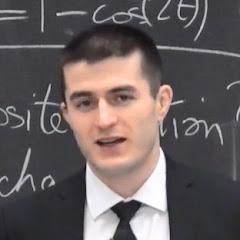 Lex Fridman
Key Moments
Neuroscientist David Eagleman discusses neuroplasticity, the brain's adaptability, and the "livewired" nature of our minds.
Key Insights
The brain is not static hardware/software but a "livewired" system constantly reconfiguring itself, physically changing as it learns and adapts.
Neuroplasticity, the brain's ability to mold and hold new shapes, diminishes with age but remains throughout life, with different brain regions having varying plasticity windows.
Human adaptability is a key evolutionary advantage, allowing us to absorb culture and language, essentially starting with a 'half-baked' brain that learns from experience.
The brain operates on multiple plastic layers, from rapid biochemical cascades to more cemented structures, explaining phenomena like memory stability (Ribot's Law).
Brain-computer interfaces (BCIs) offer potential but non-invasive methods like wearable devices are more practical for broad application than invasive skull surgery.
The concept of the "Umwelt" highlights how our reality is shaped by our senses, and new technologies can expand this Umwelts by providing new sensory inputs.
The brain excels at creating internal models of the world and humans have a fundamental, easily triggered bias towards 'in-groups' versus 'out-groups', influencing behavior and social dynamics.
While AI like GPT-3 is impressive, it lacks the human capacity for deep relevance, survival drive, and understanding social context, limiting its general intelligence.
The COVID-19 pandemic, while difficult, can be a catalyst for neuroplasticity by disrupting routines and forcing adaptation, similar to how cognitive activity in older adults can mitigate Alzheimer's effects.
The legal system could benefit from incorporating neuroscience to understand individual differences in brain function when determining accountability and rehabilitation, moving beyond a one-size-fits-all approach.
The greatest adaptation for humans, and potentially AI, is the drive for survival and relevance, which shapes our goals and interactions with the world.
THE BRAIN AS A "LIVEWIRED" SYSTEM
Neuroscientist David Eagleman introduces the concept of the "livewired" brain, departing from the traditional hardware/software metaphor. He explains that the brain is a dynamic system that constantly reconfigures itself physically as it learns and adapts to the environment. This inherent malleability allows it to rewire and utilize available neural real estate to accomplish tasks, even to the extent of surviving hemispherectomy in young children. This adaptability is not fixed but a continuous process throughout life.
THE SPECTRUM OF NEUROPLASTICITY
Eagleman clarifies that while neuroplasticity, the brain's ability to change and adapt, generally diminishes with age, it never fully ceases. Different brain regions have varying plasticity windows influenced by the stability of the data they process. For example, the visual cortex solidifies faster due to stable visual data, while areas like the somatosensory and motor cortex remain more malleable because the body's input is constantly changing. This layered plasticity allows for continuous learning and adaptation throughout life.
EVOLUTIONARY ADAPTABILITY AND THE HUMAN ADVANTAGE
Humanity's success is largely attributed to our highly flexible "livewired" brains, a product of evolution. Unlike many creatures with more hard-coded brains, humans are born to absorb culture, language, and beliefs, making us immensely adaptable. This "half-baked brain" experiment by nature has allowed us to thrive globally, underscoring that malleability, rather than rigid programming, is a strategic advantage for survival and development.
LAYERS OF CHANGE AND MEMORY FORMATION
The brain's plasticity operates across multiple layers, from rapid biochemical cascades to more stable structures. This multi-layered system explains phenomena like Ribot's Law, where older memories are more stable than newer ones. As information and experiences are processed repeatedly, they become cemented into deeper layers of the neural circuitry, making them more durable over time. This hierarchical consolidation influences how memories are formed, stored, and retrieved.
BRAIN-COMPUTER INTERFACES AND EXPANDING HUMAN CAPABILITIES
Eagleman discusses the burgeoning field of brain-computer interfaces (BCIs), acknowledging their potential for therapeutic applications and futuristic enhancements. However, he favors non-invasive approaches over invasive surgeries, highlighting his company, Neosensory. Their devices use wearable technology to translate data streams into tactile sensations, enabling individuals to learn new senses, like hearing through their skin, effectively substituting or augmenting existing sensory inputs, and expanding the human "Umwelt" without breaching the skull.
RELEVANCE, THE "UMWELT", AND THE DRIVE FOR SURVIVAL
Our perception of reality, or "Umwelt," is limited by our sensory inputs. Eagleman posits that the brain's core function is to create an internal model of the world, driven by a fundamental need for survival and relevance. This drive dictates what data the brain prioritizes, filters, and encodes. While AI can mimic patterns, it lacks this deep sense of relevance and survival instinct, representing a key difference between artificial and biological intelligence. The plasticity of our "livewired" brains allows us to integrate new information and adapt our models of reality.
SOCIAL DYNAMICS AND THE "IN-GROUP" BIAS
Research shows humans possess a strong, easily triggered bias towards 'in-groups' over 'out-groups,' influencing social behavior and empathy. This subconscious mechanism, tested through experiments involving perceived group affiliation, demonstrates how readily people prioritize their own group, even when affiliations are arbitrary. Understanding this fundamental aspect of human psychology is crucial for comprehending complex social dynamics, conflict, and the nature of both genius and evil.
NEUROSCIENCE, PSYCHIATRY, AND THE LEGAL SYSTEM
Eagleman advocates for integrating neuroscience and psychiatry to reform the legal system. He argues that a "one-size-fits-all" approach to justice fails to account for individual brain differences. Specialized courts focusing on mental health or addiction, informed by scientific understanding, can lead to more effective rehabilitation and societal outcomes. This shift moves from solely assessing blame to understanding the underlying neurological and psychological factors influencing behavior.
ADAPTABILITY AND THE FUTURE OF LEARNING
In a rapidly changing world, adaptability and the ability to learn are paramount. Eagleman advises young people to embrace broad learning rather than vocational training, as future jobs are unimaginable. He emphasizes "just-in-time" learning, fueled by curiosity, which is more effective for plasticity than rote memorization. This constant engagement with new information allows the brain to remix and create, fostering resilience and innovation in an unpredictable future.
THE MEANING OF LIFE AND CHOOSING TRAJECTORIES
The concept of "every man is born as many men and dies as a single one" reflects the brain's journey of selecting specific trajectories from countless potentials. While the ultimate meaning of life remains a profound question, the act of questioning and seeking optimal choices steers personal development. The ability to constantly reassess and adapt one's path, driven by curiosity and a "gut check" for passion, is key to navigating existence and making meaningful contributions.
Mentioned in This Episode
●Supplements
●Products
●Software & Apps
●Companies
●Organizations
●Books
●Concepts
●People Referenced
Common Questions
David Eagleman's book introduces 'livewear,' a system like the brain that constantly reconfigures itself physically as it learns and adapts. Unlike traditional hardware and software, the brain's layers are blended and continuously changing, highlighting its profound malleability.
Topics
Mentioned in this video
Author and technologist, quoted on how technology is perceived by different generations.
Referenced in a discussion about the nature of evil and how societal feedback can influence individual behavior, leading to extreme group actions.
A philosopher quoted at the beginning of 'Livewired,' with his quote interpreted by Eagleman in the context of brain plasticity and life trajectories.
Referenced in a discussion about the nature of good and evil, specifically criticizing simplistic attempts to localize these traits in the brain.
Author of 'All the Light We Cannot See,' a book inspired by David Eagleman's 'Incognito' and focusing on sensory perception.
Physicist whose discoveries exemplify how scientific understanding evolves, mentioned in the context of scientific unknowns.
Actor starring in 'The Martian', referenced in an analogy about the brain's isolation.
Entrepreneur and CEO of Neuralink, whose efforts in brain-computer interfaces are discussed by Eagleman.
A robotics expert at MIT, mentioned as an example of a world-class researcher in a specific field whose work is primarily in papers, not popular books or videos.
A psychologist who, along with others, developed Terror Management Theory based on Ernest Becker's work.
Referenced in a discussion about the nature of evil and how societal feedback can influence individual behavior, leading to extreme group actions.
An Italian author, whose book 'Invisible Cities' is recommended by David Eagleman.
Coined the term 'plasticity' over 100 years ago, inspired by plastic manufacturing.
Russian author, paraphrased to suggest that leaders like Hitler are representations of the crowd rather than solely independent evil actors.
Philosopher and author of 'The Denial of Death,' who theorized that the fear of mortality is a core human motivation.
An American author, whose short stories like 'The Snows of Kilimanjaro' are admired by David Eagleman.
An indigenous group mentioned in Eagleman's analogy about understanding complex phenomena like a radio without knowing its full context.
American poet, whose poem about choosing paths is referenced concerning life trajectories and potential.
A neuroscientist and author, known for his work on the human brain's malleability and adaptability.
An ultra-endurance athlete and motivational speaker, known for overcoming immense physical and mental challenges.
Creator of the '3Blue1Brown' YouTube channel, known for beautiful math education videos, discussed as an example of world-class educators becoming YouTubers.
Founder of psychoanalysis, mentioned in the context of theories about the fear of mortality and its impact on human action.
Referenced in a discussion about the nature of evil and how societal feedback can influence individual behavior, leading to extreme group actions.
A cognitive scientist and author who theorizes that human perception is far removed from objective reality.
A renowned astronomer and science communicator, who served as a major inspiration for David Eagleman's career.
A smart speaker and voice assistant, mentioned as a tool for children to get 'just-in-time' learning by asking questions.
A YouTube channel by Grant Sanderson focused on math education, praised for its beautiful and canonical videos.
A large language model with 175 billion parameters, trained on internet text, capable of impressive text generation but lacking human-like understanding, creativity, and motivation.
A finance app that allows users to send money, buy Bitcoin, and invest in the stock market.
A podcast mentioned for its host's positive views on Vitamin D.
A platform for reviewing the podcast.
An AI assistant from Amazon, used as an example of older people adapting to new technology.
One of the labels (religious movement) used in the 'in-group/out-group' experiment to study empathy.
One of the religious labels used in the 'in-group/out-group' experiment to study empathy.
The study of how environmental factors can influence gene expression, demonstrating that experiences directly impact who a person becomes.
One of the religious labels used in the 'in-group/out-group' experiment to study empathy.
A personality disorder characterized by a lack of empathy, used to exemplify how different brains lead to different behaviors and the need for specialized approaches in legal contexts.
One of the religious labels used in the 'in-group/out-group' experiment to study empathy.
The malleability of the human brain, which is the central topic of discussion. It diminishes with age but never stops entirely.
One of the labels (non-religious) used in the 'in-group/out-group' experiment to study empathy.
One of the religious labels used in the 'in-group/out-group' experiment to study empathy.
A social psychological theory arguing that human behavior is significantly motivated by the fear of mortality, building on Ernest Becker's philosophy.
Magazine where David Eagleman wrote an article titled 'The Brain on Trial,' discussing the intersection of neuroscience and the legal system.
A type of short, powerful presentation, highlighted as a modern way for young people to access high-quality information and learn.
A PBS television series that, along with the companion book, greatly influenced David Eagleman's career path towards science communication.
A book by Ernest Becker, which posits that the fear of mortality is a fundamental driver of human civilization and action.
An article written by David Eagleman for The Atlantic, which explores how neuroscience can inform and change the legal system, moving beyond traditional punitive approaches.
A book of fiction by Anthony Doerr, inspired by Eagleman's work on the limited slice of the electromagnetic spectrum humans perceive. It tells the story of two young people during World War II, one of whom is blind.
A short story by Ernest Hemingway, cited by David Eagleman as a favorite.
David Eagleman's book explores the concept of 'livewear,' where the brain constantly reconfigures itself physically as it learns and adapts, blending hardware and software layers.
A book recommended for understanding the history of money and cryptocurrency.
David Eagleman's book discussing the unconscious brain and speculating on the existence of free will, using the Kalahari bushman radio analogy.
A book of fiction by Italo Calvino, recommended by David Eagleman for its unique narrative and philosophical depth.
A movie starring Matt Damon, used as an analogy for the brain being 'trapped in silence and darkness' attempting to understand the world.
A sponsor of the podcast, providing online professional counseling.
A social media platform where Lex Fridman is active and used as an example for AI text generation.
A platform for following the podcast.
Elon Musk's company working on invasive brain-computer interfaces for patient cases like Parkinson's and epilepsy. Eagleman believes it's valuable for patients but not for general consumer use due to the risks of open head surgery.
A sponsor of the podcast, offering an all-in-one daily drink for health and performance.
A platform for supporting the podcast.
A platform mentioned for subscribing to the podcast and for children to access educational content like TED talks.
David Eagleman's company, which builds non-invasive wristbands with vibratory motors to feed data streams into the brain, enabling sensory substitution (e.g., hearing through skin) and expansion.
Massachusetts Institute of Technology, where faculty are exploring effective remote teaching methods.
Where David Eagleman still teaches courses, despite dedicating most of his time to his company Neosensory.
An online encyclopedia, described as a 'mole hole' for curiosity-driven learning in the internet age.
Lex Fridman's favorite football team, used as an example of strong in-group loyalty.
Boston's football team, contrasted with the Packers to illustrate difficulty in switching tribe loyalties.
A magazine whose covers are criticized for simplistic representations of complex neuroscience topics like good and evil.
A national non-profit founded by David Eagleman, dedicated to implementing changes in the legal system based on neuroscience insights, advocating for specialized court systems.
A robotic rover that failed when its wheel got stuck because it lacked the adaptive, survival-driven 'livewired' intelligence of a wolf.
An artificial eye that demonstrates the brain's ability to adapt to non-biological input, allowing people to learn to see with an electrode grid.
An artificial ear that demonstrates the brain's ability to adapt to non-biological input, converting digital signals into auditory perception.
A neurological disorder for which Neuralink's technology could be beneficial in patient cases.
A neurological disorder for which Neuralink's technology could be beneficial in patient cases.
A mental disorder mentioned to illustrate the importance of understanding different brain states in psychiatry and the legal system.
More from Lex Fridman
View all 549 summaries 259 min
FFmpeg: The Incredible Technology Behind Video on the Internet | Lex Fridman Podcast #496
 124 min
Vikings, Ragnar, Berserkers, Valhalla & the Warriors of the Viking Age | Lex Fridman Podcast #495
 146 min
Jensen Huang: NVIDIA - The $4 Trillion Company & the AI Revolution | Lex Fridman Podcast #494
 311 min
Jeff Kaplan: World of Warcraft, Overwatch, Blizzard, and Future of Gaming | Lex Fridman Podcast #493
Ask anything from this episode.
Save it, chat with it, and connect it to Claude or ChatGPT. Get cited answers from the actual content — and build your own knowledge base of every podcast and video you care about.
Get Started Free