Key Moments
Alex Honnold Interview | The Tim Ferriss Show (Podcast)
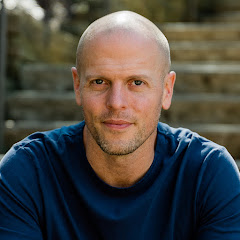 Tim Ferriss
Want to know something specific about what's covered?
We've already dissected every moment. Ask and we will deliver (with timestamps).
Key Moments
Alex Honnold on fear, risk, minimalism, and a life dedicated to climbing.
Key Insights
Honnold embraces a minimalist lifestyle, living out of his van for years to prioritize climbing above material possessions.
He approaches risk not by eliminating fear, but by meticulously managing and understanding it through preparation and mental rehearsal.
The professional climbing industry has grown significantly, allowing climbers like Honnold to make a living through sponsorships and commercial work.
His foundation focuses on environmental causes, channeling income beyond his basic needs into supporting non-profits.
Honnold's philosophy emphasizes simplicity and reducing distractions to focus on what he enjoys most: climbing.
Despite his free-soloing fame, he highlights his extensive experience in roped and speed climbing, emphasizing a well-rounded skill set.
FROM SUBURBAN CHILDHOOD TO CLIMBING PATH
Alex Honnold's journey into climbing began with a simple introduction at an 11-year-old's visit to a local gym. Though not a prodigious talent from the start, his deep love for the activity led him to dedicate years to it. Initially considering a career in civil engineering, a path influenced by a family member, he was drawn to the process of building and creating. However, his passion for climbing eventually led him to defer traditional education paths, ultimately defining his life's pursuit.
THE MINIMALIST 'DIRTBAG' LIFESTYLE
Honnold embodies the 'dirtbag climber' ethos, prioritizing climbing above all else. For nearly a decade, he lived out of his van, a lifestyle he found conducive to minimizing expenses and maximizing time spent climbing. This minimalist approach extends beyond mere practicality; it's a conscious choice to shed distractions and focus on his core passion. Even as his career and income grew, his commitment to simplicity remained, finding greater comfort and freedom in a less-cluttered existence.
MANAGING FEAR AND ASSESSING RISK
A defining characteristic of Honnold's climbing is his ability to manage fear, particularly in his free-solo ascents. He doesn't necessarily eliminate fear but rather prepares meticulously, visualizing routes and potential sensations, including fear itself. This mental rehearsal allows him to approach challenging climbs with a sense of calculated control, differentiating between rational fear and irrational panic. His approach to risk is not about being fearless but about thoroughly understanding and mitigating potential dangers through extensive preparation and experience.
THE EVOLUTION OF THE CLIMBING INDUSTRY
Honnold reflects on the significant growth of the climbing industry since he began. What was once a niche activity with few professional opportunities has evolved into a sustainable career path supported by sponsorships and media. He views this commercialization positively, acknowledging that it allows individuals like himself to dedicate their lives to climbing. While some traditionalists express criticism, Honnold sees it as a natural progression driven by increasing popularity and accessibility through climbing gyms and events.
FOUNDATION WORK AND SOCIAL RESPONSIBILITY
Beyond his climbing achievements, Honnold is committed to environmental advocacy through the Honnold Foundation. He channels a significant portion of his income into supporting environmental non-profits, focusing on initiatives like off-grid solar and energy access for rural communities. This philanthropic work stems from a desire to make a positive impact, recognizing that his success affords him the opportunity to contribute to causes beyond his personal pursuits and to further causes he deems essential for a better world.
CLIMBING AS A HOLISTIC PURSUIT
Honnold emphasizes that climbing is more than just physical strength; it encompasses technique, mental fortitude, and risk management. He highlights that while free-soloing garners much attention, his professional career is built on a much broader base, including speed climbing records and collaborative expeditions. Lessons learned in climbing, such as differentiating between fear and actual danger, have translated into other areas of his life, fostering a more rational approach to challenges and decisions. He advocates for focusing on the process and continuous learning.
Mentioned in This Episode
●Products
●Software & Apps
●Companies
●Organizations
●Books
●Concepts
●People Referenced
Common Questions
Free soloing is climbing with just hands and feet, no ropes or gear. Alex Honnold prepares by visualizing the experience, memorizing moves, and thinking through how different positions will feel to avoid unexpected fear responses.
Topics
Mentioned in this video
A park near Santa Cruz, California, where Alex Honnold started climbing as a kid.
A city mentioned as a climbing hub and location of the climbing route Necessary Evil.
Tim Ferriss grew up there, and mentions cookies from the region.
A climbing area where the Romantic Warrior route is located.
A granite dome in Yosemite National Park, with a 2,200 ft Northwest Face route first free soloed by Alex Honnold.
Mountain range where Mark-André Leclerc has been doing new solo climbs.
A vertical rock formation in Yosemite National Park, part of Alex Honnold's triple solo achievement.
A region where Alex Honnold was on an expedition during winter.
A national park in California, where Half Dome and El Capitan are located.
A city mentioned as an obvious choice for a climbing hub.
One of Yosemite's three largest faces, part of Alex Honnold's triple solo achievement.
Alex Honnold's sister lives there; he loves it as a progressive city, but notes its poor climbing climate.
A national park in Utah, home to the Moonlight Buttress.
Alex Honnold's hometown, where he first started climbing in a gym.
A city mentioned as an obvious choice for a climbing hub.
A climbing objective where Mark-André Leclerc has recently done impressive solo climbs.
A major American newspaper, whose bestseller list The 4-Hour Body appeared on.
A climbing gym in San Francisco where Tim Ferriss trained.
An organization Alex Honnold supports that does home solar PV systems for low-income families in the US.
An environmental nonprofit founded by Alex Honnold, to which he donates a third of his income.
A gym owned by Mark Bell in Sacramento.
An organization associated with explorers and photographers, mentioned in relation to Bradford Washburn.
The university Alex Honnold attended for a year, studying civil engineering, which he later left.
A 1,200 ft 5.12d climbing route in Zion National Park, first free soloed by Alex Honnold.
A 5.14c climbing route outside Las Vegas, established by Chris Sharma at age 15, which Alex Honnold still couldn't climb.
A difficult free solo route in the Needles, described as a beautiful granite wall.
A listener who asked about Alex Honnold's fear on a specific Half Dome free solo video.
A Roman Stoic philosopher, whose bust Tim Ferriss has on his counter.
Professional adventure rock climber, known for free solo ascents of America's biggest cliffs.
Founder of Headspace, known for a popular TED Talk.
A listener who submitted a question about Alex Honnold's achievements in alpinism.
The first person Alex Honnold thinks of when he hears the word 'successful'.
A high-end climber who died wingsuiting, mentioned as an example of the dangers of this activity.
An Alaskan explorer and photographer whose biography deeply impressed Alex Honnold for his productivity.
Undisputed king of big wave surfing, mentioned for his different approach to perceived risk.
A friend of Tim Ferriss and owner of Super Training Gym in Sacramento, known for powerlifting.
Considered one of the best climbers in the world for 20 years, a hero to Alex Honnold.
Former national gymnastics team coach for men, who underscored the risk of tendon injury when rapidly gaining muscle.
A young Canadian alpinist who is impressing Alex Honnold with his 'crazy Alpine soloing.'
A listener who submitted a question about Alex Honnold's influence on young climbers.
The actor who played the Hulk in the TV show.
A climber Tim Ferriss chatted with about the monastic climbing lifestyle.
Founder of Patagonia, mentioned in a documentary about 'dirtbag' climbers.
A photographer and big wall climber present during the interview, who has also been on the podcast.
A well-known soloist in the 1970s, recognized for his TV appearances and free soloing.
Mentioned as an example of an athlete with many questions about 'brass balls'.
A prominent free soloist from the generation before Alex Honnold, whom Alex admired.
Author of 'A People's History of the United States,' a book that impacted Alex Honnold's political views.
A climbing hero of Alex Honnold, with whom Alex now climbs as an adult.
Author of objectivist philosophy, whose ideas Alex Honnold read in high school but has since completely changed his mind about.
Brilliant and capable entrepreneur, coder, who recommended listening to the same song on repeat for focus.
A book Tim Ferriss was working on when he spoke with Steph Davis, also mentioned concerning his movie habits.
A book that totally changed Alex Honnold's view on economics, envisioning more just systems.
A TV show starring Lou Ferrigno, which Tim Ferriss was infatuated with as a child.
A book by Howard Zinn, which profoundly changed Alex Honnold's perspective on politics.
Chewable energy blocks, a type of food Alex Honnold uses on climbs.
A brand that used to sponsor Alex Honnold, whose products he still likes.
A smaller, kid-sized version of Clif Bar, preferred by Alex Honnold for their taste and calorie count.
Alex Honnold's current van, an upgrade that allows him to stand inside.
A type of food Alex Honnold typically brings on climbs for sustenance.
More from Tim Ferriss
View all 699 summaries 77 min
The Many Benefits of Coca — The “Divine Leaf” with 8,000+ Years of Use
 100 min
Inside The AI Race: DeepMind, OpenAI, Anthropic, China, and The Race to Superintelligence
 108 min
The Path from The Soviet Union to Building Multi-Billion Dollar Companies — Max Levchin
 127 min
Reimagining Biotech with Jake Becraft of Strand Therapeutics — Tim’s Founder Kitchen
Ask anything from this episode.
Save it, chat with it, and connect it to Claude or ChatGPT. Get cited answers from the actual content — and build your own knowledge base of every podcast and video you care about.
Get Started Free