Key Moments
A Pandemic Of Incompetence: A Conversation with Nicholas Christakis (Episode #222)
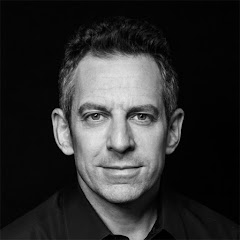 Sam Harris
Want to know something specific about what's covered?
We've already dissected every moment. Ask and we will deliver (with timestamps).
Key Moments
Nicholas Christakis discusses COVID-19's impact, institutional distrust, politicized science, and future pandemic preparedness.
Key Insights
The COVID-19 pandemic has exposed and exacerbated existing societal issues like distrust in institutions and the politicization of science.
Past pandemics offer lessons, but the current one highlights humanity's vulnerability due to our social nature, which pathogens exploit.
The gravity of COVID-19, while less extreme than historical plagues, is underestimated due to its heterogeneous presentation and lower lethality compared to smallpox or Ebola.
Mortality statistics are likely underestimated, not overestimated, as evidenced by excess death calculations and the disease's complex impact beyond direct deaths.
Future pandemic preparedness requires learning current lessons, as nature continually presents new threats, and effective responses are crucial despite economic costs.
The pandemic's trajectory suggests a prolonged period of significant impact, potentially extending into 2022, with a return to normalcy and societal changes by 2024.
THE HISTORICAL CONTEXT OF PANDEMICS
The COVID-19 pandemic, while unprecedented in recent memory, is not a novel phenomenon for humanity. Christakis emphasizes that pandemics have afflicted human societies for millennia, particularly since the agricultural revolution and the rise of cities. These outbreaks are an inherent risk tied to our social nature and interconnectedness. The current pandemic, therefore, represents an ecological release for the novel coronavirus, exploiting our lack of natural immunity and our evolved social behaviors.
SOCIETAL FRAGILITIES EXPOSED BY THE VIRUS
The pandemic has struck at a particularly inauspicious time for the United States, coinciding with a 'thinning out' of intellectual culture, a denigration of expertise, and a general disbelief or politicization of science. This is compounded by extreme political polarization, where even basic public health measures like mask-wearing become politically charged symbols. Furthermore, a loss of societal nuance leads to black-and-white thinking, hindering effective collective action. These factors have severely hampered the nation's ability to respond competently.
POLITICAL CO-OPTION AND THE CORRUPTION OF SCIENCE
Science has been co-opted by political forces from both the right and the left, revealing scientists as fallible humans. In the Trump administration, reputable scientists found themselves navigating a minefield, seemingly prioritizing not to embarrass the president over clear communication. This led to a vitiation of scientific expertise within government agencies. Simultaneously, the left exhibited a 'woke' moral panic, leading to a double standard where protests were deemed acceptable or even necessary, contradicting public health advice against gatherings.
QUANTIFYING THE RISK AND THE UNDERCOUNTING OF DEATHS
A significant source of skepticism regarding the pandemic's severity stems from concerns about over-reported COVID-19 deaths. However, Christakis argues the opposite is true: deaths are likely underestimated. The disease's varied presentation, from asymptomatic to fatal, muddies public health messages. While less lethal than historical pandemics like smallpox, COVID-19 is still roughly ten times deadlier than the flu. Calculations based on 'excess deaths'—comparing all-cause mortality during the pandemic to expected levels—suggest a higher true death toll than officially reported.
THE EVOLVING NATURE OF THE VIRUS AND FUTURE PROSPECTS
The coronavirus, like any living organism, will continue to evolve. While it's unlikely to disappear, it may become more benign over time, potentially resembling the common cold coronaviruses. However, this process takes years, and the immediate future still holds significant challenges. The development and widespread acceptance of a vaccine are crucial, but manufacturing, distribution, and public uptake remain considerable hurdles, likely extending the pandemic's immediate impact into 2022.
PREPARING FOR THE UNKNOWN AND LESSONS LEARNED
Humanity's social nature is both exploited by pathogens and essential for our defense against them. Cooperation, learning, and transmitting knowledge are key. This pandemic is a 'dress rehearsal' for future threats, whether natural or engineered. The current response has been largely incompetent, underscoring the need to learn these lessons. Despite the economic and social costs, robust preparedness for future, potentially more lethal, pandemics is a critical necessity. A return to normalcy will likely be gradual, with persistent societal changes expected long after the immediate crisis subsides.
Mentioned in This Episode
●Organizations
●Books
●Drugs & Medications
●Concepts
●People Referenced
COVID-19 R-naught Comparison
Data extracted from this episode
| Disease | R-naught Range |
|---|---|
| SARS-CoV-2 | 2.5-3.5 |
| Seasonal Flu | 0.9-1.6 |
| Chickenpox | ~6 |
| Measles | 18 |
Common Questions
The book emphasizes that while pandemics feel alien and unfair, they have been a recurring feature of human history since the agricultural revolution. It explores the profound and enduring impact of coronavirus on our lives.
Topics
Mentioned in this video
A cheap, old drug shown to lower mortality from coronavirus by 20% in seriously ill patients, discovered during the pandemic.
The most contagious known disease, with an R-naught of 18, used for comparison to SARS-CoV-2's transmissibility.
A drug that, while potentially helpful, has not yet shown a significant impact on mortality rates in large trials.
Nicholas Christakis directs the Human Nature Lab and co-directs the Institute for Network Science here.
Guidance on reporting COVID-19 deaths does not require a positive test. The administration is accused of vitiating its scientific expertise.
Published an op-ed by Harold Varmus questioning the CDC's guidance on school reopenings.
Mentioned as an agency whose scientific expertise may have been vitiated by the Trump administration.
Published a blistering editorial about the Trump administration's handling of COVID-19.
Criticized for its ineptitude in handling the pandemic, particularly by Nicholas Christakis and within a New England Journal of Medicine editorial.
Running the CDC, appeared visibly neutered when communicating about the pandemic publicly.
Host of the Makin Sense podcast. He discusses the pandemic's impact on society and politics.
Released a TED talk years prior to the pandemic that discussed precisely what was happening.
Public health official whose energy seemed dedicated to not embarrassing the President due to the administration's handling of the pandemic.
His killing prompted protests that occurred amidst the pandemic, leading to a public health double standard regarding protests.
Physician and sociologist, director of the Human Nature Lab at Yale University, author of 'Apollo's Arrow'. He is a repeat guest on the podcast.
A highly reputable figure who wrote an op-ed in The New York Times questioning the CDC's guidance on school reopenings.
A historical example of politics interfering with science, specifically Soviet biologist Trofim Lysenko's pseudoscientific theories, which were enforced by the state.
Used as an analogy for how early exposure to a pathogen can lead to a more benign course later in life, similar to how COVID-19 might evolve.
The disease caused by SARS-CoV-2, discussed in terms of its severity, mortality, long-term effects, and societal impact.
The virus responsible for the COVID-19 pandemic. It has an R-naught of 2.5-3.5, meaning each infected person infects 2.5 to 3.5 others in a non-immune population.
More from Sam Harris
View all 302 summaries 27 min
Is America Heading for a Debt Crisis? An Economist Explains
 27 min
Is America Heading for a Debt Crisis? An Economist Explains
 34 min
Is Psychedelic Therapy Ready for FDA Approval?
 26 min
You Lose Interest the Moment You Realize It's AI
Ask anything from this episode.
Save it, chat with it, and connect it to Claude or ChatGPT. Get cited answers from the actual content — and build your own knowledge base of every podcast and video you care about.
Get Started Free