Key Moments
Why Nothing Sticks to Trump (Until Now)
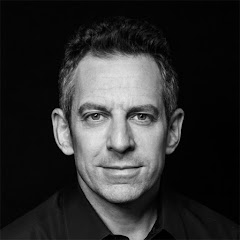 Sam Harris
Key Moments
Donald Trump's persistent creation of an alternate reality, fueled by sycophantic aides, allowed him to return to power, but recent election losses indicate his cult-like following may be fracturing due to economic woes and perceived self-enrichment.
Key Insights
Donald Trump's ability to foster an alternate reality, where even close aides couldn't endure his constant focus on the 'stolen' 2020 election, was crucial to his comeback.
Swan spent 11 consecutive years covering Trump, daily, providing him with deep insights into the former president's 'bubble' and fabricated reality.
Despite a thousand scandals that would ruin others, Trump's 'brightly colored shirt' analogy with Jared Kushner suggests his scandals don't stick because his supporters see him as inherently different.
Recent midterm elections show a notable shift away from Republicans across various demographics, including men, young people, and Hispanic voters, indicating a potential fracture in the MAGA coalition.
Corruption and personal enrichment became significant issues, with voters noticing the Trump family's increased wealth while they suffered financially, as evidenced by Swan's observations in Kansas.
The cult-like dynamics within Trump's orbit have intensified, with aides exhibiting extreme sycophancy and appearing to believe Trump possesses almost magical intuition, a phenomenon amplified by the shared experience of investigations and the events of January 6th.
The alternate reality and its role in Trump's return
Donald Trump's presidency and his subsequent return to the political forefront have been significantly shaped by his ability to cultivate and inhabit an alternate reality. Close aides in early 2021 reported being unable to tolerate his singular focus on the narrative that the 2020 election was stolen from him. This persistent belief, coupled with his readiness to create and maintain this alternative worldview, is seen as a critical factor in his ability to regain the White House. Jonathan Swan, in conversation with Sam Harris, suggests that without this specific mindset and the willingness to construct a reality detached from verifiable facts, Trump might not have achieved his political comeback. This fabricated reality is not just a personal trait but a phenomenon that engulfs his entire circle, forcing those around him to either confront his falsehoods or accept and perpetuate them.
Jonathan Swan's decade-long immersion in the Trump phenomenon
Jonathan Swan brings an unparalleled depth of experience to the discussion, having covered Donald Trump daily for 11 consecutive years. This prolonged, intensive engagement has allowed him to move beyond superficial observations and gain a profound understanding of Trump's modus operandi. Unlike those who experience fleeting intense exposure, Swan's sustained daily coverage has provided him with a unique perspective on the "bubble" Trump creates. He notes that while every president has a circle of advisors, Trump's 'flatterers' are of a different caliber, tasked with navigating a reality often detached from facts. This consistent immersion has equipped Swan to dissect the nuances of Trump's persona and the environment he cultivates, a perspective he shared in his book with Maggie Haberman, "The System: Inside the Private Wars of Donald and Melania Trump."
Trump's 'bubble' and the unmoored reality
A striking aspect of interacting with Donald Trump, according to Swan, is not necessarily his personality, but the pervasive 'bubble' he generates. This environment is characterized by a significant departure from objective reality, where many of Trump's pronouncements are not factually accurate but drift into the realm of fantasy. Those working for him face a constant dilemma: either challenge his fabrications and risk their position, or tacitly accept them to maintain their employment. Swan highlights that this self-created reality was particularly evident after the 2020 election, when Trump's insistence on its illegitimacy persisted despite a lack of evidence. Some aides reportedly experienced this repetition as akin to a form of mental disturbance. Yet, Trump's conviction that he could return to power, a belief few others shared, ultimately proved instrumental in his political survival and resurgence.
Methodology within the 'madness'
Swan posits that Trump's actions are not purely chaotic but possess a discernible methodology, albeit one that can be mistaken for deep strategic planning. Trump's response to crises, such as the situation with Jensen Huang, often involves outright denial, claims of innocence, and branding criticism as falsehoods—a consistent playbook. However, Swan cautions against viewing Trump's actions as intricate, multi-dimensional chess moves. He suggests that many of Trump's tactics are improvised, designed to navigate immediate news cycles or conversations rather than stemming from a grand, long-term strategy. This approach is further illustrated by Trump's unstructured mornings, characterized by numerous phone calls and television viewing, before arriving at the Oval Office around 10:30 AM. His afternoons often involve extended, fluid meetings where individuals enter and exit without clear boundaries, a stark contrast to the highly regimented schedules of former presidents like George W. Bush or Barack Obama.
The immunity to scandal and its evolving nature
Donald Trump's remarkable ability to weather scandals that would have irrevocably damaged any other politician is a central theme. Swan employs Jared Kushner's analogy of Trump being like a "brightly colored shirt" that can withstand spills, unlike Mike Pence's "stark white" shirt. This suggests that Trump's base is largely impervious to scandal due to their perception of him as fundamentally different. However, Swan points out a critical nuance: while Trump may be immune to scandals, he is not universally liked. His historical unpopularity is a significant factor, and recent electoral performance, particularly in the midterms, shows a distinct decline in support among independent voters and specific demographics like men, young people, and Hispanic voters. This suggests a potential fracture within the MAGA coalition, moving beyond mere scandals to broader dissatisfaction.
Economic anxieties and the perception of corruption
While scandals might not stick, economic factors and the perception of corruption have emerged as powerful deterrents. Swan acknowledges that issues like the price of eggs and gas significantly influence voter sentiment. However, he argues that these economic hardships have also made voters more attuned to perceived self-enrichment and ostentatious displays of wealth by the Trump family. During a rally in Kansas, Swan observed voters expressing anger over Trump's tariffs and the rising cost of diesel, but also noting the Trump family's significant increase in wealth amidst their own struggles. This heightened awareness of corruption has become a salient issue, potentially influencing electoral outcomes, even if the underlying motivation for voters is not solely driven by an abstract concern for American democracy or moral rectitude, but by tangible economic grievances.
Intensified cult dynamics and elite sycophancy
The cult-like dynamics surrounding Trump have reportedly intensified, particularly in the transition to a potential second term. Swan describes cabinet meetings resembling those in North Korea or Russia, where authoritarian figures demand escalating displays of flattery and loyalty. He notes that individuals with established reputations and achievements often adopt submissive postures, even professing belief in improbable claims, such as Ukraine initiating the war with Russia, simply to appease Trump. This behavior suggests that individuals are chosen for their willingness to humiliate themselves publicly. The shared experience of investigations, including the events of January 6th and subpoenas, has fostered a sense of solidarity among Trump's inner circle, leading some to develop an almost supernatural belief in his intuition. This intensified devotion, where aides might believe Trump hears or knows something they do not, represents a deepening of the cult of personality.
The enduring legacy of Trump's immunity and future shock
Looking back from a future perspective, Swan anticipates that the most shocking aspect of Trump and "Trumpism" will be the extent of his granted immunity, both perceived and actual. The book references Trump's suggestion that he would pardon anyone within 250 feet of the Oval Office, underscoring a belief in executive power that shields him and his allies. This perception of broad, almost unchecked, presidential power and its application by Trump has set a precedent. The cult-like adherence and the willingness of elites to engage in extreme sycophancy, even when contradicting reality, will likely stand out as profoundly bizarre phenomena from a historical viewpoint, especially when juxtaposed with the challenges to democratic norms and institutions that occurred during his tenure.
Mentioned in This Episode
●Companies
●Books
●People Referenced
Common Questions
Jonathan Swan covered Donald Trump's presidency for 11 consecutive years, providing daily coverage and gaining extensive experience and insights into his actions and statements.
Topics
Mentioned in this video
Co-author of the book 'The System: Inside the Presidency of Donald Trump'.
Trump's son-in-law, who used the analogy of a 'brightly colored shirt' to describe Trump's ability to withstand scandals compared to Mike Pence's 'crisp white shirt'.
The subject of the discussion, known for his unique approach to reality, his political strategies, and his ability to survive numerous scandals.
Commentator whose recent interview with Trump on '60 Minutes' was praised by Jonathan Swan.
Former US President, contrasted with Trump for his highly organized daily schedule and his hypothetical reaction to Trump's business ventures.
The interviewer and co-author of the book 'The System'. He has covered Trump for 11 years and is known for his persistent interviewing style.
Former Vice President, used as a contrast to Trump in an analogy about scandal resilience.
Former White House economic advisor who, in Trump's first term, would push back against his more unconventional ideas.
Mentioned as an example of someone who could influence personnel decisions within the Oval Office during Trump's presidency.
Former Secretary of Defense who, in Trump's first term, would strongly oppose his unconventional ideas.
Former US President, contrasted with Trump for his highly organized daily schedule.
Used as a comparison to describe the cult-like dynamics observed in Trump's cabinet meetings.
A state where voters expressed anger over Trump's tariffs harming farmers, despite the overall political leanings.
A state where voters, similar to Kansas, were affected by Trump's policies and the economic climate.
Mentioned in the context of Trump's supporters falsely claiming Ukraine started the war with Russia.
Trump's residence, mentioned in the context of his family's self-enrichment and lavish lifestyle.
More from Sam Harris
View all 319 summaries 103 min
The Islamist Threat to Western Democracy [Full Episode]
 30 min
Why Republicans Really Lost the Midterms
 25 min
Why Zuckerberg Wants to Give You Chatbot Friends
 29 min
Can AI Ever Be Funny? | Jimmy Carr
Ask anything from this episode.
Save it, chat with it, and connect it to Claude or ChatGPT. Get cited answers from the actual content — and build your own knowledge base of every podcast and video you care about.
Get Started Free