Key Moments
The Islamist Threat to Western Democracy [Full Episode]
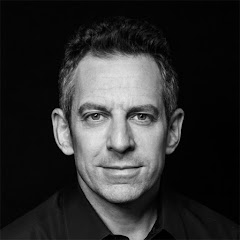 Sam Harris
Key Moments
Western democracies are being undermined by 'Islamists without the label,' who use liberal values like freedom of speech to advance a theocratic agenda, making it difficult to distinguish genuine reformers from ideological infiltrators.
Key Insights
The term 'Islamophobia' was intentionally created by Islamists to shield their ideology from criticism, analogous to how 'racism' is used, and is not equivalent to anti-Semitism.
Hassan al-Banna, founder of the Muslim Brotherhood, began his movement in a secluded Egyptian town, promising followers superiority over secular liberals in Cairo by adhering to his version of Islam focused on jihad.
Yusuf al-Qaradawi provided a playbook for Muslims abroad in the 1990s, outlining how to establish Islamic centers, leverage the Palestinian cause, and 'sabotage Western civilization from within' via Al Jazeera.
Organizations like CAIR (Council on American-Islamic Relations) are designated as terrorist organizations by the UAE, indicating their problematic agenda despite being perceived by some in the West as civil rights groups.
Electoral jihad' is a strategy where infiltrated civil society organizations are used to gain political power, mirroring tactics used in Egypt and Iran, with the goal of establishing Islamic political leadership globally.
The 'Palestinianization' process frames the Israeli-Palestinian conflict as the root of all societal grievances, used by extremists to scapegoat Jewish people and demonize Israel, thereby priming Western societies for radical narratives.
Dalia Ziada's personal escape from Egypt highlights the immediate dangers of political Islam.
Dalia Ziada, an Egyptian author and scholar, shared a harrowing account of her forced departure from Egypt following her public condemnation of Hamas's October 7th attacks and support for Israel's right to self-defense. This act triggered death threats from Hamas and the Muslim Brotherhood, leading to a search for her by extremist groups and legal accusations of espionage and treason. Her experience underscores the severe repercussions faced by those who challenge the dominant Islamist narrative, even in their home countries. Ziada's escape, facilitated by international friends, underscores the global reach and influence of these ideological movements. She emphasizes that her personal safety was threatened not just by extremists but also by legal actions initiated by the government, painting a grim picture of the political climate shaped by Islamism.
Defining the terms: Islamism, jihadism, and the spectrum of Islamic thought.
The conversation grappled with the nuanced terminology used to describe the threat of political Islam. Sam Harris proposed a distinction: 'jihadism' for those willing to use violence and 'Islamism' for political operations aimed at subverting liberal democracies. Yasmine Mohammed added that Islamists often resort to violence when in power, blurring the lines. Dalia Ziada offered a spectrum model, placing liberal and Sufi Muslims on the left and jihadists, Salafists, and Muslim Brotherhood-aligned Islamists on the right, with mainstream Muslims in the middle, often influenced by whichever side dominates the narrative. She noted that many mainstream Muslims adopt extremist ideas without critical evaluation, citing the misinterpretation of jihad and the Quran regarding the land of Israel and its people. This spectrum approach helps to differentiate between religious practice and political ideology.
The weaponization of 'Islamophobia' to shield ideology from criticism.
A significant portion of the discussion focused on the term 'Islamophobia,' which the speakers argued is a deliberately constructed tool by Islamists to stifle any criticism of Islamic doctrine or the actions of Islamist groups. Sam Harris likened its function to claims that criticizing communism is bigotry. He argued that Islam is a set of ideas, not a race, and that the term 'Islamophobia' is used to equate criticism of these ideas with irrational fear or bigotry against Muslims. Yasmine Mohammed elaborated that the term was strategically deployed after 9/11 to protect Islam from scrutiny, drawing a false equivalence with anti-Semitism. She highlighted that 'phobia' implies irrational fear, designed to make critics feel mentally unsound for expressing legitimate concerns about threats posed by certain ideologies or behaviors. Both speakers asserted that this linguistic strategy paralyzes Western societies and its progressive elements, preventing necessary dialogue and critical analysis.
The Muslim Brotherhood's evolution and global strategy.
The Muslim Brotherhood, founded by Hassan al-Banna, is described as a century-old organization that has mutated significantly over time. Initially focused on recruiting in isolated areas of Egypt, its ideology evolved, particularly under Sayyid Qutb, who advocated for revolutionary violence, influencing groups like al-Qaeda and Hamas. In the 1990s, under Yusuf al-Qaradawi, the Brotherhood shifted its focus to Western countries where members had emigrated. Al-Qaradawi developed 'the jurisprudence of minorities,' providing a playbook broadcast via Al Jazeera on how to establish Islamic centers, leverage the Palestinian cause to unite diverse Muslim communities, and ultimately 'sabotage Western civilization from within.' This strategy involves using democratic systems to dismantle them, a concept termed 'electoral jihad.' The speakers emphasized that the Brotherhood is not a static entity but a dynamic, transnational organization that continues to adapt its tactics to subvert Western societies.
The infiltration of civil society and 'electoral jihad.'
The strategy of infiltration into Western societies, termed 'entryism,' was highlighted as a key tactic of the Muslim Brotherhood. They targeted vulnerable sectors like civil society organizations, establishing hundreds of groups focused on humanitarian aid, student activities, and 'Muslim rights.' These organizations provided a platform to influence public opinion and gain legitimacy. As these groups face scrutiny from authorities like the FBI, they have pivoted to 'electoral jihad.' This involves redirecting resources and networks to influence political elections, aiming to gain power within democratic systems they do not genuinely support. The 'Holy Land Foundation' trial in the US is cited as evidence of these organizations' connections to funding terrorism, such as Hamas.
Political candidates as manifestations of disguised Islamism.
The candidacies of figures like Zohran Mamdani and Abdul El-Sayed were discussed as examples of 'Islamists without the Islamism label.' While presenting as liberals who support LGBTQ+ rights, their historical connections to organizations like the Muslim Student Association (MSA), listed in the Holy Land Foundation trial, reveal deeper ideological commitments. Their rhetoric, particularly regarding Israel and Hamas, is seen as a direct application of strategies taught by figures like Yusuf al-Qaradawi. The speakers noted that these candidates often deflect direct questions, attack their interrogators as Islamophobic, or use coded language that reveals their true allegiances to those familiar with Islamist discourse. The use of 'Allahu Akbar' in victory speeches by such candidates is presented not as cultural expression but as a deliberate projection of Islamic power, a tactic that alienates many non-Muslims and even some Muslims.
Immigration, ideology, and the 'suicide of the West.'
The discussion raised concerns about immigration, distinguishing between individual immigrants and the immigration of ideology. While individual immigrants can enrich societies, the unchecked influx of Islamist ideology, particularly in Europe, is seen as deeply problematic. Examples like the UK's grooming gangs, where thousands of non-Muslim girls were victims of sexual assault by predominantly Pakistani men, and the prosecution of non-Muslims for blasphemy, are cited as dire consequences. This is attributed to a fear of being labeled Islamophobic or racist, paralyzing political will and allowing Islamist influence to grow, especially as the Muslim vote becomes politically significant. The speakers advocate for rigorous vetting of immigrants, prioritizing liberal Muslims and ex-Muslims who understand and value Western democratic ideals, warning that failure to do so risks a 'suicide of the West' and the eventual dominance of Islamist agendas.
The polarization effect and the call for critical engagement.
The conversation concluded by addressing the polarization that arises from the framing of Islamism as a left-wing issue. The strategy of labeling critics of Islamism as bigots or Islamophobes pushes these concerns to the right, empowering far-right and potentially fascist movements as a counter-reaction. This creates an environment where extremists of all stripes thrive. The speakers stressed the need for a critical distinction between criticizing ideas and attacking people, and between the religion of Islam and political Islamism. They emphasized that a genuine reform of Islam is necessary, requiring open criticism and the re-examination of texts. The work of organizations like the Clarity Coalition and ISGAP, which aim to amplify these critical voices, is highlighted as essential in this ongoing 'war of ideas' to preserve Western democracies.
Mentioned in This Episode
●Companies
●Organizations
●Books
●Concepts
●People Referenced
Common Questions
Dalia Ziada grew up in Egypt, studied in the US, and returned to her home country. She became an advocate against political Islamism, fighting the Muslim Brotherhood and other extremist groups. After publicly condemning Hamas on October 7th and supporting Israel, she faced death threats and legal claims, forcing her to flee to the US.
Topics
Mentioned in this video
An Egyptian human rights activist, author, and civil society leader who has publicly condemned Hamas terrorism and supports Israel's right to defend itself. She faced death threats and legal claims in Egypt due to her stance.
One of the main ideologues of the Muslim Brotherhood in the 1960s, who established the idea of using violence to change societies, influencing groups like Al-Qaeda and Hamas. His writings were translated by Ali Khamenei.
A political candidate mentioned for his past as a rap artist who praised the Holy Land Foundation (an organization raising money for Hamas) and for his anti-Semitic and anti-Zionist language. He represents 'Islamists without the Islamism label' who appear liberal but hold conflicting ideologies.
The host of the podcast, who frames the discussion on political Islam and its challenges to Western liberalism, seeking to understand the issue deeply and correct any misunderstandings.
The founder of the Muslim Brotherhood in Egypt in 1928, described as an ardent fan of Hitler who started the movement in a small town by promising followers they would be 'better than the liberals in Cairo' if they adhered to his version of Islam.
A congressional candidate in New Jersey mentioned for concluding his victory speech by asking the crowd to say 'Allah Akbar,' which Dalia describes as inappropriate and potentially criticized in Egypt but defended in the US as cultural.
A religious leader of the Muslim Brotherhood in the 1990s, known for notorious fatwas supporting suicide bombing against Israelis. He developed the 'playbook' for the Muslim Brotherhood's operations in Western countries, including using the Palestinian cause to unite diverse Muslim communities.
A liberal Muslim who loves America and is the co-director of the Clarity Coalition alongside Yasmin Mohammed.
Mentioned as having translated Sayyid Qutb's works from Arabic to Persian when he was a young Islamist, helping to recruit supporters to the Islamist movement in Iran.
A political candidate mentioned for his past leadership in the Muslim Student Association and his evasive response to questions about the October 7th attack and the Muslim Brotherhood. He is seen as an 'Islamist without the Islamism label' who uses liberal rhetoric while maintaining Islamist commitments.
A prominent atheist and evolutionary biologist, whose writings are mentioned as a potential influence for apostates from Islam who no longer believe in God.
An organization mentioned as being affiliated with the Muslim Brotherhood, where candidates like El-Sayed were leaders, and listed in the Holy Land Foundation trial documents.
An organization co-directed by Yasmin Mohammed and Dr. Zudi Jasser, composed of Muslims, ex-Muslims, Jews, Christians, and Hindus, united by concerns about Islamists in government, education, and media. Dalia Ziada is also a part of it.
An Islamist organization founded in Egypt in 1928, described as having mutated over time, using democratic means to subvert Western societies from within, and considered a terrorist organization by many Arab countries.
An organization mentioned for organizing protests after October 7th, implied to be related to the network of organizations influenced by Islamism.
A jihadist terrorist organization, representing the far-right of the Islamic spectrum, whose actions are seen as a continuation of early Islamic tribal culture.
A Palestinian Sunni-Islamist fundamentalist organization designated as a terrorist group, whose actions on October 7th were condemned by Dalia, leading to death threats against her. The organization's ideology is used as a litmus test for Islamist sympathies.
A global militant Sunni Islamist organization, described as a jihadist group that represents the far-right of the Islamic spectrum, advocating for bloody, tribal actions.
An organization described as a 'sinister organization' by the host, taken by many mainstream media as a blameless human rights organization representing American Muslims, but considered a terrorist organization by the UAE and implicated in the Holy Land Foundation trial.
A think tank where Dalia Ziada wrote a report on 'entryism' by the Muslim Brotherhood into Western societies. Dalia is currently its Washington Director.
An extremist group mentioned as part of the rise of political Islam in Egypt, operating in Dalia's neighborhood and threatening her life after she condemned Hamas.
A concept from Karl Popper's 'The Open Society and Its Enemies,' where tolerant societies must be intolerant of intolerance to survive. It's used to explain how the norms of tolerance and freedom in Western societies are exploited by theocrats to subvert them from within.
More from Sam Harris
View all 318 summaries 30 min
Why Republicans Really Lost the Midterms
 25 min
Why Zuckerberg Wants to Give You Chatbot Friends
 29 min
Can AI Ever Be Funny? | Jimmy Carr
 23 min
Why the AI Skeptics Keep Being Wrong
Ask anything from this episode.
Save it, chat with it, and connect it to Claude or ChatGPT. Get cited answers from the actual content — and build your own knowledge base of every podcast and video you care about.
Get Started Free