Key Moments
Western Culture and Its Discontents: A Conversation with Douglas Murray (Episode #281)
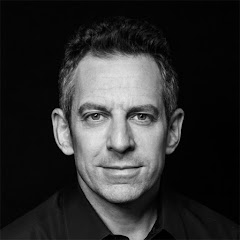 Sam Harris
Want to know something specific about what's covered?
We've already dissected every moment. Ask and we will deliver (with timestamps).
Key Moments
Sam Harris and Douglas Murray discuss Western culture, "the war on the West," and societal dysfunctions.
Key Insights
The Elon Musk Twitter acquisition highlights issues of platform moderation and free speech, with both left and right misinterpreting the problem.
Both the left and the right suffer from hyper-partisanship, identity politics, and a disregard for facts, though Murray's focus is on the 'leftist assault' in his book.
Douglas Murray defends his focus on the left by stating he consistently critiques his own side when warranted, citing examples of his commentary on Trump and the American right's embrace of Russian narratives.
The Hunter Biden laptop scandal exemplifies media suppression and the politicization of institutions, raising questions about journalistic ethics and political corruption.
The "religion of anti-racism" is criticized for prioritizing race over a colorblind future, a goal that was central to the civil rights movement.
Social media platforms create 'moral panics' and 'social contagion' exacerbated by a loss of trust in institutions and societal fragmentation.
THE ELON MUSK TWITTER CONUNDROMA
The conversation opens with an analysis of Elon Musk's potential acquisition of Twitter. Sam Harris observes that both the left and the right misunderstand the situation, with the left exhibiting "hysteria" and the right engaging in "celebratory nonsense." Harris believes Musk could improve Twitter by addressing bots and moderation issues, but acknowledges the inherent difficulty in creating a perfect moderation policy due to the endless judgment calls required. He cautions against free speech absolutism, pointing to unmoderated platforms like 4chan as examples of what can emerge without coherent policies, while also noting that outright illegal content must be removed.
THE DUALITY OF MODERN POLITICS: DEPARTURES ON THE RIGHT AND LEFT
Sam Harris probes Douglas Murray on why his book, "The War on the West," focuses exclusively on the left, suggesting similar trends of identity politics and intellectual dishonesty exist on the right. Murray counters that he consistently critiques his own side, citing his public criticisms of Donald Trump, the January 6th Capitol attack, and the American right's embrace of Russian disinformation. He argues that while these issues exist on the right, the "assault" he is pushing back against in his book is primarily from the left's deconstruction of Western culture.
THE HUNTER BIDEN LAPTOP AND INSTITUTIONAL DISTRUST
The Hunter Biden laptop controversy is discussed as a case study in media suppression and the politicization of institutions. Harris admits uncertainty about what should have been done differently, given the stakes of the 2020 election and the prior actions of figures like James Comey. Murray deems the suppression of the story by major tech companies a "catastrophic mistake," arguing that the media, by refusing to investigate the laptop's contents, undermined trust in institutions. He emphasizes that the core issue was not prurient details but potential corruption at the highest levels of American politics.
THE DEPARTURES OF THE AMERICAN RIGHT
Murray elaborates on his criticisms of the right, particularly the American right's susceptibility to conspiracy theories and figures like Donald Trump. He attributes this to a perception on the right that they had been "too nice" and that Trump, as a "dirty fighter," represented a tool to "upset their opponents." Murray highlights the Republican party's failure to commit to a peaceful transfer of power and their subsequent embrace of narratives questioning election integrity as particularly concerning, suggesting a potential departure from conservative principles. He also criticizes the baffling embrace of Vladimir Putin by some on the right, viewing it as a monumentally stupid and amnesiac stance.
THE 'RELIGION' OF ANTI-RACISM AND THE DECONSTRUCTION OF WESTERN CULTURE
The conversation pivots to the core themes of Murray's book, "The War on the West," starting with the "new religion of anti-racism." Murray and Harris agree that the ultimate goal of moral and political progress should be a colorblind society where race is irrelevant, a vision championed by civil rights leaders like Martin Luther King Jr. They criticize the current anti-racist movement for explicitly disavowing this goal, instead re-racializing public discourse and focusing on group differences and historical grievances.
THE ROLE OF SOCIAL MEDIA AND THE IMPERATIVE OF CULTURAL SELF-AWARENESS
Both speakers identify social media as a significant amplifier of misinformation, "moral panics," and "social contagion." They discuss the erosion of trust in institutions and societal fragmentation, exacerbated by platforms that struggle with moderation and transparency. Murray stresses the importance of personal responsibility in navigating these platforms, advising against posting things one wouldn't want used against them and expressing a lack of sympathy for those who behave aggressively online and then complain about the consequences. He suggests that, like email, social media will eventually develop its own norms and customs, but we are not there yet.
Mentioned in This Episode
●Software & Apps
●Organizations
●Books
●Concepts
●People Referenced
Common Questions
The main issues discussed revolve around moderation policies and whether Twitter should function as a public square beholden to First Amendment principles or as a private company with its own terms of service. There's also concern about addiction to the platform and its impact on productivity.
Topics
Mentioned in this video
The central topic of discussion regarding moderation policies, free speech, its role as a public square, and Elon Musk's potential acquisition.
Mentioned alongside 4chan as an example of an unmoderated platform, serving as a cautionary tale for social media moderation.
Presented as an example of an unmoderated platform, illustrating the potential consequences of having no moderation policy.
Mentioned as an intelligence service that has become politicized, losing trust.
Mentioned as an intelligence service that has become politicized, losing trust.
Mentioned as an example of a group with an account in good standing on Twitter, contrasting with the banning of individuals for perceived hate speech.
Mentioned alongside ISIS as an example of an entity allowed to have a Twitter account, highlighting perceived inconsistencies in moderation policies.
A publication where Douglas Murray serves as an associate editor and writes columns.
The newspaper that broke the Hunter Biden laptop story, criticized for being silenced by tech companies.
Mentioned as an intelligence service that has become politicized, losing trust.
Douglas Murray's most recent book, which is a defense of Western culture and the primary topic of the interview.
A previous book by Douglas Murray, mentioned as part of his broader body of work.
A previous book by Douglas Murray, the audio version of which is noted for Murray's performance reading of the content.
Mentioned as a mutual friend who had a discussion with Murray about where the left goes wrong, and how that discussion needed to be revisited in light of issues on the right.
Author of a book about the Hunter Biden laptop story.
A Washington Post reporter who allegedly 'doxxed' the operator of the 'Libs of TikTok' account.
Discussed in the context of his potential acquisition of Twitter and its implications for moderation policies and the platform's role as a public square.
Discussed as an example of someone who the speaker believes should have been de-platformed from Twitter for marshaling followers to harass and ruin lives, but also in the context of the difficulty of moderation.
Discussed in relation to his potential de-platforming from Twitter, his claims about the 2020 election, his role in the January 6th Capitol attack, and his status as a 'cult leader'.
The guest on the podcast, author of 'The War on the West', 'Strange Death of Europe', and 'The Madness of Crowds'. He is an associate editor for The Spectator.
Mentioned in the context of potential corruption in American politics regarding share deals, contrasted with UK financial scandals.
Quoted as stating that Donald Trump provided no evidence of election fraud.
Mentioned for being derided by Trump during his campaign, highlighting a strange and sinister turn for the right.
Mentioned as an example of an account (Ayatollah) that remained on Twitter despite alleged involvement in problematic actions, contrasted with the de-platforming of others.
Former CEO of Twitter, who Murray suggested could have 'pulled the plug' on the platform for a Nobel Peace Prize.
Referred to in the context of some on the right lionizing him, seen as a monumental strategic error, particularly in light of the invasion of Ukraine.
Mentioned as a proponent of the goal of a colorblind future, contrasting with the aims of the current religion of anti-racism.
More from Sam Harris
View all 307 summaries 48 min
When Should You Trust Your Intuition?
 92 min
Is AI Already Conscious? (FULL EPISODE)
 25 min
Why Sam Harris Is Still Angry at Ezra Klein
 30 min
Can AI Cure Loneliness?
Ask anything from this episode.
Save it, chat with it, and connect it to Claude or ChatGPT. Get cited answers from the actual content — and build your own knowledge base of every podcast and video you care about.
Get Started Free