Key Moments
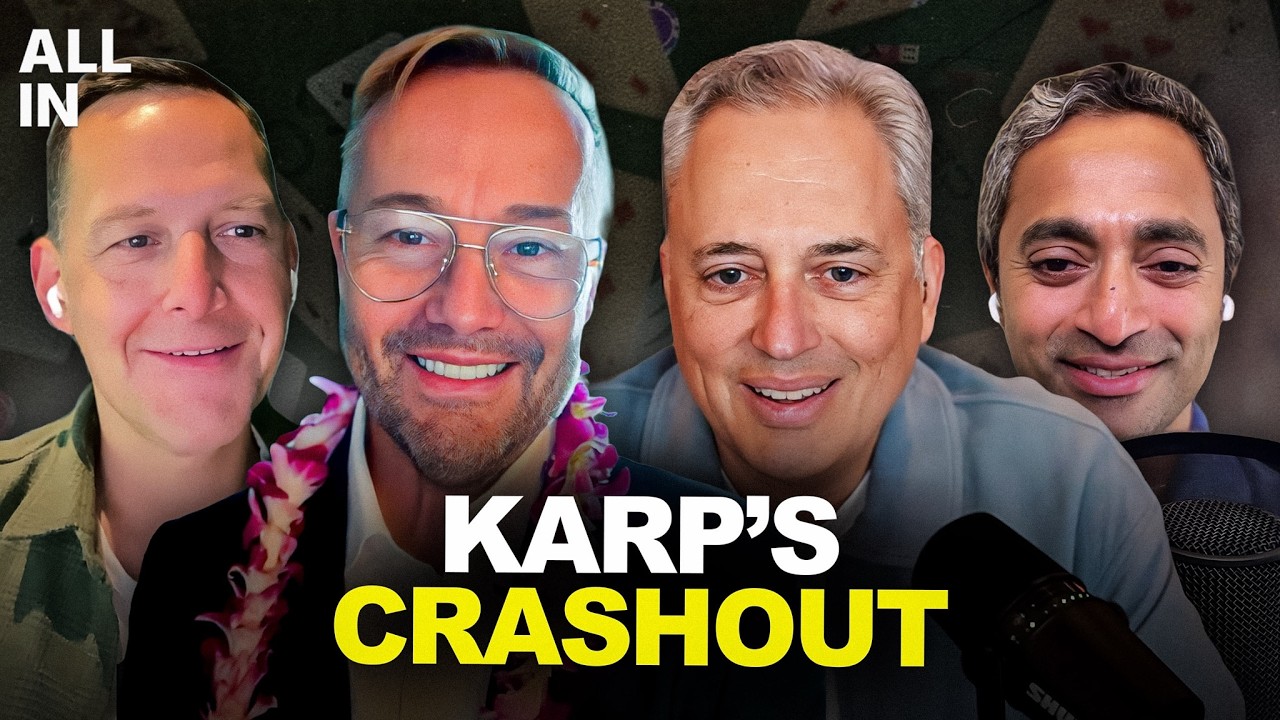
Trump's Cabinet, Google's Quantum Chip, Apple's Flop, TikTok, State of VC
 All-In Podcast
Want to know something specific about what's covered?
We've already dissected every moment. Ask and we will deliver (with timestamps).
Key Moments
All-In Podcast discusses Trump's cabinet, Google's quantum chip, Apple's AI chips, TikTok ban, and the VC market.
Key Insights
Keith Rabois explains his return to Khosla Ventures, highlighting its early-stage focus versus Founders Fund's momentum strategy.
Google's new quantum chip 'Willow' marks a significant milestone, potentially impacting encryption but still requiring substantial development for practical applications.
Apple is developing its own AI server chips for internal use, emphasizing vertical integration and on-device processing for privacy, despite recent software issues.
TikTok faces a potential ban due to national security concerns regarding Chinese government access to user data, despite bipartisan support for the app.
The VC landscape is showing signs of recovery, with AI and crypto companies attracting significant funding, though exits remain a challenge due to high valuation expectations.
A shift towards experienced business professionals in government is noted, offering a contrast to traditional political or theoretical approaches to policy-making.
KEITH RABOIS'S RETURN TO KHOSLA VENTURES
Keith Rabois details his transition back to Khosla Ventures (KV), contrasting its early-stage investment approach with Founders Fund's focus on momentum investing. He explains that KV actively seeks seed and Series A investments, often engaging with founders at the conceptual 'keynote deck' stage before product or metrics exist. This focus on early-stage input-driven companies aligns with Rabois's preference for building companies from the ground up, offering a different dynamic than Founders Fund's output-driven, later-stage investments.
GOOGLE'S QUANTUM COMPUTING BREAKTHROUGH
The podcast discusses Google's 'Willow' quantum chip, a significant advancement in quantum computing. This chip performs complex calculations in minutes that would take traditional supercomputers billions of years. While this represents a major milestone, particularly for cryptography and the potential to break current encryption standards like RSA through Shor's algorithm over the next few years, practical applications are still a decade away. The development highlights Google's long-term investment in fundamental research.
APPLE'S VERTICAL INTEGRATION AND AI CHIP STRATEGY
Apple's development of custom AI server chips for internal use is examined. This strategy leverages Apple's strength in vertical integration, controlling both hardware and software. The goal is to enhance on-device AI capabilities, prioritizing user privacy by processing data locally. Despite significant progress in its M-series chips, recent software updates for iPhones have reportedly led to user frustration with core functionalities like the Photos app, suggesting a potential decline in product polish amidst the race for AI innovation.
THE TIKTOK DILEMMA: NATIONAL SECURITY VS. POPULARITY
The potential ban of TikTok in the US is a major point of discussion, driven by national security concerns. Evidence suggests TikTok harvests American user data and is subject to Chinese government data requests, despite assurances to the contrary. The bipartisan political consensus for a ban stems from intelligence briefings highlighting these risks, with many officials believing the CEO lied under oath. The debate centers on whether Chinese companies should operate in the US market when American counterparts are restricted in China.
THE REVOLUTION OF BUSINESS PROFESSIONALS IN GOVERNMENT
A striking trend of successful business leaders entering government under the Trump administration is highlighted. This influx is seen as a positive shift, contrasting with traditional politicians or academics who may lack real-world experience. The argument is that these individuals, driven by public service rather than personal financial gain, can bring valuable judgment and efficiency to governance. This model echoes the founding principles of the US, where citizens served temporary tours of duty in public office.
VENTURE CAPITAL AND STARTUP ECOSYSTEM UPDATE
The venture capital landscape is showing signs of recovery, with deal activity approaching pre-2022 levels, particularly in AI and crypto sectors. Founders are optimistic, and new companies are emerging. However, exits, especially IPOs, are lagging due to persistent high valuation expectations from early investors. While markets are improving, the reluctance to accept lower valuations is creating an overhang, making liquidity challenging. The discussion also touches on the strategic advantages of going public early versus remaining private, as seen with companies like Stripe.
TARIFF POLICY AND INFLATION OUTLOOK
The podcast explores the implications of potential tariffs, particularly against China, and their effect on inflation and the broader economy. Experts suggest that tariffs can be implemented without causing significant inflation through substitution effects and by promoting domestic industries. The administration's focus on reducing inflation and strengthening supply chains, particularly for critical goods like rare earth minerals, is discussed. The administration believes experienced financial professionals can navigate these complex economic trade-offs effectively.
GLOBAL COMPETITION AND RECIPROCITY
The conversation touches upon the need for reciprocity in global trade, especially concerning Chinese companies. Concerns are raised about intellectual property, data access, and unfair competitive advantages, such as subsidies and relaxed environmental regulations in China, which allow companies like BYD and manufacturers of rare earth magnets to undercut global competitors. The argument is made that the US needs to implement checks and balances, possibly through tariffs or other measures, to ensure a level playing field for American businesses.
Mentioned in This Episode
●Products
●Software & Apps
●Companies
●Books
●Concepts
●People Referenced
Common Questions
Founder mode refers to a leadership style where a CEO acts like a founder, making decisions and setting direction, as exemplified by Brian Chesky of Airbnb.
Topics
Mentioned in this video
Mentioned as an example of 'founder mode' in hiring.
Met with Keith Raboy to discuss changing venture funds, advising that prioritizing human happiness (reducing commute) is valid.
Mentioned in relation to age and running for president.
Mentioned in relation to getting a suit.
Co-founder of PayPal and Founders Fund, mentioned as a college acquaintance of Keith Raboy.
Mentioned as a proponent of companies going public early, a philosophy that the speaker subscribes to.
Mentioned as someone whose involvement in government could yield success.
Appears on the podcast, mentioned as transitioning and currently busy.
Chair of the FTC, her 'wrath' is discussed in relation to M&A, though her impact on tech M&A is debated.
Mentioned as citing research suggesting illegal immigration inflates housing prices.
CEO of MicroStrategy, discussed for his strategy of using convertible notes to buy Bitcoin.
Company co-founded by Peter Thiel, where Keith Raboy and others worked.
Venture capital firm where Keith Raboy worked for five years.
Mentioned as an example of an input-driven technology company.
A company where Keith Raboy experienced a board issue that Founders Fund helped resolve.
Announced its Willow quantum chip, performing a benchmark computation significantly faster than supercomputers.
Mentioned as a company that challenged traditional hotel business models.
Mentioned as a company that challenged traditional transportation models.
Mentioned for its GPUs, used for building large language models.
Mentioned as a project that, like the quantum chip initiative, demonstrates Google's ability to incubate brilliant people.
Mentioned as an example of an input-driven technology company.
A social media platform discussed in the context of national security and potential divestment.
Mentioned for its fast and high-quality model training, attributed to fewer guardrails.
Company where Keith Raboy was the 20th employee.
Cited as a major success story and direct competitor to Amazon in DTC commerce.
Mentioned as potentially being acquired by Facebook and as potentially having similar infiltration risks to TikTok.
A company discussed regarding its 'delayed' IPO and the rationale behind it.
Acquisition of Instagram by Facebook is mentioned as a key strategic move.
Went public and was up 50% on the day of recording.
A fast fashion company expected to face challenges under the new administration, particularly regarding tariffs.
Chinese electric vehicle company whose designs are seen as copying Tesla.
Mentioned in relation to its CEO, Michael Saylor, and its strategy of acquiring Bitcoin.
Mentioned as a successful company that has not yet gone public, highlighting the founder's choice.
Acquired by Facebook, highlighting the importance of acquiring companies with 'taste'.
A Chinese self-driving car company that went public on NASDAQ.
A product used to measure heart rate, mentioned as a benchmark for low heart rate.
More from All-In Podcast
View all 430 summaries 103 min
More Trillion Dollar IPOs, Anthropic $3T, Zuck's Price War, China Ends Open Source?, Trump Accounts
 64 min
Open Source Wins, AGI Is Here, and Scorsese’s AI Toolkit with CEOs of Cerebras & Black Forest Labs
 103 min
AI Sovereignty Wars, Palantir-Nvidia Deal, SCOTUS Birthright Ruling, Newsom’s CA Budget Lie
 61 min
Nate Silver Predicts: Democrats Take the House, Newsom Is Fading & AOC Might Win It All in 2028
Ask anything from this episode.
Save it, chat with it, and connect it to Claude or ChatGPT. Get cited answers from the actual content — and build your own knowledge base of every podcast and video you care about.
Get Started Free