Key Moments
Tony Robbins and Jerry Colonna — The Tim Ferriss Show
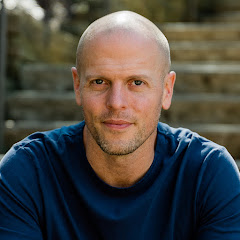 Tim Ferriss
Want to know something specific about what's covered?
We've already dissected every moment. Ask and we will deliver (with timestamps).
Key Moments
Tony Robbins & Jerry Colonna discuss peak performance, mental health, and personal growth.
Key Insights
Tony Robbins' morning routine includes hot/cold therapy and a 10-minute priming ritual focusing on gratitude, presence, and visualization.
Jerry Colonna's 'spider tattoo' symbolizes overcoming worry and trusting that his children will be okay.
Colonna's profound depression stemmed from external pressures to succeed, exacerbated by 9/11, leading to a pivotal moment where he chose life over despair.
The diagnostic questions 'How have I been complicit in creating the conditions I say I don't want?' and 'What am I not saying that needs to be said?' are crucial for self-awareness and growth.
Journaling, especially 'morning pages' and consistent daily reflection, is a vital tool for processing emotions and understanding personal patterns.
Embracing the belief 'I am a good person, just as I am' is transformative, allowing for self-compassion and acceptance of imperfections.
Saying 'I wish I could, but I can't' and recognizing that 'all beings own their own karma' are key to setting boundaries and self-care.
OPTIMIZING THE BODY AND MIND
Tony Robbins emphasizes a rigorous start to the day, incorporating hot pools and cold plunge pools to strengthen his nervous system. He also utilizes cryotherapy, highlighting its effectiveness in reducing inflammation and resetting the neurological system. This physical discipline is a cornerstone of his high-performance lifestyle, ensuring peak physical and mental readiness regardless of external circumstances or sleep duration.
THE POWER OF PRIMING AND GRATITUDE
Robbins' 'priming' ritual, distinct from traditional meditation, involves an explosive change in physiology through breathwork, followed by music and a focus on gratitude, presence, and service. He stresses the importance of feeling gratitude deeply, as it counteracts anger and fear. This daily practice, a minimum of 10 minutes, is framed not as optional, but essential for a prime life, akin to consistent fitness training for the mind and spirit.
EMBRACING THE 'SPIDER WEB' MOMENT
Jerry Colonna shares the profound story behind his spider tattoo, symbolizing a pivotal dream experience on a retreat. After tearing up mushrooms in a dream, he was guided by a spider who reassured him, 'You worry too much; your children are going to be fine.' This message has become a constant reminder to let go of excessive worry and to trust in his children's well-being, a deeply personal anchor in his life.
NAVIGATING DEPRESSION AND THE CALL TO LIFE
Colonna recounts a severe depressive episode in February 2002, triggered by the aftermath of 9/11 and the pressures of his career. Standing near Ground Zero, he felt an overwhelming desire to die. A timely call to his therapist, Dr. Seers, redirected him towards a path of healing, exemplified by a stay at Canyon Ranch, marking a turning point from despair to self-reconstruction.
THE 'COMPLICITY' IN UNWANTED CONDITIONS
Colonna introduces the powerful question, 'How have I been complicit in creating the conditions I say I don't want?' He differentiates 'complicity' from 'responsibility,' highlighting how we can be served by our challenges, often through 'secondary gain.' This reframes personal suffering as an opportunity to understand subconscious patterns, prompting deeper self-inquiry beyond mere blame or victimhood.
FINDING VOCATION THROUGH ACTIVE LISTENING
Colonna's journey to becoming a coach emerged from realizing he could help others alleviate suffering. After reading 'Let Your Life Speak,' he encountered a young lawyer who was miserable in his profession. By offering the book and asking a pivotal question, Colonna felt a profound sense of purpose. This experience led him to enroll in coach training, realizing his calling was to help others find their way out of 'the wrong box.'
THE STRUGGLE WITH BUSYNESS AND OVERWHELM
Both Robbins and Colonna touch upon the modern epidemic of busyness. Colonna explains that busyness can be a distraction from internal distress or a means of seeking external validation. He prompts reflection on how this busyness serves an individual, suggesting that it often masks deeper unaddressed needs or compensates for systems that are beginning to break down around age 35-50.
BOUNDARIES AND THE COURAGE TO SAY NO
Setting boundaries is crucial. Colonna offers tools like Seth Godin's 'I wish I could, but I can't' and Sharon Salzberg's reminder that 'all beings own their own karma.' He uses the metaphor of a chain-link fence with a gate that only opens inward as a visual for maintaining personal space while still extending kindness and love from a distance.
EMBODYING ACCEPTANCE AND SELF-WORTH
The core belief, 'I am a good person, just as I am,' is presented as radically transformative. This acceptance allows for self-compassion, embracing imperfections without compromising one's fundamental goodness. Colonna shares his own journey, moving from guilt and anxiety to recognizing his worth, enabling him to be further present for his children and himself.
THE 'CROW ON YOUR SHOULDER' AND JOURNALING
Colonna discusses the inner critic, personified as a 'crow on your shoulder,' which highlights our perceived failings. Instead of fighting this voice, he suggests acknowledging it, thanking it for trying to keep us safe (albeit imperfectly), and then gently setting boundaries. Consistent journaling, particularly morning pages, serves as an outlet for this inner dialogue, allowing for processing and increased levity.
RADICAL ACCEPTANCE AND INTEGRATING PARTS OF SELF
Drawing from Tara Brock's 'Radical Acceptance,' the conversation explores accepting all parts of oneself, including difficult emotions like anger or rage. Colonna uses the analogy of the Hulk transforming into Thor, symbolizing the integration of powerful, potentially destructive emotions into a more controlled, justice-driven force. This acceptance is liberating, acknowledging that these parts often served a purpose for survival.
MAKING FAITHFUL DECISIONS AND WALKING AWAY
Colonna reflects on his most consequential decision: walking away from a successful career in venture capital due to emotional pain, not failure. This act of saying 'no' to external success in favor of internal truth allowed his true vocation to unfold. The initial terror was balanced by profound relief, underscoring the importance of aligning actions with one's inner reality.
THE UNIVERSAL EXPERIENCE OF STRUGGLE
A key message is that struggle is universal, not a sign of personal failure. Colonna advocates for the billboard message, 'You are not alone, and just because you feel like [expletive] doesn't mean you are [expletive].' This acknowledges the human experience of pain while reinforcing inherent goodness and the transient nature of difficult feelings. The reminder of common human experience offers solac and connection.
Mentioned in This Episode
●Software & Apps
●Tools
●Companies
●Organizations
●Books
●Concepts
●People Referenced
Common Questions
Tony Robbins starts his day with contrasting temperatures like hot and cold plunges (e.g., 57-degree water, or cryotherapy at -220°F). He emphasizes that this 'shocks' his nervous system, training it for optimal performance regardless of how he feels.
Mentioned in this video
Article by Tim Urban on 'Wait But Why' about managing intrusive thoughts or monkey mind.
Jerry Colonna's book, featuring journaling invitations and personal history.
Short collection of essays by Parker J. Palmer, that really shifted Jerry Colonna's dialogue about his life.
Novel mentioned by Tim Ferriss.
Book by Pema Chödrön that Jerry Colonna read on his way to Canyon Ranch, introducing Buddhist Dharma.
Book by Sharon Salzberg that Jerry Colonna read on his way to Canyon Ranch, focusing on honesty.
Book by Tara Brach that helped Tim Ferriss relate to anger differently.
Jerry Colonna's psychoanalyst who helped him through depression.
Author of 'When Things Fall Apart,' considered a friend and teacher by Jerry Colonna.
Author of 'Faith' and meditation teacher, considered a friend and teacher by Jerry Colonna, whose teachings informed boundary setting.
Jerry Colonna's college professor and mentor who taught poetry and writing, and spoke about the 'crow on your shoulder'.
Mentioned for his quote on meditation needing more time if difficult.
Politician, mentioned in context of legislation affecting nickel composition.
Co-founder and CEO of executive coaching firm reboot.io, author of 'Reboot: Leadership and the Art of Growing Up'.
Jerry Colonna's assistant at the time, who remained a close friend.
Jungian Eco-psychologist who led a retreat Jerry Colonna attended.
Co-founder of Union Square Ventures, mentioned in relation to Fred Wilson.
Author of 'Let Your Life Speak,' considered a friend and teacher by Jerry Colonna.
Author known for 'Morning Pages' journaling technique.
Vice Chairman of a bank, Jerry Colonna's boss at JP Morgan and a close friend, with whom Jerry discussed leaving his job.
Author of 'Radical Acceptance,' described as a brilliant teacher.
Executive coaching and leadership development firm co-founded by Jerry Colonna.
Previous fund where Jerry Colonna worked that was wound down.
Venture capital firm launched by Fred Wilson and Brad Burnham.
Health spa recommended by Dr. Sers to Jerry Colonna for recovery.
More from Tim Ferriss
View all 705 summaries 108 min
The Random Show — AI Super Assistants, Dream Engineering, Wizards, Supplements, and More!
 121 min
How to Legalize Medical Psychedelics in Your Country — Tania de Jong on Australia’s Breakthrough
 70 min
Q&A with Tim — The Art of Male Friendship, Reinvention in The Age of AI, & More
 125 min
Dr. Andrew Huberman — Peptides, Performance, and Protocols
Ask anything from this episode.
Save it, chat with it, and connect it to Claude or ChatGPT. Get cited answers from the actual content — and build your own knowledge base of every podcast and video you care about.
Get Started Free