Key Moments
The Politics of Risk: A Conversation with Nate Silver (Episode #389)
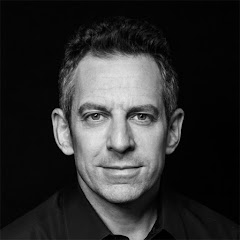 Sam Harris
Want to know something specific about what's covered?
We've already dissected every moment. Ask and we will deliver (with timestamps).
Key Moments
Nate Silver discusses risk, cultural elites, and the 2024 election, highlighting trust erosion and contrasting 'village' and 'river' factions.
Key Insights
Erosion of trust in liberal institutions is a significant concern, impacting political narratives and societal cohesion.
Two dominant elite groups, the 'village' (establishment, risk-averse) and the 'river' (tech/finance, analytical risk-takers), are in cultural and economic competition.
Silicon Valley and financial elites are increasingly influential, sometimes exhibiting risk assessment flaws despite analytical reputations.
Cultural attitudes toward risk vary significantly, influencing decision-making in finance, politics, and personal lives.
Political polling and media narratives are often subject to confirmation bias and partisan manipulation, distorting public understanding.
The rise of AI and existential risks are areas of growing concern, intersecting with risk-taking behavior and elite ideologies.
EROSION OF TRUST IN INSTITUTIONS
A significant decline in public trust towards institutions like the media, government, and even higher education is a major concern. This erosion is exacerbated by political polarization and the perception that elites are not serving the public interest. This phenomenon creates a downward spiral, making individuals more partisan and less receptive to factual information, ultimately leading to a fragmentation of shared reality.
THE 'VILLAGE' VERSUS THE 'RIVER' OF ELITES
Nate Silver contrasts two rival elite groups: the 'village,' representing the traditional establishment like the New York Times and Ivy League universities, which is progressive, collectively oriented, and risk-averse. The 'river' comprises analytical risk-takers from Silicon Valley, Wall Street, and parts of Las Vegas, characterized by individualism, competition, and a 'risk-on' mentality. The book argues that the 'river' is gaining economic dominance, increasingly shaping the landscape.
CULTURAL ATTITUDES TOWARD RISK
The conversation delves into differing cultural attitudes toward risk, examining how this influences decision-making across various domains. While poker and game theory provide frameworks for understanding calculated risks, the book highlights figures like Peter Thiel who are anti-probabilistic. This exploration includes the influence of religious upbringings and a deterministic worldview among some prominent risk-takers, contrasting with the 'expected value' approach of professional gamblers.
THE INFLUENCE AND FLAWS OF SILICON VALLEY
Silicon Valley's growing influence is discussed, particularly its initial stance of political aloofness which has since shifted. Figures like Elon Musk and Sam Bankman-Fried are examined as case studies. Musk's evolving political alignment and reaction to perceived slights, and Bankman-Fried's flawed risk assessment despite his analytical reputation, reveal both the power and potential blind spots within this elite group. Concerns are raised about their wealth, influence, and interactions with political processes.
CHALLENGES IN POLITICAL FORECASTING AND MEDIA
The discussion touches upon the difficulties in political polling and the consumption of information online. Algorithms and confirmation bias amplify partisan divisions, making objective assessment of facts challenging, even for simple data like polls. There’s a concern that some polling firms may engage in narrative manipulation rather than purely objective reporting, contributing to the overall distrust and fragmentation of the public sphere.
THE INTERSECTION OF TECHNOLOGY AND EXISTENTIAL RISK
The conversation broadens to include newer areas of concern, such as the development of Artificial Intelligence (AI) and existential risks. Figures involved in AI development, like Sam Altman, represent a distinct facet of the elite landscape. Such topics are increasingly intertwined with discussions of risk-taking, utopian aspirations, and the potential for unforeseen consequences, underscoring the complex interplay between innovation, ethics, and societal well-being.
Mentioned in This Episode
●Software & Apps
●Companies
●Organizations
●Books
●Concepts
●People Referenced
Common Questions
Nate Silver is famous for election forecasting, founding 538, and is a New York Times bestselling author. His work often involves analyzing risk through lenses like poker, game theory, and venture capital, exploring topics such as cryptocurrency, AI, and effective altruism.
Topics
Mentioned in this video
Discussed in the context of its role as a fourth estate and the challenges of reporting in the current media landscape.
Cited for recent data showing a decline in trust in the news media.
Mentioned as a quintessential institution of the 'village' elite culture.
The company founded by Sam Bankman-Fried, whose fall is discussed as a case study.
Mentioned as a figure in Silicon Valley with aspirations in AI, differing from others in his potential political engagement.
Mentioned for vetoing the California AI regulation bill.
Host of the Making Sense podcast, discussing election concerns and introducing Nate Silver.
Author of the book 'The Contrarian' about Peter Thiel.
Profiled in Nate Silver's book, described as anti-probabilist with a conservative and potentially Catholic background, who questions deterministic views.
Her campaign strategy and perceived evasiveness on changed positions are discussed as 'own goals'.
Founder of Stripe, described as well-read, well-rounded, and a balanced thinker, though less provocative for illustrative purposes in the book.
Mentioned in the context of cultural figures influencing sentiments.
Mentioned as an influential figure associated with neoreactionary ideas.
Founder of FTX, discussed as a case study in risk assessment and autodidacticism, known for his involvement in effective altruism.
Mentioned in relation to undermining trust in democracy and media, and his potential re-election.
Mentioned in relation to the EV summit snub to Tesla and his administration's policies.
Founder of 538, author of 'The Signal and the Noise' and 'On the Edge', and publisher of The Silver Bulletin.
Mentioned as a figure from Silicon Valley, potentially influential in elections, and discussed in relation to his political shifts and reaction to 'wokeness'.
His 'America First' approach to foreign policy is mentioned as a comparison point for the current Republican party's stance.
Mentioned in the context of the EV summit snub and Elon Musk's reaction.
Mentioned as a public square that has not worked as ideally as expected for information sharing.
The company founded by Patrick Collison.
A polling firm accused of coordinating with the Trump campaign, highlighting dishonest polling practices.
A New York Times bestselling book written by Nate Silver.
A book by Max Chafkin about Peter Thiel.
Nate Silver's new book discussing risk, cultural differences in risk tolerance, poker, game theory, venture capital, cryptocurrency, effective altruism, and AI.
More from Sam Harris
View all 302 summaries 27 min
Is America Heading for a Debt Crisis? An Economist Explains
 27 min
Is America Heading for a Debt Crisis? An Economist Explains
 34 min
Is Psychedelic Therapy Ready for FDA Approval?
 26 min
You Lose Interest the Moment You Realize It's AI
Ask anything from this episode.
Save it, chat with it, and connect it to Claude or ChatGPT. Get cited answers from the actual content — and build your own knowledge base of every podcast and video you care about.
Get Started Free