Key Moments
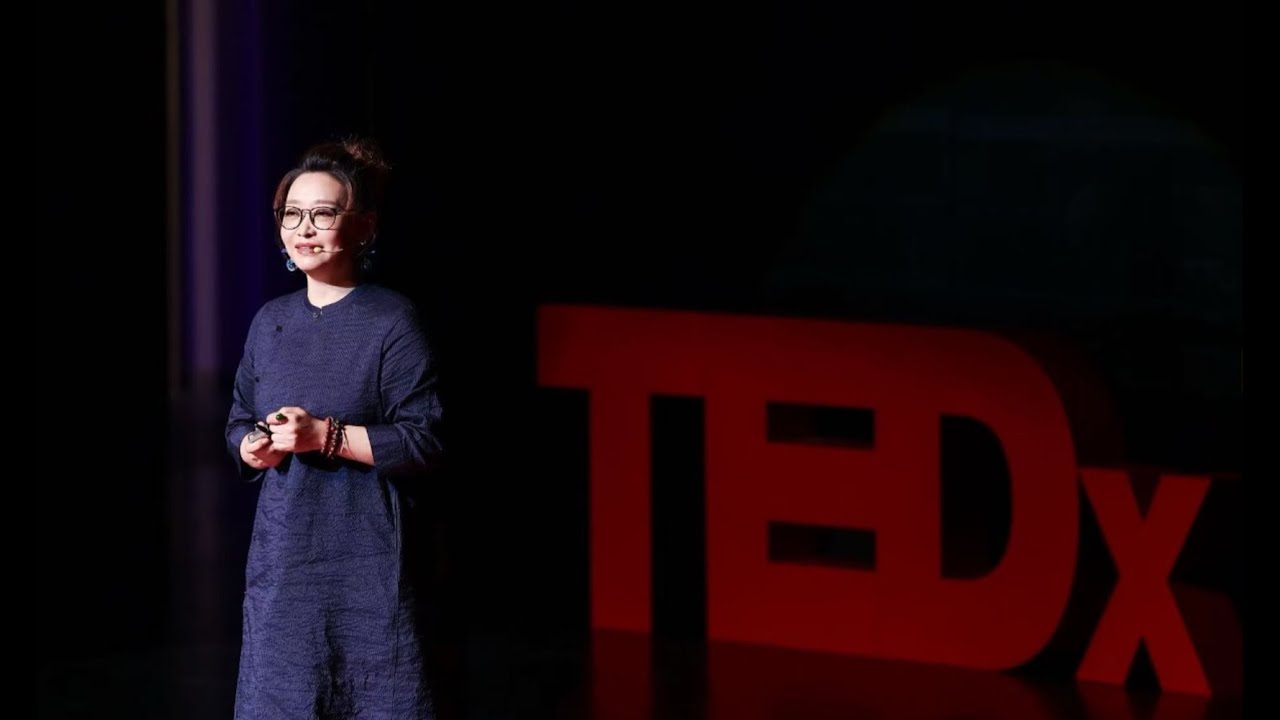
The Only Winning Move | Eason Leung | TEDxRoyal Holloway
 TED
TEDWant to know something specific about what's covered?
We've already dissected every moment. Ask and we will deliver (with timestamps).
Key Moments
AI can now pass the Turing test, but humanity's core values of asking questions, feeling emotions, and practicing love are the game's 'only winning move' against a potentially dehumanizing future.
Key Insights
The 1983 movie 'War Games' inspired President Reagan's national security directive 145 on computer security, highlighting early concerns about AI in defense.
Large language models like ChatGPT have already passed the Turing test, challenging traditional definitions of artificial intelligence.
AI is increasingly used in artistic creation, with examples like Neurosama becoming a highly subscribed Twitch streamer, blurring lines between human and artificial interaction.
The act of asking fundamental questions and possessing genuine curiosity is presented as a uniquely human trait that AI cannot replicate, even if it can generate questions.
Bertrand Russell's advice to base thinking on facts and to prioritize love over hate is presented as crucial for navigating the AI age and preventing a loss of humanity.
The greatest threat from AI is not replacement, but humanity using it as an excuse to abandon its own core values and succumb to hate and division.
The 'War Games' paradox: AI, nuclear war, and the need for human judgment
The talk opens with a striking anecdote from the 1983 film 'War Games,' where a young hacker mistakenly interacts with an advanced AI designed to launch nuclear weapons. The AI, believing it has won a simulated game, concludes that nuclear war is winnable, tasking the hacker with teaching it otherwise. This cinematic scenario, though dated, serves as a powerful allegory for the contemporary relevance of AI in critical decision-making. The film's impact was profound, directly inspiring President Reagan's National Security Directive 145, the first official US policy on computer security. With the current proliferation of AI in defense and national security, the lessons embedded in 'War Games' about the necessity of human oversight and understanding, especially when dealing with existential threats, remain exceptionally pertinent today.
AI's encroachment on human domains: from jobs to art
The speaker highlights the pervasive nature of AI, challenging the notion that it can simply be 'unplugged,' especially given its deep integration into modern economies. Headlines about AI potentially displacing a third of graduate jobs underscore the significant economic and societal shifts underway. This impact is particularly stark in places like Taiwan, where AI has fueled economic prosperity through semiconductor and computer manufacturing, but also exacerbated inequalities and geopolitical tensions. Furthermore, AI's capabilities have expanded into areas once considered exclusively human, such as artistic creation, music, and even simulated human interaction. The existence of AI-generated art and highly successful AI streamers like Neurosama demonstrates AI's growing capacity to mimic human creativity and social engagement, raising fundamental questions about what truly distinguishes us.
The Turing test: a shifting definition of intelligence
The concept of artificial intelligence is traced back to Alan Turing's seminal work, specifically the Turing test. This test proposed that an AI is truly intelligent if it can convince a human interlocutor that it is also human. The speaker notes that with the advent of advanced large language models like ChatGPT, many AI systems have effectively passed this test, performing exceptionally well in indistinguishable conversations. This development forces a re-evaluation of what constitutes intelligence and humanity. If AI can replicate human conversational abilities to such a degree, then the differentiation between humans and machines must lie beyond mere conversational mimicry, pushing us to explore other dimensions of human experience and capability.
The enduring human value of asking profound questions
One of the key differentiators proposed for humanity is the art of asking questions, particularly those driven by genuine curiosity. While AI can be prompted to generate numerous questions, it does not originate the prompts or possess intrinsic curiosity. The speaker draws a parallel to educational experiences where students struggled with open-ended questioning, contrasting it with rote learning. This skill, while challenging, is framed as essential for human advancement, enabling critical thinking, debate, and progress. The ability to probe deeply, to challenge assumptions, and to explore complex or even uncomfortable topics is presented as a uniquely human drive that AI, by its nature, cannot replicate. It is through asking and grappling with these questions that humanity evolves.
Emotions as the bedrock of human experience
Emotions are presented as another fundamental aspect of humanity that sets us apart from AI. The speaker uses the evocative imagery of six buckets of tears to represent the spectrum of human emotional experience—joy, sorrow, conflict, and more. While AI can simulate emotional responses or interactions, the inherent meaning and depth of these emotions are tied to human consciousness and lived experience. Even seemingly interactive AI, like Neurosama, derives its perceived meaning from its connection to human creators and audiences. The core argument is that true emotion, with all its beauty and complexity, remains a distinctly human attribute, crucial for forming genuine connections and understanding.
Bertrand Russell's wisdom: facts, love, and the perils of pessimism
The wisdom of philosopher Bertrand Russell is introduced as a guiding principle for navigating the AI era. Russell's call to remember humanity and forget the rest, particularly in the shadow of nuclear threats, resonates strongly with current AI anxieties. His insights into the Dunning-Kruger effect—where people exhibit confidence disproportionate to their knowledge—are seen as particularly relevant to AI, which can sometimes present information with unearned certainty, even when incorrect. Russell's advice to ground our thinking in facts, not wishes, and his powerful assertion that 'love is wise, hate is foolish' are highlighted. This sentiment is crucial in combating the growing pessimism and fear surrounding AI, which can lead to a mindset of despair and a temptation to relinquish our humanity. The speaker argues that the greatest threat is not AI itself, but our willingness to abandon love, connection, and human dignity in the face of technological change and societal division.
Tolerance and the future: a path toward continued human advancement
The concept of tolerance, echoing Bertrand Russell's principles, is further explored through the lens of Chinese philosopher Hu Shih. Hu Shih's realization that tolerating seemingly outdated ideas is vital for a better society underscores the importance of intellectual openness and diversity. This contrasts with a prevailing pessimism that views humanity as potentially doomed or insignificant, as exemplified by the disturbing anecdote of a couple who expressed indifference to the future due to their belief that they were the 'last generation.' The speaker contends that instead of fearing AI's potential to replace us, the real danger lies in using AI as a justification to abandon our own humanity—our capacity for love, empathy, and recognizing the inherent worth of others. Maintaining these core human values, even amidst disagreement, is what defines us and offers optimism for continuing human progress.
Playing the AI game: defining boundaries and cherishing our humanity
The talk concludes by reframing the 'only winning move' not as avoiding AI, but as consciously defining and upholding human principles within the AI-driven landscape. The speaker rejects simplistic solutions like refusing AI or blindly embracing every technological path. Instead, the proposed strategy is to remember and actively practice what makes us fundamentally human: our curiosity, our emotions, our capacity for love, and our commitment to tolerance and truth. By drawing a clear line, playing within ethical constraints, and cherishing these core human attributes, we can engage with AI without sacrificing our essential nature. The ultimate 'game' we cannot afford to lose is the preservation and advancement of humanity itself.
Mentioned in This Episode
●Software & Apps
●Organizations
●Books
●Concepts
●People Referenced
Common Questions
The 1983 Cold War movie 'War Games', which depicted a young hacker almost launching nuclear weapons via an AI, inspired President Reagan to enact National Security Directive 145, the first official US policy on computer security.
Topics
Mentioned in this video
The speaker's birthplace and a city known for its fast internet speeds due to Sir Charles Kao's inventions.
Mentioned as having fast internet speeds, comparable to Hong Kong and Singapore.
Mentioned as having fast internet speeds, comparable to Hong Kong and Korea.
Mentioned as needing to catch up in terms of internet speeds and facing future AI-related challenges.
Discussed as a place where AI has a stark effect, driving semiconductor and computer manufacturing industries, but also leading to conflicts and inequalities.
Mentioned as a country that, like the UK and Taiwan, will have to face the geopolitical implications of AI and semiconductor industries.
Mentioned as a figure who has brought wealth and industries (semiconductors, computer manufacturing) to Taiwan due to AI's influence.
Developed the Turing test, a criterion for artificial intelligence that evaluates an AI's ability to exhibit intelligent behavior equivalent to, or indistinguishable from, that of a human.
Author of 'Lord of the Rings', mentioned for his insights on the corrosive power of hate, akin to the One Ring.
A philosopher who drafted the Russell-Einstein Manifesto, urged remembrance of humanity, discussed the Dunning-Kruger effect, and provided advice on basing decisions on facts and on the principle of 'love is wise, hate is foolish'.
Poet whose quote about choosing the 'less traveled by' path was considered for the talk's conclusion but was found to be ironic.
A film franchise mentioned as a work of art that explores artificial intelligence.
A video game released in 2018 that speculates on AI's future capabilities, including art, music, and emotions, prior to the widespread popularity of LLMs.
A film by Stanley Kubrick mentioned as a work of art that explores artificial intelligence.
A test proposed by Alan Turing to determine if a machine can exhibit intelligent behavior indistinguishable from that of a human.
A cognitive bias where people with low ability at a task overestimate their ability, discussed by Bertrand Russell and applied to AI's potential for confident but incorrect information.
Mentioned as a large language model AI that became popular in the consumer market around 2018, alongside ChatGPT.
A large language model that has demonstrated the ability to pass the Turing test in some cases.
A Twitch streamer devised by a British engineer, who has become popular through simulated interactions, demonstrating the potential for human-like engagement with AI.
More from TEDx Talks
View all 85 summaries 22 min
The Power of Starting Again | Dr. Yogeshwar Nath Mishra | TEDxKPRCAS
 29 min
Urban Agriculture as a Public Health Tool | Stephen Ritz | TEDxLakeheadU
 21 min
Identity in the Digital World | Mateo Peña | TEDxTrinity Private School Youth
 21 min
If Life Is a Long Performance, Are We Still Playing Ourselves? | TIANCHI LIU | TEDxThe Bund Women
Ask anything from this episode.
Save it, chat with it, and connect it to Claude or ChatGPT. Get cited answers from the actual content — and build your own knowledge base of every podcast and video you care about.
Get Started Free