Key Moments
Sebastian Junger — Seeking Freedom and Reordering Your Place in the World | The Tim Ferriss Show
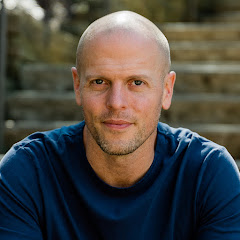 Tim Ferriss
Want to know something specific about what's covered?
We've already dissected every moment. Ask and we will deliver (with timestamps).
Key Moments
Sebastian Junger discusses freedom, near-death experiences, and resilience.
Key Insights
A near-death experience profoundly reshaped Junger's perspective on mortality and the preciousness of each moment.
Voluntary risk-taking has diminished for Junger due to fatherhood, prioritizing his daughters' well-being.
Boxing and learning the accordion, though physically and mentally demanding, provide Junger with a sense of accomplishment and mental fortitude.
Children reorder one's place in the world, shifting focus from self to familial responsibility, which Junger finds liberating.
Maintaining societal freedom requires a balance of defense and kindness, with leaders needing to demonstrate selfless commitment.
Freedom from oppression is not freedom from obligation; contributing to society through acts like donating blood or voting is crucial.
A BRUSH WITH MORTALITY AND EXISTENTIAL RECALIBRATION
Sebastian Junger recounts a life-threatening aneurysm rupture, a near-death experience that profoundly altered his perception of existence. Previously unconcerned with his own mortality due to his experiences as a war reporter, this sudden, unexpected event at home starkly revealed the fragility of life. The close call, where he lost 90% of his blood, recalibrated his sense of reality, highlighting the preciousness of each present moment and the profound gratitude for simple things like his children.
RISK, FATHERHOOD, AND THE EVOLUTION OF COURAGE
Junger's approach to risk has significantly evolved, particularly after becoming a father. While he previously embraced voluntary risks in high-risk professions and athletics, the responsibility of parenthood has made him a more cautious individual. His primary concern is now ensuring his presence and well-being for his daughters, influencing his decisions to avoid unnecessary dangers. This shift reflects a mature understanding of guardianship and a reordering of priorities from personal ambition to familial security.
SEEKING CHALLENGE THROUGH BOXING AND THE ACCORDION
To confront fear and maintain mental sharpness, Junger has taken up challenging physical and mental pursuits. He describes boxing as an exceptionally difficult discipline that tests his limits, while learning the accordion, with its complex hand coordination, also offers a significant challenge. These activities, pursued later in life, serve as lifelines, providing a sense of accomplishment and security by pushing boundaries and demonstrating his capacity to overcome daunting tasks.
THE ELEMENTAL NATURE OF PARENTHOOD AND COMMUNITY
Fatherhood, for Junger, reorders one's place in the world by shifting the focus from self-absorption to the needs of others, a dynamic he likens to the camaraderie found in military platoons. This relinquishing of self-primacy, he argues, is not a loss but a liberation from anxiety. He also discusses a more elemental, tribal approach to parenting, emphasizing co-sleeping and constant physical contact, contrasting it with Western practices that he believes are driven by commercial interests rather than natural primate bonding needs.
FREEDOM AS AUTONOMY AGAINST OVERARCHING POWER
Junger's book 'Freedom' explores how individuals and smaller groups maintain autonomy against more powerful entities. He identifies three core strategies: running (evading control), fighting (resisting aggression), and thinking (strategizing and outsmarting adversaries). Using historical examples like the Apache resisting Spanish colonization and the labor movement employing unconventional tactics, he illustrates that freedom is often achieved through resourcefulness, courage, and collective action, rather than brute force.
THE CRUCIAL ROLE OF WOMEN IN RESISTANCE MOVEMENTS
The strategic inclusion of women is highlighted as a critical factor for the success of resistance movements. Their participation can de-escalate conflict with authorities due to societal hesitations about using violence against them. Furthermore, women often possess strong lateral social networks vital for communication and intelligence, offering a tactical advantage that masculine hierarchical structures might lack in certain contexts, making movements more resilient and unpredictable.
THE WARRIOR'S TRANSITION AND MAINTAINING SOCIETAL UTILITY
Junger reflects on aging as a warrior, drawing parallels to Plenty Coups, a Crow chief who adapted his role from physical combat to preserving his community through new means. As physical capabilities decline with age, the warrior's duty shifts. This involves a transition from self-focused ambition to understanding one's decreasing physical prowess and finding new ways to contribute, ensuring continued utility and dignity by embracing softer, wiser roles to protect the community, a concept explored in 'Radical Hope'.
UNIVERSAL HUMANITY: VIOLENCE AND COMPASSION'S DUALITY
Junger asserts that human beings are inherently complex, capable of both extreme brutality and profound compassion. He uses historical examples of horrific torture and violence, like the burning of a Black couple in Vicksburg, to illustrate that no single group holds a monopoly on cruelty. Conversely, he points to acts of immense heroism, such as individuals hiding Jewish families during WWII, emphasizing that humans possess a dual nature and societal progress relies on fostering kindness while maintaining the strength to defend against aggression.
DEHUMANIZATION AS A FACILITATOR OF ATROCITY
The strategy of dehumanizing an 'enemy' group by labeling them as non-human or animalistic is a dangerous precursor to mass violence. This mental reframing removes moral barriers, allowing individuals to commit atrocities such as torture and genocide without confronting the inherent wrongness of killing. This tactic, evident throughout history in various conflicts, enables ordinary people to participate in heinous acts by convincing themselves they are not harming 'people' but eradicating pests or following a divine mandate.
FREEDOM'S ROOTS AND THE INTERCONNECTEDNESS OF OBLIGATION
The etymology of 'freedom' reveals its historical ties to the concept of 'beloved,' suggesting that in ancient times, freedom was primarily a privilege afforded to one's own community or loved ones, not a universal human right. Junger stresses that freedom from oppression is distinct from freedom from obligation. In modern, prosperous societies, where basic survival is largely guaranteed, individuals must actively seek ways to contribute back, reinforcing the societal bonds that provide safety and well-being.
THE GINI COEFFICIENT AND SOCIETAL INEQUALITY
Junger introduces the Gini coefficient as a measure of income inequality within a society. He notes that historically, powerful empires often had high Gini coefficients, indicating significant wealth disparity but also global influence. Conversely, egalitarian societies with low Gini coefficients tend to possess less global power. This highlights a complex interplay between equality, freedom, and societal influence, suggesting that immense power can come at the cost of justice and widespread freedom for the populace.
CONTRIBUTING TO SOCIETY: THE MODERN AMERICAN'S OBLIGATION
In contemporary, specialized societies, the direct need for individual contributions to survival is reduced. Junger suggests that acts like donating blood, serving on a jury, or voting are crucial ways for citizens to fulfill their obligations to society. These actions not only support the collective good but also reinforce the citizen's connection to the community and their own sense of freedom and participation. He posits that such contributions are essential for maintaining a healthy, functioning nation.
THE IMPERATIVE OF SEEKING AND DEMANDING MORAL LEADERSHIP
Junger emphasizes the critical need for moral leadership, highlighting that successful movements, from insurgencies to labor unions, require leaders willing to share the risks and burdens of those they represent. He criticizes the tendency for powerful figures to prioritize self-enrichment and abuse their positions, a phenomenon seen across all political systems. He advocates for citizens to demand selfless leadership that prioritizes the collective good, suggesting that such dedication is vital for the survival and prosperity of any society.
EMBRACING PARENTHOOD AND THE UNPLANNED JOURNEY
Addressing the fear of becoming a parent without prior experience, Junger strongly encourages embracing fatherhood, calling it 'the best thing there is.' He reassures Tim Ferriss that the instinctive drive to care for young is deeply ingrained in humans. While acknowledging the emotional volatility of children and the challenges of parenting, he advises a calm, compassionate approach, focusing on providing a safe environment rather than attempting to 'fix' every emotional episode. This perspective suggests that adaptation and love are key to navigating parenthood.
Mentioned in This Episode
●Products
●Software & Apps
●Companies
●Organizations
●Books
●Concepts
●People Referenced
Common Questions
Sebastian Junger experienced a ruptured pancreatic artery aneurysm, leading to 90% blood loss. He was writing his book 'Freedom' at the time and was in danger in his own home on Cape Cod. The experience profoundly changed his perspective, giving him an intense awareness of mortality and the preciousness of each moment.
Topics
Mentioned in this video
A New York Times bestselling author and co-director of the documentary 'Restrepo,' known for his work as a war reporter and his books 'Tribe,' 'War,' 'A Death in Belmont,' 'Fire,' 'The Perfect Storm,' and 'Freedom'.
A professor of neuroscience and psychology at UC Berkeley and author of 'Why We Sleep,' who serves as Oura's chief science advisor.
A British photographer and Sebastian Junger's colleague in Afghanistan, with whom he co-directed 'Restrepo.' He was tragically killed while covering the civil war in Libya.
A doctor who introduced Tim Ferriss to the Oura Ring and vets many health devices.
A Spanish photographer who was with Tim Hetherington when he died and later joined Sebastian Junger on 'The Last Patrol'.
A Crow Indian chief, war leader, and visionary whose life story of transitioning from warrior to preserver of his people through adaptation served as a metaphor for Sebastian Junger's understanding of aging and utility.
A mutual friend of Tim Ferriss and Sebastian Junger, responsible for their initial meeting and who provided questions for the interview.
An Irish revolutionary who was executed by the British for his role in the Easter Rising, known for a poignant letter written to his wife and children before his death, demonstrating dignity and courage.
The author of 'Radical Hope,' described as a brilliant philosopher who deconstructs and explains Plenty Coup's vision.
A book by Sebastian Junger, mentioned as one of his New York Times bestsellers.
A work of philosophy and anthropology about the life of Plenty Coup, which Sebastian Junger found to be one of the most important books he's ever read.
A book by Sebastian Junger, mentioned as one of his New York Times bestsellers.
A book by Sebastian Junger, mentioned as one of his New York Times bestsellers.
A book by Sebastian Junger, mentioned as one of his New York Times bestsellers.
A book by Sebastian Junger, mentioned as one of his New York Times bestsellers.
A mega-hit book about sleep, authored by Dr. Matthew Walker.
A biblical quote asserting that God tests humans so they may know they are animals, used by Sebastian Junger to highlight the animalistic nature of humans.
A variation of the accordion from Argentina, mentioned by Tim Ferriss as a beautiful instrument.
A website that looks at parenting from an evolutionary perspective within modern society, recommended for new parents.
A musical instrument that Sebastian Junger started learning at age 51 to challenge his mind and find a sense of peace.
Sebastian Junger's newest book, which explores the concept of freedom through historical examples and personal experiences, including 'The Last Patrol'.
Native American hunter-gatherer tribes known for their mobility, which allowed them to remain free from Spanish and later US government control for centuries.
An automated investing platform that pioneered robo-advising, helping clients diversify portfolios, minimize fees, and lower taxes.
A video sharing platform where Tim Ferriss watched a program about Alzheimer's patients reacting to music.
A company reinventing men's basics with smart design, premium fabrics, and simple shopping.
The oppressive regime in Germany during WWII, responsible for persecution and execution of those hiding Jews.
A neurodegenerative disease that affects Sebastian Junger's family and for which he finds mental challenges like learning instruments beneficial.
Native American agricultural tribes in the American Southwest who lived in fixed villages and were easily conquered by the Spanish due to their immobility.
A number developed by an Italian economist in the early 1900s, ranging from 0 to 1, that measures the income gap between rich and poor within a society; higher numbers indicate greater inequality.
Native American people, mentioned alongside the Apache for their mobile lifestyle and ability to evade Spanish and American control.
A group from the Russian steppe who invaded the Iberian Peninsula around 5,000 years ago, wiping out the male population and highlighting the historical consequences of inability to defend oneself.
The city in Libya where Tim Hetherington was killed.
A city where a black couple was tortured and burned alive in 1904, highlighting atrocities within American history.
A U.S. state mentioned as a frontier in the 1600s-1700s, where communal defense was a high obligation, and also a location traversed during 'The Last Patrol.'
A mixed martial arts fighting promotion whose statistics were used by Sebastian Junger to illustrate that size is not a strong predictor of outcome in individual combat.
A newspaper that published a horrific article from February 8, 1904, detailing the lynching and torture of a black couple in Vicksburg.
An insurgency group that, despite lacking modern military technology, managed to outlast and fight established militaries like the US and Russia, demonstrating effective resistance strategies of smaller entities.
More from Tim Ferriss
View all 699 summaries 77 min
The Many Benefits of Coca — The “Divine Leaf” with 8,000+ Years of Use
 100 min
Inside The AI Race: DeepMind, OpenAI, Anthropic, China, and The Race to Superintelligence
 108 min
The Path from The Soviet Union to Building Multi-Billion Dollar Companies — Max Levchin
 127 min
Reimagining Biotech with Jake Becraft of Strand Therapeutics — Tim’s Founder Kitchen
Ask anything from this episode.
Save it, chat with it, and connect it to Claude or ChatGPT. Get cited answers from the actual content — and build your own knowledge base of every podcast and video you care about.
Get Started Free