Key Moments
Rolf Potts Interview: Part 1 (Full Episode) | The Tim Ferriss Show (Podcast)
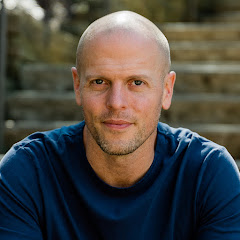 Tim Ferriss
Want to know something specific about what's covered?
We've already dissected every moment. Ask and we will deliver (with timestamps).
Key Moments
Rolf Potts and Tim Ferriss discuss "Vagabonding," long-term travel, and the mindset needed for meaningful experiences.
Key Insights
Long-term travel (vagabonding) is an attainable art form, not just for the wealthy, and offers a meaningful way to actualize one's "time wealth."
Fear of travel is often rooted in misconceptions about safety and cost; specific information and a shift in mindset can overcome these fears.
Redefining success beyond monetary metrics is crucial; travel provides experiences that far outweigh material accumulation.
Technology has double-edged benefits for travel, offering convenience but potentially reducing serendipity and genuine disconnection.
Unplugging from technology during travel is essential for creativity, introspection, and embracing unexpected experiences.
The 'beginner's mind' cultivated through travel can be applied to daily life, fostering appreciation over achievement and enhancing creativity.
INTRODUCTION TO VAGABONDING AND ITS PHILOSOPHY
Rolf Potts, author of "Vagabonding: An Uncommon Guide to the Art of Long-Term World Travel," is introduced by Tim Ferriss as a profound influence on his own life and travels. "Vagabonding" is presented not merely as extended vacationing but as a deliberate, meaningful way to experience the world and utilize one's "time wealth." Potts emphasizes that long-term travel is far more accessible and less expensive than commonly perceived, often costing less than living in a major city, and encourages people to pursue these dreams without deferring them until later in life.
OVERCOMING FEAR AND MISCONCEPTIONS ABOUT TRAVEL
A significant portion of the discussion addresses the common fears associated with long-term travel, such as expense and danger. Potts and Ferriss argue that these fears are often fueled by sensationalized media and a lack of specific, reliable information. By actively seeking out detailed accounts from fellow travelers, particularly those who have navigated challenging destinations successfully, individuals can dismantle these anxieties. They highlight that places like Medellin, Colombia, once notorious for violence, are now safe and vibrant, illustrating how perceptions can lag behind reality.
REDEFINING SUCCESS AND THE ROLE OF MONEY
The conversation critically examines the American obsession with wealth as the primary metric for success. Potts and Ferriss propose that true success lies in having the freedom and flexibility to live life on one's own terms, emphasizing "time wealth"—the richness of experiences—over material accumulation. They use examples of billionaires constrained by their own wealth and possessions to illustrate how excessive material success can paradoxically reduce freedom and options, contrasting this with the potential for a far richer life through judicious use of resources for experiential gains.
TECHNOLOGY'S DUAL IMPACT ON TRAVEL AND EXPERIENCE
The rise of technologies like Airbnb, Couchsurfing, and constant internet connectivity has profoundly altered the travel landscape. While these tools offer unparalleled convenience and potential cost savings, they also risk diminishing the serendipity and genuine disconnection that often lead to personal growth. The ability to pre-book every aspect can lead to a more managed, less spontaneous experience, potentially hindering the valuable moments of boredom or loneliness that can spur introspection and self-discovery.
THE IMPORTANCE OF DISCONNECTING IN THE DIGITAL AGE
Ferriss shares his personal experience of taking extended "off-the-grid" sabbaticals, emphasizing the profound benefits of disconnecting from smartphones and the internet. This deliberate unplugging, even if challenging and inconvenient, is presented as critical for fostering creativity, gaining perspective, and allowing the mind to rest and process. The conversation draws parallels to historical figures who struggled with maintaining presence amidst new communication technologies, underscoring that the battle for disconnection is an enduring one.
CULTIVATING CREATIVITY AND A 'BEGINNER'S MIND'
The principles of "Vagabonding" extend beyond travel, applying to cultivating creativity and life itself. Potts and Ferriss discuss the value of adopting a "beginner's mind"—approaching tasks and environments with curiosity and openness, akin to a child's wonder. This mindset, often awakened by travel, can be consciously applied at home to foster appreciation over constant achievement. They explore the demanding, often non-linear process of writing, highlighting the 'swooper' and 'basher' approaches as legitimate methods, and the importance of creating environments and plans that support, rather than hinder, creative output.
Mentioned in This Episode
●Software & Apps
●Companies
●Organizations
●Books
●People Referenced
Common Questions
Vagabonding is defined as long-term travel, not just a short vacation. It's a lifestyle choice that involves traveling for extended periods (six weeks to several years) with the aim of a more meaningful life experience rather than simply consuming services as a tourist.
Topics
Mentioned in this video
The guest on the podcast, author of 'Vagabonding', who discusses long-term travel and lifestyle philosophies.
Author whose concept of 'shitty first drafts' is mentioned in the context of writing processes.
Financier who traveled to Egypt but was too preoccupied with business via telegraph to experience the location.
Author who discussed how technologies like trains changed the experience of travel.
Author who described two types of writers: 'swoopers' and 'bashers'.
The host of The Tim Ferriss Show, author of 'The 4-Hour Work Week' and '4-Hour Body', and interviewer in this podcast.
Author of 'Walden', quoted by Tim Ferriss regarding the tendency to postpone important life goals.
A former Colombian drug kingpin whose era in Medellín is contrasted with the city's current state.
Quoted regarding the importance of planning, even if the plan isn't strictly followed.
A book by Anne Lamott about writing, considered a fantastic resource.
A book by Rolf Potts that serves as an uncommon guide to the art of long-term world travel, influencing Tim Ferriss's life and work.
A book by Henry David Thoreau that Tim Ferriss took with him during his travels.
Tim Ferriss's book, inspired by his travels and notes, which discusses lifestyle design and efficiency.
A book by Tim Ferriss that became a bestseller, for which 99designs helped create cover concepts.
An application that turns off internet connection, mentioned as a tool to help with self-discipline and avoid distractions.
A travel community website offering resources and reassurance for long-term travelers.
An online marketplace for graphic designers, used by Tim Ferriss for book cover concepts.
A travel community website focused on questions and following specific locations, founded by the creator of Virtual Tourist.
A company that makes lightweight, quick-drying, and antimicrobial clothing and underwear, recommended for travel.
A platform for short-term lodging rentals, discussed as a tool that has changed travel and offers alternatives to traditional hotels and hostels.
A service for travelers to find free accommodation, discussed as a tool that has changed travel.
More from Tim Ferriss
View all 696 summaries 127 min
Reimagining Biotech with Jake Becraft of Strand Therapeutics — Tim’s Founder Kitchen
 132 min
Reversing Type 2 Diabetes and Rowing 2,750 Miles — Sami Inkinen of Virta Health
 71 min
The Most Incredible Transformation I’ve Ever Seen — Jerzy Gregorek on Cerebral Palsy and Coaching
 34 min
PRISONER NO MORE: The True Story of Tae Jin Park
Ask anything from this episode.
Save it, chat with it, and connect it to Claude or ChatGPT. Get cited answers from the actual content — and build your own knowledge base of every podcast and video you care about.
Get Started Free