Key Moments
Politics & Power: A Conversation with Rahm Emanuel (Episode #387)
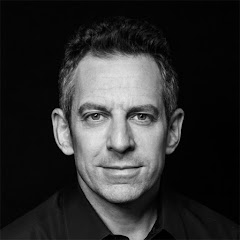 Sam Harris
Want to know something specific about what's covered?
We've already dissected every moment. Ask and we will deliver (with timestamps).
Key Moments
Rahm Emanuel discusses Japan's economy, US-China relations, and Democratic Party politics, advocating for alliances and value-based culture.
Key Insights
Japan's economic 'stagnation' is a top-line observation; its manufacturing sector is highly productive and automated, while the service sector lags in technology adoption.
China's regional aggression has inadvertently strengthened US alliances, compelling nations to seek US partnership as a counterbalance.
The Democratic Party has lost its way by prioritizing a permissive culture over a value-based one, alienating voters who respect law and order, especially immigrant communities.
Effective diplomacy in the Indo-Pacific requires strong alliances and trust, making US commitment to partners like Japan and the Philippines crucial.
Vice President Harris and the Democratic Party need to acknowledge shifts in policy and embrace a value-based approach to connect with a broader electorate.
The enduring US-Japan friendship, rooted in post-WWII reconciliation and strategic alignment, offers a model for overcoming past conflicts.
JAPAN'S ECONOMIC PARADOX AND STRATEGIC IMPORTANCE
Ambassador Rahm Emanuel addresses the perceived economic stagnation in Japan, distinguishing between its world-class, highly productive manufacturing sector, particularly in robotics and automation, and its slower adoption of technology in the service sector. He highlights Japan's role as the 'supply chain of the supply chain' in semiconductors and its strong export orientation. Despite high national debt, Japan's significant savings cushion its economy. Emanuel views Japan as a crucial anchor for US strategy in the Indo-Pacific and a testament to the possibility of transforming bitter enemies into strong allies.
US-CHINA COMPETITION AND THE STRENGTHENING OF ALLIANCES
Emanuel argues that China's aggressive regional behavior, from maritime incursions to economic coercion, has paradoxically strengthened US alliances. Nations in the Indo-Pacific, seeking a counterbalance to China, are aligning more closely with the United States. He notes that China's strategic mistake was underestimating US resolve and overestimating its own influence, leading to a containment strategy that China now perceives as its primary challenge. The US, while initially slow to adapt, is now leveraging China's tactics against it.
THE CRITICAL ROLE OF ALLIANCES AND US ELECTORAL IMPLICATIONS
The effectiveness of US foreign policy, particularly in countering China, hinges on strong alliances and trust with partners like Japan, South Korea, and the Philippines. Emanuel emphasizes that a US approach prioritizing these relationships is vital, contrasting it with a view that might see China as an equal in its own backyard. He suggests that US election outcomes will significantly influence how allies perceive and engage with American leadership, impacting regional stability and security dynamics.
TAIWAN, THE SOUTH CHINA SEA, AND TREATY OBLIGATIONS
Addressing flashpoints like Taiwan and the South China Sea, Emanuel clarifies the nuances of US policy. While strategic ambiguity surrounds Taiwan, the US has a stronger, treaty-bound commitment to the Philippines, a key ally facing Chinese assertiveness. He points to the ongoing conflict in the South China Sea over fishing rights and potential resources as a real-time demonstration of international law being challenged by a more powerful nation, underscoring the importance of US commitment to its treaty partners.
THE DEMOCRATIC PARTY'S DEPARTURE FROM CORE VALUES
Emanuel critiques the Democratic Party's recent drift, particularly around 2020, towards what he calls a 'permissive culture' rather than a 'value-based culture.' He believes aggressive stances on issues like 'defund the police' and certain social issues alienated voters who respect law and order. He posits that the party’s loud but unrepresentative activist voices overshadowed its traditional appeal to working-class voters and immigrants, damaging its electoral prospects by neglecting cultural and value-based appeals that defined past successes.
RECALIBRATING THE DEMOCRATIC MESSAGE AND VICE PRESIDENT HARRIS
Emanuel suggests that while the Democratic Party may be recalibrating, it needs to more explicitly address its past messaging on issues like immigration and crime. He believes Vice President Harris, like other candidates, needs to acknowledge shifts in her positions and project strength, confidence, and optimism. He draws a parallel to President Obama's evolution on gay marriage, suggesting transparency about changing views is crucial for building trust and demonstrating leadership capable of filling the presidential office.
THE ENDURING US-JAPAN FRIENDSHIP: A FOUNDATION FOR STABILITY
The remarkable transformation of the US and Japan from wartime enemies to steadfast allies is a testament to diplomatic vision and mutual respect, according to Emanuel. He attributes the foundation of this relationship to key moments like General MacArthur's meeting with Emperor Hirohito and George Kennan's post-war analysis of Japan's strategic role. This enduring friendship, exemplified by recent trilateral summits, provides a vital anchor for regional security and a hopeful example of reconciliation in a turbulent world.
Mentioned in This Episode
●Products
●Companies
●Organizations
●Concepts
●People Referenced
Common Questions
Rahm Emanuel is currently serving as the US Ambassador to Japan. He has a significant political background, including roles as Mayor of Chicago, President Obama's Chief of Staff, a US Representative from Illinois, and a senior advisor to President Clinton.
Topics
Mentioned in this video
A key country in the Middle East, whose international standing, security concerns, and domestic politics are part of the discussion.
Mentioned as the other half of the 38th parallel flashpoint, alongside South Korea.
A region discussed towards the end of the conversation, touching upon the standing of Israel, regional conflicts, and potential peace initiatives.
Referred to as a key ally in the Indo-Pacific region, essential for US strategy and for counterbalancing China. Also known as South Korea.
A strategically important maritime area with significant resources and territorial disputes involving China and surrounding nations.
Territory in the Middle East with Israeli settlements, a topic in the discussion about the Israeli-Palestinian conflict.
Conflict zone mentioned as an example of global instability, contrasting with the diplomatic achievements at Camp David.
Country where Rahm Emanuel currently serves as US Ambassador and a primary focus of the early discussion regarding its economy and geopolitical role.
A key ally in the Indo-Pacific region, whose partnership is crucial for US strategy and for counterbalancing China.
Mentioned as one of the countries with maritime interests in the South China Sea.
A key geopolitical flashpoint in the Taiwan Strait, discussed in the context of US policy and potential conflict with China.
Country in the Middle East, discussed in relation to potential conflict and its influence on Israeli security.
Mentioned as an ally in the Indo-Pacific whose cooperation is important for US strategy against China.
Referred to in the context of trilateral diplomatic efforts with Japan and the US, and also concerning historical complexities.
Conflict zone mentioned as an example of global instability, contrasting with the diplomatic achievements at Camp David.
A major geopolitical and economic competitor to the US, with its actions in the Indo-Pacific region being a significant topic of discussion.
Japanese Emperor whose role in the post-WWII transition was crucial for the US-Japan alliance.
Host of the Making Sense podcast, conducting the interview with Rahm Emanuel.
President of South Korea, who, along with Japanese PM Kishida, significantly strengthened ties with the US.
Diplomat and historian, author of the 'long memo' on Soviet containment and a later memo on Japan's role in the Pacific.
Former US President, cited as an example of a successful Democrat who balanced economics with a strong value system, and whose appeal is discussed.
Former Senator and Ambassador to Turkey, who endorsed President Biden and Vice President Harris, illustrating that there is still a home for such figures in the Democratic party.
Leader of China, whose decision to view the US as a strategic adversary is contrasted with the US's initial view of China as a competitor.
Former US President, included in a list of successful Democratic leaders.
An individual who, along with Sam Harris, facilitated the meeting with Rahm Emanuel.
Current US Ambassador to Japan, former Mayor of Chicago, Chief of Staff to President Obama, and advisor to President Clinton.
Republican politician, whom the speaker would hypothetically support for her stance against theocratic tendencies, indicating a dissatisfaction with the current Republican party direction.
Vice President, mentioned for his candid admission of a 'knucklehead move' during a debate.
Republican politician, whom the speaker would hypothetically support, indicating a dissatisfaction with the current Democratic party direction.
Former US President, cited as an example of a successful Democrat who balanced economics with a strong value system, and whose 1992 campaign message is recalled.
Discussed as a prominent public figure with a large platform who has become a single-issue voter on cultural war topics, influencing opinions.
A treaty ally of the US in the South China Sea region, whose disputes with China are highlighted as a current geopolitical event.
Post-WWII European recovery program, referenced in relation to diplomatic strategies, though Kennan's memo on Japan is considered distinct.
A key strength in Japan's manufacturing sector, driven by population decline.
An area where Japan is a leader, particularly in automation, due to its early adoption driven by population decline.
A slogan and policy proposal associated with a segment of the Democratic party around 2020, criticized by both speakers.
The term 'Latino' is mentioned as an example of identity politics that may not resonate with all segments of the Hispanic community.
Japan's critical role in the supply chain for semiconductor materials and packaging is highlighted.
Palestinian militant group, mentioned in the context of the Israeli-Palestinian conflict.
Mentioned as an ally in the Indo-Pacific whose cooperation is important for US strategy against China.
The court that ruled in favor of the Philippines against China in a 2016 case concerning the South China Sea.
The political party with which Rahm Emanuel identifies, its recent past, and its current trajectory are discussed.
Organization that reportedly asked Vice President Harris a question about gender reassignment surgery for incarcerated illegal immigrants in 2020.
Legislative body from which Rahm Emanuel previously served as a member representing Illinois.
More from Sam Harris
View all 304 summaries 30 min
Can AI Cure Loneliness?
 25 min
Why Is Everyone So Unhappy?
 27 min
Is America Heading for a Debt Crisis? An Economist Explains
 27 min
Is America Heading for a Debt Crisis? An Economist Explains
Ask anything from this episode.
Save it, chat with it, and connect it to Claude or ChatGPT. Get cited answers from the actual content — and build your own knowledge base of every podcast and video you care about.
Get Started Free