Key Moments
Pavel Tsatsouline and Chris Sommer — The Tim Ferriss Show
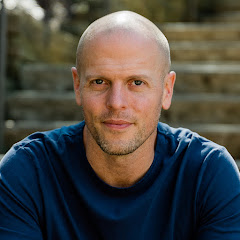 Tim Ferriss
Want to know something specific about what's covered?
We've already dissected every moment. Ask and we will deliver (with timestamps).
Key Moments
Tim Ferriss celebrates 10 yrs & 1B downloads w/ Pavel Tsatsouline on strength, & Chris Sommer on gymnastics.
Key Insights
Pavel Tsatsouline emphasizes that strength is a skill, not just about exhausting muscles, and prioritizing central nervous system training over muscle failure for optimal gains.
Chris Sommer, a gymnastics coach, highlights that proper gymnastic strength training (GST) focuses on foundational mobility, joint preparation, and body control before advanced skills.
Both experts stress the importance of patience and consistency in training, particularly for connective tissue adaptation, which rebuilds slower than muscle.
Counterproductive myths in training include consistently training to failure and prioritizing aesthetics over functional strength and mobility.
Effective training methodologies, whether for strength or gymnastics, are principle-based and adaptable, focusing on overall physical preparation and longevity.
A proper warm-up, addressing full-body mobility and lower-level strength elements, is crucial for preventing injuries and optimizing performance in any physical endeavor.
STRENGTH AS A SKILL AND NERVOUS SYSTEM TRAINING
Pavel Tsatsouline, renowned strength coach and founder of StrongFirst, introduces strength as a skill primarily trained through the nervous system. He emphasizes that rather than simply building bigger muscles (a six-cylinder engine), the focus should be on efficiently firing all existing muscles (making a four-cylinder engine fire on all four). This approach, tested by military and high-end units, allows individuals to achieve greater strength quickly by maximizing existing capacity. Techniques like 'crushing the bar,' contracting glutes, and tightening abs during lifts significantly amplify strength by engaging more muscle fibers through irradiation.
THE PRINCIPLES OF STRENGTH TRAINING AND GRIP/CORE DEVELOPMENT
Tsatsouline asserts that true strength training is principle-based, transcending specific equipment like kettlebells. His methods, derived from observing naturally strong individuals, aim to accelerate progress by identifying and applying core principles. For grip strength, he recommends IronMind grippers, advocating frequent, sub-maximal sets (the 'grease the groove' method) throughout the day. For abdominal training, he advises focusing on tension and contraction with low repetitions (three to five sets of three to five reps), avoiding fatigue to prevent hydrogen ion buildup which impairs muscle function and causes damage.
PRIORITIZING STRENGTH AND COUNTERPRODUCTIVE TRAINING MYTHS
Tsatsouline posits that strength is the 'mother quality' of all physical attributes, crucial for overall health and performance in any sport. He debunks the myth of training to failure, drawing from Soviet weightlifting methodologies that advocate for one-third to two-thirds of maximal repetitions per set, performed across more sets. This approach, he explains, builds strength more safely and effectively, fostering a 'practice' mindset rather than a 'workout' aimed at exhaustion. He also highlights the deadlift as a foundational exercise for longevity and overall power, cautioning against improper technique due to its technical complexity.
INTRODUCTION TO GYMNASTIC STRENGTH TRAINING (GST)
Chris Sommer defines Gymnastic Strength Training (GST) as high-level bodyweight strength training focused on strength, joint preparation, and mobility, separate from technical acrobatics. He distinguishes GST from common fitness practices by emphasizing proper form and foundational physical preparation over aesthetics or immediate gratification. Sommer highlights that many common physical aesthetic goals, such as a handstand, are only achievable with proper underlying strength and mobility, rather than just skill training, correcting common compensations like excessive hip arching in an attempt to balance.
ADDRESSING COMMON MOBILITY DEFICIENCIES AND JOINT HEALTH
Sommer identifies a lack of shoulder extension as a significant deficiency in non-gymnasts, often due to an imbalance between anterior and posterior shoulder development. He stresses that many perceived 'extreme' ranges of motion in gymnastics are actually natural human mobility that has atrophied from disuse. GST prioritizes rebuilding this natural range of motion and strengthening connective tissues, which regenerate much slower than muscles. He explains that training through pain, especially at joint attachment points, is detrimental and often leads to chronic injuries, necessitating patience and careful progression.
THE HOLLOW POSITION AND CORE STRENGTH IN GST
The hollow body position is central to GST, emphasizing comprehensive core engagement beyond just superficial abs, involving obliques and the transverse abdominis. Sommer explains that a proper hollow position—maintaining a posterior pelvic tilt—is crucial for supporting the body in straight-body movements and preventing lower back strain. He uses the analogy of a 'wine glass' to explain anterior versus posterior pelvic tilt, underscoring that many exercises like ab rollers are only problematic when performed with improper back alignment due to a lack of understanding core mechanics.
CRITICAL ASSESSMENTS AND MOBILITY EXERCISES
For assessing mobility, Sommer recommends movements like hanging leg lifts (to gauge hamstring flexibility and core strength), the bridge (focusing on thoracic spine mobility rather than lumbar overextension), and shoulder extension tests (such as lifting interlaced hands behind the back). He introduces the Jefferson Curl as a highly effective weighted mobility exercise for the entire posterior chain, emphasizing gradual, vertebra-by-vertebra rounding to restore spinal flexibility. These exercises not only build strength but also address common deficiencies that contribute to injury and limit overall physical capability.
KIPPING MOVEMENTS AND ADAPTATION OF CONNECTIVE TISSUE
Sommer criticizes Kipping pull-ups for beginners, arguing they bypass the crucial strength development needed for a healthy shoulder joint, often leading to injuries. He clarifies that Kipping is an advanced finishing technique, not a starter. Connective tissue (tendons and ligaments) adapts much slower than muscle, making high-volume, high-intensity training without adequate foundational strength and mobility highly risky. This principle also applies to the use of anabolics, which can dangerously accelerate muscle growth beyond what connective tissue can safely support, making injuries more likely.
PRESS HANDSTAND AS A HOLISTIC GOAL
Sommer identifies the press handstand as an ideal goal for adults in GST, as it holistically integrates strength, mobility, and balance. He distinguishes a proper gymnastics handstand from common variations (like yoga handstands) that might compromise joint health or limit progression. A correct press handstand involves a straight body line, active shoulders, and significant core and compression strength, not merely an aesthetic pose. The focus on strict, controlled movement ensures optimal strength development transferable to other advanced skills, contrasting with methods that prioritize ease over integrity.
DEVELOPMENT OF THE UPPER BODY AND GRIP
The impressive musculature of gymnasts, particularly in the upper body, largely stems from straight-arm strength work on rings and high-volume rope climbs, not just bent-arm exercises. Sommer explains that rope climbs, performed without legs, build significant bicep mass due to the bicep's role as an endurance muscle, handling sustained high loads. He also differentiates between grip types, highlighting that parallel grips (like on ropes) heavily engage the brachialis muscle, crucial for elbow support in straight-arm ring strength. Emphasizing this specific grip training is vital for preventing elbow pain and progressing to advanced ring movements.
MENTAL PREPARATION FOR ELITE PERFORMANCE
Mental preparation for competition starts with countless successful repetitions in training, leading to competence and then confidence. Sommer recounts the example of a Russian Olympic gymnast who, despite physical perfection, struggled due to a lack of mental preparation for uncontrolled competition environments. He advocates for deliberately introducing stressors into training—like unexpected starts or distractions—to condition athletes to perform under pressure. This approach, he asserts, ensures that competition feels less stressful than training, preparing athletes for the harsh realities of elite-level performance.
COACHING PHILOSOPHY AND LONGEVITY IN TRAINING
Sommer's coaching philosophy rejects the 'no pain, no gain' mentality, opting for 'no brain, no gain,' distinguishing between fatigue and injury. He emphasizes consistency and patience, explaining that elite-level physical development is a multi-year process, not a quick fix. He stresses that an athlete's career longevity is directly tied to a thoughtful, progressive training approach that prioritizes joint health and long-term adaptation. He advises listening to the body, avoiding overtraining, and understanding that even world-class athletes benefit from periodic deload or recuperation periods, as seen in the training cycles of top gymnasts.
ASSESSING A GYMNASTICS FACILITY AND WARM-UP PRINCIPLES
When evaluating a gymnastics facility, Sommer recommends checking the competitive record of its coaches and athletes, as well as their injury rates. He suggests observing warm-ups to see if they prioritize joint mobility and lower-level strength elements before intense work, indicating a conscientious approach to athlete health and longevity. A proper warm-up, balancing general movements with specific preparatory exercises, is crucial for preventing injuries and optimizing performance. He highlights the importance of consistency in these preparatory movements, as exemplified by a senior student who maintains peak physical condition through diligent mobility work.
PERSONAL GROWTH AND THE PURSUIT OF EXCELLENCE
Sommer views success across various fields—athletics, business, arts, politics—as driven by similar core principles: consistency, mastering basics, patience, continuous reinvention, and keen observation. He shares his own journey of sustained effort and belief in a long-term vision, drawing parallels to figures like Tony Robbins and Arnold Schwarzenegger who achieved multi-faceted success through work ethic and adaptability. He encourages individuals to embrace gradual progress and be receptive to learning, noting that an 'average' mindset limits potential, while a commitment to continuous growth can lead to exceptional results, even starting later in life.
FINAL ADVICE FOR THE AUDIENCE
Sommer encourages listeners to re-evaluate their urgency, suggesting a slower, more consistent pace in training and personal development. His primary recommendation is to prioritize mobility, as it significantly enhances the quality of life, followed by core strength, and then conventional strength training. He invites interested individuals to explore Gymnastic Bodies' introductory program, designed to provide a gentle and structured entry into GST principles. He also openly shares his personal experiences with health improvements from probiotics and Vitamin D, emphasizing the importance of blood work and listening to one's body for optimal health.
Mentioned in This Episode
●Supplements
●Products
●Software & Apps
●Tools
●Companies
●Organizations
●Books
●Concepts
●People Referenced
Common Questions
Pavel Tsatsouline suggests three techniques: crushing the dumbbell or barbell, contracting glutes as tightly as possible, and tightening abs as if expecting a kick. These actions amplify muscle contraction and allow for several more repetitions, focusing on the underlying principles of strength rather than just the equipment.
Topics
Mentioned in this video
Pavel Tsatsouline's company and school of strength, focused on underlying principles of strength training.
A company that sells heavy-duty hand grippers, recommended by Pavel for grip training.
Christopher Sommer's training system known for building strong and powerful athletes. It focuses on high-level bodyweight strength training, joint preparation, and mobility.
A brand that Christopher Sommer believes he uses for his liquid Vitamin D drops.
A brand of laboratory-grade probiotics that Christopher Sommer found highly effective for digestion issues.
A former World Champion gymnast from the Netherlands, described as a 'monster' for his incredible strength and wide back.
Former US national team gymnastics coach and founder of the GymnasticBodies training system.
A former General Officer, mentioned by Tim Ferriss as not eating breakfast.
An osteopath in the UK who runs a GB Affiliate (Forma GST) and taught Coach Sommer about the body's limits of abuse.
A World Champion gymnast whose coach Stacy Malani sought opinions from other coaches, demonstrating humility and a desire to learn even at a high level.
A famous powerlifter known for lifting five times his body weight, illustrating the concentration of mental force in strength.
The CEO of StrongFirst, whom Pavel cites as exemplifying success through 'balance with priorities' and embodying 'calm is contagious.'
A PhD in physical therapy who has experimented with the Jefferson Curl for several years and feels wonderful, sharing his insights.
Paul Hamm's coach, who demonstrated humility by asking other coaches for their opinion even after winning the World Championships.
A top powerlifter with whom Tim Ferriss co-authored a book, Deadlift Dynamite.
A Russian Olympic and World Champion gymnast who won worlds at 16, recovered from a severe leg injury to win again in '87, and was notably the only gymnast in '83 to use a deload week every fourth week.
A physically large and extremely flexible individual in New York City, demonstrating that muscle mass doesn't necessarily inhibit flexibility.
Dmitri Bilozerchev's coach, who is the only coach in history to produce both a male and female world champion. Known for his depth of knowledge and ability to plan long-term athlete development.
A professional wrestler and business executive for WWE, who shared an anecdote about Floyd Mayweather's mental preparation for a fight.
A mutual friend who introduced Tim Ferriss to Christopher Sommer, also a nutritional guru and high-intensity guy.
A famous Olympian gymnast from the 1972 Olympics who melted down during competition despite nearly perfect training, due to lack of mental preparation for uncontrolled variables.
A CrossFit gym in Venice, California, where Tim Ferriss trained and met someone who introduced him to Gymnastic Bodies.
A Master Affiliate of GymnasticBodies in Colorado, described as a fantastic gym where Tim Ferriss had his assessment.
A branch of the United States Armed Forces, for whom Pavel Tsatsouline has been a subject matter expert.
A product review website that picked OnePassword as its top choice for password managers.
More from Tim Ferriss
View all 703 summaries 70 min
Q&A with Tim — The Art of Male Friendship, Reinvention in The Age of AI, & More
 125 min
Dr. Andrew Huberman — Peptides, Performance, and Protocols
 112 min
The Random Show! Mortality, AI, Supplements, Rock Climbing, & More
 88 min
The Legendary Hollywood Power Broker — Guy Oseary on 36 Years of Managing Madonna, 26 IPOs, and More
Ask anything from this episode.
Save it, chat with it, and connect it to Claude or ChatGPT. Get cited answers from the actual content — and build your own knowledge base of every podcast and video you care about.
Get Started Free