Key Moments
Michael Malice: Totalitarianism and Anarchy | Lex Fridman Podcast #200
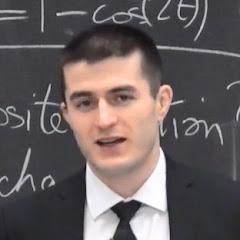 Lex Fridman
Want to know something specific about what's covered?
We've already dissected every moment. Ask and we will deliver (with timestamps).
Key Moments
Malice and Fridman discuss totalitarianism, anarchism, the nature of evil, and the importance of conscience and kindness.
Key Insights
Totalitarianism, as depicted in Orwell's Animal Farm, extends beyond specific historical events to encompass broader forms of oppressive dictatorship.
True heroism often involves quiet defiance and adherence to liberal humanist values, rather than grand, performative gestures, especially when facing overwhelming state power.
The concept of "absurdism," as viewed by figures like Camus, posits that while life may inherently lack meaning, this presents an immense opportunity for individuals to create their own values, seek truth, and find happiness.
Historical atrocities, such as those in the Soviet Union and North Korea, highlight the profound and often overlooked suffering caused by collectivist regimes and the banality of evil in everyday cruelty.
Anarchism, at its core, advocates for voluntary human relationships, rejecting forced hierarchies and the moral legitimacy of the state's coercive power, viewing it as a parasitic entity.
Technological advancement and free enterprise inherently lead to decentralization and increased choice, contrasting with government intervention which centralizes power and stifles competition.
THE NATURE OF TOTALITARIANISM AND HEROISM
Michael Malice and Lex Fridman begin by discussing George Orwell's *Animal Farm*, an allegory for totalitarianism that Malice argues extends beyond the Russian Revolution to encompass various dictatorships. Malice identifies with the pigs' position of power, preferring to rule in 'hell' than serve in 'heaven'. He praises left-wing figures like Emma Goldman, Albert Camus, and Orwell for their courage in opposing totalitarian communism. Malice highlights Goldman's disillusionment with the Soviet Union, Camus's fight against fascism and his stance on the death penalty, and Orwell's use of fiction to expose state horrors. Heroism, Malice contends, lies in quiet defiance—like the Nazi guard who subtly saved a child—and adhering to liberal humanist values, rather than suicidal grandstanding, especially when facing regimes that threaten family members.
REFLECTIONS ON HUMAN NATURE AND THE BANALITY OF EVIL
Malice underscores the profound impact of totalitarian regimes, citing North Korea's policy of punishing three generations for the actions of one individual. He emphasizes the inseparability of heroism and personal sacrifice, especially when loved ones are at stake, and how such extreme circumstances expose the depths of human nature. The conversation delves into the 'banality of evil', highlighting how mediocre individuals in positions of power can inflict immense suffering through everyday cruelty, as exemplified by the Rwandan dictator Nicolae Ceaușescu. This phenomenon, Malice suggests, is deeply disturbing because it shows how easily people can abuse power when they feel strong at the expense of others, revealing a primal, vindictive aspect of human nature.
CAMUS, ABSURDISM, AND THE QUEST FOR MEANING
Malice champions Albert Camus's absurdism as a response to nihilism, emphasizing that life's inherent meaninglessness offers an immense opportunity for individuals to create their own values and seek truth and happiness. He rejects cynicism as a lie that happiness is impossible or requires moral compromise. Malice relates this to his Jewish upbringing, viewing life as a beautiful gift to be lived morally and to the fullest, a perspective that resonates with Camus's philosophy of embracing the present journey rather than fixating on an afterlife. The discussion touches on the power of small acts of kindness and making things better at little cost, which Malice deeply admires more than grand, championed heroism.
HEROISM, NAIVETÉ, AND THE INTERNET
Fridman often finds himself labeled 'naive' for his optimism and belief in inherent benevolence, but he argues this reflects a deeper wisdom, a child-like wonder that can be a powerful force for change. Malice agrees, seeing it as an active choice to find beauty and possibility even in suffering, distinguishing it from ignorance. They critique the intellectual's tendency towards cynicism and darkness in art, preferring instead to celebrate love, joy, and the inherent goodness possible in human experience. The conversation extends to online interactions, where Malice often responds to aggression with empathy, suggesting that harshness often stems from personal pain or a misguided upbringing, aiming to foster self-reflection rather than perpetuate negativity.
THE LEGACY OF WAR AND IMMIGRATION
The conversation takes a personal turn as Fridman shares the haunting impact of his grandparents' experience during World War II in Soviet Ukraine, where the threat of Nazi extermination was a daily reality. Malice, recalling his family's similar background, reflects on the incomprehensible choices and suffering endured to survive, drawing parallels to modern-day North Korea. He emphasizes the responsibility to bear witness—to those who suffered in the past and those enduring similar plights today—to prevent such atrocities from being dismissed as distant or foreign. Malice's trip to North Korea and subsequent book *Dear Reader*, aimed to humanize the suffering under totalitarian regimes, transforming a once-mocked topic into a widely recognized humanitarian crisis.
ANARCHIST PHILOSOPHIES: FROM TOLSTOY TO GOLDMAN
Malice discusses key thinkers from his *Anarchist Handbook*, highlighting their shared belief in the illegitimacy and malevolence of government. Leo Tolstoy's Christian anarchism and pacifism are explored, noting his influence on figures like MLK and Gandhi. Tolstoy's non-violent resistance, which forced oppressors to confront the moral implications of their actions, is presented as a powerful, albeit often misunderstood, form of defiance. In contrast, Emma Goldman's radical anarchism, while advocating for individual freedom, held a more complex, at times controversial, view on violence as a means to dismantle oppressive structures. Malice acknowledges the ethical tightrope walked by figures advocating violence, stressing the need for careful consideration to avoid unintended consequences.
THE ANARCHIST CRITIQUE OF THE STATE AND MARKET DYNAMICS
Malice defines anarchism not as a location but as a relationship based on voluntary consent, where no one has the moral right to impose their will on another. He argues that the state, unlike a private service provider, relies on coercion (e.g., taxation) rather than voluntary exchange, making it fundamentally immoral. Malice asserts that markets inherently trend towards decentralization and increased choice through competition and technological innovation, citing examples from the music and television industries. He contends that government intervention distorts markets, favoring large corporations over small businesses, and is ultimately inefficient due to the 'calculation problem' of lacking accurate price signals to allocate resources effectively.
RETHINKING VOTING, CRIME, AND THE DOUBLE STANDARD
Malice explains his anarchist stance against voting, comparing it to not taking communion—neither mechanism grants external authority over his life. He advocates for direct referendums on issues rather than electing representatives who claim to speak for constituents across a broad spectrum of policies, deeming the latter an illogical pretense. The discussion also touches upon the decriminalization of victimless crimes, especially drugs and prostitution, emphasizing the need for compassion and the safety of vulnerable individuals over punitive approaches. Malice fiercely criticizes the double standard where elite individuals face no consequences for drug use while ordinary citizens endure severe, life-altering penalties, exposing the hypocrisy of state power regardless of political affiliation.
THE PERILS AND PITFALLS OF CONSPIRACY THEORIES
While cautious about the term 'conspiracy theory' due to its pejorative connotations, Malice acknowledges the validity of questioning powerful elites. He distinguishes between verifiable instances of government manipulation (e.g., Tuskegee experiments, Operation Mockingbird) and baseless claims, arguing that the blanket term serves to dismiss legitimate scrutiny. Malice notes that over-immersion in conspiracy theories can lead to cynicism and a sense of powerlessness, a 'black-pilled' worldview. However, he counters this with the 'white pill' perspective: that those in power are often not as competent or cunning as perceived, and their public displays of ineptitude (e.g., politicians' social media presence) diminish their mystique, empowering individuals to challenge authority.
PERSONAL JOURNEY AND THE VALUE OF CONNECTION
Malice shares personal insights into his recent move from New York to Austin, a decision both difficult and liberating. He describes New York as a deeply ingrained part of his identity but acknowledges the city's declining quality of life and the outward migration of his social circle. Austin, with its more affordable real estate and supportive community, offers new opportunities for personal freedom and a different quality of life. Malice reflects on his approach to conversation, aiming to create a safe, engaging, and often humorous environment for guests, even those with contrasting political views. He emphasizes the importance of genuine human connection and kindness over political differences, believing that strong relationships are a greater testament to shared humanity.
THE SEARCH FOR JOY AND WONDER
Malice expresses profound joy and satisfaction with his current life, even considering his past experiences and the historical suffering of his family. He finds beauty and humor in everyday annoyances, viewing them as anecdotes that underscore life's absurdity and wonder. His 'bucket list' includes experiences that offer unique perspectives on the world, such as deep-sea submersible exploration, to witness "God's mistakes" (deep-sea creatures) and visit historical sites in Russia and Ukraine. He reflects on the growing public recognition he receives, acknowledging it as a strange but ultimately rewarding aspect of his work, reinforcing his belief in spreading kindness and showing gratitude for the support received.
Mentioned in This Episode
●Companies
●Organizations
●Books
●Studies Cited
●Concepts
●People Referenced
Common Questions
Michael Malice would choose to be a pig, specifically a leader like Napoleon. He explains this choice by paraphrasing Milton, stating it's 'better to rule in hell than serve in heaven,' reflecting his preference for power and control.
Topics
Mentioned in this video
Author, anarchist, and host's friend. Explicitly called a 'simpleton' by the host in the intro. Discusses his views on totalitarianism, human nature, and anarchism.
A man of conscience and a strong voice against totalitarianism, joined the Communist Party to fight fascists; known for his absurdist philosophy and insistence on living a life based on conscience.
Mentioned as the employer of Henry Clay Frick, highlighting the industrial context of early anarchist actions.
Mentioned as the actual author of the quote "It is a job of thinking people not to be on the side of the executioners," often misattributed to Camus.
Influenced by Tolstoy's pacifism, he forced people to confront the consequences of their racism through non-violent protest.
Barry Goldwater's speechwriter, mentioned as an unexpected figure with anarchist leanings, though not a household name.
Converted to anarchism by Murray Rothbard's essay "Anatomy of the State."
Host of the Modern Wisdom podcast, a close friend of Michael Malice, known for his grounded advice, with whom Michael plans to travel to Russia and Ukraine.
A political commentator, mentioned as the host of a show where Alex Jones and Michael Malice had a heated debate, demonstrating Alex's performative side.
Emma Goldman's partner, attempted to assassinate Henry Clay Frick, and was also deported to the Soviet Union, sharing her disillusionment.
Influenced by Tolstoy's pacifism, he demonstrated the power of non-violent opposition.
Considered for inclusion in "The Anarchist Handbook" as a prominent contemporary anarchist thinker.
The main pig leader in Animal Farm, representing a totalitarian dictator.
An anarchist theorist, whose model of revolution was discussed among socialists prior to the Bolshevik victory.
An economist who described the "calculation problem" faced by governments, lacking market data to make efficient resource allocation decisions.
Coined "survival of the fittest" and wrote "The Right to Ignore the State," which was considered for The Anarchist Handbook despite him not being an anarchist.
An early anarchist thinker whose ideas might be mentioned in the book.
A US politician, mentioned for admitting to smoking weed in college without facing consequences, contrasting with the severe penalties for others.
Author of Animal Farm, praised for his courage in fighting totalitarian communism, and a proponent of democratic socialism against totalitarianism.
His model of revolution was contrasted with Bakunin's, providing a theoretical framework for socialist movements.
A US politician, mentioned in the context of powerful figures being more accessible to large corporations like Amazon than small businesses.
The leader of the Bolsheviks, who dismissed Emma Goldman's concerns about free speech, indicating the authoritarian turn of the Soviet Revolution.
The founder of North Korea, who institutionalized the policy of exterminating 'class enemies' for three generations, impacting families as a unit.
A North Korean refugee, mentioned as someone who has experienced the extreme conditions there.
A Christian anarchist and author of War and Peace and Anna Karenina, who advocated for non-violence and influenced figures like MLK and Gandhi.
An entrepreneur often associated with innovative companies like SpaceX that demonstrate market efficiency over government services.
Son of Joe Biden, mentioned for avoiding legal consequences despite admitting to crack cocaine use in a New Yorker article, highlighting a double standard in drug enforcement.
Podcast host, mentioned as someone who has observed Alex Jones's tendency to make non-controversial statements sound crazy.
An early anarchist figure and a strong voice against totalitarian communism, deported from the US to the Soviet Union where she became disillusioned; discussed for her ideas on individual freedom and violence.
Mentioned as anti-communist, representative of figures who fought against communism.
A US Senator, mentioned in the context of powerful figures being more accessible to large corporations like Amazon than small businesses.
An early progressive who opposed World War I and wrote "War is the Health of the State," an essay about states increasing power during wartime.
The assassin of President McKinley, who claimed to have been radicalized by Emma Goldman, causing her to go on the run.
Former US President, mentioned for overcoming cocaine addiction, further illustrating the double standard regarding drug use among elites.
Andrew Carnegie's associate, targeted in an assassination attempt by Alexander Berkman during the Pittsburgh steel mill strike.
Founder of Amazon, used as an example of powerful individuals whose interests are often favored by state involvement, contrasting with small businesses.
An influential anarchist thinker whose essay "Anatomy of the State" converted Dave Smith and defined the state as inherently parasitic.
Emma Goldman and Alexander Berkman's mentor, an early advocate of free speech who distributed pamphlets on building dynamite as a means for the working class to level the playing field against oppressive governments.
US President assassinated in 1901 by Leon Czolgosz, an event that led to Emma Goldman being implicated and going on the run.
A conspiracy theorist, discussed for his performative communication style, historical knowledge, and his perspective on conspiracy theories' effects on the mind.
An actor who played a character based on Alex Jones in the film "The Hunt," illustrating Alex's cartoon archetype.
German philosopher whose quote about gazing into the abyss is referenced in relation to Alex Jones's immersion in conspiracy theories.
A novel and film depicting an impossible moral dilemma, used as an analogy for the difficult choices faced by people during wartime.
Michael Malice's book on North Korea, aimed at transitioning public perception from a humorous caricature to serious understanding of the human rights situation.
A book by an Auschwitz survivor, discussing the arbitrary nature of suffering and cruelty in concentration camps.
A book compiled by Michael Malice, featuring essays from various anarchist thinkers, exploring the illegitimacy of government and non-state alternatives.
Herbert Spencer's book which included the essay "The Right to Ignore the State,"
A book by George Orwell, an allegory about the Soviet Union and the Russian Revolution of 1917, where animals overthrow humans and become as bad or worse.
A book written by Emma Goldman detailing her horror and disappointment with the Soviet Union after witnessing its early authoritarian practices.
A novel by Dostoevsky, mentioned by the host to describe his own self-perception as naive but genuinely believing in goodness, similar to Prince Myshkin.
Albert Camus's essay attacking the death penalty not on the grounds of evil, but on what it does to a society to practice such acts.
Michael Malice's biography, mentioned for its high price on eBay, and his interaction with a friend about its availability.
A philosophy that Camus's absurdism explicitly responds to and attacks, emphasizing finding value in a seemingly meaningless life.
A political ideology that George Orwell defended against totalitarianism, contrasting with its more authoritarian counterparts.
A totalitarian ideology that Albert Camus fought against, joining the Communist Party as a mechanism to oppose it.
A modern totalitarian state where the 'class enemy' principle leads to generational punishment, serving as a contemporary example of extreme human suffering.
A historical communist state and a primary example of totalitarianism discussed in relation to Animal Farm, Emma Goldman's disillusionment, and World War II.
The capital of North Korea, described by a friend as looking like 'a Russian city with Asian people,' highlighting the bleak reality of the regime.
A historic plaza in Moscow, Russia, mentioned as a significant site to visit for personal and historical reflection on the Soviet era.
The capital of Ukraine, mentioned as being bombed early in Operation Barbarossa, symbolizing the sudden onset of war.
The French State under German occupation during WWII, serving as context for Camus's anti-fascist activities.
A city in Western Ukraine, the speaker's family's original home, where a monument now stands commemorating the murder of its Jewish population by Nazis.
A film mentioned for its portrayal of Kim Jong Il as a clown, initially bringing awareness to North Korea but trivializing its severity.
A film that humorously depicts Stalin's death but reveals the disturbing realities of the Soviet regime and its brutality.
A film in which Ethan Suplee played a character based on Alex Jones.
A podcast hosted by Chris Williamson, Michael Malice's close friend.
Emma Goldman's periodical, a platform for radical and anarchist ideas of her time.
An animated TV show, cited for a joke about college being the time and place to try drugs, reflecting societal views on drug experimentation among different classes.
An aerospace manufacturer and space transportation services company, used as an example of private innovation outcompeting government services.
A courier delivery service used as an example of a private company that innovates and competes more effectively than government-run services like the USPS, despite being taxed.
A package delivery and supply chain management company, comparable to FedEx in its private-sector efficiency over the USPS.
A magazine that published an article in which Hunter Biden admitted to drug use, used to illustrate selective enforcement of drug laws.
A British socialist organization, predecessor to the Labour Party, that sought to establish a socialist nation.
The political party that succeeded the Fabian Society, representing a socialist movement in Britain.
A government-operated postal service, contrasted with private carriers like FedEx and UPS to illustrate the state's inefficiency and unfair market advantages due to taxation.
More from Lex Fridman
View all 550 summaries 174 min
Biggest Mysteries in Physics: Antimatter, Dark Energy & ToE - Don Lincoln | Lex Fridman Podcast #497
 259 min
FFmpeg: The Incredible Technology Behind Video on the Internet | Lex Fridman Podcast #496
 124 min
Vikings, Ragnar, Berserkers, Valhalla & the Warriors of the Viking Age | Lex Fridman Podcast #495
 146 min
Jensen Huang: NVIDIA - The $4 Trillion Company & the AI Revolution | Lex Fridman Podcast #494
Ask anything from this episode.
Save it, chat with it, and connect it to Claude or ChatGPT. Get cited answers from the actual content — and build your own knowledge base of every podcast and video you care about.
Get Started Free