Key Moments
Mark Cuban: Shark Tank, DEI & Wokeism Debate, Elon Musk, Politics & Drugs | Lex Fridman Podcast #422
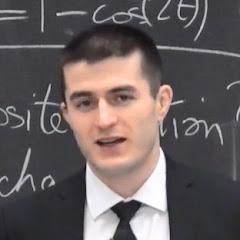 Lex Fridman
Want to know something specific about what's covered?
We've already dissected every moment. Ask and we will deliver (with timestamps).
Key Moments
Mark Cuban discusses entrepreneurship, business, DEI, politics, and healthcare innovation.
Key Insights
Entrepreneurship requires curiosity, adaptability, and strong sales skills.
Authentic selling involves understanding and helping others solve problems.
Starting a business requires preparation, financial discipline, and risk assessment.
The American entrepreneurial spirit is a key differentiator, but faces challenges from social media polarization.
DEI programs, when implemented correctly, focus on expanding applicant pools and supporting employees.
Mark Cuban's Cost Plus Drugs aims to revolutionize the opaque healthcare system through radical transparency.
THE CORE OF ENTREPRENEURSHIP
Mark Cuban defines a great entrepreneur as someone inherently curious, continually learning, and agile enough to adapt to ever-changing business landscapes. Crucially, they must possess strong salesmanship, not in a pushy sense, but in the ability to effectively communicate value and help potential customers solve their problems. This skill, honed from a young age, involves understanding customer needs and demonstrating how a product or service can meet those needs, whether it's selling garbage bags door-to-door or revolutionizing online content delivery.
BUILDING BUSINESSES AND MANAGING TEAMS
Cuban emphasizes that success in business stems from a deep understanding of how companies make money and an ability to innovate for future growth. This requires voracious consumption of information and a recognition that the business world is dynamic. He notes a past tendency to be a "yeller" and impatient, a trait he learned to manage by partnering with detail-oriented individuals. While he sees potential in many, he acknowledges his weakness in firing people, often delegating this difficult task to others, highlighting the importance of self-awareness and complementary skill sets in a team.
TAKING THE LEAP: STARTING A BUSINESS
The initial leap into entrepreneurship is often the most challenging. Cuban suggests that desperation can be a catalyst, but preparation is paramount. This involves saving money, sacrificing non-essentials, and thoroughly researching the chosen industry. He cautions against the naive approach of thinking an idea is unique simply because it's on Google, overlooking potential past failures. The willingness to manage the consequences of changing one's circumstances is key, whether starting from a position of having 'nothing' or carefully planning a transition from a stable job.
THE AMERICAN ENTREPRENEURIAL SPIRIT AND ITS CHALLENGES
Cuban views American entrepreneurship as a unique cultural driver, fostering innovation more than in any other country. However, he observes a recent shift where success, especially wealth accumulation, is met with distrust and criticism, amplified by social media. This polarization makes it harder to celebrate entrepreneurial achievements. He argues that the ability to control algorithms on platforms dictates control over information and potentially people, emphasizing the importance of diverse information sources rather than relying on a single platform.
DEI: PRINCIPLES AND IMPLEMENTATION
Cuban explains Diversity, Equity, and Inclusion (DEI) as expanding the applicant pool (Diversity), positioning new hires for success (Equity), and providing support for all employees to feel comfortable and confident (Inclusion). He dismisses quotas as illegal and a 'straw man' argument. While acknowledging that DEI programs can be poorly implemented like any business function, he believes the free market naturally corrects failures. He argues that discrimination against people of color is more prevalent than 'reverse discrimination' and that the widespread fear of criticizing DEI programs stems from organizational culture and leadership failures, not an inherent flaw in DEI itself.
HEALTHCARE REVOLUTION THROUGH TRANSPARENCY
Mark Cuban's Cost Plus Drugs initiative directly addresses the lack of transparency and trust in the healthcare system, particularly concerning prescription drug pricing. By displaying actual costs, a 15% markup, and associated fees, the platform offers radical transparency. This model challenges the opaque practices of Pharmacy Benefit Managers (PBMs) like CVS Caremark, Express Scripts, and Optum Rx, which Cuban argues prioritize profits over patient well-being. He highlights how PBMs manipulate rebates and exclude more affordable generic alternatives, ultimately costing employers and individuals millions.
REFORMING CORPORATE HEALTHCARE STRATEGIES
Cuban asserts that most CEOs and CFOs do not fully understand their company's healthcare coverage costs, leading to massive inefficiencies. His own experience revealed that employee benefits consultants were often incentivized by commissions from PBMs, leading to inflated costs. He advocates for companies, especially those with over 500 employees, to hire dedicated healthcare executives internally to manage these complex, significant expenses. This internal expertise, coupled with transparency in provider contracts and pricing, can decentralize power away from large PBMs and insurance companies.
THE CHALLENGES OF THE PHARMACEUTICAL CARTEL
The pharmaceutical industry operates like a cartel, particularly benefiting large PBMs that control drug formularies based on rebate structures rather than patient cost savings. Cuban explains how independent pharmacies are being squeezed out because PBMs reimburse them less than the acquisition cost of medications, a practice that is even more pronounced with Medicare Part D. Cost Plus Drugs aims to disrupt this by working outside the established system and collaborating with major drug brands that see the long-term risk of PBMs destroying the independent pharmacy network.
AI: OPEN SOURCE, BIAS, AND THE FUTURE
Cuban advocates for open-sourcing AI models as a smart business decision, drawing parallels to the shift from proprietary software to more accessible platforms like Windows. He believes this will foster competition and innovation. While acknowledging the potential for bias in AI, he trusts the free market and public scrutiny to correct these issues. He dismisses fears of AI leading to catastrophic outcomes like nuclear weapons, viewing it more as a tool for progress, with brand names like Mayo Clinic likely developing their own specialized models rather than contributing all their data to one singular platform.
LEADERSHIP AND THE PERILS OF POLARIZATION
Cuban critiques the current political landscape, characterized by extreme polarization and hyperbole, where leaders fail to admit mistakes. He contrasts Biden's stable team with Trump's high staff turnover, suggesting it reflects leadership quality. He dismisses the conspiracy theory that illegal immigrants are deliberately admitted to vote, emphasizing factual inaccuracies and the need for objective analysis. The core problem, he argues, is a lack of leadership that can bridge divides and address issues like immigration and foreign policy factually, rather than through partisan 'us vs. them' narratives.
NAVIGATING SOCIAL MEDIA AND CULTURAL DIVIDES
Cuban highlights how social media algorithms, particularly on platforms like X (formerly Twitter), can create echo chambers, reinforcing existing biases and amplifying division. He notes that Elon Musk's engagement patterns influence the algorithm's output, suggesting that removing dominant accounts could alter the perceived narrative. He believes that while individual platforms may have biases, the overall market and user-driven feedback mechanisms provide a form of self-correction. The challenge lies in discerning truth from hyperbole in an increasingly polarized media environment.
THE EVOLUTION OF TECHNOLOGY AND SOCIETAL NORMS
Cuban reflects on how technological advancements, from early internet streaming to the current AI revolution, have reshaped industries and societal norms. What was once controversial, like early online pornography, has become normalized due to widespread adoption and integration. He anticipates a future with millions of personalized AI models, driven by increased efficiency and accessibility. This decentralization will empower individuals and institutions to leverage expertise, leading to diverse applications and potentially challenging the dominance of large, centralized tech platforms.
DEFINING SUCCESS AND FINDING YOUR SPARK
Cuban defines success not by wealth but by waking up happy and excited for the day, emphasizing that happiness is cultivated internally. He draws wisdom from his father, who instilled values of kindness, care, and acceptance. He encourages young people to be curious, explore different experiences, and discover their unique talents, acknowledging that this journey may be lonely but requires self-belief. He also points to the rebuilding efforts after conflict creating opportunities, and the inherent spark of entrepreneurship he witnessed even in post-Soviet Russia.
HOPE FOR HUMANITY AND FUTURE GENERATIONS
Cuban finds hope for humanity in the spirit and curiosity of young people, particularly Gen Z. He sees their drive to ask 'why not me?' and their desire to make the world better as a powerful force. He illustrates this by encouraging elementary school students to recognize the innovations around them and to believe in their own potential to create change. This optimism is balanced by an acknowledgment of global challenges, but underscored by the resilience and innovative capacity he observes in younger generations.
Mentioned in This Episode
●Products
●Software & Apps
●Companies
●Organizations
●Books
●Drugs & Medications
●Concepts
●People Referenced
Common Questions
Mark Cuban believes a great entrepreneur is curious, agile, and skilled in sales. Curiosity drives continuous learning, agility allows for adaptation to change, and strong salesmanship is crucial for business survival and growth.
Topics
Mentioned in this video
Mark Cuban's initial company that became the first streaming content company on the internet, later renamed Broadcast.com.
An early internet service provider where Mark Cuban promoted AudioNet.
The company where Mark Cuban's father worked, doing upholstery on cars.
One of the major Pharmacy Benefit Managers (PBMs) criticized for lack of transparency and prioritizing rebates over patient cost savings.
A peer-to-peer networking company Mark Cuban invested in, founded by Travis Kalanick.
An early online service provider where Mark Cuban promoted AudioNet.
The evolved version of AudioNet, which became the largest multimedia site on the internet and was sold to Yahoo.
The initial name for Uber, which Mark Cuban considered investing in but passed.
Mark Cuban's first company, which focused on connecting PCs to local area networks and software integration.
One of the major Pharmacy Benefit Managers (PBMs) criticized by Mark Cuban for its opaque practices.
A company Mark Cuban co-founded that aims to bring transparency to drug pricing in America.
One of the major Pharmacy Benefit Managers (PBMs) criticized by Mark Cuban for its opaque practices.
A company that gave Mark Cuban $500 to install software, helping him start MicroSolutions.
The bank where Mark Cuban learned to program, which led to his career in technology.
Lawyer and political operative, described as a mentor to Donald Trump, known for the 'deny, deny, deny' strategy.
Author whose book discusses the genealogy of wokeism and its ideology.
The 'pharmacy bro' notorious for significantly jacking up the price of the drug Daraprim.
A key player for the Dallas Mavericks who was instrumental in the team's turnaround.
Musician who publicly reacted to the Bud Light/Dylan Mulvaney partnership by shooting cans.
Former general counsel at Broadcast.com, later Chief Operating Officer for Brian Chesky of Airbnb.
Co-founder of Cost Plus Drugs, a radiologist and physicist who initially contacted Mark Cuban with the idea.
Mark Cuban's partner in AudioNet and Broadcast.com.
A judge associated with QAnon who ruled on IVF treatment in Alabama.
Former US President, whose audio interviews related to the Monica Lewinsky scandal caused high traffic on Broadcast.com.
CVS Caremark spokesperson who responded to criticisms with a statement on their services.
Venture capitalist involved in a debate with Mark Cuban and Mark Andreessen about open-source AI.
Her scandal with President Clinton led to audio interviews that drove significant traffic to Broadcast.com.
The university where Mark Cuban and Todd Wagner went to school, inspiring AudioNet.
University where Mark Cuban taught kids how to start businesses in 1992.
University mentioned alongside Harvard in discussions about DEI decisions.
An NBA team whose principal owner is Mark Cuban. He purchased a majority stake in 2000 and turned around its performance by focusing on the team and fan experience.
Narratives celebrating rags-to-riches success, used to exemplify the American entrepreneurial dream.
World War II era political group, mentioned as being depicted as Black by Gemini 1.5, highlighting AI bias.
The Chicago Board Options Exchange (CBOE) Volatility Index, which Mark Cuban explored trading.
More from Lex Fridman
View all 550 summaries 174 min
Biggest Mysteries in Physics: Antimatter, Dark Energy & ToE - Don Lincoln | Lex Fridman Podcast #497
 259 min
FFmpeg: The Incredible Technology Behind Video on the Internet | Lex Fridman Podcast #496
 124 min
Vikings, Ragnar, Berserkers, Valhalla & the Warriors of the Viking Age | Lex Fridman Podcast #495
 146 min
Jensen Huang: NVIDIA - The $4 Trillion Company & the AI Revolution | Lex Fridman Podcast #494
Ask anything from this episode.
Save it, chat with it, and connect it to Claude or ChatGPT. Get cited answers from the actual content — and build your own knowledge base of every podcast and video you care about.
Get Started Free