Key Moments
John Danaher: The Path to Mastery in Jiu Jitsu, Grappling, Judo, and MMA | Lex Fridman Podcast #182
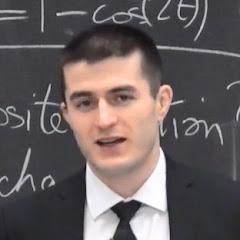 Lex Fridman
Want to know something specific about what's covered?
We've already dissected every moment. Ask and we will deliver (with timestamps).
Key Moments
John Danaher discusses jiu-jitsu mastery, personal philosophy on life and death, and AI in combat sports.
Key Insights
Death is the ultimate motivator, giving value and urgency to life; immortality would render life hollow.
A great life emphasizes longevity of profound achievement over single peak performances, but there's no universal definition.
Jiu-jitsu mastery hinges on understanding and exploiting an opponent's weak points by focusing superior strength on a critical bodily area.
Escapes are the foundational skill in jiu-jitsu, building confidence and enabling fearless offense by removing the fear of bad positions.
Persistence in thought and a progressive training program are crucial for growth, avoiding complacency and boredom.
Effective drilling emphasizes mechanics and feel with increasing resistance, not just repetition for numbers.
The leg lock system represents a significant evolution in grappling, moving from opportunistic attacks to control-based submissions.
AI and robotics in combat sports suggest a future where human-computer collaboration (cyborgs) or AI could surpass human capabilities.
THE PHILOSOPHY OF LIFE, DEATH, AND MEANING
John Danaher begins by confronting the existential question of death, asserting a materialist view: we experience two deaths, the one before birth and the one after life. He posits that since we don't fear the former, the latter should hold no terror. Death, he argues, is the ultimate motivator, imbuing life with value through scarcity. Immortality, conversely, would remove the urgency to act, rendering life hollow and meaningless. This existential framework sets the stage for a discussion on what constitutes a 'great life,' concluding that a definitive answer is elusive and highly subjective, varying greatly across different perspectives and values.
PEAK PERFORMANCE VERSUS LONGEVITY
Danaher explores the tension between achieving a single, brilliant peak performance and sustaining high performance over a long career. While he appreciates the 'highest peak' moments, he leans towards longevity, citing examples like Alexander the Great's meteoric but short reign versus Stalin's sustained power. He acknowledges the unique difficulties inherent in both paths, noting that attributes leading to one often conflict with those needed for the other. Ultimately, neither is inherently superior, but both require tremendous dedication and overcome distinct challenges. The discussion highlights the personal stories of struggle and perseverance as particularly inspiring.
THE CORE PRINCIPLES OF JIU-JITSU
Jiu-jitsu, Danaher explains, is both an art and a science. Scientifically, it leverages physics to apply a high percentage of one's strength against a low percentage of an opponent's strength at a critical point, such as a joint or the neck. Artistically, it involves choosing from a vast array of techniques, reflecting personal expression. The objective is to identify and exploit the opponent's 'left knee' – their most vulnerable point – rendering their overall strength irrelevant. Discovering these weak points and developing methodologies to create an asymmetry of power is central to the art. The body lock, for instance, is a strategic control position designed to neutralize an opponent's dangerous hip movement in guard, a key insight in his teaching.
THE SCIENTIFIC DEVELOPMENT OF JIU-JITSU TECHNIQUES
New techniques and systems in jiu-jitsu are developed through a rigorous process analogous to scientific inquiry: trial and error. Danaher emphasizes that ideas, like babies, are fragile and need nurturing before being subjected to harsh testing. Innovations often face initial skepticism, even from experienced practitioners, requiring perseverance and a willingness to refine. This process involves starting with minimal resistance, gradually increasing difficulty, and discarding less promising avenues. It transcends simple repetition, emphasizing a deep understanding of mechanics and problem-solving. This progressive approach is essential for organic growth and preventing premature dismissal of potentially revolutionary techniques.
THE STRATEGIC VALUE OF TRAINING PARTNERS
Training with a variety of opponents, particularly those of lower skill, is crucial for growth. Humans are naturally risk-averse, and sparring exclusively with equally skilled partners leads to conservatism, limiting technique exploration and individual development. Training with lesser belts allows for experimentation without fear of immediate defeat, fostering creativity and confidence in new techniques. This approach, which Danaher encourages in his students, contrasts with the typical 'ape reflex' of always seeking dominance. While competition demands peak performance, daily training should prioritize skill development over winning, creating a safe space for growth and learning from mistakes without ego inhibition.
ESCAPES: THE BEDROCK OF CONFIDENCE
Danaher considers escapes the most fundamental skill in jiu-jitsu, not for dominance, but for building confidence. An athlete who trusts their ability to escape bad positions or submissions will attack more fearlessly, knowing that even a failed attempt won't result in catastrophic loss. He advocates teaching beginners from the 'ground up,' starting with pin escapes, then guard retention, and finally guard offense. For experts, he teaches 'endgame' first, focusing on a small, high-percentage set of submission holds. This approach instills a belief that if they reach a finishing position, victory is highly probable, motivating them to aggressively pursue those positions.
THE FIVE-YEAR REINVENTION CYCLE AND THE ROLE OF GENETICS
Danaher firmly believes individuals can reinvent their skill sets in five-year cycles, citing numerous examples of athletes achieving world-class status from scratch within this timeframe. While genetics play a role in sports emphasizing pure power or speed, jiu-jitsu, with its emphasis on skill and tactics, sees a diverse range of body types succeed. The training program itself, however, is paramount. He references the disproportionate success of smaller populations in sports like Russian wrestling and New Zealand rugby, attributing it to superior training methodologies and cultural dedication. Persistence, particularly in 'hard thinking' and continuous program evolution, is identified as the indispensable virtue for mastery.
THE ART AND SCIENCE OF EFFECTIVE DRILLING
Danaher clarifies that true drilling focuses on skill acquisition and mechanics, not merely repetition or 'numbers.' Ineffective drilling, often driven by arbitrary rep counts, leads to diminishing returns and boredom. He advocates for drills that emphasize 'feel' and problem-solving, with progressively increasing resistance. Drilling, when done correctly, is a cooperative venture, akin to dance, where partners help each other refine movements. Many practitioners, including black belts, often avoid drilling because it's perceived as boring or ineffective due to a lack of proper instruction; this is a 'tragedy' given its potential to rapidly expand a student's repertoire.
THE LEG LOCK SYSTEM: CONTROL BEFORE SUBMISSION
Danaher recounts the development of his leg lock system, initially born from questioning the prevailing wisdom that leg locks were low-percentage, tactically unsound, and unsafe. His key insight was distinguishing between the mechanism of control (leg entanglements like Ashi Garami) and the mechanism of breaking (e.g., heel hooks). By prioritizing intricate control and immobilization through leg entanglements, the system became safer, more effective, and less susceptible to positional loss. The success of his diverse team, rather than just one individual, helped popularize the system, demonstrating its applicability across various body types and making it a 'science' accessible to many.
THE FUTURE OF JIU-JITSU AND AI: CYBORG ADVANTAGE
Drawing parallels to the evolution of chess AI, Danaher explores whether a robot could defeat a top grappler like Gordon Ryan. He argues that like chess, jiu-jitsu involves an astronomically high number of potential actions, making brute-force computation impossible. However, the use of heuristic 'rules of thumb' can drastically reduce the option space. Machine learning, as seen in AlphaZero's mastery of chess and Go, suggests an AI could, given sufficient computational power and simulation environments, develop revolutionary grappling strategies. Danaher predicts that a 'cyborg Gordon Ryan' (human heuristic insight augmented by AI computational power) would likely initially outperform a purely AI-driven robot, especially given the current challenges of soft robotics and nuanced physical interaction. However, in the long run, pure AI may surpass even the cyborg.
MARTIAL ARTS FOR SELF-DEFENSE: COMBAT SPORTS FIRST
When it comes to self-defense, Danaher unequivocally states that combat sports are superior to non-sporting martial arts. The live sparring component of combat sports uniquely prepares individuals for the intensity of a genuine altercation, fostering crucial physical and mental conditioning. While acknowledging that safety rules in sports might be exploited in a 'street fight,' he asserts that the adaptability gained from rigorous training, combined with technical and tactical modifications for real-world scenarios, makes combat sports adherents the most effective. He also addresses the 'tying' debate, noting that while strangulation by a tie is inefficient, being pulled down by it is a legitimate concern, recommending clip-ons, bow ties, or bolo ties as practical solutions.
ADVICE FOR BEGINNERS: BUILD FROM THE GROUND UP
Danaher's core advice for white belts is to start from the 'ground up': prioritize pin escapes and guard retention. Beginners inevitably spend much time on their backs, making these defensive skills paramount for survival and longevity in the sport. Once a solid foundation is built, he recommends moving to offense from bottom position, specifically starting with half guard, as it provides a natural continuity with defensive skills. He urges students not to focus on the 'black belt' as a goal, but rather on continuous skill development, emphasizing that belts are merely indicators, not guarantees of true proficiency. The journey is about becoming 'damn good,' not just obtaining a rank.
THE HUMAN SEARCH FOR MEANING
Danaher concludes by reflecting on the 'meaning of life.' He observes that for most of human history, survival was the sole meaning. However, humanity's success in conquering threats has shifted the crisis from survival to meaning. Paradoxically, this unprecedented security has led to a rise in uniquely human phenomena like suicide, often linked to a perceived lack of purpose. Danaher suggests that meaning isn't found passively but actively created, an act of 'authorship.' He, as an atheist, stresses the profound importance of living for something 'bigger than yourself'—a community, a cause—to find fulfillment, acknowledging it's an ongoing, complex quest with no single, universally agreed-upon answer.
Mentioned in This Episode
●Software & Apps
●Companies
●Organizations
●Books
●People Referenced
John Danaher's Guide to Jiu-Jitsu Training and Self-Defense
Practical takeaways from this episode
Do This
Avoid This
Common Questions
John Danaher asserts that he is a materialist and does not believe in an immortal soul or afterlife. He views death as a return to the non-existence experienced before birth, suggesting that if one was not afraid of the first period of non-existence, there is no logical reason to fear the second. He believes that consciousness ceases to exist upon physical death.
Topics
Mentioned in this video
Widely acknowledged as one of the greatest coaches and minds in the martial arts world, having coached many champions in jiu-jitsu, submission grappling, and MMA.
An MMA champion coached by John Danaher.
Founder of SpaceX and Tesla, who hopes human beings become a multi-planetary species.
A former leader of the Soviet Union, used as an example of a 'great life' from a Machiavellian perspective due to his immense power and longevity.
An Italian diplomat, philosopher, and historian, whose perspective is used to define a 'great life' based on success and power.
Podcast host, who holds the opinion that wearing a tie in a street fight is extremely dangerous due to the risk of strangulation.
A champion in jiu-jitsu and submission grappling, coached by John Danaher, also known for a very good body lock.
American grappler, known as 'American Grandpa', who pioneered the use of Achilles locks and later heel hooks in competition, influencing John Danaher's leg lock system.
A student of John Danaher, part of the early 'Danaher Death Squad' who came from nowhere to achieve success in grappling.
Boxer who fought Mike Tyson in a street fight where Tyson broke his hand.
A historical figure who died at 33, known for a few truly defining battles, representing a brilliant but short peak of achievement.
American judoka, mentioned as having been at the 2012 Olympics.
An MMA champion coached by John Danaher, known for his professional approach to training, discipline, and pioneering 'shoot boxing' by integrating striking and takedowns.
A cognitive psychologist and author who believes that human cognition and perception construct reality, rather than perceiving objective reality directly.
An American Olympic judoka, admired by the host for his intensity, refusal to quit, and focus on big throws like standing seoi nage.
A psychologist known for his work on cognitive biases, notably risk aversion, often mentioned alongside Amos Tversky (referred to as 'Duversky' in the transcript).
Co-founder of Apple, described as ruthless in criticizing early ideas from designers like Jony Ive, which is compared to the chaotic moments in scientific development.
A champion in jiu-jitsu and submission grappling, coached by John Danaher, noted for his strong body lock guard passing.
A Brazilian Jiu-Jitsu practitioner, mentioned in the context of 'headquarters position' for guard passing pressure.
American mixed martial artist, mentioned as using heel hooks with success in competition during the 1990s.
Russian mixed martial artist, whom the host is partial towards when discussing the greatest MMA fighter of all time.
The current world champion in chess, who studies AlphaZero games for inspiration and education.
A champion in jiu-jitsu and submission grappling, coached by John Danaher, known for extreme handicapped training and escaping bad positions.
Japanese judoka, mentioned as an example of an athlete achieving high-level competitive success (silver in All-Japans) within five years of starting the sport.
Former world chess champion, defeated by IBM's Deep Blue in 1997, a significant moment in the history of AI and human-computer competition.
American journalist and author, whose quote about living life to the fullest rather than arriving safely at death is discussed.
A champion in jiu-jitsu and submission grappling, coached by John Danaher, known for his prolific use of lower body attacks and calm demeanor in competition.
A champion in jiu-jitsu and submission grappling, coached by John Danaher, described as outstanding with body lock guard passing and noted for being a shorter grappler.
The host of the podcast, a research scientist who started judo by watching the Olympics.
Philosopher and author of 'The Denial of Death', who posited that the terror of death is a primary driver of human creativity.
Legendary American wrestler, whose mentality of refusing to quit is referenced by the host.
German judoka, described as very talented and incredible at frustrating opponents with gripping and strategy.
Russian Greco-Roman wrestler, known for his dominant 'Karelin Lift' which involves big pickups.
Owner of Boston BJJ, described as a good friend of the host.
A cognitive psychologist, known for his work on cognitive biases, including risk aversion, often mentioned alongside Daniel Kahneman.
Legendary boxing trainer who took Mike Tyson at 13 years old.
Japanese MMA fighter, an example of someone who had sharp leg locks in the 1990s.
Considered by John Danaher to be the greatest jiu-jitsu player of all time, excelling in gi, no-gi, and MMA, known for his classical game and relentless pursuit of submission.
Romanian gymnast, the first person to get a perfect score in Olympic gymnastics, representing a single flawless peak performance.
American judoka and MMA fighter, mentioned as having been at the Olympics in 2008.
Japanese judoka, referred to as 'Koga' in the transcript, one of the greatest throwers of all time, whose style of standing seoi nage influenced Travis Stevens and the host.
Former heavyweight boxing champion, used as an example of an athlete achieving world-class status in five years and also his street fight where he broke his hand.
A Brazilian Jiu-Jitsu practitioner, mentioned in the context of 'headquarters position' for guard passing pressure.
A sponsor of the podcast.
Google's AI research lab that developed AlphaZero.
An AI research lab whose system trained 'sumo wrestlers' in simulation with basic goals through self-play.
A sponsor of the podcast.
A sponsor of the podcast.
Elon Musk's company, pioneering reusable rocket technology, used as an example of a single entity driving a new phase of development in a stagnant field.
Elon Musk's neurotechnology company, mentioned as a way to build a 'cyborg Gordon Ryan' by expanding computational capabilities of the human brain.
A sponsor of the podcast.
The gym where the host got his black belt and grew up in jiu-jitsu, known for its informal training environment.
Technology company where Johnny Ive was the lead designer for many products.
More from Lex Fridman
View all 550 summaries 174 min
Biggest Mysteries in Physics: Antimatter, Dark Energy & ToE - Don Lincoln | Lex Fridman Podcast #497
 259 min
FFmpeg: The Incredible Technology Behind Video on the Internet | Lex Fridman Podcast #496
 124 min
Vikings, Ragnar, Berserkers, Valhalla & the Warriors of the Viking Age | Lex Fridman Podcast #495
 146 min
Jensen Huang: NVIDIA - The $4 Trillion Company & the AI Revolution | Lex Fridman Podcast #494
Ask anything from this episode.
Save it, chat with it, and connect it to Claude or ChatGPT. Get cited answers from the actual content — and build your own knowledge base of every podcast and video you care about.
Get Started Free