Key Moments
How To Write A Best-Selling Book | Tim Ferriss
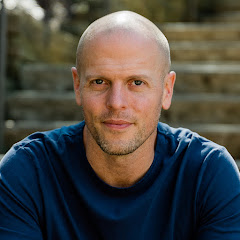 Tim Ferriss
Want to know something specific about what's covered?
We've already dissected every moment. Ask and we will deliver (with timestamps).
Key Moments
Tim Ferriss discusses writing a best-selling book, emphasizing authentic voice, storytelling, and strategic marketing.
Key Insights
Writing success stems from an authentic voice rather than perfect prose.
Use storytelling and relatable examples to make writing engaging.
Targeted marketing and relationship-building with influencers are crucial for book launches.
Embrace a 'bird by bird' approach and set small daily writing quotas.
Don't fear criticism; focus on creating value for a core audience.
Mentorship and learning from established authors can significantly accelerate success.
THE ACCIDENTAL AUTHOR'S JOURNEY
Tim Ferriss shares that his path to writing 'The 4-Hour Workweek' was largely unplanned. Despite a previous vow against writing long-form content due to a difficult senior thesis, his interest was piqued by a student's suggestion to write a book based on his guest lectures at Princeton. Compelled by recurring ideas and insomnia, he began compiling notes, eventually developing a book proposal. This accidental start, supported by early guidance from Jack Canfield, highlights how inspiration can strike unexpectedly and lead to significant achievements.
CRAFTING AN AUTHENTIC VOICE
Ferriss emphasizes that aspiring authors don't need to be literary geniuses, but rather possess a consistent, authentic voice. He found initial drafts for 'The 4-Hour Workweek' too pompous or overly simplistic. The breakthrough came when he decided to write in a relaxed, conversational tone, as if sending a heartfelt email to a couple of close friends over wine. This approach fosters transparency and connection, making the writing more relatable and engaging for the reader.
THE POWER OF STORYTELLING AND RELEVANCE
When facing writer's block or uncertainty, Ferriss suggests leaning on storytelling and concrete examples. He advises asking, 'Whose story can I tell?' to embody a principle, drawing a parallel to Jack Canfield's mastery of this technique. Another strategy is to write about what frustrates you, explaining why it bothers you and what actions you took to address it. This emotional connection often leads to compelling and valuable content for readers.
STRATEGIC MARKETING AND INFLUENCER LEVERAGE
A key to book success, according to Ferriss, is strategic marketing and leveraging influential people. He advocates for targeted outreach, focusing on specific influencers like bloggers whose audiences align with the book's content. Building genuine relationships before pitching is vital. Attending events like SXSW to meet influencers in person, not as a transaction but as relationship cultivation, helps build trust. Offering a tailored excerpt, rather than pushing the entire book, can be more effective.
OVERCOMING FEAR AND EMBRACING THE PROCESS
Ferriss addresses the common fears of rejection and criticism that hold aspiring authors back. He encourages readers to recognize that these insecurities are universal. He suggests writing down potential negative outcomes, prevention strategies, and recovery plans, which often reveals that failure is manageable and recoverable. The value of writing a book, even if it doesn't become a bestseller, lies in the process and the potential to connect with a core group of '1,000 true fans'.
THE VALUE OF MENTORSHIP AND ACTION
Both Ferriss and Canfield stress the importance of seeking mentors and taking consistent action. Ferriss would opt for a program like Canfield's 'Bestseller Blueprint' to avoid wasting years on trial and error, valuing mentorship from those who have proven success. Canfield highlights Ferriss's willingness to 'study with the masters' across various disciplines as a key to his rapid learning and success. This proactive approach, combined with a relentless commitment to excellence, is presented as essential for achieving significant results.
WRITING FOR SPECIFIC AUDIENCES
Ferriss advocates for modular writing and specifically targeting an audience rather than trying to appeal to everyone. By considering 'Who is my reader?' during the writing process, the content naturally becomes more focused and impactful. This approach not only benefits the reader by providing relevant information but also serves as effective marketing. Thinking about which blogs or platforms specific content would fit into helps refine the message and identify the intended readership.
THE PRINCIPLES OF STOICISM IN WRITING
Drawing parallels to Stoic philosophy, particularly Seneca, Ferriss suggests that true success in writing and life comes from focusing on the process and the people involved, rather than solely on external validation like bestseller lists. By learning to be embarrassed only by things worth being embarrassed about and understanding that life's most important aspects are internal, one can eliminate the fear of loss and failure, enabling the pursuit of seemingly impossible goals.
Mentioned in This Episode
●Software & Apps
●Organizations
●Books
●People Referenced
Tips for Aspiring Authors
Practical takeaways from this episode
Do This
Avoid This
Common Questions
Tim Ferriss initially hated writing after his senior thesis. He decided to write 'The 4-Hour Workweek' by focusing on the one or two friends experiencing similar problems, adopting a relaxed, email-like tone, and treating it like a heartfelt conversation over two glasses of wine.
Topics
Mentioned in this video
Tim Ferriss's book focusing on optimizing physical health and performance.
Jack Canfield's highly successful book series, known for its numerous publisher rejections.
A book recommended for overcoming writer's block and dealing with meltdowns.
Tim Ferriss's book about cooking and culinary skills, mentioned as forthcoming.
Another book recommended for improving writing skills.
Tim Ferriss's first major book, discussing lifestyle design and efficiency.
A book that helped Tim Ferriss improve his writing.
Questioner asking if Jack Canfield's Bestseller Blueprint would help Tim Ferriss.
Co-host of the live cast, introducing Tim Ferriss and Jack Canfield.
Author of 'The 4-Hour Workweek', 'The 4-Hour Body', and 'The 4-Hour Chef', featured guest.
Questioner from Colorado asking about the worth of bad publicity.
Author mentioned for his advice on overcoming writer's block by writing about frustration.
Founding editor of Wired magazine, author of the '1,000 True Fans' article.
Author, speaker, and mentor figure to Tim Ferriss, known for 'Chicken Soup for the Soul' series.
Mentioned as someone who emphasizes writing a good book and caring passionately about the work.
Author whose style Tim Ferriss suggests imitating to improve writing.
More from Tim Ferriss
View all 700 summaries 88 min
The Legendary Hollywood Power Broker — Guy Oseary on 36 Years of Managing Madonna, 26 IPOs, and More
 77 min
The Many Benefits of Coca — The “Divine Leaf” with 8,000+ Years of Use
 100 min
Inside The AI Race: DeepMind, OpenAI, Anthropic, China, and The Race to Superintelligence
 108 min
The Path from The Soviet Union to Building Multi-Billion Dollar Companies — Max Levchin
Ask anything from this episode.
Save it, chat with it, and connect it to Claude or ChatGPT. Get cited answers from the actual content — and build your own knowledge base of every podcast and video you care about.
Get Started Free