Key Moments
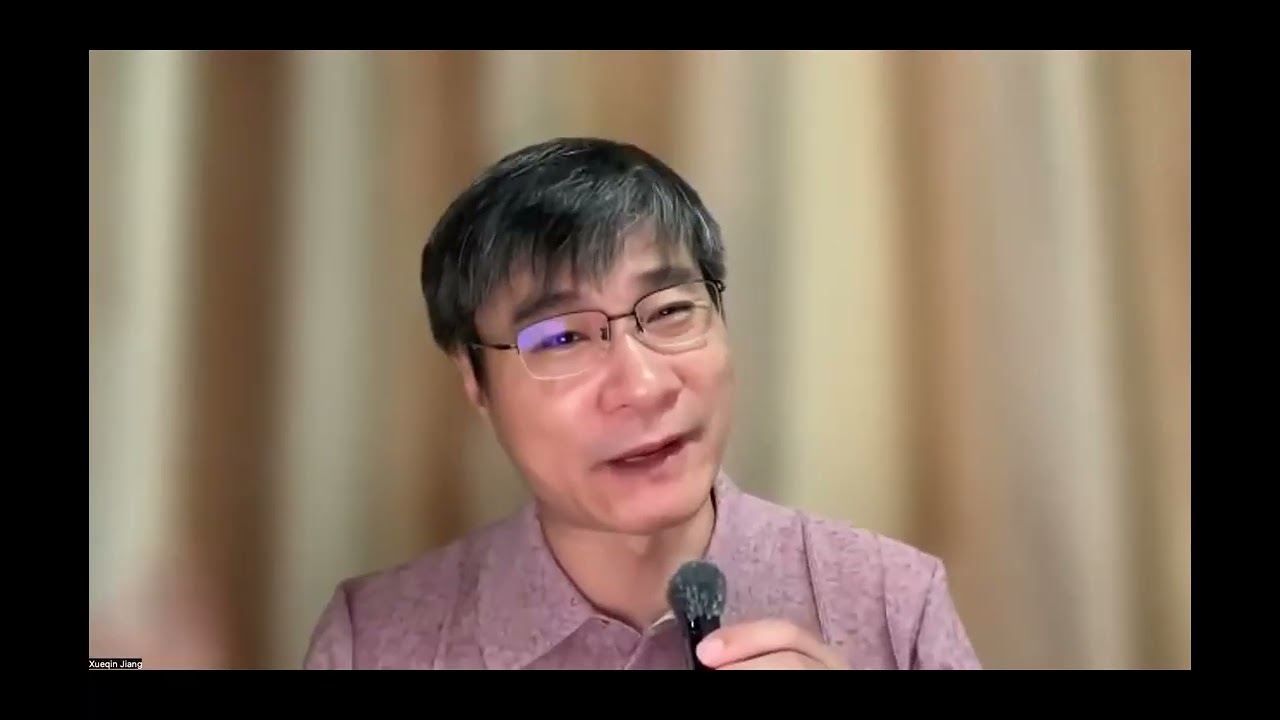
Global Meet-Up #2 (Los Angeles): The "End of the World" US Tour
 Predictive History
Want to know something specific about what's covered?
We've already dissected every moment. Ask and we will deliver (with timestamps).
Key Moments
The US dollar's global dominance is collapsing due to over-issuance and a shift from manufacturing to finance, leading to economic instability and potential global conflict.
Key Insights
The US transitioned from a creditor nation to a debtor nation after abandoning the gold standard in 1971, a move facilitated by the petrodollar system and China's manufacturing.
The "End of the World" tour aims to frame how current geopolitical and economic situations have evolved and where they are heading.
Imperial overstretch and financialization have led to massive wealth inequality and a weakened US military.
The Ukraine war has backfired, destroying the credibility of the Western financial system and pushing nations like China to shift from US Treasury bonds to gold.
The current global system is inherently unstable and showing signs of collapse, with events like Brexit and Trump's election being early indicators.
The speaker identifies three core reasons for imperial decline: financial speculation overriding real wealth creation, bureaucratic expansion, and elite overproduction.
First impressions of Los Angeles and the concept of imperial exhaustion
The speaker begins with personal observations of Los Angeles, noting stark contrasts between opulence and decay, exemplified by dog waste on sidewalks and the high cost of basic goods like avocado toast ($17). He observes significant homelessness and drug addiction, leading to his initial impression that America is suffering from 'imperial exhaustion'—an empire in decline. This perspective, he suggests, is clearer when viewed from outside the US, contrasting with the often-positive narratives heard within China about America.
The Bretton Woods system and the abandonment of the gold standard
A historical overview explains the establishment of the US dollar as the global reserve currency at the Bretton Woods Conference in 1944. The US leveraged its post-WWII manufacturing capacity by lending money to war-torn nations to buy American goods, backing the dollar with gold. This system allowed for a golden age for the American middle class in the 1950s and 60s. However, costly ventures like the Vietnam War and the Great Society program, coupled with the industrial rise of Germany and Japan, led to the US becoming a debtor nation. This culminated in President Nixon's 1971 decision to unilaterally abandon the gold standard, making the dollar a purely fiat currency. This move necessitated the creation of the petrodollar system (Saudi Arabia agreeing to price oil in USD) and encouraged China's economic liberalization to fuel global manufacturing, creating a new global economic framework where all trade eventually funneled back to the US, but at the cost of its manufacturing base and leading to financialization and wealth inequality.
Signs of systemic collapse and the Ukraine war's impact
The current global system is described as inherently unstable. Early indicators of its decline included Brexit and Donald Trump's election in 2016. The most significant sign, however, is Russia's 2022 invasion of Ukraine. This challenged the post-WWII American-led order, as many US leaders underestimated Russia's capabilities. The sanctions imposed on Russia, including freezing $300 billion in Russian assets and removing it from SWIFT, backfired. Instead of crippling Russia, these actions eroded the credibility of the Western financial system, prompting nations like China to question their reliance on US assets and increasingly invest in gold. The Ukraine war serves as a test of the 'American Peace,' and with Russia being a nuclear power, the US has limited options, suggesting Ukraine will eventually be exhausted.
The weakening of the global financial system and Japan's role
The speaker highlights Japan as a critical point to watch. The yen's collapse against the dollar is a severe negative sign because Japan and the Middle East provide significant liquidity to the global economy, primarily through purchasing US Treasury bonds. This liquidity has propped up the US economy, which the speaker likens to a Ponzi scheme. If Japan and the Middle East can no longer buy US Treasuries, the artificial inflation of AI and private credit bubbles could collapse. The US intervention to support the yen, the first in decades, is seen as a sign of desperation, indicating a lack of tools to prevent global economic collapse and suggesting the system is months away from a complete breakdown.
The three drivers of imperial decline: finance, bureaucracy, and elite overproduction
Drawing on historical patterns, the speaker outlines three primary reasons for imperial decline, citing Thomas Piketty's work on capital. First, financial speculation becomes more profitable than real wealth creation, incentivizing investment in stocks over opening businesses. Second, bureaucratic expansion turns vital institutions into parasitic entities; universities are cited as an example, where administrators now outnumber professors, creating issues like DEI programs and political correctness to justify their existence. This bureaucratic bloat extends to government. Third, elite overproduction, characterized by a conflict between Wall Street financiers and Silicon Valley tech magnates vying for political control, leads to policies that benefit a select few, such as tech leaders pushing for government subsidies for AI.
The role of "accelerationalists" and secret societies
The perceived coordination in events is attributed to 'accelerationalists' within secret societies who understand historical patterns. They don't control events but aim to accelerate them to maximize their profits. By controlling the timing of economic collapse, they can reap immense financial gains. This interest in astrology and eschatology, combined with an understanding of human history's cyclical nature, allows them to anticipate and hasten outcomes. Their goal is to accelerate the empire's collapse and create conditions for a new order, potentially increasing inequality and danger, viewing technology as a potential way to bypass the 'dark ages' that historically follow imperial decline.
The contrast between historical cycles and the modern era
The speaker questions whether the current era represents a return to the historical norm of 'survival of the fittest' after a 70-year anomaly of prosperity, cooperation, and globalization, or if it's an anomaly in itself. He references Isaac Asimov's 'Foundation' series, where protagonists attempt to shorten the 'dark ages' following imperial decline. Many tech oligarchs, like Peter Thiel, are inspired by this, seeking to use technology to prevent humanity from entering prolonged periods of suffering and chaos that have historically followed societal collapse, aiming to engineer a smoother transition to the next stage of human evolution.
Spiritual well-being and the future of humanity
Addressing the fear and anxiety surrounding the current global situation, the speaker advises young people to reclaim their spiritual heritage. He posits that humanity is fundamentally spiritual beings, not just physical bodies, and that fear stems from forgetting this connection. He emphasizes the importance of family, love, and purpose as central to the human experience, drawing parallels with Homer's 'Odyssey.' The speaker believes that recognizing our divine, spiritual nature is key to unlocking humanity's true potential, envisioning a future world filled with magic, peace, and prosperity, possibly resembling a recreated Atlantis. He differentiates between organized religion and free spirituality, advocating for the latter as the path forward.
Mentioned in This Episode
●Products
●Software & Apps
●Companies
●Organizations
●Books
●Concepts
●People Referenced
Common Questions
The US dollar became the global reserve currency after the 1944 Bretton Woods Conference. Initially backed by gold, the system shifted to the petrodollar after 1971, linking the dollar to oil and manufacturing in countries like China. This system is now under stress due to factors like the Ukraine war and rising distrust in US assets.
Topics
Mentioned in this video
Described as an empire suffering from imperial overstretch, in a state of actual decline.
Mentioned as a country in East Asia that manufactures goods for global trade facilitated by the US dollar.
A mythical ancient civilization that some esoteric scholars believe humans previously created, showcasing human potential.
Signed a mutual defense treaty with Saudi Arabia and Turkey, expanding its alliance with Saudi Arabia.
NATO is intended to balance Russia in Europe.
One of the countries Wesley Clark mentioned as targets for destruction in the Middle East.
The speaker's first impressions of Los Angeles were negative, citing homeless people, drug addicts, and expensive avocado toast.
The area in Los Angeles where the speaker was accommodated, described as nice.
The speaker had previously worked in Beijing and observed that Americans held a high opinion of China, which he didn't understand until he saw the US from their perspective.
After WWII, Germany industrialized and began to surpass the US in manufacturing capacity.
Partnered with the US to establish the petrodollar system, agreeing to sell oil only in US dollars.
Described as being controlled by financial elites and later by tech oligarchs.
Cited as a country that jailed those responsible for its financial crisis, unlike the US.
Agreed to buy 5,000 Patriot missiles from the US.
Discussed in terms of US strategy: supporting it as a counterweight to Iran versus invading it, which created a massive problem.
A street in Los Angeles mentioned by the speaker while describing his observations of the city.
The US is described as losing a war in Iran, adding pressure to the American political system.
The location where the Bretton Woods Conference was held.
After WWII, Japan industrialized and began to surpass the US in manufacturing capacity.
Mentioned as a country in East Asia that manufactures goods for global trade facilitated by the US dollar.
Its fall is cited as a historical example of societal collapse followed by a 'Dark Ages'.
Signed a mutual defense treaty with Saudi Arabia and Pakistan, part of the US strategy to create a balance of power in the Middle East.
Intended to balance Iran in the Middle East, also described as receiving oil from Turkey despite disputes.
Agreed to buy 5,000 Patriot missiles from the US.
Regime change in Syria was proposed by 'A Clean Break' memo to achieve Israeli dominance.
One of the countries Wesley Clark mentioned as targets for destruction in the Middle East.
One of the countries Wesley Clark mentioned as targets for destruction in the Middle East.
One of the countries Wesley Clark mentioned as targets for destruction in the Middle East.
Henry Jackson was obsessed with forcing the Soviet Union to allow Jews to emigrate to Israel.
The agreement that the US dollar would be linked to gold, which was abandoned in 1971.
Established by Nixon with Saudi Arabia, requiring oil to be sold only in US dollars, thereby creating demand for the dollar.
Its collapse against the US dollar is a very bad sign, as Japan provides liquidity to the global economy by buying US Treasury bonds.
Its focus on human reason over emotion is seen as a denial of true human nature, ultimately leading to unhappiness despite progress.
Harvard is compared to Plato's Cave, teaching students the beauty and allure of illusion, but it is still just an illusion.
The process where the financial sector grows disproportionately, leading to the hollowing out of US manufacturing and immense wealth inequality.
Russia was expelled from this financial messaging system as part of US sanctions, but this backfired by eroding confidence in the Western financial system.
Previously considered the best investment, countries are now shifting away from them to gold due to distrust in the US financial system.
Predicted to collapse if Japan and the Middle East stop investing in the US economy.
A peace process aimed at regional stability and a balance of power in the Middle East, which 'A Clean Break' memo advocated against.
Refers to US dollars held outside the US economy, circulating globally, and described as having issues with unknown quantities and counterfeit currency.
The US is retreating from its role as the ultimate guarantor of global security, which was deemed too costly and difficult.
Chabad Lubavitch is part of this system, which relies on dynastic succession for rabbis.
Predicted to collapse if global liquidity dries up from the US economy.
Diversity, Equity, and Inclusion programs in universities are seen as examples of bureaucracies creating problems to justify their existence.
The idea of Israel becoming the dominant regional power in the Middle East, replacing Pax Americana.
Elected in 2016 after Obama, promising to build a wall and stop global exploitation of the US.
Author of 'Capital in the Twenty-First Century', whose ideas on financial speculation becoming more profitable than real wealth creation are referenced.
A tech figure attempting to gain control over policy in Washington D.C., and advocating for government subsidies for AI infrastructure.
A tech oligarch who sees preventing humanity from entering a 'Dark Ages' as his ultimate mission.
Author of 'The Divine Comedy', a great book cited for its spiritual insights.
Co-author of 'A Clean Break' memo and a key architect of the Iraq War, suspected of being an Israeli asset by the FBI and CIA.
A key architect of the Iraq War, who worked with Perle and Feith.
A US Senator, Cold War hawk, and mentor to Wolfowitz, Perle, and Feith, obsessed with forcing the Soviet Union to allow Jews to emigrate to Israel.
Founder of Facebook, his birth was blessed by Rabbi Schneerson, and he was involved with Harvard Chabad.
Actress, mentioned as a member of Harvard Chabad.
Along with his wife Miriam, he funded Netanyahu's political career and was a major donor to Donald Trump's campaigns.
Mentioned as a successful comedian who graduated from an Ivy League university, challenging the speaker's assertion about Ivy League graduates and comedy.
A tech oligarch who believes in the mission of preventing a 'Dark Ages' for humanity through technology.
A philosopher whose concept of the 'categorical imperative' is used to explain how individual actions affect the collective world.
US President during the 1990s, who had a side deal with Saddam Hussein for cheap Iraqi oil.
Former Harvard President and a major sponsor of Harvard Chabad. Also appointed by Obama.
The US President who delinked the dollar from gold in 1971 and established the petrodollar system and relationship with China.
Mentioned as the Treasury Secretary who intervened to save the Japanese Yen, an act seen as a sign of desperation.
Author of the 'Foundation series', which influences tech oligarchs' thinking about preventing a societal dark age.
An Enlightenment thinker who hoped for a world beyond religion, race, and culture, yet the modern world inspired by such thought leads to unhappiness.
Cited as an example of someone who changed their stance on the Iraq War, in contrast to how people are currently reacting to the Iran War.
A comedian and podcaster who invited the speaker to Los Angeles for a podcast appearance.
Elected in 2008 to fix issues but failed to represent the working class.
A film director whose movie is mentioned in passing, but the speaker hasn't seen it.
As Treasury Secretary, she redefined 'recession' to avoid admitting the US economy was in one during the Biden years.
Had a side deal with Bill Clinton during the Clinton years for American companies to access Iraqi oil cheaply.
Co-author of 'A Clean Break' memo and a key architect of the Iraq War, suspected of being an Israeli asset by the FBI and CIA.
Israeli Prime Minister who received 'A Clean Break' memo and later sought blessings from Rabbi Schneerson, also funded by Sheldon Adelson.
Discussed a plan to destroy the entire Middle East within five years, including Iraq, Libya, Syria, Lebanon, Iran, Somalia, and Sudan.
A highly influential rabbi, leader of the Chabad Lubavitch movement, who gave blessings to Netanyahu and Mark Zuckerberg's parents.
Businessman and political advisor, mentioned as a member of Harvard Chabad and head of social media for Trump's campaign.
Legal scholar, mentioned as the academic advisor for Harvard Chabad.
Along with her husband Sheldon, she funded Netanyahu's political career.
Accused of trying to control the economic narrative by redefining 'recession' to hide the US economy's decline.
Its National Defense Strategy is described as shifting away from being the global security guarantor to using a balance of power approach.
Pose a significant problem for Saudi Arabia, leading to a multinational alliance against them.
Suspected Richard Perle and Douglas Feith of being Israeli assets in the 1970s.
An organization at Harvard where Mark Zuckerberg was a member, connected to Rabbi Schneerson.
Banks on Wall Street became reckless with speculation, leading to the 2008 mortgage crisis, knowing the government would bail them out.
Mentioned as an elite university where connections are made, implying a lack of accountability for graduates.
Described as a 'welfare state' and a 'MKUltra programming system' that indoctrinates students into a meritocratic, achievement-at-all-costs mindset, shielding them from consequences.
Described as corrupt, overstretched, lacking strategic vision, and bureaucratic.
Mentioned as an example of organized religion being problematic, similar to the modern world's issues.
Intended to balance Russia in Europe as part of the Pentagon's balance of power strategy.
Suspected Richard Perle and Douglas Feith of being Israeli assets in the 1970s.
A Hasidic Jewish movement, whose leader, Rabbi Schneerson, is central to the speaker's discussion of elite interconnections.
Allowed Mark Zuckerberg to create Facebook and link it to other universities, raising questions about its motivations.
Founded by Mark Zuckerberg, it originated from a 'Facebook' given to Yale freshmen and was facilitated by Harvard despite privacy concerns.
Its valuation of $220 billion is seen as absurd, indicative of a financial system where money has lost its value.
Involved in a scandal in 2016 for accessing metadata of 50 million Facebook users to target political ads for Trump's campaign.
A book by Thomas Piketty cited for its analysis of how capitalism eventually leads to financial speculation being more profitable than real wealth creation.
A book by Homer, which, according to the speaker, teaches that the greatest joy is loving one's family.
A book by Homer used as an example of the internal battle between good and evil and the power of forgiveness, through the characters of Achilles and Priam.
A 1996 policy paper advocating for Israel's regional dominance through regime change in Iraq and Syria.
A science fiction series by Isaac Asimov, popular among tech oligarchs like Peter Thiel and Elon Musk for its theme of shortening a coming 'Dark Ages' through advanced planning and technology.
A book by Dante cited as a great work offering spiritual insights.
More from Predictive History
View all 183 summaries 156 min
Global Meet-Up #2 (New York City): The Eschatology of Capitalism
 183 min
Emergency Discussion #2: The Blackmailing of Spain
 146 min
Emergency Discussion #1: Spain Wins World Cup, US Plans Ground Invasion of Iran
 87 min
Live with Predictive History #2: US-Iran War, World Cup
Ask anything from this episode.
Save it, chat with it, and connect it to Claude or ChatGPT. Get cited answers from the actual content — and build your own knowledge base of every podcast and video you care about.
Get Started Free