Key Moments
Eric Weinstein Interview (Full Episode) | The Tim Ferriss Show (Podcast)
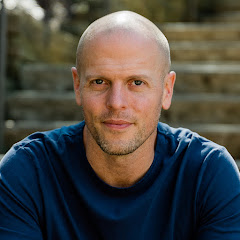 Tim Ferriss
Key Moments
Eric Weinstein on physics, economics, education reform, high agency, and challenging consensus.
Key Insights
True innovation often comes from challenging established norms and thinking from first principles, not from consensus.
Education systems can stifle creativity by prioritizing conformity over independent thought and genuine inquiry.
High agency individuals possess the drive to overcome obstacles and find unconventional solutions, a trait crucial for innovation.
The pursuit of knowledge can be guided by aesthetics and intuition, not solely by empirical data, which can lead to profound discoveries.
Understanding the underlying systems of language and music reveals deep mathematical and physical principles.
Challenging consensus reality, even when it leads to isolation, is essential for pushing boundaries and discovering new truths.
CHALLENGING CONSENSUS AND DRIVING INNOVATION
Eric Weinstein emphasizes the crucial role of challenging consensus reality to achieve true innovation. He argues that many individuals are pressured to conform, leading to a suppression of contrarian thinking. Weinstein advocates for thinking from first principles, likening it to 'jailbreaking' the system to discover novel solutions. This often involves swimming away from the 'shore' of accepted thought, which carries inherent risks but is necessary for genuine progress in fields like science, economics, and technology.
THE CRISIS IN MODERN EDUCATION
Weinstein is sharply critical of current educational systems, suggesting they often stifle creativity and intellectual curiosity. He believes that rigid structures and the emphasis on 'teaching to the test' render students incapable of independent thought. This approach, he argues, labels inherently gifted children as 'learning disabled' because they don't fit the standardized model. Weinstein proposes the creation of alternative educational structures to foster 'high agency' and creativity, rather than rote memorization and conformity.
THE ESSENCE OF HIGH AGENCY
High agency is defined as the persistent drive to find solutions, even when faced with apparent impossibility. It's the ability to see beyond the immediate obstacles and engage in a continuous dialogue of 'how to get around' limitations. Weinstein uses 'The Martian' as a prime example of a high-agency film, showcasing individuals who leverage every available resource to overcome extreme challenges. He believes that this trait is essential for innovation and that societies have, at times, become too risk-averse and timid.
AESTHETICS AND INTUITION IN SCIENTIFIC DISCOVERY
Contrary to the popular perception of the scientific method, Weinstein suggests that groundbreaking discoveries are often guided by aesthetics and intuition rather than a purely empirical, falsification-driven process. He points to physicists like Einstein, Dirac, and Yang, who used beauty and elegance as their primary guides in formulating fundamental equations. This perspective implies that 'great science' can involve defying conventional data or seeking unconventional paths, a characteristic often found in scientific 'misfits' rather than conformists.
SYSTEMS THINKING IN LANGUAGE AND MUSIC
Weinstein draws parallels between the study of natural languages and music, highlighting their underlying systematic and mathematical structures. He notes that while many assume innate musical talent, music's underlying physics and mathematics, such as harmonics and the twelve-tone system, play a significant role. Similarly, language acquisition can be understood through underlying grammatical principles, much like Chomsky's theories. This exploration reveals that these intrinsically human pursuits are deeply governed by discoverable systems.
NAVIGATING THE OVERTON WINDOW AND INTELLECTUAL ARBITRAGE
The concept of the 'Overton window' frames the discussion around what is considered acceptable discourse. Weinstein criticizes how this window can be used to shut down important conversations and label individuals, creating a 'thought police' environment. He advocates for intellectual arbitrage, particularly in science, by identifying the collective weaknesses or blind spots of established groups. This involves looking for what the community cannot afford to say or think, thereby uncovering opportunities for dissent and innovation, much like challenging the consensus on quantum mechanics or seeking new angles on familiar problems.
THE QUEST FOR SUCCESSORS AND UNCONVENTIONAL PEDAGOGY
Weinstein uses the analogy of 'Kung Fu Panda' to discuss the challenge of innovators leaving successors. He posits that true innovation often stems from 'self-teachers' or individuals who learned through unconventional means, perhaps even through traumatic experiences that forced them to confront reality's underlying structures. He advocates for 'high agency' education, suggesting that formal academic paths may not be optimal for cultivating true innovators. The Teal Fellowship, which supports individuals to leave college and pursue high-impact projects, is presented as an example of this alternative approach.
THE POWER OF 'SECRETS' AND BREAKTHROUGH INNOVATION
Drawing from Peter Thiel's 'Zero to One,' Weinstein emphasizes the importance of having a 'secret'—a unique insight or understanding that the rest of the world misses. He argues that most people lack such a secret, which is why they shouldn't start companies or pursue radical innovation. True breakthroughs come from identifying problems overlooked by others, like Robert Plath's invention of wheeled luggage or Hiroi Sato's innovative table tennis paddle. Innovation often involves connecting disparate ideas or applying commonplace solutions from one domain to another overlooked area.
DESIGN PRINCIPLES FROM NATURE AND CANONICAL FORMS
Weinstein explores the concept of 'canonical design,' inspired by natural forms like the T4 bacteriophage. These are designs that appear almost inevitable, discovered by nature rather than invented by humans. Examples include the icosahedron structure of viruses and the 'gear' mechanisms found in grasshoppers' legs. He suggests that when designing, looking for these naturally elegant, simple, and mathematically sound forms can lead to breakthrough innovations, akin to understanding the mathematics of paper folding for new umbrella designs.
THE CHALLENGE OF THE UMBRELLA AND ADVICE FOR ASPIRING INNOVATORS
Weinstein uses the common object of an umbrella as a thought experiment for innovation, highlighting its design flaws and the potential for improvement through concepts like origami or modularity. For aspiring innovators, especially those feeling constrained by traditional paths, he advises developing high agency and seeking unconventional routes. He suggests that even with a potential lack of formal credentials, opportunities exist through programs like the Teal Fellowship, emphasizing that expanding fields like technology offer more promise than contracting academic ones. He also touches upon the idea of leveraging rebels within institutions, like his professor Mike Zuckerman.
THE PERSONAL JOURNEY AND CULTIVATING CREATIVITY
Weinstein shares personal anecdotes, including his late embrace of psychedelics, which he saw as an 'open secret' among intellectually gifted individuals used for creativity and accessing deeper insights. He employs a unique method for entering deep work states, involving a sequence of profanities, to signal his brain to shift into a different mode. He describes his ideal work environment as late at night, when distractions fade, allowing for intense synthesis and creativity. He also mentions his purchase of a mandolin for his son as a lesson in pursuing less common, analog instruments.
THE DECEPTIVE NATURE OF CONSENSUS AND INTELLECTUAL HUMILITY
A key takeaway from Weinstein's discussion is his profound skepticism of consensus. He asserts that a large number of experts agreeing on something doesn't make it right, and that consensus often arises from implied threats to livelihood or social standing rather than pure intellectual clarity. He uses the example of the 'Washington consensus' or 'climate consensus' as instances where disagreement is suppressed. He suggests that true understanding often requires questioning the prevailing agreement, even if it means standing alone against the crowd.
Mentioned in This Episode
●Products
●Software & Apps
●Companies
●Organizations
●Books
●Studies Cited
●Concepts
●People Referenced
Common Questions
Eric Weinstein is the Managing Director of Teal Capital, and holds a PhD in mathematical physics from Harvard. He's also been a research fellow at the Mathematical Institute of Oxford University.
Topics
Mentioned in this video
One of the discoverers of the structure of DNA, mentioned in the context of being 'shorted' by another genius.
A bluegrass prodigy known for excelling in violin and flatpicking guitar, mentioned by Eric Weinstein as a terrific musician.
Former US President whose proposal to temporarily ban Muslims was cited as an example of something outside the 'Overton window'.
Technologist and investor who hired Eric Weinstein to work at Teal Capital. Weinstein credits him with a 'stunning, sparkling mind' and courage in his convictions.
Japanese table tennis player who innovated by gluing foam to his paddle, changing the sound of the ball and helping him win a championship in the 1950s.
Managing director of Teal Capital, with a PhD in mathematical physics from Harvard and research fellowship at Oxford. He also identifies as an immigration expert and an economist.
Current holder of the Simonyi Professorship for the Public Understanding of Science at Oxford, previously held by Richard Dawkins.
Author of 'The Emperor of Scent'.
A pilot for Northwest Airlines who invented wheeled luggage in 1989, fundamentally changing the industry.
Physicist mentioned alongside Dirac and Chen-Ning Yang as someone who used aesthetics, not just experiment, to guide his scientific discoveries.
A renegade scientist and subject of 'The Emperor of Scent', known for his genius in chemistry and challenging established scientific consensus regarding olfaction.
Philosopher quoted (or misquoted) by Tim Ferriss regarding the brilliance of admitting something 'seemed like a good idea at the time'.
A history professor at the University of Pennsylvania who created a 'secret' program called University Scholars to help undergraduates bypass red tape and pursue research.
A great Harvard physicist known for his disinclination to teach early morning classes.
One of the discoverers of the structure of DNA, mentioned in the context of being 'shorted' by another genius.
Author who transcribed Peter Thiel's class, which became the basis for the book 'Zero to One'.
Former Microsoft engineer who endowed the Simonyi Special Lectures at Oxford, where Eric Weinstein was invited to speak.
A gifted intuitive musician who reportedly couldn't read music for a period, used as an example of innate musical grammar.
Entrepreneur and investor, implicitly referenced for his ideas on 'orthogonal thinking'.
Linguist known for his theories on innate language grammar, referenced in the discussion of music and language systems.
Previous holder of the Simonyi Professorship for the Public Understanding of Science at Oxford.
A theoretical physicist, whom Eric Weinstein considers a 'successful' figure for discovering strange and bizarre physics by using aesthetics as a guide, rather than solely experiment.
Physicist mentioned alongside Einstein and Dirac as someone who used aesthetics, not just experiment, to guide his scientific discoveries.
Musical comedy trio known for their 'Four Chord Song'.
Regulatory body whose regulations prevent Wealthfront from using client testimonials for sponsorships.
Renowned university where Eric Weinstein was a research fellow at the Mathematical Institute and later gave the Simone Special Lectures.
University where Eric Weinstein completed his undergraduate degree, notably circumventing a language requirement through the 'University Scholars' program.
Prestigious university where Eric Weinstein obtained his PhD in mathematical physics.
A group for which Eric Weinstein serves on the advisory board, working towards a rational and healthy drug policy for the US.
A public radio network whose affiliate, Capital Radio, collaborated on a 'Death Over Dinner' event Eric Weinstein attended.
Prestigious university mentioned as an example of institutions producing 'overtrained students' who may lack creativity.
Prestigious university mentioned as an example of institutions producing 'overtrained students' who may lack creativity.
University mentioned for conducting an interesting study on psychedelics that Tim Ferriss is helping to fundraise for.
A program (pre-dating Eric Weinstein's arrival at Teal Capital) that pays students $100,000 over two years to leave college and pursue high-agency projects like starting companies or non-profits.
A type of mathematical physics theory that Eric Weinstein applied to economics as 'Gauge Theoretic and Geometric Economics'.
A phenomenon of public accusations of disloyalty, subversion, or treason without proper regard for evidence, compared to modern 'Internet Lynch Mobs'.
A virus mentioned as an example of canonical design in nature, resembling a 'lunar lander' with a 20-sided icosahedron capsid.
A 20-sided Platonic solid, the shape of the T4 bacteriophage capsid, illustrating canonical design in nature.
Also known as the 'Genius Grant', an award mentioned in the context of notable mandolin players
A 12-sided Platonic solid, mentioned in conversation about geometric shapes.
TV show character known for his resourcefulness and ability to solve problems using everyday objects, used to describe 'high agency'.
An anti-pornography documentary that Eric Weinstein found brilliant for making its point by allowing pornographers to speak at length without interruption or editing.
A well-known piece of classical music, whose chord progression Eric Weinstein reproduced with a Python program.
A humorous song by The Axis of Awesome that demonstrates how many popular songs share the same four-chord progression, used to illustrate simplicity underlying complexity in music.
Fictional superhero mentioned as an analogy for how society relies on 'traumatic births' (like a spider bite) to produce innovators, rather than systematic cultivation.
Product created by Microsoft, mentioned in reference to Charles Simonyi.
A programming language Eric Weinstein used to write a tiny program to reproduce the chord progression for Pachelbel's Canon.
A Q&A website where Eric Weinstein wrote his most viral essay explaining the deeper meaning of Kung Fu Panda.
A platform for graphic design needs, used by Tim Ferriss for book cover prototypes, banner ads, and illustrations.
A film praised by Eric Weinstein as the 'ultimate high agency film' due to its protagonist's constant problem-solving and improvisation.
A children's film that Eric Weinstein found deeply moving and believes struggles with the question of how a self-teacher can leave successors, becoming a viral essay for him.
A prominent scientific journal mentioned as having 'styed' Luca Turin's work.
A New York Times bestseller by Tim Ferriss, for which he used 99designs for cover prototypes.
Often referred to as 'The Eighth Day of Creation: Makers of the Revolution in Biology' by Horace Judson, it's mentioned under the title 'Heronian Fire' by Weinstein as a book about defying consensus, specifically regarding Watson and Crick's DNA discovery.
A book by Peter Thiel (transcribed by Blake Masters) about how to build companies by finding unique, often counter-intuitive 'secrets' that the rest of the world misunderstands.
Journal where Eric Weinstein published a peer-reviewed model on 'migration for the benefit of all' in 2002.
A book by Chandler Burr about Luca Turin, a renegade scientist who challenges established research, recommended for understanding how dissident voices are marginalized.
Airline where Robert Plath worked as a pilot and invented wheeled luggage.
An investment firm where Eric Weinstein serves as Managing Director, working closely with Peter Thiel.
Investment bank Eric Weinstein referenced in the context of the 2008 financial crisis alarm he tried to sound.
A design and innovation consulting firm, mentioned as an example of places that have processes for tackling and innovating in new areas.
A set-it-and-forget-it investing service that uses smart software to offer services previously reserved for the ultra-wealthy at low costs, including automatic tax loss harvesting and dividend reinvestment.
A technology company mentioned as a source of technologists for Wealthfront.
A musical instrument Eric Weinstein recently bought his son, describing it as compact, highly melodic, and sharing fingering patterns with a violin.
A virtual reality headset, used as an example of an innovation that became possible due to advances like affordable high-quality smartphone screens.
US state mentioned as an example of a place where 'disruptive' children might be sent home for bad behavior.
US state mentioned as an example of a place where 'disruptive' children might be sent home for bad behavior.
A region in California known for its tech and innovation, described by Weinstein as an 'innovation ghetto' for high-agency people.
Chinese city mentioned in the context of specific phonetic sounds like retroflex consonants.
City in India that hosted the Table Tennis Championships where Hiroi Sato innovated.
Social psychology experiments illustrating conformity, used by Weinstein to explain how an education should enable students to resist peer pressure for fitting in.
A social psychology experiment demonstrating obedience to authority, used by Weinstein as an example of what an unconventional education should help students resist.
More from Tim Ferriss
View all 694 summaries 71 min
The Most Incredible Transformation I’ve Ever Seen — Jerzy Gregorek on Cerebral Palsy and Coaching
 34 min
PRISONER NO MORE: The True Story of Tae Jin Park
 89 min
From Food Stamps to the Super Bowl War Room — NFL Chief Security Officer Cathy Lanier
 55 min
From Dad’s Basement to Selling Two Companies — 4-Hour Workweek Success Story
Ask anything from this episode.
Save it, chat with it, and connect it to Claude or ChatGPT. Get cited answers from the actual content — and build your own knowledge base of every podcast and video you care about.
Get Started Free