Key Moments
Elizabeth Gilbert’s Creative Path — Saying No, Trusting Your Intuition, and More
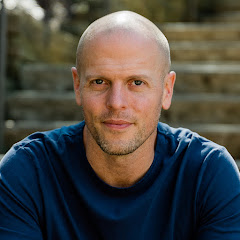 Tim Ferriss
Want to know something specific about what's covered?
We've already dissected every moment. Ask and we will deliver (with timestamps).
Key Moments
Elizabeth Gilbert discusses intuition, grief, creativity, and living with integrity.
Key Insights
Trusting your intuition is paramount, often communicated through bodily sensations, and is a more ancient and reliable system than the thinking mind.
Grief is a powerful, often rageful, natural force that must be allowed to run its course rather than be resisted or managed.
Creativity offers a path to stillness and a respite from the ego, providing a sense of purpose and connection beyond mundane existence.
Living with integrity, even when difficult, leads to authenticity, self-trust, and a healthier, more resilient life.
Humor and laughter are essential coping mechanisms, acting as 'grace' during times of hardship and survival.
Writing, research, and structured systems like index cards, are vital for preparing for the creative process and managing the demands of crafting a story.
THE ALPHA AND THE TRUTH OF LOVE
Elizabeth Gilbert shares the profound story of Raya, the love of her life. Raya, a resilient and powerful woman who overcame addiction and hardship, was the anchor in Gilbert's life, embodying the 'Alpha' who made everyone feel safe. Their deep connection, kept quiet due to Gilbert's existing marriage, became impossible to hide after Raya's terminal diagnosis. Gilbert's decision to be with Raya until the end was guided by Raya's lifelong philosophy: 'The truth has legs,' emphasizing the importance of honesty even when it's difficult.
NAVIGATING GRIEF WITH UNEXPECTED RAGE
Gilbert reflects on her experience with grief, highlighting how her meticulously laid plans for managing Raya's death were completely upended. She learned that grief cannot be mastered but must be survived, likening it to a force of nature. A shocking element for Gilbert was the immense rage she felt – at Raya for not dying as planned, for leaving her, and even at God. She realized this rage, though painful, was a necessary part of processing the magnitude of her loss.
THE CREATIVE SOURCE OF STILLNESS AND AWE
From a young age, writing provided Gilbert with a sanctuary from her anxious mind—a 'vacation from the ego.' This creative pursuit offered a sense of stillness and inner peace, which she later recognized as a spiritual practice. She finds profound awe in art that is both surprising and inevitable, citing poets like T.S. Eliot and Walt Whitman, and novelists like Hilary Mantel, whose work inspires a sense of wonder and a reminder that life is more than just daily obligations.
INTEGRITY AS A COMPASS AND A CLEANSE
Gilbert emphasizes the importance of listening to one's intuition, often felt as a physical sensation in the sternum-navel area. She was deeply influenced by life coach Martha Beck, who advocates for an 'integrity cleanse'—rigorously aligning actions with true desires, even if it means shedding societal expectations, relationships, or careers. This radical honesty, while often initially difficult and costly, ultimately leads to greater health, self-trust, and a life built on authentic choices.
MASTERING THE ART OF SAYING NO
Saying 'no' is a practice that becomes easier with intention and clarity. Gilbert distinguishes between deleting unsolicited intrusions (like emails from strangers) and politely declining invitations from people she cares about, often with a simple 'Thank you, but I'm not going to be able to do this at this time.' She learned from teachers like Byron Katie that a simple, weaponless 'no' prevents manipulation and clarifies relationships, revealing the true character of others and reinforcing her own boundaries.
THE STRUCTURE OF RESEARCH AND THE SERVANT OF IDEAS
For her research-intensive novels, Gilbert employs a meticulous index card system, inspired by her ninth-grade teacher Mr. Kisker. This method involves organizing facts and ideas into distinct categories, creating a 'novel in a box.' She views herself as a servant to the ideas that emerge from a mysterious outer source, dedicating herself to preparing meticulously through research. While only a fraction of this material makes it into the final book, this diligent preparation alleviates writer's block and honors the creative muse.
EMBRACING FEMALE SEXUALITY AND FRIENDSHIP
Gilbert's novel 'City of Girls' challenges the trope of the 'ruined woman,' celebrating a woman's right to a free and open sexual life without dire consequences. She emphasizes female resilience and how chosen family, particularly deep female friendships, can be as, or even more, foundational and fulfilling than romantic partnerships. The novel explores the liberation that comes from shedding shame and discovering one's authentic self, highlighting that being a 'good girl' is not a prerequisite for being a good person.
THE POWER OF MERCY IN A MERCILESS WORLD
Gilbert concludes by advocating for mercy, particularly self-mercy, in a culture that often demands perfection and self-criticism. She defines mercy as an act of surrender to the reality of being human and a commitment to treating oneself with kindness and stewardship. This inner mercy is the foundation for extending compassion to others, recognizing that everyone, including oneself, is navigating complex challenges. She suggests that until we can extend mercy to ourselves, our attempts at universal compassion remain incomplete.
Mentioned in This Episode
●Supplements
●Products
●Companies
●Organizations
●Books
●Concepts
●People Referenced
Common Questions
Raya Elias was the love of Elizabeth Gilbert's life, a friend for 17 years before they became partners. She was a vibrant, strong, and deeply influential person in Gilbert's life, a rock-and-roll hairdresser, filmmaker, author, and musician who maintained her identity and strength even while battling terminal pancreatic and liver cancer. Gilbert shared her story at The Moth.
Topics
Mentioned in this video
Elizabeth Gilbert's novel set in the New York City theatre world of the 1940s, focusing on female sexuality and friendship.
A book by Mary Karr that discusses the use of humor alongside difficulty and darkness in storytelling.
A classic novel mentioned as an example of the 'ruined woman' trope, where a woman makes a bad decision and suffers terrible consequences.
A 12-week self-guided course created by Julia Cameron, based on the 12-step recovery program, designed to liberate one's inner artist; instrumental in Elizabeth Gilbert's journey leading to 'Eat Pray Love'.
A book by Tim Ferriss where he first recommended Athletic Greens in 2010.
A poem by Walt Whitman, particularly a line about 'standing both in and out of the game,' that Elizabeth Gilbert finds particularly insightful and enlightening.
The journals of Marcus Aurelius, highly regarded by Elizabeth Gilbert for its beautiful and immediate insights into the human condition and self-coaching.
A classic novella mentioned as an example of the 'ruined woman' trope by Elizabeth Gilbert.
A New York Times bestseller by Elizabeth Gilbert that explores creativity, inspiration, and overcoming fear in the creative process.
An internationally bestselling non-fiction book by Elizabeth Gilbert, translated into over 30 languages and adapted into a feature film, detailing her spiritual journey and personal quest.
A poem by TS Eliot that Elizabeth Gilbert uses for guidance during difficult times.
A fantastic, surreal yet realistic tale of fairies mentioned by Tim Ferriss, which he reads with awe.
A series of books by Hilary Mantel about Henry VIII, praised by Elizabeth Gilbert for its extraordinary quality and realism.
A classic novel mentioned as an example of the 'ruined woman' trope by Elizabeth Gilbert.
A classic play mentioned as an example of the 'ruined woman' trope by Elizabeth Gilbert.
Elizabeth Gilbert's partner and love of her life, described as a strong, extraordinary, rock-and-roll hairdresser, filmmaker, author, and musician; her death from cancer prompted Gilbert's Moth story.
An author whose adage, 'The truth will set you free, but not before it’s had its way with you,' is quoted by Elizabeth Gilbert.
A poet whose work, 'East Coker,' inspires Elizabeth Gilbert and helps her through dark times.
A fiction writer, author of the Wolf Hall trilogy, whose work Elizabeth Gilbert deeply admires for its intimacy and historical realism.
A researcher and author who has discussed 'art scars,' a concept related to trauma that hinders creativity.
An author credited with piquing Tim Ferriss's interest in The Moth.
A poet whose description of himself in 'Song of Myself' resonates with Elizabeth Gilbert, reflecting a state of enlightenment.
A writer and practicing Buddhist who refers to people acting out as 'me on a different day,' which Elizabeth Gilbert finds insightful regarding compassion.
A Roman Emperor and philosopher whose journal, 'Meditations,' explores eternal human questions and internal self-coaching.
Co-founder of The Moth, also credited with piquing Tim Ferriss's interest in the organization.
A life coach and writer, considered the original life coach and Oprah Winfrey's life coach, who teaches methods for navigating fear and trusting intuition.
An author whose ability to blend readability with memorable wordsmithing is analogous to Elizabeth Gilbert's writing style.
The host of The Tim Ferriss Show, who interviews Elizabeth Gilbert about her creative path and life lessons.
The number one New York Times bestselling author of Big Magic and Eat Pray Love, known for both her fiction and non-fiction work.
A media executive and talk show host with whom Elizabeth Gilbert went on tour, speaking to over 100,000 people.
Author of 'The Art of Memoir,' a book that Tim Ferriss adores and believes touches on the allure and danger of fetishizing pain.
A therapist mentioned by Tim Ferriss as working closely with MAPS in developing protocols for MDMA-assisted psychotherapy for PTSD.
A designer and artist, among the forward-thinking citizens who helped restore and bring the High Line to life as a pedestrian walkway.
An author and friend credited by Tim Ferriss for making the connection that led to this interview with Elizabeth Gilbert.
The author of the book, 'Little, Big,' whose prose Tim Ferriss finds astonishing.
A therapist mentioned by Tim Ferriss as working closely with MAPS in developing protocols for MDMA-assisted psychotherapy for PTSD.
A teacher who developed 'The Work,' an amazing method for identifying and questioning stressful thoughts, and is an expert at saying compassionate 'no's.
Author of 'The Artist's Way,' a course designed to help people recover their creativity from trauma and 'art scars.'
The main character in Elizabeth Gilbert's novel 'City of Girls,' a woman depicted as sexual and promiscuous throughout her life, challenging traditional narratives of 'ruined women.'
An elevated park and pedestrian walkway in New York City, built on former industrial railroad tracks, which Elizabeth Gilbert explored as an 'artist's date'.
A neighborhood in New York City where the High Line begins and historically where livestock was brought for butchering.
Almond butter mentioned as a product offering significant savings on Thrive Market.
Mayonnaise made with avocado oil, mentioned as a delicious and healthy product available on Thrive Market.
Marinara sauce described as awesome and available at a discount on Thrive Market.
The membership program for Thrive Market, which offers wholesale prices and savings, with options for monthly or annual billing.
A magazine Elizabeth Gilbert wrote for at the beginning of her career as a journalist.
A magazine Elizabeth Gilbert wrote for at the beginning of her career as a journalist.
A magazine Elizabeth Gilbert wrote for at the beginning of her career as a journalist.
A magazine Elizabeth Gilbert wrote for; an article she wrote about bartending became the basis for the movie Coyote Ugly.
A movie based on an article Elizabeth Gilbert wrote for GQ about her bartending experiences.
A magazine in which Elizabeth Gilbert first read about The High Line.
A night school in New York City where Elizabeth Gilbert took Italian lessons as part of her artistic exploration, calling it 'night school for divorced ladies'.
A non-profit organization that Michael and Annie Mithoefer work with to develop protocols for MDMA-assisted psychotherapy for PTSD.
A 9-day training created by Byron Katie, described by Elizabeth Gilbert as the most important thing she has ever done for herself.
A magazine that named Elizabeth Gilbert one of the 100 most influential people in the world.
A storytelling organization where Elizabeth Gilbert gave a powerful talk about Raya Elias a year after her passing.
More from Tim Ferriss
View all 705 summaries 108 min
The Random Show — AI Super Assistants, Dream Engineering, Wizards, Supplements, and More!
 121 min
How to Legalize Medical Psychedelics in Your Country — Tania de Jong on Australia’s Breakthrough
 70 min
Q&A with Tim — The Art of Male Friendship, Reinvention in The Age of AI, & More
 125 min
Dr. Andrew Huberman — Peptides, Performance, and Protocols
Ask anything from this episode.
Save it, chat with it, and connect it to Claude or ChatGPT. Get cited answers from the actual content — and build your own knowledge base of every podcast and video you care about.
Get Started Free