Key Moments
E94: NFT volume plummets, California's overreach, FBI meddling, climate change & national security
 All-In Podcast
Key Moments
NFTs crash, California overreaches, FBI meddles, and climate policy challenges.
Key Insights
NFT trading volume has plummeted by 99% since its peak, indicating a significant market correction and raising questions about the long-term viability of the asset class.
California is enacting aggressive legislation, including banning new gas car sales, holding social media liable for children's mental health, and establishing a state panel for fast-food wages, potentially distorting free markets.
Mark Zuckerberg revealed that Facebook limited the distribution of the Hunter Biden laptop story due to FBI advice, raising concerns about potential FBI interference in elections and the politicization of law enforcement.
The discussion on climate change emphasizes the need to balance environmental action with economic stability and national security, warning against extreme policies that could harm economies, citing examples like Sri Lanka and the Netherlands.
The ongoing energy crisis in Europe, driven by the war in Ukraine, highlights the complexities of transitioning away from fossil fuels and the potential for blackouts and economic disruption.
Mikhail Gorbachev's passing prompts reflection on his role in ending the Cold War through reforms like Glasnost and Perestroika, while also noting the resurgence of Cold War tensions with Russia.
There's a growing recognition of the need for nuclear power as a viable energy source, with countries like Germany and Japan reconsidering their stances, and California potentially keeping its Diablo Canyon plant online.
THE NFT COLLAPSE AND MARKET NARRATIVES
The episode opens with a discussion on the dramatic decline in NFT trading volume, with OpenSea experiencing a 99% drop from its peak. This sharp correction is likened to previous market bubbles, emphasizing how asset valuations are often driven by narrative and collective belief rather than underlying productive value. The panelists suggest that the NFT frenzy was another iteration of people buying assets with the expectation of selling them to someone else at a higher price, a pattern seen throughout market history.
CALIFORNIA'S SWEEPING LEGISLATION AND FREE MARKET CHALLENGES
California's recent legislative actions are scrutinized, including the ban on new internal combustion engine car sales by 2035 and the establishment of a state-governed wage board for fast-food workers. This move towards sector-wide wage setting, bypassing traditional union negotiations with individual companies, is seen as a significant intervention in the free market. The panelists express concern that such policies create an uneven playing field, potentially distort existing business models, and could lead to increased automation and higher consumer prices.
FBI MEDDLING AND THE HUNTER BIDEN LAPTOP STORY
Mark Zuckerberg's admission on the Joe Rogan podcast that Facebook limited the distribution of the New York Post's Hunter Biden laptop story due to FBI guidance is a major point of discussion. The panelists highlight the concern that the FBI, possessing knowledge of the laptop's authenticity, may have indirectly intervened in the 2020 election by encouraging the suppression of potentially damaging information. This raises significant questions about the politicization of law enforcement agencies and their role in shaping public discourse.
BALANCING CLIMATE ACTION WITH ECONOMIC REALITIES
The conversation shifts to climate change, with a strong emphasis on the need to balance environmental policies with economic sustainability and national security. The panelists caution against adopting extreme measures that could cripple economies, citing the economic collapse in Sri Lanka due to fertilizer policies and the plight of Dutch farmers. Elon Musk's perspective on the continued necessity of oil and gas as a bridge fuel is discussed, alongside the irony of California mandating electric vehicles while struggling with grid capacity during heatwaves.
EUROPEAN ENERGY CRISIS AND RENEWED FOCUS ON NUCLEAR POWER
The severe energy crisis in Europe, exacerbated by the war in Ukraine, is examined as a cautionary tale about the challenges of rapid energy transitions. The spike in natural gas prices has led to fertilizer shortages and concerns about beer production for Oktoberfest. Amidst this turmoil, there's a notable global shift towards reconsidering nuclear power, with Japan planning new plants and Germany reversing earlier decisions. California is also debating the future of its Diablo Canyon nuclear plant, reflecting a broader re-evaluation of energy sources.
THE LEGACY OF MIKHAIL GORBACHEV AND THE NEW COLD WAR
The passing of Mikhail Gorbachev leads to a reflection on his pivotal role in ending the Cold War through his reforms of Glasnost and Perestroika. Reagan's willingness to engage with Gorbachev is credited with de-escalating nuclear tensions. However, the current geopolitical climate, characterized by the resurgence of Cold War-like tensions with Russia, prompts an analysis of post-Cold War US foreign policy. The expansion of NATO is identified as a significant factor contributing to current hostilities, suggesting a failure to heed Gorbachev's warnings.
THE LONG-TERM IMPLICATIONS OF AUTOMATION AND AI
The discussion touches upon the accelerating pace of automation and artificial intelligence, particularly in relation to the California fast-food wage law. The panelists predict that businesses will increasingly turn to automation to offset rising labor costs, potentially displacing millions of manual labor jobs within the next decade. This technological advancement is seen as a natural market correction to economic pressures, creating new opportunities while fundamentally altering the labor landscape.
GOVERNMENT INEFFICIENCY VERSUS FREE MARKET SOLUTIONS
A recurring theme is the perceived inefficiency and potential harm of government intervention in the economy, contrasted with the problem-solving capacity of free markets. The example of California's policies is used to illustrate how state-level interventions can lead to unintended consequences, such as job displacement and economic stagnation. The panelists argue that while immediate crises may necessitate government action, long-term solutions are more effectively driven by market forces and technological innovation.
THE ROLE OF DATA AND INTELLECTUAL PROPERTY IN AI
The development of AI is linked to advancements in computing power, particularly GPUs, and the increasing availability of vast datasets. A significant emerging issue is the question of ownership and copyright for derivative works created by AI trained on existing data, such as images owned by companies like Disney. This legal and ethical challenge highlights the complexities of regulating rapidly evolving technologies.
EXAMINING GOVERNMENT OVERREACH AND REGULATORY CAPTURE
Concerns are raised about governmental regulatory capture, where powerful entities can influence policies to their advantage. This is illustrated by the potential for unions to exert influence over government-regulated sectors, making it difficult for free markets to adapt. The panelists suggest that when governments create barriers to entry or control access to markets, it can stifle innovation and create an environment ripe for exploitation.
THE ECONOMIC MODEL OF CALIFORNIA AND ITS NATIONAL IMPLICATIONS
The economic trajectory of California is described as one of increasing wealth disparity, with a shrinking middle class concentrated among government workers, alongside a thriving tech and entertainment sector for the wealthy. This model, proponents fear, is being promoted nationally by figures like Gavin Newsom, but is seen as unsustainable and detrimental to the broader prosperity required for a functioning democracy.
THE STRATEGIC IMPLICATIONS OF ENERGY INDEPENDENCE
Achieving energy independence through domestic production of oil, gas, and expanding nuclear capabilities is presented as a critical factor for national security. The reliance of European nations on Russian energy, for instance, has given Russia significant leverage. The panelists argue that a robust, diversified energy sector, driven by free markets, can bolster economic resilience and reduce geopolitical vulnerabilities.
LEARNING FROM ECONOMIC HISTORY AND SYSTEMIC FAILURES
The historical failures of centrally planned economies, exemplified by the Soviet Union's persistent issues with work ethic, productivity, and quality, are highlighted. The panelists draw parallels to current policies in California, suggesting that excessive government intervention can lead to similar detrimental outcomes. The enduring lesson is that free enterprise systems, while not perfect, have historically proven more effective at generating wealth and prosperity.
THE REAGAN-Gorbachev LEGACY AND CURRENT GEOPOLITICAL TENSIONS
The enduring impact of the Reagan-Gorbachev era is revisited, emphasizing their success in concluding the Cold War and reducing nuclear threat. However, current US foreign policy is criticized for alienating Russia and potentially returning to a new Cold War. Broken arms control treaties and NATO expansion are cited as significant missteps that have undermined previous efforts toward de-escalation.
Mentioned in This Episode
●Products
●Software & Apps
●Companies
●Organizations
●Concepts
●People Referenced
Common Questions
The NFT market has experienced a significant crash, with platforms like OpenSea seeing a 99% drop in volume since their peak. The floor price for assets like Bored Apes has also fallen considerably.
Topics
Mentioned in this video
Co-host of the podcast, offering commentary on various topics.
Quoted for his saying that 'whenever somebody tells you that this time is different, it's probably not that different'.
Mayoral candidate in Los Angeles, presented as a product of the political machine, winning due to ballot harvesting.
Former CIA Director, signed a letter claiming the Hunter Biden laptop story had 'hallmarks of Russian disinformation'.
Governor of California, mentioned in relation to the state's policies on electric car charging during a heatwave and his role in mediating with businesses.
Mentioned as a strong president of the US, second only to Reagan in the given timeframe.
Mentioned as having left California due to legislative actions, specifically citing an interaction with Lorena Gonzalez Fletcher.
His laptop story, published by the New York Post, was suppressed by Facebook following FBI guidance.
Former Democratic legislator in California who introduced the bill to create a fast food council and is now running a major union.
CTO of Facebook and founder of Quora, discussed the continuation of Moore's Law shifting to GPUs.
Meta CEO who admitted the FBI influenced Facebook's censorship of the Hunter Biden laptop story before the 2020 election.
Mentioned as someone who leaked the Hunter Biden laptop story.
Last ruler of the USSR, credited with initiating reforms (glasnost and perestroika) that led to the end of the Cold War and the collapse of the Soviet Union.
Real estate developer and mayoral candidate in Los Angeles, discussed in the context of the power of political machines and ballot harvesting.
Former Director of National Intelligence, signed a letter claiming the Hunter Biden laptop story had 'hallmarks of Russian disinformation'.
UK Prime Minister who told Reagan that Gorbachev was a man they could 'do business with'.
US President who played a key role in negotiating arms control treaties with Gorbachev, ending the Cold War, and fostering a strong economy.
Associated with Apple's refusal to unlock the shooter's phone, a stance seen as a hard line on privacy.
Founded by Adam D'Angelo, who is mentioned for his insights on Moore's Law.
A protein structure prediction model, mentioned as a tool pharma may use to change its R&D model due to drug price caps.
An NFT marketplace that has seen a 99% drop in volume since its peak.
AI model mentioned in the context of advanced machine learning and large datasets.
AI model mentioned in the context of advanced machine learning and large datasets.
Used as a primary example for the discussion on fast food wages, automation, and business models reliant on labor.
A company involved in automated robotic coffee, highlighted as an example of automation in the service industry.
Praised for drawing a hard line on privacy by refusing to unlock the San Bernardino shooter's phone.
The last operational nuclear power plant in California, whose future was being voted on at the time of taping.
Legislation that granted CMS and Medicare the ability to negotiate drug prices and capped prescription costs.
An arms control treaty signed by Reagan and Gorbachev.
Granted power to negotiate drug prices under the Inflation Reduction Act.
Centralized economic planning system used by the Soviet Union.
A political reform initiated by Gorbachev in the USSR, meaning 'openness'.
An economic reform initiated by Gorbachev in the USSR, meaning 'restructuring'.
The doctrine of nuclear deterrence during the Cold War, where a full-scale use of nuclear weapons by two opposing sides would cause the complete annihilation of both.
The Centers for Medicare & Medicaid Services, granted power to negotiate drug prices under the Inflation Reduction Act.
Considering putting back online nuclear reactors that were scheduled for shutdown due to energy concerns.
Discussed extensively for its recent legislative actions, including banning new gasoline car sales by 2035, creating a state-sponsored body to set fast food minimum wages, and holding social media companies liable for minors' mental well-being.
The ongoing war is cited as a reason for high natural gas prices in Europe, impacting fertilizer production.
Announced plans to build more nuclear power plants despite the Fukushima incident.
Its fall in 1989 is mentioned as a consequence of Gorbachev's reforms and the opening up of Eastern Europe.
Its collapse in 1991 is discussed as a result of Gorbachev's reforms and internal decay, contrasted with the current 'new Cold War' with Russia.
Farmers are being put out of work due to ESG policies.
Economy's collapse is cited as an example of the negative consequences of implementing ESG rules on fertilizer.
Mentioned for an article criticizing the changes at Burning Man due to 'glamping' and making it 'too nice'.
Led a funding round for OpenSea.
Led a funding round for OpenSea.
Accused of meddling in elections by influencing social media censorship, specifically regarding the Hunter Biden laptop story.
Published the story about Hunter Biden's laptop, which was then subject to censorship by Facebook.
Military alliance of the Eastern Bloc during the Cold War, contrasted with the Western bloc led by the US.
More from All-In Podcast
View all 409 summaries 77 min
Trump-Xi Summit, Benioff: "Not My First SaaSpocalypse," OpenAI vs Apple, Multi-Sensory AI, El Niño
 96 min
How We Grew Koch Inc. to $150 Billion Without Going Public: Charles & Chase Koch
 72 min
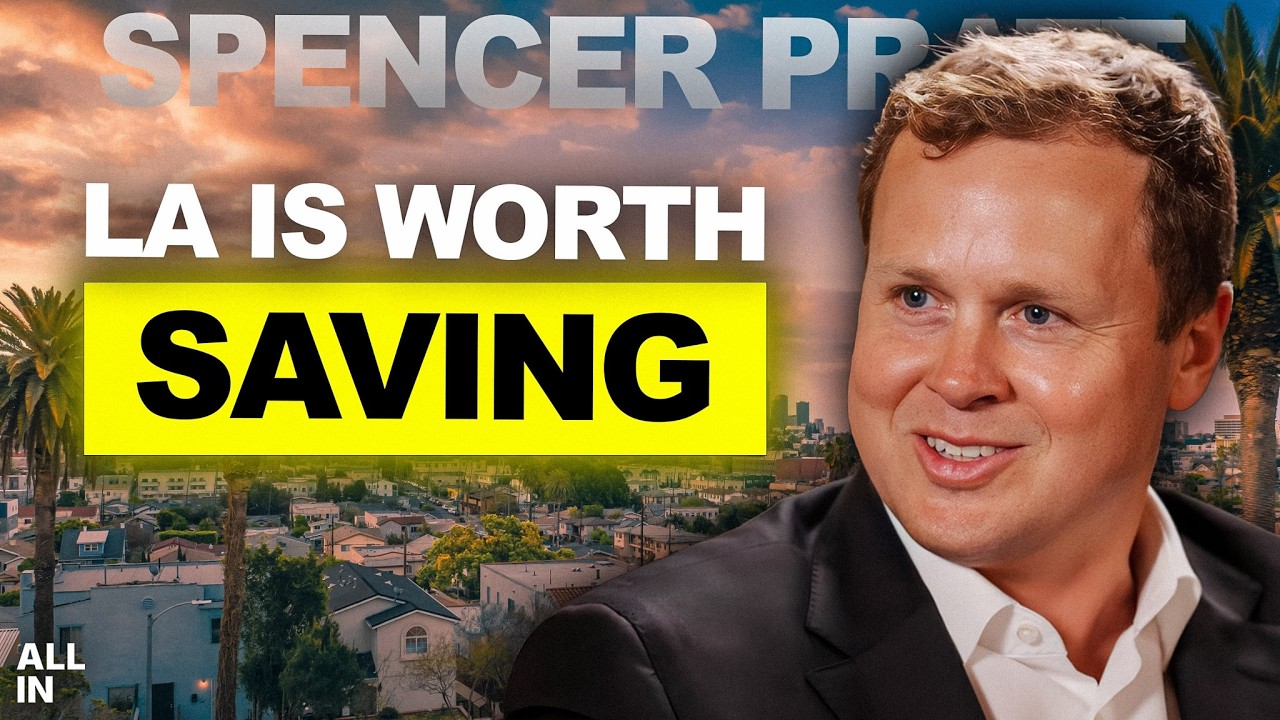
Spencer Pratt on Fixing LA: Wildfires, Homelessness, Corruption & the Fight to Take It Back
 83 min
Elon’s Anthropic Deal, The Next AI Monopoly?, “FDA for AI” Panic, Trading the AI Boom
Ask anything from this episode.
Save it, chat with it, and connect it to Claude or ChatGPT. Get cited answers from the actual content — and build your own knowledge base of every podcast and video you care about.
Get Started Free