Key Moments
E78: VC fund metrics that matter, private market update, recession, student loans, Bill Hwang arrest
 All-In Podcast
Want to know something specific about what's covered?
We've already dissected every moment. Ask and we will deliver (with timestamps).
Key Moments
VC fund metrics, recession risks, student loan policy, and Bill Hwang's arrest are discussed.
Key Insights
VC fund metrics are inconsistent, with some firms using financial engineering to inflate IRRs.
The US economy shows signs of slowing down, with Q1 GDP contraction increasing recession concerns.
Student loan forgiveness is politically motivated and doesn't address the root cause of rising education costs.
Bill Hwang's arrest highlights regulatory gaps in equity derivatives markets.
DHS's Disinformation Governance Board is criticized for its potential for partisan censorship.
Balancing free speech principles with content moderation requires clear, consistently applied standards, possibly inspired by First Amendment law.
VC FUND METRICS AND TRANSPARENCY
The discussion opens with an examination of venture capital fund metrics, highlighting a lack of standardization. Some funds, particularly late-stage ones, reportedly use questionable tactics like lines of credit to artificially inflate Internal Rate of Return (IRR), while showing minimal distributions (DPI). Chamath advocates for a standardized reporting format that includes Gross and Net IRRs, Total Value to Paid-In Capital (TVPI), and Distributions to Paid-In Capital (DPI) to provide a clearer picture of fund performance and discourage manipulation. The SEC is reportedly introducing new legislation to improve transparency in this area.
THE CHALLENGE OF PRIVATE MARKET VALUATIONS
The conversation delves into the difficulty of accurately valuing private market investments, especially in a volatile economic climate. Private valuations are often 'sticky,' meaning they don't adjust as rapidly as public market prices. This can lead to discrepancies between paper gains and actual realized returns. The panelists discuss how the significant downturn in public tech stocks (e.g., Nasdaq stocks down 50-90%) suggests that private marks should also be discounted, potentially by 60%. Founders are advised to be pragmatic, close deals when term sheets are available, and consider 'sideways' or 'neutral' funding rounds if necessary.
RECESSION RISKS AND ECONOMIC HEADWINDS
The current economic climate is raising concerns about a potential recession. With Q1 GDP contracting by 1.4%, following a strong Q4, the US economy is showing signs of deceleration. Factors contributing to this include depleted consumer savings, high inflation, ongoing supply chain disruptions, and geopolitical instability. While consumer spending and business investment showed some resilience in Q1, the falling personal savings rate and fluctuating consumer confidence suggest a potential slowdown. The Federal Reserve faces a delicate balancing act of raising interest rates to combat inflation without inadvertently triggering a severe recession.
THE STUDENT LOAN DEBT CRISIS AND SYSTEMIC ISSUES
The episode critically examines the student loan debt crisis in the US. It's argued that the federal government's easy availability of loans since the 1960s has fueled a bubble in education costs, with tuition soaring disproportionately. Proposed student loan forgiveness is seen by some as a politically motivated stimulus rather than a systemic solution. A key point is that such forgiveness doesn't address the underlying problem of college costs or ensure that degrees provide a viable return on investment. There's a strong call to reform the system by tying loan availability to the earning potential of degrees and making student debt dischargeable in bankruptcy.
BILL HWANG'S ARREST AND MARKET REGULATION GAPS
The discussion turns to the arrest of Bill Hwang and his firm Archegos Capital Management, highlighting a significant gap in financial regulation. Archegos allegedly used total return swaps to build massive, highly leveraged positions in stocks without the transparency typically found in other markets. Unlike interest rate derivatives, equity derivatives often lack a central clearinghouse, allowing substantial risk to build undetected. The panelists suggest that implementing a clearinghouse for equity derivatives, similar to the one for interest rate derivatives, could prevent future systemic risks stemming from such opaque trading activities.
DISINFORMATION GOVERNANCE AND FREE SPEECH DEBATES
The establishment of the Department of Homeland Security's Disinformation Governance Board is met with skepticism and criticism. The board's leader, Nina Jankowicz, is questioned for her past promotion of the Steele dossier and involvement in censoring the Hunter Biden laptop story. The panelists express concern that such a board, particularly within Homeland Security, could become a tool for partisan censorship rather than genuine efforts to combat misinformation. This leads to a broader debate on social media's role in content moderation, with calls for transparency and policies based on established First Amendment principles rather than ad-hoc decisions.
ELON MUSK'S TWITTER VISION AND CONTENT MODERATION
Exploring Elon Musk's potential vision for Twitter, the conversation touches on open-sourcing algorithms, authenticating users, and combating misinformation. A key aspect of the debate is how to balance free speech with the need for content moderation. The argument is made that First Amendment case law provides a framework for defining unprotected speech (e.g., fraud, incitement to violence, defamation) that can inform content policies. The idea of labeling rather than outright censoring problematic content is discussed, with an emphasis on transparency in moderation decisions and empowering users to critically evaluate information.
THE PSYCHOLOGY OF EXCESS AND PERSONAL RESPONSIBILITY
The episode touches upon the psychology behind individuals engaging in extreme financial risk-taking, like Bill Hwang, questioning why billionaires would risk their freedom for more wealth. A related thread is the concept of personal responsibility regarding debt, particularly student loans. The panelists ponder at what age individuals should be held fully accountable for their financial decisions, suggesting that the current system, especially in education, doesn't adequately account for the immaturity and limited foresight of young borrowers. The importance of developing one's own process for discerning truth and making informed decisions is emphasized.
Mentioned in This Episode
●Products
●Software & Apps
●Companies
●Organizations
●Books
●Drugs & Medications
●Studies Cited
●Concepts
●People Referenced
US Higher Education Cost Inflation (1969-2020)
Data extracted from this episode
| Institution Type | Cost Per Year (1969-1970) | Cost Per Year (2019-2020) |
|---|---|---|
| Public Four-Year College | 1200 dollars | 21000 dollars |
| Private Four-Year College | 2500 dollars | 46000 dollars |
Median Weekly Earnings by Education Level (2020)
Data extracted from this episode
| Education Level | Median Weekly Earnings (2020) |
|---|---|
| Without High School Diploma | 619 dollars |
| Some College, No Degree | 877 dollars |
| Bachelor's Degree | 1305 dollars |
Archegos Capital Management Exposure & Losses
Data extracted from this episode
| Date | Invested Capital (Billions USD) | Gross Exposure (Billions USD) | Leverage |
|---|---|---|---|
| March 31, 2020 | 1.6 | 10.2 | 6.375x |
| January 1, 2021 | 7.7 | 54 | 7.01x |
| March 22, 2021 | 36 | 160 | 4.44x |
Common Questions
Prenuvo offers head-to-toe MRI scans that take 45 minutes. They use machine learning and image recognition to help radiologists interpret the MRIs in real-time, leading to early detection of serious health issues.
Topics
Mentioned in this video
A ridesharing company, used as an example of a high-return private investment highlighted in a book.
A semiconductor company that predicted shortages in chips through 2024, indicating ongoing supply chain issues.
A tech company expecting a $10 billion hit due to supply chain problems hindering component availability.
A company offering head-to-toe MRI scans using machine learning for real-time interpretation, which saved lives by detecting early-stage cancers and tumors in podcast listeners.
Warren Buffett's holding company, cited as an example of a fantastic organization with a 50-year track record of around 20% gross returns.
An asset manager considered best-in-class across real estate, credit, and private equity, noted for returning 2x on hundreds of billions in capital.
An e-commerce giant, mentioned as one of the companies affected by supply chain issues and unable to meet demand.
Mentioned in the context of Russian interference in elections, specifically the purchase of $100,000 in ads.
Elon Musk's aerospace company, mentioned as potentially going public, with gains that could be offset by a charitable donation of Twitter (speculation).
A social media platform at the center of a debate about censorship and free speech, particularly concerning its content moderation policies and Elon Musk's acquisition bid.
Her campaign is accused of manufacturing the Steele Dossier which was later found to be disinformation.
A story about Hunter Biden's laptop and business dealings in Ukraine that was censored by social media platforms prior to an election, now acknowledged as true by major news outlets.
CEO of Prenuvo, who informed the hosts about 11 life-saving diagnoses found by listeners of the podcast.
A renowned investor, whose long-run track record of around 20% gross returns is used as a benchmark for excellent performance in investment management.
A venture capitalist and author of an LP newsletter, whose methodology for calculating AR multiple (valuation divided by ARR) is used for portfolio analysis.
Appointed head of the Department of Homeland Security's Disinformation Governance Board, criticized for her past history of pushing disinformation (Steele Dossier) and censoring truth (Hunter Biden laptop).
His actions of asking Putin to hack Hillary's emails and pressuring Ukraine to investigate the Bidens are referenced as context for censorship decisions.
Philosopher whose individualistic themes are contrasted with the government's actions, creating a 'mash-up' with Orwell's dystopia.
Portrayed as a heroic entrepreneur attempting to rescue free speech by acquiring Twitter, with a prediction that he might turn it into a public trust.
A Special Counsel who is making indictments related to the origins of the Trump-Russia investigation, proving claims about misinformation.
Author of '1984,' whose dystopian vision of a 'Ministry of Truth' is evoked in criticism of the Disinformation Governance Board.
Former Twitter CEO, who acknowledged that censoring the Hunter Biden laptop story was a mistake.
Cited as an example of an intelligent person who made questionable health decisions (trying to cure cancer with juicing) that might have shortened his life.
A podcaster whose listeners are cited by critics as an example of people making health decisions based on non-expert advice, highlighting the debate over personal responsibility.
The U.S. Securities and Exchange Commission, which has introduced legislation to increase transparency in private investing and uncover misleading financial practices.
A major news publication that eventually acknowledged the veracity of the Hunter Biden laptop story after initial suppression.
The ultimate buyer of tech stocks, currently a market where over 45% of stocks are down 50%, and over 5% are down 90%.
Announced the creation of a 'Disinformation Governance Board,' drawing criticism for its Orwellian implications and the department's militarized nature.
Cited as one of three agencies that informed social media companies about potentially hacked material designed to interfere with elections.
A legitimate publication that was 'dinged' when its true story about Hunter Biden's laptop was suppressed by social media platforms.
Cited as one of three agencies that informed social media companies about potentially hacked material designed to interfere with elections.
The Food and Drug Administration, whose regulations on commercial claims about drugs are contrasted with informal claims on social media.
The Centers for Disease Control, whose guidance was often contradictory during the pandemic, leading to criticism regarding its reliability as a sole source of truth.
A document containing allegations of Russian interference in the 2016 US election, later determined to be disinformation and manufactured by a political campaign.
A book written by J-Cal about his investment in Uber, which is framed as an example of a story that excites individual investors about private markets.
More from All-In Podcast
View all 426 summaries 102 min
Socialists Sweep NYC, China Catches Up in Coding, AI Memory Crunch, Micron's Blowout Quarter
 64 min
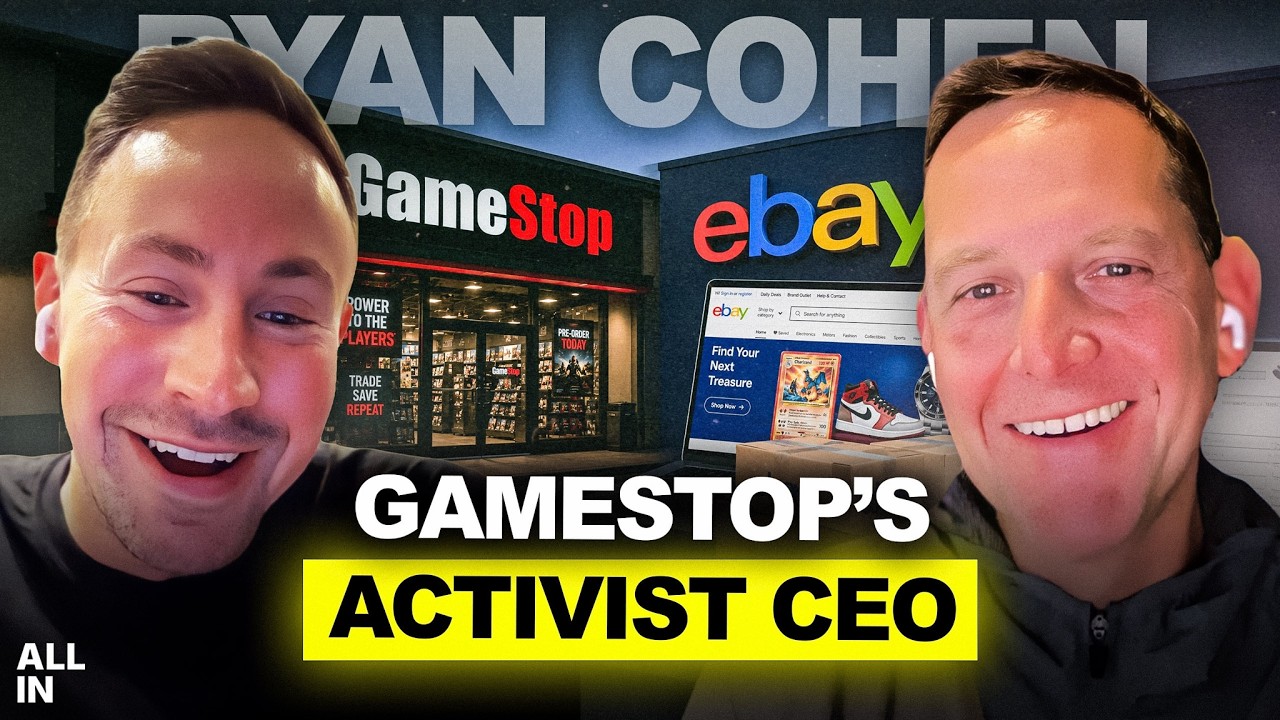
GameStop CEO Ryan Cohen’s $56B Plan to Take Over eBay
 85 min
World's First Trillionaire, Anthropic Fable Banned, The New Oligarchs, Iran Peace Deal
 102 min
Anthropic's Fable Backlash, Nationalizing AI, Inflation Heats Up & California’s Broken Elections
Ask anything from this episode.
Save it, chat with it, and connect it to Claude or ChatGPT. Get cited answers from the actual content — and build your own knowledge base of every podcast and video you care about.
Get Started Free