Key Moments
E77: Tech work culture, crypto regulation, stablecoins, $NFLX & more w/ Coinbase CEO Brian Armstrong
 All-In Podcast
Want to know something specific about what's covered?
We've already dissected every moment. Ask and we will deliver (with timestamps).
Key Moments
Coinbase CEO Brian Armstrong discusses tech work culture, crypto regulation, stablecoins, and Netflix's struggles on the All-In Podcast.
Key Insights
Coinbase's mission-focused culture, while initially painful to implement, has ultimately led to increased productivity and attracted talent seeking focused work environments.
The shift to "hard" vs. "soft" company cultures highlights a growing trend where CEOs must balance employee appeasement with mission-driven leadership to maintain productivity.
Effective crypto regulation in the U.S. requires clear distinctions between commodities, securities, and currencies, with congressional action needed to provide these demarcations.
Stablecoins present diverse models, from centralized trust in USDC to decentralized systems like DAI and innovative flatcoins aiming to maintain purchasing power against inflation.
Netflix faces significant headwinds from increased competition, the declining effectiveness of online advertising due to privacy changes, and a potential loss of cultural relevance in its content.
The debate around corporate involvement in politics suggests a growing consensus that companies should prioritize their core business mission over engaging in divisive social issues to avoid alienating customers and investors.
REDEFINING WORK CULTURE AT COINBASE
Coinbase CEO Brian Armstrong details his decision to refocus the company culture on its core mission of increasing economic freedom. This move, while causing short-term disruption and leading to some departures, ultimately fostered a more productive environment. Armstrong contrasts this with broader tech industry trends where CEOs may feel constrained by internal politics, emphasizing the importance of a clear, mission-driven direction for attracting and retaining talent committed to the company's goals.
NAVIGATING THE 'HARD' VERSUS 'SOFT' CULTURE DEBATE
The discussion contrasts 'hard' cultures, characterized by clear boundaries and focus, with 'soft' cultures that may struggle to appease a diverse employee base. Armstrong advocates for a balance, where a company has an ambitious mission and a CEO is decisive, while still maintaining aspects of a supportive environment. He notes that the intense competition for talent pre-pandemic, coupled with the rise of remote work, has shifted the dynamics, allowing companies to be more discerning about employee alignment with the mission.
EVOLVING REGULATORY LANDSCAPE FOR CRYPTOCURRENCIES
Brian Armstrong outlines the complexities of crypto regulation in the U.S., acknowledging the need for clarity from bodies like the SEC and CFTC. He suggests crypto assets can be classified as commodities (like Bitcoin), securities (for fundraising), or currencies (like stablecoins), each requiring different regulatory approaches. The current administration's executive order is seen as a positive step toward developing a balanced framework that protects consumers without stifling innovation, emphasizing the need for congressional legislation.
THE DIVERSE WORLD OF STABLECOINS
The conversation delves into the world of stablecoins, addressing concerns around transparency, particularly with Tether. Armstrong highlights USD Coin (USDC) as an example of a stablecoin with improved controls. He also introduces decentralized stablecoins like DAI and innovative 'flatcoins' that aim to maintain purchasing power against a basket of goods rather than a single fiat currency, offering a potential hedge against inflation in traditional currencies.
NETFLIX'S CONTENTION AND STRATEGIC CHALLENGES
The podcast examines Netflix's subscriber drop, attributing it to a combination of macro-economic factors and company-specific issues. These include the impact of Apple's privacy changes on advertising effectiveness, intense competition from other streaming services with strong content libraries (like HBO Max, Disney Plus), and a potential loss of perceived value. The discussion touches on whether Netflix's content strategy has become less distinctive or aligned with broader audience appeal.
CORPORATE POLITICS AND THE FUTURE OF MEDIA
A significant portion of the discussion revolves around whether companies should engage in political or social issues. The example of Netflix's internal struggles and broader media companies like Disney facing backlash highlights the risks of alienating customer bases. The emerging consensus favors a return to mission-focused operations, with former McDonald's CEO Ed Rensi advocating for corporations to remain apolitical to serve all stakeholders, particularly investors. Armstrong’s approach at Coinbase is presented as a model for navigating this complex landscape by prioritizing the company's core mission.
INITIATIVES FOR SOCIAL CHANGE AND ENTREPRENEURSHIP'S ROLE
The panelists explore avenues for individuals seeking to drive social change. They suggest that starting or joining mission-driven companies is a powerful way to effect change, offering a more direct impact than traditional activism alone. The conversation also touches upon decentralized autonomous organizations (DAOs) as potential new governance models, while emphasizing that sustainable change requires long-term dedication and proving the value of ideas in the market.
PROPOSALS FOR REGULATORY FRAMEWORKS IN CRYPTO
Ideas for a more functional crypto regulatory framework are discussed, including a sophisticated test for investor financial literacy, safe harbors for smaller projects (under $10 million) functioning as experiments, and tiered KYC requirements for larger ventures. The concept of founder accountability, akin to corporate directors, is also raised as a potential measure to instill greater responsibility within crypto projects and protect investors from fraud and mismanagement.
THE DECLINE OF ADVERTISING EFFECTIVENESS AND CONTENT MONOPOLIES
Chamath highlights the diminishing returns of online advertising, exacerbated by privacy changes enacted by tech giants. This macro trend, coupled with Netflix's own content strategy shifts and increased competition, has eroded its former market dominance. The discussion posits that in a crowded streaming market, the 'network advantage' of content exclusivity and consumer lock-in is being fragmented, forcing companies to compete more intensely on value and distinctiveness.
ASSESSING THE COMPETITIVE LANDSCAPE IN STREAMING
The panelists compare major streaming services, with HBO Max, Disney Plus, and emerging players like Hulu receiving praise for their quality and compelling content. Netflix's strategy of large deals with celebrities and a pivot towards reality TV is contrasted with services that are perceived to take more creative risks and offer engaging, adult-oriented programming. The sheer volume of high-quality content across multiple platforms suggests a shift away from Netflix's previous unique selling proposition.
Mentioned in This Episode
●Products
●Software & Apps
●Companies
●Organizations
●Concepts
●People Referenced
Common Questions
Coinbase implemented a policy focusing discussions on the company's mission (crypto and increasing economic freedom) while in the office. This was to ensure focus and avoid divisive debates, though employees are free to discuss other topics on their own time.
Topics
Mentioned in this video
Discussed regarding its approach to cryptocurrency regulation and potential classification of tokens as securities.
Mentioned as a potential regulator for cryptocurrencies classified as commodities.
Praised as a top streaming service with engaging, risk-taking content that doesn't pander.
Discussed extensively due to its subscriber drop, stock performance, and the impact of content strategy and competition.
Mentioned in relation to Elon Musk's background.
Mentioned in the context of privacy changes impacting online advertising and also in relation to employee activism pressuring them to fire Antonio Garcia Martinez.
Mentioned in the context of Elon Musk's potential approach to running it as a free speech company.
A cryptocurrency exchange platform. Brian Armstrong discussed their policy on workplace focus and mission.
Discussed in the context of corporate politics and its special privileges in Florida being revoked after giving in to employee demands.
Mentioned for shows like 'Ted Lasso,' 'We Crashed,' and their Oscars win.
Mentioned as a streaming service with strong content like 'The Great,' 'Dopesick,' and 'The Dropout.'
A communication platform discussed regarding its use in the workplace and potential for social media-like interactions.
Mentioned as an example of a cryptocurrency that has faced regulatory scrutiny from the SEC.
Mentioned as a strong competitor to Netflix, with highly re-watchable content.
Listed as a speaker for the All-In Summit.
Mentioned as a speaker for the All-In Summit and in relation to his acquisition of Twitter and the 'woke mind virus' concept regarding Netflix programming.
Mentioned in relation to employee pressure at Netflix regarding Dave Chappelle.
Mentioned for dumping his stake in Netflix and booking a significant loss.
Listed as a speaker for the All-In Summit.
Listed as a speaker for the All-In Summit.
CEO of Coinbase, interviewed on the podcast. Discussed company culture, crypto regulation, and stablecoins.
Co-host of the podcast, known for his scientific and analytical approach.
Creator of the Netflix show 'Never Have I Ever,' which was highlighted as a positive example of Netflix programming.
Listed as a speaker for the All-In Summit.
Listed as a speaker for the All-In Summit.
Co-host of the podcast, discussed his experience with Vanilla Ice and corporate culture.
His situation at Netflix was discussed in relation to employee activism and content decisions.
Listed as a speaker for the All-In Summit.
Listed as a speaker for the All-In Summit.
A stablecoin mentioned as having better controls and being a potentially more trustworthy option than Tether.
Mentioned as the catalyst for Brian Armstrong's mission to increase economic freedom worldwide.
A stablecoin discussed with concerns surrounding its transparency, attestations, and regulatory actions.
More from All-In Podcast
View all 426 summaries 102 min
Socialists Sweep NYC, China Catches Up in Coding, AI Memory Crunch, Micron's Blowout Quarter
 64 min
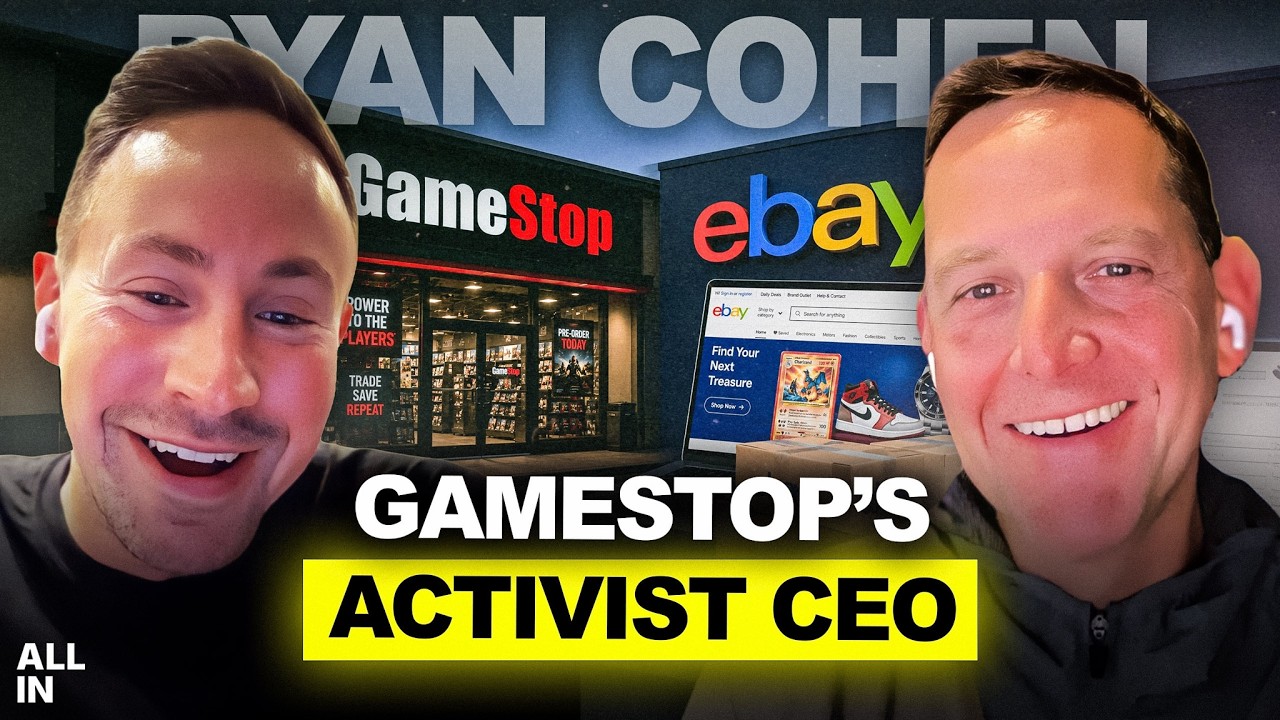
GameStop CEO Ryan Cohen’s $56B Plan to Take Over eBay
 85 min
World's First Trillionaire, Anthropic Fable Banned, The New Oligarchs, Iran Peace Deal
 102 min
Anthropic's Fable Backlash, Nationalizing AI, Inflation Heats Up & California’s Broken Elections
Ask anything from this episode.
Save it, chat with it, and connect it to Claude or ChatGPT. Get cited answers from the actual content — and build your own knowledge base of every podcast and video you care about.
Get Started Free