Key Moments
E72: Impact of sanctions, deglobalization, food shortage risks, macroeconomic outlook and more
 All-In Podcast
Key Moments
Russia-Ukraine war's global impact, sanctions, food shortages, deglobalization, and economic outlook.
Key Insights
The Russia-Ukraine war has complex geopolitical and economic ramifications, including potential global food shortages due to disrupted supply chains.
Western sanctions on Russia are severe, impacting global markets and potentially leading to widespread famine, but their long-term effectiveness and blowback are debated.
Deglobalization and a shift towards more resilient, decentralized supply chains are likely trends in response to current global instability.
The global economy faces inflation and recession risks, influenced by the war, energy prices, and geopolitical tensions.
There's a need for pragmatic foreign policy, focusing on vital national interests and selective engagement rather than broad interventionism or isolationism.
Technological advancements in areas like GMOs and synthetic food production could offer solutions to future food security challenges.
THE RUSSIA-UKRAINE WAR AND ITS IMMEDIATE FALLOUT
Three weeks into the Russia-Ukraine war, initial assessments suggest Putin miscalculated the conflict's difficulty and the Ukrainian resistance. The West exhibits a degree of overconfidence, potentially underestimating the war's protracted nature and second-order effects. Discussions highlight the possibility of a ceasefire being closer than perceived, with complex negotiations involving key players like Israel and France, as the US's role as a mediator is diminished.
SANCTIONS AS ECONOMIC WARFARE AND DEGLOBALIZATION TRENDS
The unprecedented scale and speed of Western sanctions against Russia represent a new form of economic warfare, impacting everything from financial transactions to corporate presence. While intended to pressure Russia, these sanctions also risk severe global economic blowback, including potential famines and geopolitical realignments, such as Russia becoming a client state of China. This situation is accelerating trends toward deglobalization and a demand for more resilient, redundant supply chains.
THE LOOMING GLOBAL FOOD SHORTAGE CRISIS
The conflict, coupled with sanctions and export controls, poses a significant threat to global food security. Ukraine and Russia are major exporters of wheat and fertilizer. Disruption to planting seasons and fertilizer supply (nitrogen, phosphorus, potassium) due to natural gas prices and Russian export bans are causing commodity prices to skyrocket. This is predicted to lead to widespread famine, disproportionately affecting vulnerable nations, and could result in hundreds of millions facing starvation.
ECONOMIC OUTLOOK: INFLATION, RECESSION, AND MARKET VOLATILITY
The global economy is grappling with high inflation, driven by energy prices and supply chain disruptions. While some anticipate a potential 'melt-up' in markets due to receding uncertainty around the Fed's rate hikes and peace deal speculation, recession risks remain significant. The defining characteristic of current markets is volatility, with the potential for peace deal failures or war escalation posing substantial downside risks.
RETHINKING GLOBAL STRATEGY AND NATIONAL INTERESTS
There is a growing consensus on the need for a pragmatic foreign policy, focusing on vital national interests and selective engagement rather than broad interventionism or isolationism. The war highlights the dangers of over-reliance on specific countries for essential resources like energy and pharmaceuticals. This necessitates a 'race to resiliency' and building redundancy in critical supply chains, including semiconductors and food production.
TECHNOLOGICAL SOLUTIONS AND POLICY REASSESSMENT
The crisis underscores the need to reassess past policy decisions, particularly regarding energy independence (e.g., nuclear power) and agricultural technologies like GMOs, which have been hindered by overly cautious or ideologically driven opposition. Future solutions may involve advanced agricultural techniques, gene editing, and even synthetic food production to enhance food security and reduce reliance on fragile global supply chains.
FOREIGN POLICY ESTABLISHMENT AND THE PURSUIT OF PEACE
Critiques are made regarding the foreign policy establishment's tendency towards interventionism and regime change, with a questionable track record of success. There's a call for a more strategic approach, potentially offering 'golden bridges' for adversaries to de-escalate conflicts. While sanctions are seen as a valid tool for economic pressure, their use must be balanced with a clear strategy for de-escalation and peace negotiations.
THE GEOPOLITICAL SHIFT AND THE US ROLE
The conflict is reshaping the global order, potentially accelerating a shift towards a multipolar world or a Cold War II dynamic, primarily between the US and China. Russia's increasing alignment with China weakens the US's hegemonic position. The effectiveness of collective action by OECD countries, particularly in consumer power, could be a key factor in managing future geopolitical challenges and maintaining US influence.
Mentioned in This Episode
●Supplements
●Products
●Software & Apps
●Companies
●Organizations
●Books
●Studies Cited
●Concepts
●People Referenced
Common Questions
The sanctions have led to Russia's cancellation from the global economy, affecting companies from Visa to McDonald's. While hurting Russia, the full economic repercussions are expected to take time to manifest, with potential blowback for the Western economies as well.
Topics
Mentioned in this video
Author of 'The End of History and the Last Man,' whose recent piece predicted imminent Russian defeat.
Host of the podcast, discussed his openness to take first meetings with startups and his businesses' move into SaaS.
Mentioned as a Republican who, despite bellicose rhetoric, would likely make similar decisions to Biden if in power, to avoid war.
Mentioned as one of the current negotiators attempting to broker a peace treaty.
Author of a book on the cyclical nature of world powers and economic orders, which the speaker believes is playing out currently.
Former Vice President, associated with hawkish foreign policy views.
Another controversial speaker announced for the All-In Summit.
Friend of the pod, will be speaking about markets and education at the All-In Summit.
Co-founder of The Production Board, previously ran Climate.com. Discussed extensively on food supply, sanctions, and the fertilizer crisis.
Described as a 'crazy sort of warmonger'.
Mentioned sarcastically as a figurehead for environmental activism influencing energy policy.
Mentioned by David Sachs in a humorous interjection.
His concept of a 'golden bridge' for enemies was mentioned as a strategic approach to de-escalation.
Announced as a speaker at the All-In Summit.
US Assistant Secretary of State for European and Eurasian Affairs, implicated in influencing Ukrainian politics.
Mentioned as one of the current negotiators attempting to broker a peace treaty.
Federal Reserve Chair, his meeting and prescriptive forecast for the next year removed market uncertainty.
Mentioned as trying his best in a difficult situation, with the speaker acknowledging he's done a 'pretty good job'.
Friend of the podcast from Flexport, will be speaking about supply chain issues at the All-In Summit.
Former leader of Iraq, his removal by the US led to Iran gaining influence in the country.
Mentioned as a country whose leaders, along with Saudi Arabia, did not answer Biden's call, indicating a shift in global influence.
Ukraine recognizing some form of independence for the disputed territories in Donbas is part of the proposed peace deal.
Mentioned in the context of regime change that led to Iran gaining influence.
Mentioned as an example of a country where US foreign policy has shifted towards supporting autocrats for strategic reasons.
Its potential invasion by China is considered 'off the table' due to the economic repercussions China would face from sanctions similar to Russia's.
Mentioned as an example of an autocratic government that the US supports due to strategic alignment.
The central focus of the discussion regarding the ongoing war, its military capabilities, economic impact of sanctions, and geopolitical implications.
Cited as an example of a failed US intervention leading to the Taliban's return to power.
Discussed in the context of its potential stance on the Russia-Ukraine war, its economic relationship with Russia, and its global power rivalry with the US.
The ongoing war with Russia and its geopolitical and economic consequences were a central topic of discussion.
Ukraine's recognition of Russia's control over Crimea is a key point in the proposed peace deal.
Mentioned as a country whose leaders, along with UAE, did not answer Biden's call, indicating a shift in global influence.
Cited as an example of a country with which the US can maintain isolation due to lack of interdependence.
Used as an example of a failed US-incited regime change, resulting in a worse situation.
Applied to the US-China-Russia dynamic, illustrating multi-party complex interactions.
A post-pandemic trend focused on building redundancy and vertical integration in manufacturing to mitigate risks.
Combined with government sanctions, it has been effective in creating pressure for compromise or regime change.
China's infrastructure development strategy, potentially used to channel Russian resources to China.
A shift in business strategy, prioritizing supply chain resilience over pure cost optimization.
Supported as a means for Ukraine to defend itself.
The traditional model that the global economy is moving away from towards distributed, decentralized production systems.
The argument that sanctions should be actively used in peace talks to achieve resolution, not just as punishment.
Perceived to have declined, with other nations like France and Israel taking more prominent roles in negotiations.
Capital expenditures, discussed in relation to business decisions on outsourcing and vertical integration of supply chains.
The effectiveness and consequences of sanctions are debated, with suggestions for their use as leverage in peace negotiations.
Can impede critical developments like energy independence by prioritizing wildlife protection over resource access.
Discussed as an escalatory measure in the Ukraine conflict that the US has avoided.
A key objective for the West in energy, semiconductors, and food supply, driven by the realization of supply chain vulnerabilities.
A strategy discussed extensively, with a record of failures and negative outcomes cited.
Software as a Service, discussed in the context of venture capital investment criteria and its application in businesses.
Described as a great power rivalry, shaping the current global geopolitical landscape.
A framework for understanding the current global landscape as a great power rivalry, primarily between the US and China.
The fundamental shift occurring in international relations, influenced by the Ukraine war and great power rivalries.
Could lead to strategic errors and a delayed push for peace and de-escalation.
Advocacy for selective engagement and a focus on vital national interests, moving away from broad interventions.
A precision technique in agriculture discussed as having potential benefits for growing crops more efficiently.
The future of global manufacturing, moving towards distributed, technologically advanced models.
A personal practice of reducing digital input to improve signal clarity, mentioned by Chamath.
Its role in corporate social responsibility and its effectiveness in influencing geopolitical outcomes was highlighted.
The public's aversion to foreign wars is seen as a significant factor influencing presidential policies and election outcomes.
Markets reacted positively to the possibility of a deal; failure could lead to significant losses.
Mentioned as a personal business structure that helps manage affairs.
A strategy for supply chains to mitigate risks, contrasting with the previous focus on capital efficiency.
A critique argues for selective engagement and a focus on vital national interests, moving away from broad interventions.
The VIX index is at an all-time high, reflecting the unpredictable nature of current markets.
The shortage and increased cost of fertilizer, due to Russia's export bans and natural gas prices, is a major driver of reduced crop yields and potential famine.
Mentioned as a protected species whose habitat prevents access to lithium deposits in the US, symbolizing environmental regulations hindering energy independence.
Ukraine's neutrality regarding NATO membership is a key component of the proposed peace deal.
Starch, composed of amylose and amylopectin, provides 60% of global calories.
Fueled by the war and sanctions, leading to widespread concerns about inflation and recession.
Deteriorated significantly due to the war, leading to sanctions and a push for peace negotiations.
The price of natural gas has doubled, significantly increasing the cost of nitrogen-based fertilizer and contributing to the global food crisis.
Mentioned as a potential mitigation for reliance on Russian hydrocarbons, hindered by 'shoddy science' and environmentalist opposition.
Referred to in the context of failed Middle East policy and potential western triumphalism after the Ukraine war.
The US aim to avoid direct military involvement while providing support to Ukraine.
The defining feature of the 21st-century global geopolitical landscape.
The war may be driving Russia further into China's sphere of influence, altering the global balance of power.
A dominant force shaping the 21st-century global geopolitical landscape.
A key component of fertilizer, with a significant portion of global supply coming from Russia, which has banned exports.
A technology mentioned in relation to starch synthesis, drawing CO2 from the atmosphere.
One of the two grand narratives about current global events, framing the US-Russia-China dynamic.
A near-term trend characterized by less capital-efficient decisions leading to redundancy in supply chains.
Current economic challenges make China particularly vulnerable to severe international sanctions.
A critical national interest for America, discussed in relation to fossil fuels, renewables, and domestic resource access.
The current global focus on reducing reliance on authoritarian regimes and building resilient systems.
The need for pragmatic decision-making, especially in environmental and agricultural policies, rather than flawed logic.
Critiqued for abandoning the 'vital national interest' argument in foreign policy and pushing for escalatory measures in Ukraine.
Mentioned in the context of Ukraine's potential membership and its approach to gene editing technology.
Considered to have a policy of avoiding direct military intervention in Ukraine, and effective in leveraging economic sanctions.
Returned to power in Afghanistan after US intervention.
Elected in Egypt after the overthrow of Mubarak, their rise was not favored by the US.
Cited for casualty figures in the war in Ukraine.
Mentioned in the context of the US's track record with inciting regime change.
Mentioned in relation to Obama's stance against the Iraq War.
Organization of the Petroleum Exporting Countries, implicitly relevant to the discussion on oil prices and geopolitical influence.
Ukraine's potential membership was a key sticking point in peace negotiations.
Published an article discussing how tensions between Russia and Ukraine decreased after a June summit but then increased again.
Organisation for Economic Co-operation and Development, its member countries are key consumers of Chinese exports.
Carbon Dioxide, mentioned as a source for starch synthesizers to create food calories.
David Friedberg's company, previously ran climate.com.
Mentioned as a company where individuals might have experience with GMO development and approval processes.
Mentioned as the company Brian Peterson is affiliated with, discussing supply chain issues.
Mentioned in the context of being a competitor to the podcast's informal investor network.
Mentioned as one of the companies that pulled out of Russia as part of sanctions.
Mentioned as a company whose stock price was negatively impacted by retail investor sentiment.
Mentioned as one of the companies that pulled out of Russia, contributing to its cancellation from the global economy.
Mentioned as a company whose entanglement in the Chinese economy would be affected if China were to invade Taiwan.
The price of corn has nearly doubled due to global commodity scrambling amid food supply concerns.
A major global calorie source significantly impacted by the Russia-Ukraine conflict, with production and export bans leading to potential famine.
Pipeline project, implicitly discussed in the context of Europe's energy security and reliance on Russian hydrocarbons.
MiG fighter jets, mentioned in the context of Republican calls for their delivery to Ukraine.
Prices are skyrocketing due to global commodity scrambling amid food supply concerns.
More from All-In Podcast
View all 409 summaries 77 min
Trump-Xi Summit, Benioff: "Not My First SaaSpocalypse," OpenAI vs Apple, Multi-Sensory AI, El Niño
 96 min
How We Grew Koch Inc. to $150 Billion Without Going Public: Charles & Chase Koch
 72 min
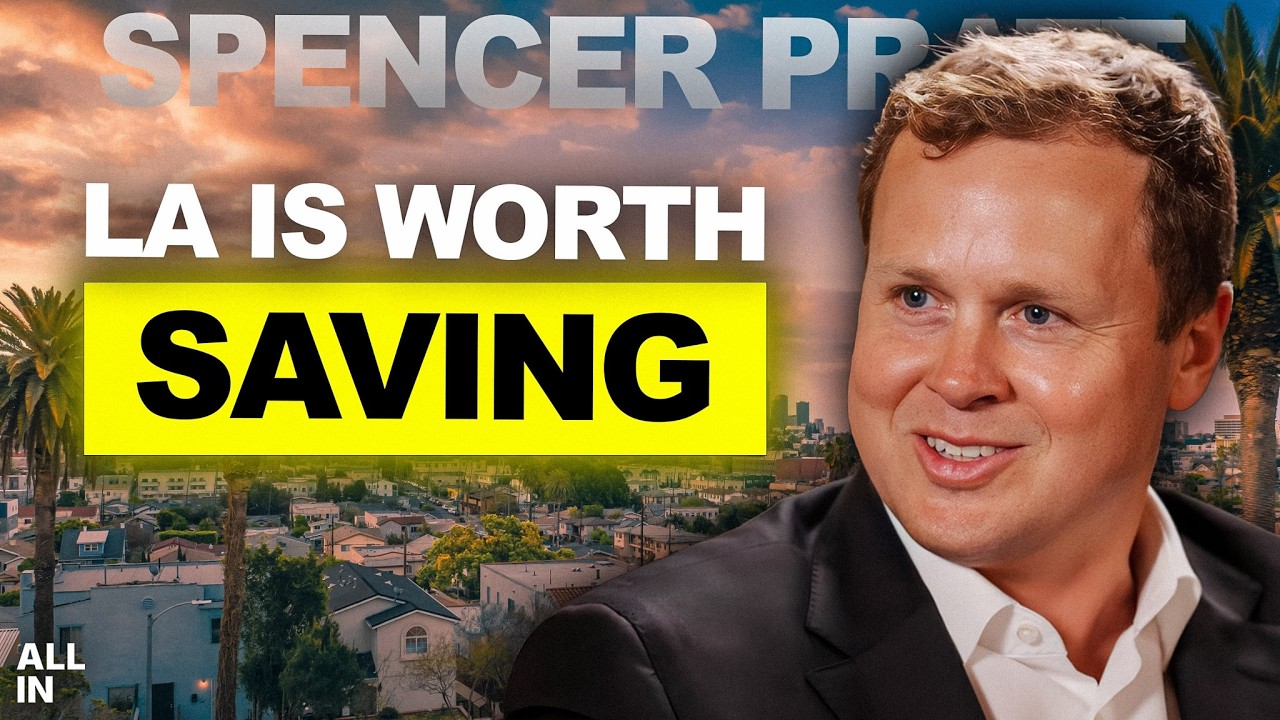
Spencer Pratt on Fixing LA: Wildfires, Homelessness, Corruption & the Fight to Take It Back
 83 min
Elon’s Anthropic Deal, The Next AI Monopoly?, “FDA for AI” Panic, Trading the AI Boom
Ask anything from this episode.
Save it, chat with it, and connect it to Claude or ChatGPT. Get cited answers from the actual content — and build your own knowledge base of every podcast and video you care about.
Get Started Free