Key Moments
E47: Facebook's week from hell, Ellen Pao on sexism in Elizabeth Holmes coverage, Newsom wins & more
 All-In Podcast
Want to know something specific about what's covered?
We've already dissected every moment. Ask and we will deliver (with timestamps).
Key Moments
Podcast discusses Facebook's controversies, UBI, Newsom's recall, and sexism in tech coverage.
Key Insights
Facebook's internal research on Instagram's negative impact on teen girls highlights a significant public health concern related to social media use.
The debate around Universal Basic Income (UBI) touches on potential demotivating effects, inflationary pressures, and the importance of work as a pathway to purpose.
Gavin Newsom's recall victory in California was influenced by tactical errors by the Republican party and the nationalization of the election around topics like Trumpism and COVID-19.
Concerns about sexism in tech coverage are highlighted by the differing accountability for male and female CEOs facing allegations of fraud or mismanagement.
The effectiveness and potential regulation of social media platforms, particularly for minors, are key issues due to their addictive nature and psychological impact.
The role of special interests, particularly education unions, and the need for a balanced approach in California's governance are debated.
REFLECTIONS ON THE LIVE ALL-IN PODCAST EVENT
The episode begins with a recap of the live All-In Podcast event, featuring discussions on its success and audience reception. The hosts noted the unique experience of performing in front of a live audience, which included a mix of scientists and podcast fans. They humorously reflected on the production value, the casual nature of their discussions, and the energy of an in-person format, contrasting it with their usual remote recordings and even discussing the quality of wine served.
THE DEBATE ON UNIVERSAL BASIC INCOME AND MOTIVATION
A significant portion of the discussion revolves around Universal Basic Income (UBI). The hosts express concerns that UBI could disincentivize work, particularly for entry-level positions, which are crucial for personal development and economic mobility. They argue that while a safety net is important, paying able-bodied individuals not to work could have long-term negative psychological and socioeconomic consequences, impacting their sense of purpose and societal contribution.
CALIFORNIA'S NEWSOM RECALL AND POLITICAL STRATEGY
The podcast analyzes Gavin Newsom's victory in the California gubernatorial recall election. The defeat is attributed to several factors, including the Republican party's consolidation around Larry Elder, which provided Newsom with a clear target. Newsom's campaign successfully nationalized the election by framing it as a referendum on Trumpism and focusing on broader national issues, effectively diverting attention from state-specific concerns like homelessness and crime.
FACEBOOK'S INSTAGRAM CONTROVERSY AND REGULATION
The discussion turns to Facebook's internal research highlighting Instagram's detrimental impact on teen girls' mental health. Hosts draw parallels to the tobacco industry litigation, questioning Facebook's responsibility for these issues and the potential for regulatory intervention. They debate whether social media is creating new harms or merely amplifying existing societal problems, considering the addictive nature of these platforms and their influence on body image and mental well-being.
SEXISM IN TECH COVERAGE AND ACCOUNTABILITY
Ellen Pao's op-ed on sexism in tech coverage, using the Elizabeth Holmes trial as a case study, is analyzed. The hosts discuss whether female executives face harsher scrutiny and accountability for alleged wrongdoing compared to their male counterparts. They explore instances of male tech leaders like Travis Kalanick and Adam Neumann, who faced significant controversies yet faced fewer legal repercussions and continued their careers, contrasting this with the intense focus on figures like Holmes.
THE CHALLENGES OF DEEP TECH AND ENTREPRENEURIAL FRAUD
The conversation delves into the complexities of deep tech and life sciences companies, citing examples like Theranos, Juicero, and Zymergen. They discuss 'faking it till you make it' as a common startup strategy, but differentiate it from outright fraud. The debate highlights how ambitious pitches, especially in volatile or highly regulated markets, can blur the lines, and how the perception of success or failure can differ significantly between Silicon Valley insiders and the broader public.
THE IMPACT OF SOCIAL MEDIA ALGORITHMS ON YOUTH
The hosts express significant concern about the algorithmic content delivery on platforms like TikTok, particularly for minors. The potential for these algorithms to create echo chambers, expose children to harmful content, and influence their ethics and morals is a primary focus. They discuss the difficulty in regulating content and the need for parental guidance and potentially stricter age restrictions for social media usage to protect young users.
MILITARY DRONE STRIKE AND AFGHANISTAN WITHDRAWAL
A tragic Pentagon admission regarding a drone strike in Kabul that killed 10 civilians, including seven children, is discussed. The hosts condemn the incident as a devastating consequence of the war and highlight the New York Times' detailed reporting on the event. This incident underscores the human cost of military operations and raises broader questions about the effectiveness and ethical implications of drone warfare and withdrawal strategies.
CONSIDERATIONS FOR MEDIA FACT-CHECKING AND BIAS
The discussion touches upon the perceived double standard in fact-checking on social media platforms, particularly comparing the treatment of conservative commentator Dave Portnoy and progressive figures like Rachel Maddow. This raises questions about editorial bias and the influence of political leanings on content moderation and fact-checking processes, suggesting that certain viewpoints may be scrutinized more heavily than others.
MERCERIZATION AND BOOTSTRAPPING IN THE TECH INDUSTRY
The acquisition of Mailchimp by Intuit for $12 billion is presented as a significant event, particularly due to Mailchimp's bootstrapped nature. The hosts discuss the founder's decision not to offer employee equity, opting instead for cash bonuses. While acknowledging the founder s success, they reflect on the broader Silicon Valley practice of equity distribution and the potential disadvantages of not raising venture capital in a highly competitive landscape.
Mentioned in This Episode
●Products
●Software & Apps
●Companies
●Organizations
●Drugs & Medications
●People Referenced
Common Questions
UBI is seen by some as a safety net that could raise the general standard of living. However, critics argue it could be anti-compassionate by removing entry-level job rungs, demotivating people from work, and leading to inflationary effects that ultimately negate its benefits.
Topics
Mentioned in this video
Failed startup that raised significant capital for a juicer product, which turned out to be misleading, discussed in the context of entrepreneurial failure vs. fraud.
Venture capital firm that invested in Juicero.
Analytics company that received an FCC fine for allegedly selling user data despite promising not to.
Acquired Mailchimp for $12 billion.
The company whose secretaries got rich through stock options, highlighting the benefits of broad-based equity.
Social media platform mentioned for fact-checking Dave Portnoy's tweet, raising questions about double standards.
Largest beverage company globally, used as an example of a product with a deleterious effect (sugar content) that is accepted by the market.
Failed blood-testing startup founded by Elizabeth Holmes, used as a primary example in a debate about fraud and sexism in tech.
Media outlet that published Olivia Zaleski's video exposing Juicero's product.
Life sciences company that went public and was later accused of fraud by a short seller for selling hardware that didn't work as claimed.
Short seller firm that published a 160-page report accusing Berkeley Lights of fraud.
Venture capital firm that invested in Juicero.
Cited as an example of a company that will pay for college tuition, contrasting with the argument that UBI alone doesn't provide career stepping stones.
Social media giant under scrutiny for its internal research on Instagram's negative impact on teen mental health, and its overall democratizing force.
Social media platform mentioned by a host's daughter as her preferred app for dance videos, sparking a discussion about algorithmic content and potential censorship.
Facebook-owned social media platform, research revealed its negative effects on teen body image, anxiety, and depression.
Pharmaceutical company, used as an example of an entity that produced a drug (fentanyl) with known risks that were overlooked for business gain.
E-cigarette and vaping company, used as an example of a product that directly targeted young people with harmful effects, warranting regulatory intervention.
SaaS company mentioned as being involved in straight-up lying about their software.
The company whose chef and secretaries got rich through stock options, highlighting the benefits of broad-based equity.
Life sciences company that went public with a large valuation but then revealed it had no product or revenue, leading to its stock collapse.
Investment firm that provided significant funding to Zymergen.
Apple co-founder, Elizabeth Holmes deliberately styled herself after him, which the hosts suggest contributed to her ability to deceive in the media.
One of the podcast hosts, referred to as 'the rain man.' He shares his thoughts on the live event and various political issues.
Referenced for repeating a saying about startup creation being like 'staring into the abyss and eating glass.'
One of the podcast hosts, who organized a live event discussed at the beginning of the episode.
Former U.S. Secretary of the Treasury, cited for his economic theory on the inflationary effects of UBI.
District Attorney of San Francisco, mentioned in the context of local recalls showing citizens challenging elected officials.
CEO of Zymergen, who raised significant capital but whose company later collapsed due to lack of product/revenue.
One of the podcast hosts, referred to as 'the dictator.' He discusses his views on UBI and other societal issues.
CEO of Facebook, mentioned in a story about not recognizing Marc Andreessen and later in the context of social media's democratizing force.
Governor of California, whose win in the recall election and political strategy are discussed.
Current U.S. President, who came to California to denounce Larry Elder as a 'Trump clone.'
Tobacco industry whistleblower, used as an analogy for the internal Facebook leaker.
Former CEO of Theranos, whose trial is discussed in the context of sexism in tech and the definition of fraud.
Co-founder of WeWork, cited by Ellen Pao as an example of a male executive who engaged in questionable behavior without severe legal penalty.
Bloomberg reporter who created a video exposing the Juicero product as fraudulent or misleading.
MSNBC host, whose tweets allegedly went unfact-checked by Twitter, used to illustrate a potential fact-check double standard.
Former U.S. President, mentioned in the context of passing welfare reform in the 1990s with bipartisan support.
Republican candidate in the California recall election, demonized by Newsom's campaign as a 'Trump clone.'
Former U.S. President, whose 'Trumpism' was used as a campaign tactic against Larry Elder in the California recall.
Celebrity whose Met Gala attire is mentioned in the context of unrealistic body images.
Author of a New York Times op-ed on sexism in tech, using the Elizabeth Holmes trial as a key example.
Former CEO of Uber, cited by Ellen Pao as an example of a male executive who engaged in questionable behavior without severe legal penalty.
Former Governor of California, mentioned as a past moderate Republican candidate who was socially liberal.
Founder of Barstool Sports, whose tweet criticizing AOC's 'Tax the Rich' Met Gala dress sparked debate and was fact-checked.
Former CEO of Juul, Ellen Pao's main example of a male tech executive who left a company amidst blowback with significant personal wealth.
Elizabeth Holmes' former romantic partner and Theranos COO, whose 'Svengali defense' (that he controlled her) is discussed.
U.S. Congresswoman, discussed for wearing a 'Tax the Rich' dress to the Met Gala and then selling related merchandise, prompting debate on hypocrisy and virtue signaling.
A pioneering web browser created by Marc Andreessen, mentioned in a historical anecdote about the tech industry.
Children's version of YouTube, discussed as a curated platform for kids, but even it can lead to inappropriate content if not properly supervised.
A parental control app suggested by one of the hosts to monitor children's device usage and online activity.
Email marketing company that sold to Intuit for $12 billion, marking the largest bootstrapped acquisition ever.
Financial software platform by Intuit, familiar to the hosts.
U.S. Food and Drug Administration, suggested as a potential regulator for social media given its role with products like Juul.
U.S. Department of Defense, issued a Friday news drop acknowledging civilian deaths in a Kabul drone strike.
Reported extensively and with 'incredible journalism' on the Kabul drone strike that killed civilians.
News organization where Rich Lowry published a piece advising Republicans on their strategy.
Banned Tether from New York and is reportedly investigating the company.
Cable news channel, mentioned in the context of Rachel Maddow's allegedly unfact-checked tweets.
Venture capital firm that invested in Juicero.
Country where the U.S. drone strike debacle occurred, marking the 'final debacle' of American involvement.
Capital of Afghanistan, site of a U.S. drone strike that killed 10 civilians, including seven children.
State from which Tether was banned by the DOJ and where certain ICOs have been prosecuted.
More from All-In Podcast
View all 433 summaries 90 min
Can the AI Industry Regulate Itself? Stripe Wants PayPal, China Catches Up, NY Bans Datacenters
 50 min
Former Intel CEO on What Went Wrong, What's Next + Lovable CEO on the Real Promise of Vibe Coding
 52 min
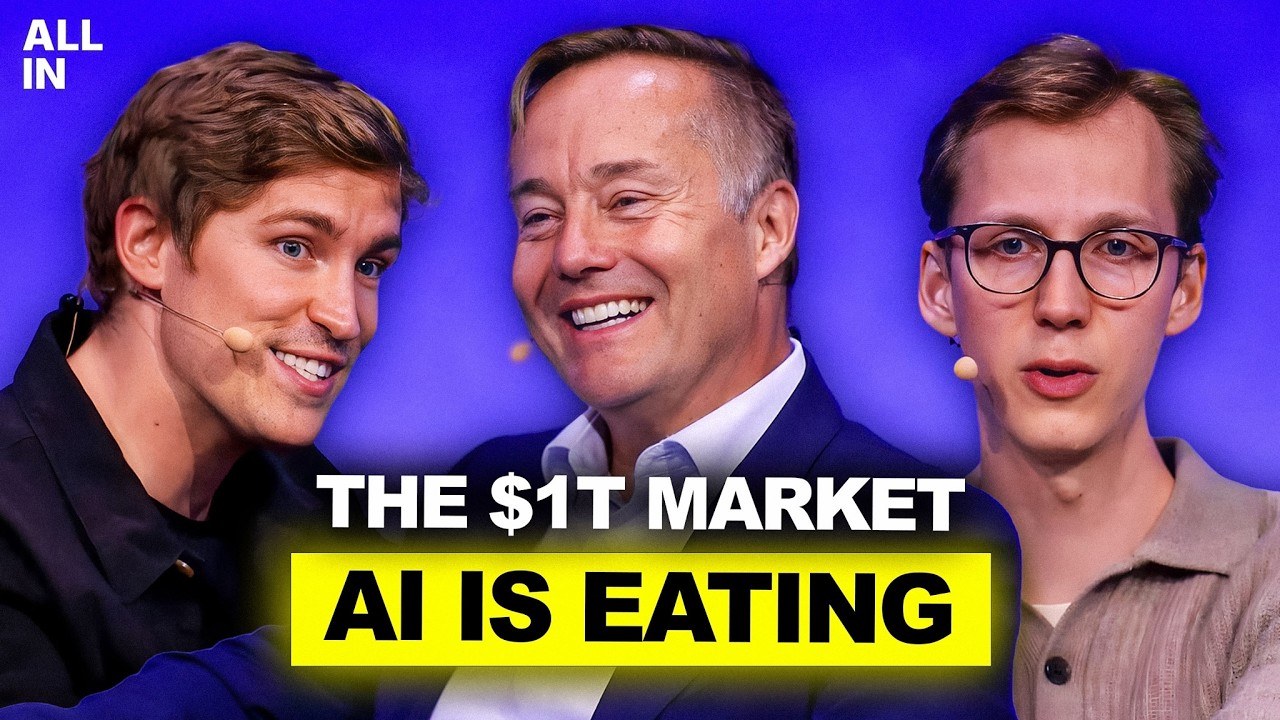
The Trillion-Dollar Industries AI Is Disrupting: Voice, Law & the End of the Billable Hour
 103 min
More Trillion Dollar IPOs, Anthropic $3T, Zuck's Price War, China Ends Open Source?, Trump Accounts
Ask anything from this episode.
Save it, chat with it, and connect it to Claude or ChatGPT. Get cited answers from the actual content — and build your own knowledge base of every podcast and video you care about.
Get Started Free