Key Moments
Dr. Adam Gazzaley - Brain Optimization and The Future of Psychedelic Medicine | The Tim Ferriss Show
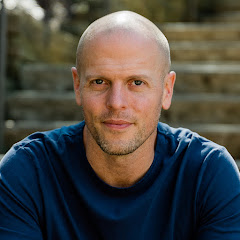 Tim Ferriss
Want to know something specific about what's covered?
We've already dissected every moment. Ask and we will deliver (with timestamps).
Key Moments
Dr. Adam Gazzaley discusses brain optimization, AI, and the future of psychedelic medicine.
Key Insights
Video games, like VR, can be powerful tools for cognitive enhancement and are being developed into FDA-cleared medical devices.
Psychedelic medicine's potential lies not just in the compounds but in the experiential and contextual elements of treatment.
Integrating technology like multimodal biosensing and VR is key to optimizing psychedelic experiences and understanding their mechanisms.
Neuroscape is launching a new division dedicated to psychedelic research, led by Robin Carhart-Harris, to bridge the gap between basic science and clinical trials.
The future of psychedelic therapy involves sophisticated, data-driven tools to assist therapists, not replace them, enhancing personalized treatment.
The potential for psychedelic compounds to create enduring positive change is linked to their ability to induce neuroplasticity and 'shuffle the deck' of rigid cognitive patterns.
FROM NEURO-GAMING TO THERAPEUTIC DEVICES
Dr. Adam Gazzaley, a distinguished professor at UCSF, has pioneered the use of technology for brain optimization. His work with neuroracer, a video game designed to target cognitive functions like attention and working memory, led to significant findings, including improvements in older adults that persisted for years. This research culminated in the development of EndeavorRx, the first FDA-cleared digital therapeutic for children with ADHD, demonstrating the potential of experiential medicine delivered through technology.
THE PROMISE OF PSYCHEDELIC MEDICINE
Gazzaley reveals his deep dive into psychedelic medicine, spurred by conversations and reading works like Michael Pollan's 'How to Change Your Mind.' He emphasizes that psychedelics are not traditional molecular treatments but experiential medicines, akin to his work with VR and video games. The transformative power lies in the experience itself, influenced by set (mindset) and setting (environment), which can induce profound changes and neuroplasticity.
LAUNCHING THE NEUROSCAPE PSYCHEDELIC RESEARCH DIVISION
Driven by the potential of these compounds and the need for rigorous scientific investigation, Gazzaley is launching a new division within Neuroscape dedicated to psychedelic research. This initiative will be led by Dr. Robin Carhart-Harris, a leading figure in psychedelic science, who will join UCSF. This launch signifies a significant step in bringing structured, technologically advanced research to a field ripe with potential.
BRIDGING THE GAP IN PSYCHEDELIC RESEARCH
Gazzaley identifies a critical gap in psychedelic research between basic science insights (cellular mechanisms, receptor binding) and advanced clinical trials (PTSD, depression, addiction). His new division aims to fill this 'middle ground' by optimizing treatment delivery, personalization, and understanding the nuances of set and setting through technology, thereby improving therapeutic outcomes.
TECHNOLOGY'S ROLE IN OPTIMIZING EXPERIENCES
The core of Gazzaley's approach involves leveraging technology to enhance and understand psychedelic experiences. This includes multimodal biosensing to track physiological and behavioral states in real-time, and sophisticated environmental controls (visuals, sounds, smells) to shape the therapeutic setting. The ultimate goal is to create closed-loop systems where data informs personalized interventions, guided by either AI or human facilitators.
THE SYNERGY OF EXPERIENCE AND SCIENCE
Gazzaley stresses that this technologically-driven approach is not about replacing therapists but about providing them with advanced tools to understand and guide patient experiences more effectively. He engages with practitioners and indigenous wisdom, seeking to integrate real-world expertise with scientific rigor. This philosophy aims to democratize access to psychedelic therapies by making them more scalable, effective, and accessible.
Mentioned in This Episode
●Software & Apps
●Companies
●Organizations
●Books
●Drugs & Medications
●People Referenced
Common Questions
NeuroRacer is a video game developed by Dr. Adam Gazzaley's team, featured on the cover of Nature. It was shown to improve sustained attention, working memory, and multitasking abilities in healthy adults aged 60+, restoring their cognitive function to the level of 20-year-olds with effects lasting up to six years without continued training.
Topics
Mentioned in this video
A company co-founded by Dr. Gazzaley to translate NeuroRacer technology into a medical device, which led to the FDA-cleared video game EndeavorRx.
A global measurement and data analytics company for which Dr. Gazzaley has served as a scientific advisor.
A technology company for which Dr. Gazzaley has served as a scientific advisor.
A multinational professional services network for which Dr. Gazzaley has served as a scientific advisor.
A new company launched by Helix Sleep, making premium, customizable sofas and chairs delivered directly to your door at a fraction of traditional store costs, with easy assembly.
An automated investment service (robo-advising) that helps clients diversify portfolios, minimize fees, lower taxes, and offers a service called Autopilot to manage excess cash.
A virtual private network (VPN) app that secures internet connections, hides IP addresses, and bypasses regional content restrictions, consistently rated as one of the fastest.
A multinational conglomerate for which Dr. Gazzaley has served as a scientific advisor.
A key person leading a site for the MAPS trial at Neuroscape, contributing to the early momentum of the psychedelic research division.
Author of 'How to Change Your Mind', whose book served as an inspiration for Dr. Gazzaley's entry into psychedelic research, especially in understanding these compounds as 'experiential treatments'.
Host of The Tim Ferriss Show, interviewing world-class performers and a close friend of Dr. Adam Gazzaley, supporting his research.
Author and founder of MAPS (Multidisciplinary Association for Psychedelic Studies), introduced to Dr. Gazzaley by Tim Ferriss, and known for accepting cryptocurrency donations.
David Dolby Distinguished Professor of Neurology, Physiology, and Psychiatry at UCSF, founder and executive director of Neuroscape, and co-founder of Akili Interactive. He is a pioneer in brain optimization and digital medicine, and is now launching a psychedelic research division.
A clinician scientist at Duke who conducted the pivotal phase three trial for EndeavorRx in children with ADHD, independently validating the game's efficacy.
A university in the UK, visited by Dr. Gazzaley as part of his research into the psychedelic field.
A leader in psychedelic research, the most cited researcher in the field, who will be joining Neuroscape as faculty and the founding director of its new psychedelic research division, bringing expertise on 'set and setting'.
A translational neuroscience center founded and executive directed by Dr. Adam Gazzaley at UCSF, focused on technology development and scientific research for brain assessments and optimization. It's now launching a new psychedelic research division.
The U.S. Food and Drug Administration, which cleared Dr. Gazzaley's video game, EndeavorRx, as the first ever FDA-cleared digital treatment for ADHD in children.
An organization conducting trials related to psychedelic therapies, with a site led by Jenny Mitchell at Neuroscape, also known for accepting cryptocurrency donations.
A world-renowned medical and health center, especially prominent in neuroscience, neurology, neurosurgery, and psychiatry. It is the institution hosting Dr. Gazzaley's Neuroscape center and the new psychedelic research division.
A leading scientific journal that featured Dr. Gazzaley's NeuroRacer paper on its cover in 2013.
A university in the UK where Robin Carhart-Harris conducted significant psychedelic research, and where Dr. Gazzaley gave a talk during his exploration of the field.
A dissociative anesthetic that can induce deep psychedelic experiences at sufficient doses, discussed by Tim Ferriss from personal experience during a five-session series of intravenous infusions.
A psychedelic compound mentioned as an example of a substance used in therapeutic treatments, leading to strong experiences. Its effects are being studied in relation to neuroplasticity and altering perception of self and environment.
A commercially developed, F.D.A.-cleared video game derived from NeuroRacer, used as a medical device to treat inattention in children with ADHD, and shown to be effective across various neurological and psychiatric conditions.
The first video game invented by Dr. Gazzaley cleared by the FDA, designed to improve cognitive control abilities in older adults, showing improvements comparable to 20-year-olds with sustained effects.
More from Tim Ferriss
View all 703 summaries 70 min
Q&A with Tim — The Art of Male Friendship, Reinvention in The Age of AI, & More
 125 min
Dr. Andrew Huberman — Peptides, Performance, and Protocols
 112 min
The Random Show! Mortality, AI, Supplements, Rock Climbing, & More
 88 min
The Legendary Hollywood Power Broker — Guy Oseary on 36 Years of Managing Madonna, 26 IPOs, and More
Ask anything from this episode.
Save it, chat with it, and connect it to Claude or ChatGPT. Get cited answers from the actual content — and build your own knowledge base of every podcast and video you care about.
Get Started Free