Key Moments
280 ‒ Cultivating happiness, emotional self-management, and more | Arthur Brooks Ph.D.
 Peter Attia MD
Want to know something specific about what's covered?
We've already dissected every moment. Ask and we will deliver (with timestamps).
Key Moments
Focus on happiness through enjoyment, satisfaction, and meaning, not just feelings.
Key Insights
Happiness is distinct from fleeting happy feelings; feelings are evidence of happiness.
Four fundamental negative emotions (sadness, anger, fear, disgust) and two positive ones (joy, interest) are rooted in evolution.
Individual happiness levels have a significant genetic component, but habits and self-management are crucial.
True happiness is built on three macronutrients: enjoyment (pleasure with people and memory), satisfaction (joy after struggle), and meaning (coherence, purpose, significance).
Metacognition, the ability to experience emotions in the prefrontal cortex, is key to self-management.
Happiness is a complex problem that requires continuous effort, self-reflection, and a focus on 'happyness' (getting happier) rather than a static state of happiness.
DISTINGUISHING HAPPINESS FROM FEELINGS
Arthur Brooks emphasizes that happiness is not the same as fleeting positive emotions. Feelings, while important signals, are transient and influenced by immediate circumstances. Mistaking feelings for happiness leads to chasing temporary pleasures rather than cultivating a sustainable sense of well-being. True happiness is a deeper state that produces many positive feelings but is not defined by them. Understanding this distinction is the first step towards managing one's own happiness effectively.
THE EVOLUTIONARY ROOTS OF EMOTIONS
Our emotional landscape is shaped by evolution, with four primary negative emotions—sadness, anger, fear, and disgust—and two positive ones—joy and interest. These emotions, driven by the limbic system, serve crucial survival functions. Fear and anger, for instance, are immediate responses to threats, while disgust protects us from pathogens. Understanding these evolved mechanisms helps us recognize that negative emotions are attention-grabbing signals, not necessarily indicators of our overall state of happiness or well-being.
GENETICS AND THE MANAGEMENT OF HAPPINESS
Research, particularly on identical twins, suggests that a significant portion of our baseline mood and self-evaluated well-being is heritable (44-52%). This means our genetic makeup influences our susceptibility to certain emotional states. However, genes are not destiny. Knowing one's genetic predispositions, such as tendencies toward certain emotional profiles (e.g., 'mad scientist,' 'cheerleader,' 'poet,' 'judge'), provides the power to manage them through conscious habit formation and self-awareness, thus mitigating potential challenges.
THE THREE MACRONUTRIENTS OF HAPPINESS
Brooks identifies enjoyment, satisfaction, and meaning as the fundamental 'macronutrients' of happiness. Enjoyment involves pleasure derived from social connection and memory-making, not mere solitary pleasure-seeking. Satisfaction is the sense of accomplishment that follows overcoming challenges. Meaning, the most crucial, comprises coherence (life makes sense), purpose (life has direction), and significance (life matters). Cultivating these three elements requires deliberate strategies and practices.
METAPROCESSING EMOTIONS FOR SELF-MASTERY
Metacognition—the ability to think about one's own thoughts and emotions and process them in the prefrontal cortex rather than reacting solely from the limbic system—is central to happiness. Techniques like journaling, meditation, prayer, and even simply counting to thirty when angry provide the necessary 'space' for executive control. This allows for deliberate responses rather than impulsive reactions, enabling individuals to manage their emotional states and live a more intentional life.
THE CHALLENGE OF MODERN HAPPINESS
While our ancestors faced different struggles, modern life presents unique challenges to happiness. Declines in faith, family formation, close friendships, and a sense of purpose in work, exacerbated by the rise of social media, political polarization, and remote work, have contributed to a societal 'climate drift' towards unhappiness. These 'storms' demand conscious effort to navigate. Happiness is not a destination but a direction ('happyness'), achieved through continuous learning, habit change, and sharing knowledge.
FINDING MEANING AND TRANSCENDENCE
Meaning, consisting of coherence, purpose, and significance, is vital for a fulfilling life. Questions like 'Why are you alive?' and 'For what are you willing to die?' guide this search. Transcendence, the experience of awe and realizing one's smallness in the universe, offers peace and perspective, often found in nature, art, or spiritual practices. This balance between recognizing one's significance and accepting one's finitude is key to navigating life's complexities.
STRATEGIES FOR CULTIVATING HAPPINESS
Practical strategies for enhancing happiness include journaling failures to find lessons, distinguishing between optimism and hope, and managing one's 'wants' rather than solely pursuing more 'haves'. Moreover, actively cultivating presence by looking outward (the 'I-self') rather than constantly inward (the 'me-self'), especially by reducing social media consumption and external validation-seeking, is crucial. Treating life as a complex problem requiring multi-dimensional solutions and personalized tracking, rather than a complicated one with easy fixes, allows for genuine progress.
Mentioned in This Episode
●Supplements
●Software & Apps
●Tools
●Companies
●Organizations
●Books
●Drugs & Medications
●Studies Cited
●Concepts
●People Referenced
Common Questions
Happy feelings are temporary, limbic system activities—evidence of happiness, but not happiness itself. True happiness, by contrast, is a more stable, underlying phenomenon associated with specific 'macronutrients' like enjoyment, satisfaction, and meaning, which require more conscious engagement of the prefrontal cortex.
Mentioned in this video
A Danish word for cozy conviviality in the presence of friends on a comfy couch, representing their cultural definition of happiness.
The path in Buddhism that encourages a 'want less' strategy, contrary to natural impulses.
Describes individuals with traits of narcissism, Machiavellianism, and psychopathy, often successful in mating markets despite being unhappy.
Glands that release stress hormones signaled by the hypothalamus.
More from Peter Attia MD
View all 337 summaries 118 min
Building strength and muscle mass: optimize training & nutrition for longevity (AMA #71 rebroadcast)
 121 min
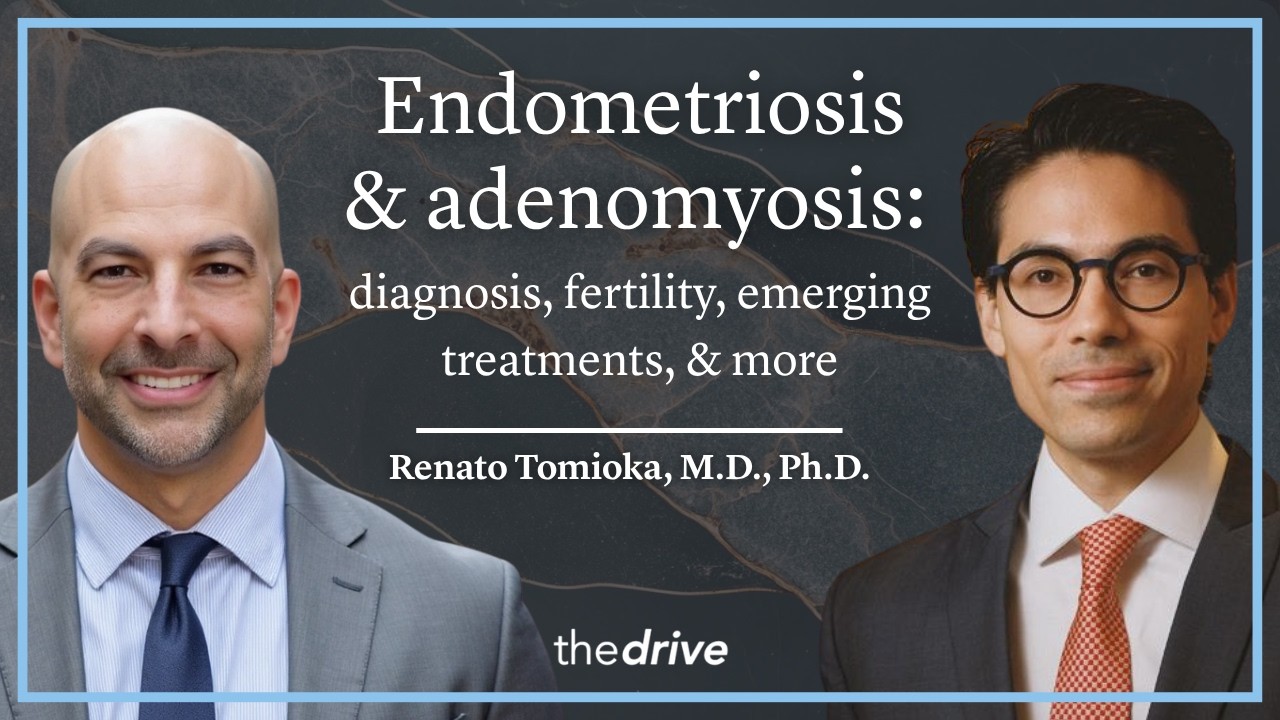
397 - Endometriosis and adenomyosis: diagnosis, fertility, reproductive aging, & emerging treatments
 51 min
396 – Breast cancer screening: understanding risk, deciding when to start, and more
 105 min
395 – Brain lipidology: understanding APOE, cholesterol homeostasis, Alzheimer’s disease, & more
Ask anything from this episode.
Save it, chat with it, and connect it to Claude or ChatGPT. Get cited answers from the actual content — and build your own knowledge base of every podcast and video you care about.
Get Started Free